Short Turns: IOC Expands Winter Games, Axes Nordic Combined
Over its 102-year history, the Olympic Winter Games program has expanded several times, as the International Olympic Committee (IOC) has periodically added sports to enhance the Games’ global appeal. Notable examples: Alpine skiing—popular in Europe’s Alps in the 1920s and 1930s—made its Olympic debut in 1936 in Garmisch-Partenkirchen; snowboarding exploded into the mainstream in the 1980s and 1990s and joined the action at the 1998 Nagano Games.
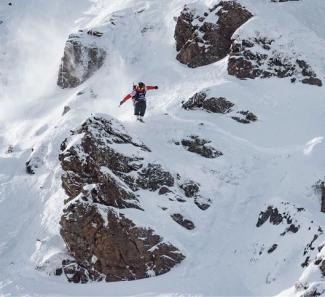
Photo top: As IOC strives to keep the Olympics relevant, several TV-friendly are added to the 2030 Winter Games, including freeride. Courtesy J. Bernard/Freeride World Tour.
Now another mountain sport gets its chance. For the (recently branded) Alpes 2030 Olympic Winter Games, freeride will debut. Skiers and snowboarders descend natural, ungroomed terrain with features like cliffs, chutes and powder fields.
“From the first Xtreme Verbier in 1996 to the inaugural FIS Freeride World Championships in 2026, three decades of riders, organizers and fans built this moment,” the Freeride World Tour posted on Instagram. “To those who first believed in this discipline, and to the young athletes who can now dream of an Olympic medal: this one is yours.”
Today, as the Olympics struggles with a shrinking pool of willing and suitable hosts due to ballooning costs, infrastructure requirements and frequent political opposition, the IOC strives to keep the games vibrant, and relevant. To that end, other additions to the 2030 Winter Games include a mixed-singles relay in biathlon, team sprints in speed skating, a mixed-team ski-cross race, women’s super team in ski jumping and men’s and women’s individual races in ski mountaineering. And with the debut of Synchro9, a synchronized figure-skating event, the 2030 Olympics will be the first Winter Games to boast gender parity (officially referred to as “athlete quotas”), with an equal number of approved spots for male and female participants. “It’s a very important milestone for us,” IOC president Kirsty Coventry said after the announcement. “It was also very clearly the priority for the Olympic program working group to achieve this parity.”
Freeride Gets Its Turn
Although “freeride” sounds like a new-school term, the idea is as old as Alpine skiing. In the 1930s and ’40s, skiers like Emile Allais sought out steep couloirs and other challenging off-piste terrain around Chamonix. His descents were not competitions, just a test of what could be done on skis.
By the 1960s, “ski extreme,” as it was termed, became its own pursuit. French skier Sylvain Saudan, nicknamed “le skieur du l’impossible” (“the skier of the impossible”) earned notoriety for pushing the limit of what was considered skiable terrain. Across the Atlantic, the Rockies, Sierras, Wasatch, and Chugach mountains offered boundless opportunities for “ski extreme,” and in the 1980s, skiers like Steve McKinney, Glen Plake and Greg Stump introduced viewers to their jaw-dropping descents in annual Warren Miller movies and Stump’s own 1988 classic The Blizzard of Aahhh’s.
In 1991, Valdez, Alaska, hosted the first World Extreme Ski Championships (won by big-mountain legends Doug Coombs and Kim Reichhelm). Rather than racing a clock, competitors were judged on the difficulty of their line, technique, control and overall style.
Snowboarders soon developed their own freeride competitions. In 1996, Xtreme Verbier took place in Switzerland and was considered the world’s first extreme freeride competition. Originally a snowboard-only event, it pitted riders against the tight couloirs, exposed ridges and cliffs of Verbier’s Bec des Rosses. Male skiers joined the event in 2004, and women came aboard in 2006.
The success of Xtreme Verbier helped launch the Freeride World Tour (FWT) in 2008, a series that took riders to iconic big-mountain terrain around the world, with the grand finale staged in Verbier. Today, the organization oversees several competition levels: world tour, challenger, qualifier and junior series, with more than 10,000 skiers and boarders participating.
In December 2022, the International Ski Federation (FIS) acquired the FWT. It was a pivotal step in the Olympic nomination process. The change provided freeride with the organizational structure and global exposure expected of Olympic sports, and it would join its ski cousins Alpine, Nordic, freestyle and snowboarding under the FIS umbrella. “FIS is the home of snowsports in all its forms, for everyone,” Johan Eliasch, then FIS president, said at the time. “It is only natural for us to fully embrace the excitement of a rising discipline like freeride.”
He also hoped to see freeride “on an Olympic scene in the future,” realizing the growing appeal of the free-spirited discipline to a new generation of skiers and boarders—and one that offered an intriguing counterpoint to the more rigid formats of Alpine and Nordic competitions.
Today, overseen by FIS, the FWT consists of six stops at venues from the Spanish Pyrenees to Alaska. In 2026, FIS staged the inaugural FIS Freeride World Championships in Andorra with a global spectrum of riders. American Mia Jones—ranked number one on the FWT in 2026—and Switzerland’s Liam Rivera won the snowboard world titles, and Poland’s Zuzanna Witych and New Zealand’s Ben Richards claimed the ski crowns.
Olympic Clout
Justine Dufour-Lapointe from Canada—the 2014 Olympic moguls gold medalist—was runner-up to Witych at the 2026 worlds. Dufour-Lapointe successfully transitioned to freeride in 2022, then won the 2023 and 2025 world titles.
Dufour-Lapointe echoes the appeal of freeride to its mainstream fans. “When I made my freeride debut in 2023, I know [sic] nothing about this sport, and this freeride family welcomed me with open arms,” she wrote on social media after the IOC’s announcement to include it in the 2030 Games. “I discovered something pure, real, beautiful. Freeride gave me back the joy of skiing and I never felt as free as I do right now. Now, the whole world gets to discover this incredible sport.”
A three-time Olympian—and two-time medalist (she also won silver in 2018), Dufour-Lapointe knows the power of the Olympic games. “They changed my life forever,” she wrote. “The Olympic values, excellence, respect, friendship … it’s exactly what freeride lives every single day on the mountain. These two were simply meant to be.”
Ski Mountaineering on Full Display
After debuting at the 2026 Olympics with only sprint and a mixed-team event, ski mountaineering—or skimo, as it’s known—will take a significant step forward at the 2030 Winter Games. The IOC has approved five medal events, adding men’s and women’s individual races.
For the skimo community, the individual event is the soul of the sport. Unlike the three-minute sprint, this race requires skiers to climb and descend thousands of vertical feet in technical Alpine terrain. It’s the type of skiing that motivated most ski mountaineers to take up the sport.
American Olympian Cam Smith welcomes the IOC’s decision to expand skimo’s scope. “Once the world sees skimo as a sport where we’re climbing ridges and peaks, racing each other down couloirs,” he says, “I think it’s going to be one of the best spectacles in all of sports.”
A successful debut—with enthusiastic crowds and an electric atmosphere at this winter’s Milano Cortina Olympics—helped convince the IOC to add the individual races. The French Alps will provide a fitting backdrop.
“In the Alps, ski mountaineering is not a guest, it is at home here,” Alpes 2030 organizing committee president Edgar Grospiron told IOC delegates. “It is part of the scenery, part of our landscape, part of our culture.”
Gender Parity
Gender parity—defined as having an equal number of male and female athletes—has long been an IOC priority, especially at the Winter Games, where ice hockey and bobsledding have historically skewed the athlete balance (women began competing in Olympic ice hockey in 1998, in bobsledding in 2002).
Many had hoped that adding women’s Nordic combined would help close the gap. Instead, the IOC nixed the sport altogether this summer. (For full coverage, see the upcoming November-December 2026 issue.)
The debut of Synchro9 rights the imbalance. The competition will bring 90 women—10 teams of nine skaters—to the Games, offsetting the 86 more men competing in ice hockey and bobsledding than women.
At first glance, Synchro9 resembles the Rockettes on ice. Recognized by the International Skating Union (ISU) as a figure-skating discipline in 1994, it’s touted as a fast, dynamic skating format that’s “engaging for global audiences.” According to the ISU, it was developed to modernize figure skating by lowering barriers to participation for emerging skating nations while enhancing its appeal for television and digital audiences.
Synchro9 made its official debut at the 2026 ISU Figure Skating World Championships, where a Finnish demonstration team performed during the exhibition gala. Synchro9 is also slated for inclusion in the 2028 Winter Youth Olympic Games, paving the way for its Olympic debut two years later. 
Peggy Shinn has covered eight Olympic Games and is the author of World Class: The Making of the U.S. Women’s Cross-Country Ski Team (Ullr Award 2018).
Snapshots in Time
1937 An inefficient form of suicide
What most people neglect to find out about winter sports until they try them is that, for novices, they are mildly perilous. Skiing down mountains that are sparsely covered by snow and thickly covered by trees, amounts for unskilled skiers to an inefficient form of suicide. At Sun Valley, where the slopes are treeless and the snow is deep, skiing hurts are minimized. Most of the casualties came from falling down on skates at the resort’s ice rink. — “East Goes West to Idaho’s Sun Valley, Society’s Newest Winter Playground”
(Life, March 8, 1937)
1955 skilled men wanted
This season, examinations will be held for the certification of professional ski instructors. Yet it is thought by many who now instruct that the standards have gotten progressively lower in recent years. Last year, the entire group of candidates were to be taken to the top of a steep, but wide, trail, for their demonstration of free skiing. They were simply to ski down, at any speed, as long as they were under control. So much objection was raised by some of the candidates that the test was moved to an intermediate slope. — Addison A. Augusta,
“Wanted: College Men to Fill the Need for First-Class Instructors.” (SKI, December 1955)
1990 Hidden Benefit of Rental Gear?
Because skiers will be skiing fewer days a year on average this season, fewer will invest in their own equipment. This will be particularly true at the discount-level ski areas. As a consequence, skiers will be renting and then skiing on equipment that, on average, is better maintained than skier-owned equipment. A decline in equipment-related injuries will result from this. — Al Greenberg, “Skiing in the ’90s” (Skiing, February 1990)
2003 American-made ski revolution
In “State of the Arc,” (September 2003) Paul Hochman writes, “The shaped-ski revolution began in a eureka moment in 1989” at the Elan factory in Slovenia. In fact, the shaped ski was an American invention. Working for Olin Skis in 1984, the engineer Frank Meatto designed a 178.4cm ski with a 127.6mm shovel width and a 40mm waist. Olin’s project, the “Albert” ski, was patented in 1985 (no. 4,688,821). The company made 150 pairs of the Albert ski with an exaggerated sidecut on one edge. — John Fry, President, International Skiing History Association, Katonah, N.Y, “New Tech, Old Tech” (Letters, SKI, September 2003)
2026 See Something, Say Something
Donner Ski Ranch took to social media to inform guests about new signs that were installed at each chairlift. “SAFETY FIRST,” reads the sign. “IT IS NOT OK FOR OUR LIFT OPS TO BE USING THEIR CELL PHONES. RAT ’EM OUT!” Beneath the text is a rat holding a sign that reads, “IF YOU SEE SOMETHING SAY SOMETHING.” The bottom of the sign asks guests to tell a lift op supervisor, ski patrol or to call a number to report cellphone-using employees. The response to the signs has been anything but positive. — Matt Lorelli, “Irreverent California Ski Area Asks Guests To ‘Rat Out’ Cellphone-Using Employees With New Signs” (Powder.com, June 6, 2026)
Now another mountain sport gets its chance. For the (recently branded) Alpes 2030 Olympic Winter Games, freeride will debut. Skiers and snowboarders descend natural, ungroomed terrain with features like cliffs, chutes and powder fields.
“From the first Xtreme Verbier in 1996 to the inaugural FIS Freeride World Championships in 2026, three decades of riders, organizers and fans built this moment,” the Freeride World Tour posted on Instagram. “To those who first believed in this discipline, and to the young athletes who can now dream of an Olympic medal: this one is yours.”
Today, as the Olympics struggles with a shrinking pool of willing and suitable hosts due to ballooning costs, infrastructure requirements and frequent political opposition, the IOC strives to keep the games vibrant, and relevant. To that end, other additions to the 2030 Winter Games include a mixed-singles relay in biathlon, team sprints in speed skating, a mixed-team ski-cross race, women’s super team in ski jumping and men’s and women’s individual races in ski mountaineering. And with the debut of Synchro9, a synchronized figure-skating event, the 2030 Olympics will be the first Winter Games to boast gender parity (officially referred to as “athlete quotas”), with an equal number of approved spots for male and female participants. “It’s a very important milestone for us,” IOC president Kirsty Coventry said after the announcement. “It was also very clearly the priority for the Olympic program working group to achieve this parity.”
Freeride Gets Its Turn
Although “freeride” sounds like a new-school term, the idea is as old as Alpine skiing. In the 1930s and ’40s, skiers like Emile Allais sought out steep couloirs and other challenging off-piste terrain around Chamonix. His descents were not competitions, just a test of what could be done on skis.
By the 1960s, “ski extreme,” as it was termed, became its own pursuit. French skier Sylvain Saudan, nicknamed “le skieur du l’impossible” (“the skier of the impossible”) earned notoriety for pushing the limit of what was considered skiable terrain. Across the Atlantic, the Rockies, Sierras, Wasatch, and Chugach mountains offered boundless opportunities for “ski extreme,” and in the 1980s, skiers like Steve McKinney, Glen Plake and Greg Stump introduced viewers to their jaw-dropping descents in annual Warren Miller movies and Stump’s own 1988 classic The Blizzard of Aahhh’s.
In 1991, Valdez, Alaska, hosted the first World Extreme Ski Championships (won by big-mountain legends Doug Coombs and Kim Reichhelm). Rather than racing a clock, competitors were judged on the difficulty of their line, technique, control and overall style.
Snowboarders soon developed their own freeride competitions. In 1996, Xtreme Verbier took place in Switzerland and was considered the world’s first extreme freeride competition. Originally a snowboard-only event, it pitted riders against the tight couloirs, exposed ridges and cliffs of Verbier’s Bec des Rosses. Male skiers joined the event in 2004, and women came aboard in 2006.
The success of Xtreme Verbier helped launch the Freeride World Tour (FWT) in 2008, a series that took riders to iconic big-mountain terrain around the world, with the grand finale staged in Verbier. Today, the organization oversees several competition levels: world tour, challenger, qualifier and junior series, with more than 10,000 skiers and boarders participating.
In December 2022, the International Ski Federation (FIS) acquired the FWT. It was a pivotal step in the Olympic nomination process. The change provided freeride with the organizational structure and global exposure expected of Olympic sports, and it would join its ski cousins Alpine, Nordic, freestyle and snowboarding under the FIS umbrella. “FIS is the home of snowsports in all its forms, for everyone,” Johan Eliasch, then FIS president, said at the time. “It is only natural for us to fully embrace the excitement of a rising discipline like freeride.”
He also hoped to see freeride “on an Olympic scene in the future,” realizing the growing appeal of the free-spirited discipline to a new generation of skiers and boarders—and one that offered an intriguing counterpoint to the more rigid formats of Alpine and Nordic competitions.
Today, overseen by FIS, the FWT consists of six stops at venues from the Spanish Pyrenees to Alaska. In 2026, FIS staged the inaugural FIS Freeride World Championships in Andorra with a global spectrum of riders. American Mia Jones—ranked number one on the FWT in 2026—and Switzerland’s Liam Rivera won the snowboard world titles, and Poland’s Zuzanna Witych and New Zealand’s Ben Richards claimed the ski crowns.
Olympic Clout
Justine Dufour-Lapointe from Canada—the 2014 Olympic moguls gold medalist—was runner-up to Witych at the 2026 worlds. Dufour-Lapointe successfully transitioned to freeride in 2022, then won the 2023 and 2025 world titles.
Dufour-Lapointe echoes the appeal of freeride to its mainstream fans. “When I made my freeride debut in 2023, I know [sic] nothing about this sport, and this freeride family welcomed me with open arms,” she wrote on social media after the IOC’s announcement to include it in the 2030 Games. “I discovered something pure, real, beautiful. Freeride gave me back the joy of skiing and I never felt as free as I do right now. Now, the whole world gets to discover this incredible sport.”
A three-time Olympian—and two-time medalist (she also won silver in 2018), Dufour-Lapointe knows the power of the Olympic games. “They changed my life forever,” she wrote. “The Olympic values, excellence, respect, friendship … it’s exactly what freeride lives every single day on the mountain. These two were simply meant to be.”
Ski Mountaineering on Full Display
After debuting at the 2026 Olympics with only sprint and a mixed-team event, ski mountaineering—or skimo, as it’s known—will take a significant step forward at the 2030 Winter Games. The IOC has approved five medal events, adding men’s and women’s individual races.
For the skimo community, the individual event is the soul of the sport. Unlike the three-minute sprint, this race requires skiers to climb and descend thousands of vertical feet in technical Alpine terrain. It’s the type of skiing that motivated most ski mountaineers to take up the sport.
American Olympian Cam Smith welcomes the IOC’s decision to expand skimo’s scope. “Once the world sees skimo as a sport where we’re climbing ridges and peaks, racing each other down couloirs,” he says, “I think it’s going to be one of the best spectacles in all of sports.”
A successful debut—with enthusiastic crowds and an electric atmosphere at this winter’s Milano Cortina Olympics—helped convince the IOC to add the individual races. The French Alps will provide a fitting backdrop.
“In the Alps, ski mountaineering is not a guest, it is at home here,” Alpes 2030 organizing committee president Edgar Grospiron told IOC delegates. “It is part of the scenery, part of our landscape, part of our culture.”
Gender Parity
Gender parity—defined as having an equal number of male and female athletes—has long been an IOC priority, especially at the Winter Games, where ice hockey and bobsledding have historically skewed the athlete balance (women began competing in Olympic ice hockey in 1998, in bobsledding in 2002).
Many had hoped that adding women’s Nordic combined would help close the gap. Instead, the IOC nixed the sport altogether this summer. (For full coverage, see the upcoming November-December 2026 issue.)
The debut of Synchro9 rights the imbalance. The competition will bring 90 women—10 teams of nine skaters—to the Games, offsetting the 86 more men competing in ice hockey and bobsledding than women.
At first glance, Synchro9 resembles the Rockettes on ice. Recognized by the International Skating Union (ISU) as a figure-skating discipline in 1994, it’s touted as a fast, dynamic skating format that’s “engaging for global audiences.” According to the ISU, it was developed to modernize figure skating by lowering barriers to participation for emerging skating nations while enhancing its appeal for television and digital audiences.
Synchro9 made its official debut at the 2026 ISU Figure Skating World Championships, where a Finnish demonstration team performed during the exhibition gala. Synchro9 is also slated for inclusion in the 2028 Winter Youth Olympic Games, paving the way for its Olympic debut two years later.
Peggy Shinn has covered eight Olympic Games and is the author of World Class: The Making of the U.S. Women’s Cross-Country Ski Team (Ullr Award 2018).
Snapshots in Time
1937 An inefficient form of suicide
What most people neglect to find out about winter sports until they try them is that, for novices, they are mildly perilous. Skiing down mountains that are sparsely covered by snow and thickly covered by trees, amounts for unskilled skiers to an inefficient form of suicide. At Sun Valley, where the slopes are treeless and the snow is deep, skiing hurts are minimized. Most of the casualties came from falling down on skates at the resort’s ice rink. — “East Goes West to Idaho’s Sun Valley, Society’s Newest Winter Playground”
(Life, March 8, 1937)
1955 skilled men wanted
This season, examinations will be held for the certification of professional ski instructors. Yet it is thought by many who now instruct that the standards have gotten progressively lower in recent years. Last year, the entire group of candidates were to be taken to the top of a steep, but wide, trail, for their demonstration of free skiing. They were simply to ski down, at any speed, as long as they were under control. So much objection was raised by some of the candidates that the test was moved to an intermediate slope. — Addison A. Augusta,
“Wanted: College Men to Fill the Need for First-Class Instructors.” (SKI, December 1955)
1990 Hidden Benefit of Rental Gear?
Because skiers will be skiing fewer days a year on average this season, fewer will invest in their own equipment. This will be particularly true at the discount-level ski areas. As a consequence, skiers will be renting and then skiing on equipment that, on average, is better maintained than skier-owned equipment. A decline in equipment-related injuries will result from this. — Al Greenberg, “Skiing in the ’90s” (Skiing, February 1990)
2003 American-made ski revolution
In “State of the Arc,” (September 2003) Paul Hochman writes, “The shaped-ski revolution began in a eureka moment in 1989” at the Elan factory in Slovenia. In fact, the shaped ski was an American invention. Working for Olin Skis in 1984, the engineer Frank Meatto designed a 178.4cm ski with a 127.6mm shovel width and a 40mm waist. Olin’s project, the “Albert” ski, was patented in 1985 (no. 4,688,821). The company made 150 pairs of the Albert ski with an exaggerated sidecut on one edge. — John Fry, President, International Skiing History Association, Katonah, N.Y, “New Tech, Old Tech” (Letters, SKI, September 2003)
2026 See Something, Say Something
Donner Ski Ranch took to social media to inform guests about new signs that were installed at each chairlift. “SAFETY FIRST,” reads the sign. “IT IS NOT OK FOR OUR LIFT OPS TO BE USING THEIR CELL PHONES. RAT ’EM OUT!” Beneath the text is a rat holding a sign that reads, “IF YOU SEE SOMETHING SAY SOMETHING.” The bottom of the sign asks guests to tell a lift op supervisor, ski patrol or to call a number to report cellphone-using employees. The response to the signs has been anything but positive. — Matt Lorelli, “Irreverent California Ski Area Asks Guests To ‘Rat Out’ Cellphone-Using Employees With New Signs” (Powder.com, June 6, 2026)