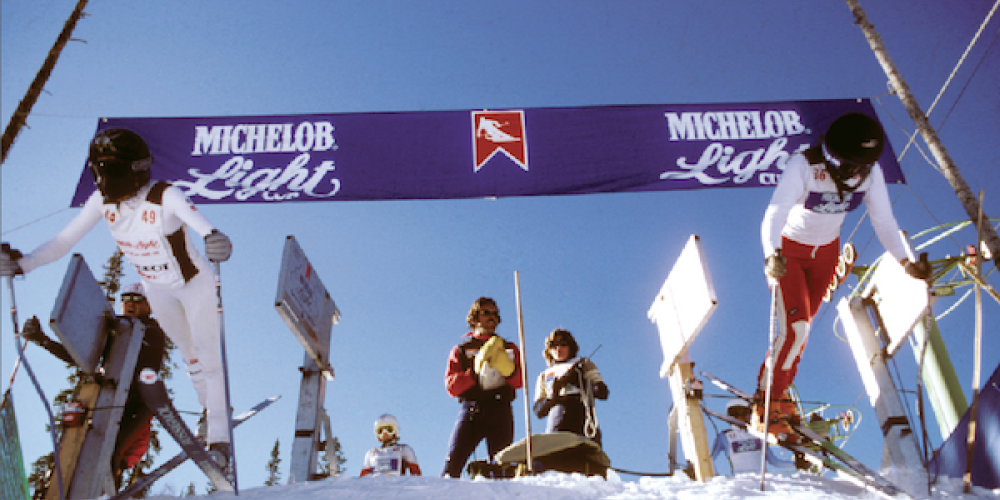
1970s

Open to Public?
Off
Feature Image Media
Image
Timestamp

James Niehues has published a new coffee-table book that includes more than 200 of his hand-painted trail maps.

Ski artist James Niehues has published a new coffee-table book that includes more than 200 of his hand-painted trail maps, with text by journalist Jason Blevins. With eight geographically themed chapters, the hardcover book is the definitive collection of the art created by Niehues during his 30-year career.

In the modern digital age, Niehues may be the last of the great mapmakers. The book showcases his exacting process, in which he first captures aerial shots and then explores the mountain himself before painstakingly illustrating every run, chairlift, tree and cliff band by hand. Over the years, he has created maps for resorts across North America, South America, Europe, Asia and Australia, with hundreds of millions of printed copies distributed to skiers on the slopes.

“I’ve always enjoyed the challenge of fitting an entire mountain on a page. Mountains are wonderful puzzles, and I knew if I painted with the right amount of detail and care, they would last,” says Niehues. “A good design is relevant for a few years, maybe even a decade. But a well-made map is used for generations.”

With Big Sky Resort chosen to illustrate the cover and a foreword by pioneering big-mountain skier Chris Davenport, the compilation includes trail maps from iconic destinations such as Jackson Hole, Squaw Valley, Alta, Snowbird, Aspen Highlands and Vail. The book is 11.5 inches tall and opens to a spread of 24 inches wide, the perfect size to showcase the biggest ski mountains in the world. Niehues went all-in on the production process, with Italian art-quality printing, heavyweight matte-coated paper, and a lay-flat binding.

Funded by a successful Kickstarter campaign that raised capital from 5,000 donors, The Man Behind the Maps had over 10,000 pre-orders. The book retails for $90 and ISHA members qualify for free shipping, a $12.99 savings. To purchase, go to jamesniehues.com and use the code Skiing History. Offer valid until February 8, 2020. 

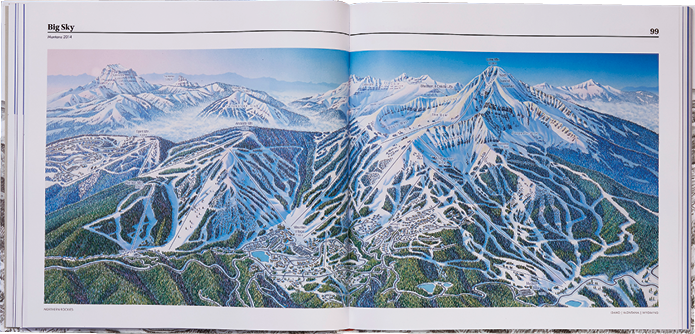
The book was constructed with a lay-flat binding and opens to a spread of 24 inches wide, making the maps—like this illustration of Big Sky, Montana—easy to read.

Category
Open to Public?
Off
Feature Image Media
Image
Timestamp

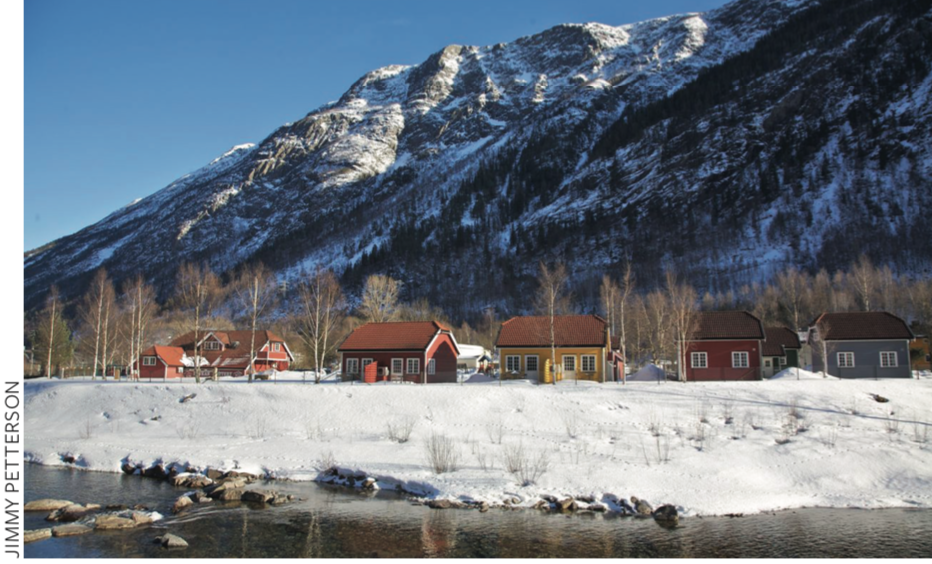
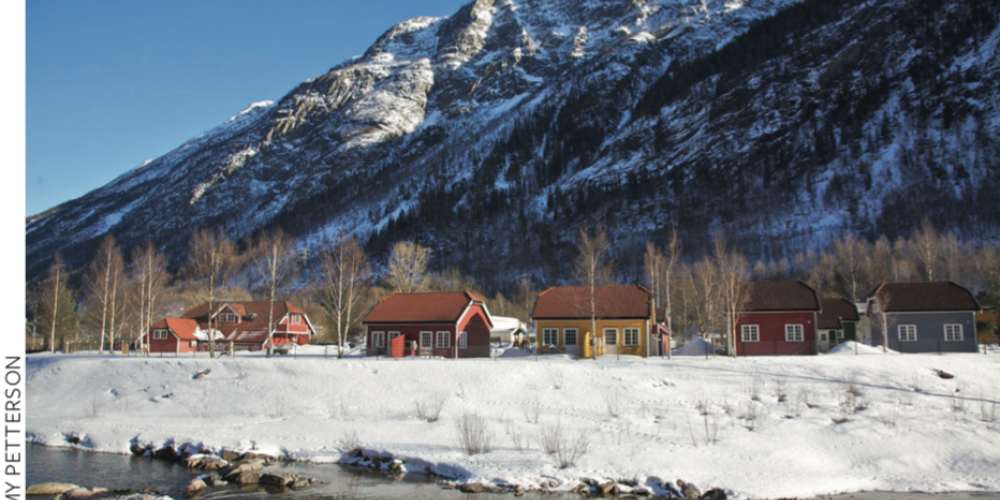
In a region of Norway rich with military history, skiers can ride a NATO train through a tunnel to the top of the mighty Gaustatoppen. BY JIMMY PETTERSON

A few odd ski areas exist in a time warp—living tributes to a bygone era of skiing, before the advent of snowguns to make the snow and fleets of snowcats to flatten it to perfection. These mountains are dedicated to freeriders, with few or no groomed pistes. La Grave in France was one of the first. Austria has the Krippenstein, and in the French Pyrenees, the cable car hauls freeriders up the Pic du Midi.

Norway has its own exclusive off-piste mountain—Gaustatoppen, near the village of Rjukan—with a lift that must rank among the strangest of all time. And the region has a fascinating backstory... 

Gaustatoppen
Category
Open to Public?
Off
Feature Image Media
Image
Timestamp
Author Text
By Lisa Densmore

A former competitor remembers the Women’s Pro Ski Tour. 

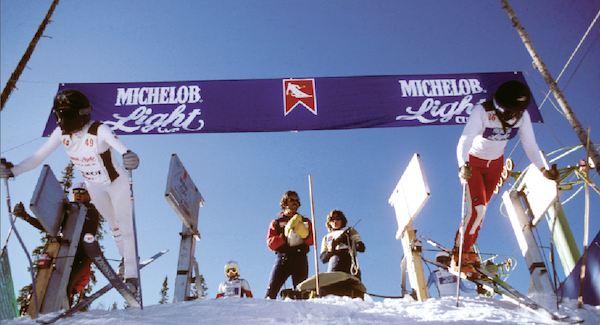
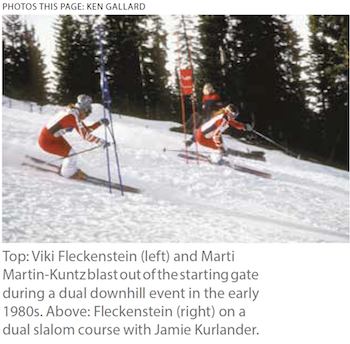
I slid into the starting gate, defined by a low board in the snow four feet behind two “horse gates.” Though I exuded confidence, adrenaline surged through my body. Before me, 25 red panels zigzagged down the slope, next to an identical row of blue panels. The two courses spilled over two six-foot kickers en route to the banner-bedecked finish arena. The racer to my left, Kim Reichhelm, planted her poles and pushed back, lifting her ski tips a foot off the snow as she tested the kick board behind her. Satisfied, she coiled like a puma about to pounce.

Kim and I had been good friends and fellow competitors since our days as high-school students at Stratton Mountain School in Vermont, but at that moment, we dueled for our paycheck. My eyes fixed on the gates while my ears tuned out all but the starter’s familiar husky voice.

“Red course ready?” he shouted. “Blue course ready? Courses clear. Racers ready…” As the ear-splitting horn pierced the air, the gates sprang open. Kim and I rocketed down the hill, matching each other turn for turn. We thrust ourselves across the finish line and glanced at the clock. After two runs, one on the red course and one on the blue, Kim had bested me by 0.003 second, less than the length of a ski tip.

During my six winters on the Women’s Pro Ski Tour, starting in the mid-1980s, sometimes I was on the winning side of those split seconds and sometimes not. It was challenging, exciting and nerve-racking, not to mention one of the few ways a woman could earn a living as a professional athlete.

“Women’s pro ski racing 

was the third-richest pro sport for women at the time,” says Jill Wing Heck, who founded the Women’s Pro Ski Tour in 1978. “It ranked after tennis and golf, but ahead of bowling and rodeo barrel racing.” 

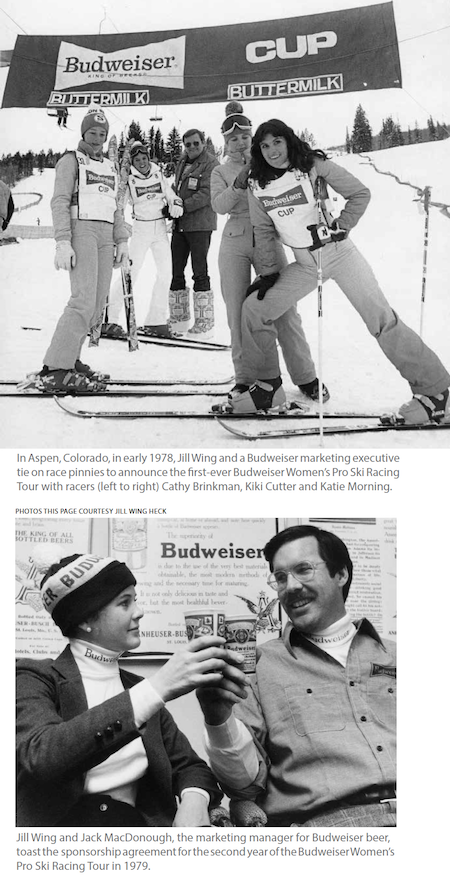
While selling sponsorships for the co-ed pro freestyle tour, Wing Heck had befriended Judy Nagel, Susie Corrock and a number of top female alpine ski racers who had switched to freestyle. “There was nothing else,” says Wing Heck. “They talked about how much more fun it would be to race. Then the freestyle tour started having insurance problems, lawsuits due to injuries. Its sponsors fled. No one wanted women’s pro ski racing, so I wrote up a proposal. Anheuser Busch bought it! Then I thought, now what do I do?”

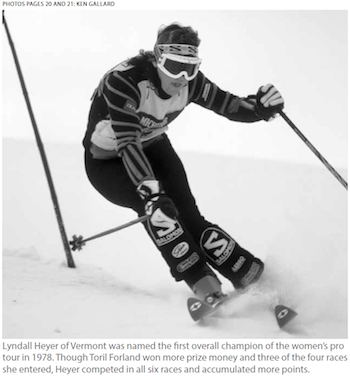
Tony Furman, a New York publicist who was involved with the ski industry, gave Wing Heck office space and offered to do P.R. for the fledging tour. She hired a tournament director, Eric Hvoslef, and put together three events (comprising six races) at Waterville Valley in New Hampshire, Alpine Meadows in California and Vail in Colorado, with a $40,000 purse for the inaugural season. Though Norwegian Toril Forland won the most prize money and three of the four races she entered, Lyndall Heyer of Stowe, Vermont, who entered all six races, accumulated more points and was named the first overall champion.

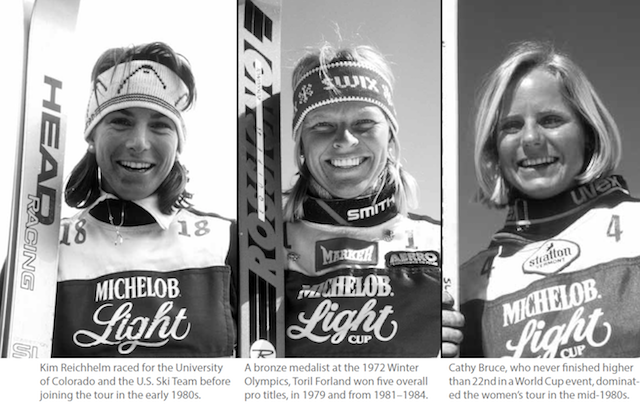
Over the two decades the tour existed, though many female World Cup standouts competed periodically after retiring from their national teams, most of the stars on the start list were middle-of-the-pack World Cuppers, collegiate All-Americans and Europa Cuppers who never made an Olympic team due to lack of ability or mental toughness, politics or injury. The Women’s Pro Tour gave these athletes a second chance to be world-class, particularly those who thrived on the dual format and the lack of team structure. They tuned their own skis, coordinated their travel and training, and drank adult beverages whether they liked them or not, as Budweiser, Michelob and DeKuyper sponsored the tour at various times. The three overall champions of the women’s pro tour during my era—American Cathy Bruce, Austrian Rowitha Raudaschl and Swede Catarina Glasser-Bjerner—fit this profile. Norwegian Toril Forland, who retired the year after I joined the tour, did not.

Bruce, who never finished higher than 22nd in a World Cup event, dominated the women’s tour during the mid-1980s. “I had a slight confidence problem after being dropped from the [U.S.] team before the 1980 Winter Olympics,” said Bruce in an interview with Los Angeles Times (March 5, 1987). “It took a while for me to grow up mentally, and ski racing is definitely a mental sport.”

Toril Forland was a master at the mental game. A bronze medalist in alpine combined at the 1972 Winter Olympics, she skied for the University of Utah and then joined the pro tour. She won five overall pro titles—in 1979 and from 1981–84. She had an uncanny ability to dial up her intensity as needed, sneaking by a newcomer in an early round before pouring it on for the finals.

Roswitha Raudaschl, a diminutive brunette from Austria, joined the tour as a teenager. She spoke little English but skied with lots of tenacity. She returned to the Alps many thousands of dollars richer. Ditto for Glasser-Bjerner and a handful of women’s pro tour standouts, though not entirely from prize money.

By the time I joined the women’s pro tour in 1985, prize purses at an event varied from $10,000 to $25,000 split between two races per weekend—usually a giant slalom and slalom—with the top 16 each day earning a check. Though no one revealed exactly what they made each year, a top racer with victory bonuses from her sponsors and a willingness to do photo and film shoots and make public appearances could accumulate anywhere from $40,000 to more than $100,000.

When I retired from the tour in 1990, Wing Heck had sold the tour to North American Pro Ski Corporation, which also owned the men’s tour. ESPN was on board with a two-year agreement to broadcast events. Television brought in more sponsors, prize money and athletes. By 1993, the women’s tour boasted a $325,000 prize purse over nine events, but a couple of years later, the women’s tour began to unravel. It’s not clear whether the television coverage disappeared because sponsorships dried up or vice versa, but a year after the millennium, the women’s pro tour was no more.


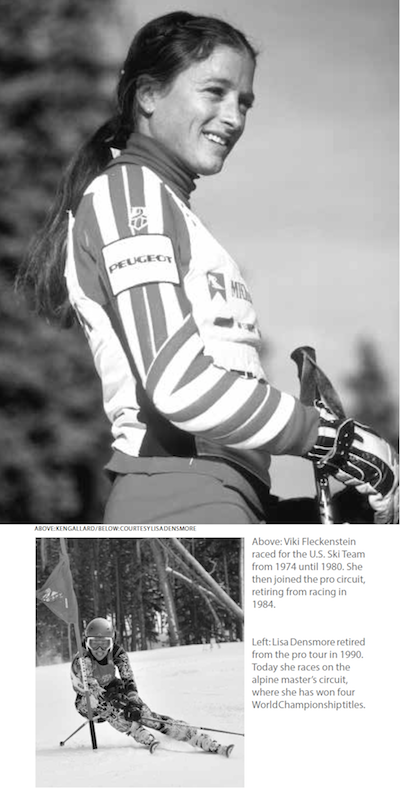
A member of the Women’s Pro Ski Tour from 1985 to 1990, Lisa Densmore has written about, photographed and televised ski racing for more than 20 years (www.LisaDensmore.com). 


Women's Pro Tour
Category
Open to Public?
Off
Feature Image Media
Image
Timestamp

Charges of sexual abuse come to light in Austria, Canada. By John Fry

The #MeToo movement has come to skiing in a swirl of proof and denial. 

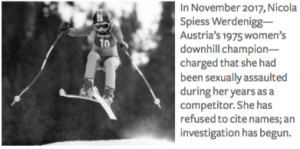
Nicola Werdenigg—Austria’s women’s national downhill champion in 1975 when she was teenager Nicola Spiess—has charged that she was sexually molested during her years as a competitor. Though she refuses to cite names, the Tyrol State Office of Criminal Investigation is looking into the 59-year-old grandmother’s allegations. 

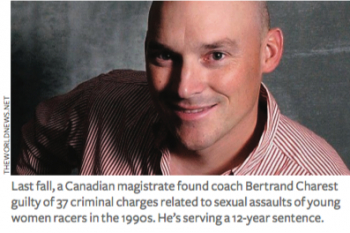
A few months before Werdenigg’s searing confession, across the Atlantic Ocean in Quebec, a magistrate found a Canadian junior women’s ski coach guilty of 37 criminal charges related to sexual assaults on young racers in the 1990s. Nine women have publicly testified against Bertrand Charest, 52. He has been sentenced to 12 years in prison. 


AUSTRIAN ACCUSERS

In November of last year, Werdernigg publicly disclosed in the newspaper Der Standard that while attending a ski academy run by a pedophile, she had been raped. She disclosed also that she had been fondled by a ski-manufacturing executive, and had witnessed abuses of other young racers. 

According to Werdenigg, a second former Austrian racer has reported to Der Standard about sexual assaults in the 1970s. “We were fair game,” said the athlete, who wants to remain anonymous. “It happened to everyone. Often alcohol was involved.”

The Bavarian newspaper Suddeutsche Zeitung headlined that “a climate of abuse and a culture of looking away” existed in Austrian ski racing. Former racers report serious sexual assault and rape in ski academies and on the World Cup circuit. Even the name of the iconic Austrian ski hero Toni Sailer, Olympic triple gold medalist and head coach of the Austrian national team in the 1970s, has been dragged into the scandal. 

Among the Austrian coaches was the legendary Charly Kahr, who coached the women’s team in the period 1966–1970. Three former racers have accused Kahr of sexual misconduct and rape. Kahr, 86, has denied the charges. His attorney says the allegations “are pulled out of thin air…it’s outrageous now, after 50 years, to drag Charly Kahr through the dirt.” The Austrian Ski Federation, Österreichischer  Skiverband (ÖSV), says it has no knowledge of the accusations. 


National Ski Associations Shamed

The disclosures have proven deeply embarrassing to national ski associations. Alpine Canada “failed” its racers, admits board chair Martha Hall Findlay. “We are profoundly sorry.”

In Austria, the powerful ÖSV was criticized for insensitivity when it declared itself unable to investigate Werdenigg’s claims unless she provides names and details. “It is not appropriate to issue ultimatums,” said Defense and Sports Minister Hans Peter Doskozil. “If someone (Werdenigg) comes out and dares to take this step at personal risk, then we should expect sensitivity in dealing with the person concerned.” 

Werdenigg says that it was not her intention to publicly pillory the perpetrators, but to reveal what happened so that young people will have the strength to provide information in case it happens to them. 


Influence of Ski Companies

Werdenigg’s case has been intensely covered in German-language European newspapers and magazines, and she’s been interviewed on television. She stated that when she was 16 two men got her drunk, and a teammate then raped her. “I did not talk to anyone about it because I was so ashamed,” she says. 

In the Der Standard interview, Werdenigg recalls being touched inappropriately by a ski-manufacturing executive. “An unappetizing old man, he asked me to sit on his knees and touched me as it should not have been. He said he needed racers like me on his team. I got up and left.” 

Ski companies strongly influenced decision-making in the sport. In the 1970s, for the first time, financial contracts were at stake. Racers and trainers were rewarded for their actions.


Vonn, Moser-Proell: Differing Reactions 

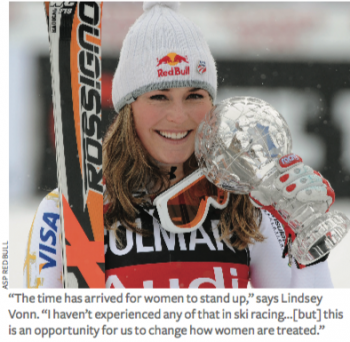
“The time has arrived for women to stand up,” said American downhill superstar Lindsey Vonn in reference to sexual crimes against young U.S. gymnasts. At a World Cup race at Cortina in February, according to Andrew Dempf on Therepulic.com, Vonn said, “Thankfully I haven’t experienced any of that in ski racing,” adding, “this is an opportunity for us to change how women are treated in the world.”

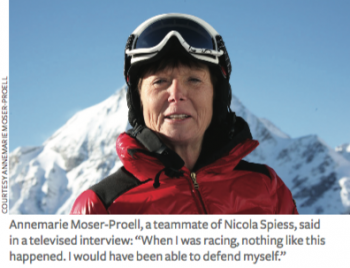
Annemarie Moser-Proell, whose number of World Cup wins is second only to Vonn’s among women racers, appeared unsympathetic. Proell was a teammate of Werdenigg. “When I was racing, nothing like this happened,” she said in a televised interview. “I would have been able to defend myself. 

“It’s not unusual for racers on the team to become couples,” continued Proell. “It happened with Rosi Mittermaier and Christian Neureuther, and Marlies Schild and Benny Reich. There was no rape. There are always two.”

Proell expressed sorrow for coaches, supervisors and service people “who have given everything and are now put in a bad light.” Unsurprisingly, she received a verbal lashing in the social media. But she was supported by Alois Bumberger, who coached Nicola Spiess in the late 1970s. Bumberger said he was surprised by the allegations made by his former racer. He is quoted as saying that he heard nothing about sexual assaults, and no racer had ever spoken up.


She Grew Up in a Skiing Family

Nicola’s parents ran the ski school at the west Tyrolean ski resort of Mayrhofen, which at one time employed 170 instructors, and had a top-notch kindergarten. Her mother, Erika “Riki” Mahringer, won two bronze medals at the 1948 Winter Olympics at St. Moritz, and two silver medals at the 1950 FIS World Championships in Aspen. Her father, Ernst Spiess, coached national team women, and was race director at the 1964 and 1976 Olympics in Innsbruck. Her brother, Uli Spiess, won two World Cup downhills.

Nicola herself was a prodigy. At the age of 16 she already was on the Austrian national team, registering four World Cup podium appearances her first season. She missed by 0.21 seconds a medal in the 1976 Olympic downhill, edged out by America’s Cindy Nelson, who won the bronze. 

Werdennig retired from ski racing in 1981 and joined the family ski school, which no longer exists. She married Erwin Werdenigg in 1984, and has a son and two daughters. She lives in Vienna. 

She suffered from an eating disorder. “There were many female racers who had severe bulimia. I was one of them. I see it in the context of the self-image that we women skiers developed under the sexist abuse of power.

“Yes,” said Werdenigg, “maybe I should have turned my back on the ski circuit earlier. But don’t forget our great emotional dependence on the sport…the sport for which one lives, for which one makes everything, for which one makes sacrifices.

“Today I am a grandmother, I have everything behind me, it’s finished, I’m not angry anymore.”


Toni Sailer Redux

The #MeToo movement recently led Der Standard to re-visit a well-known scandal that happened about the same time that Spiess-Werdennig was molested. The newspaper revealed how, in 1974, the Austrian government intervened to extricate from Poland the nation’s iconic champion, Olympic triple gold medalist Toni Sailer (d. 2009), after he was charged in a notorious rape case. 

At the time, Sailer was the head coach of the Austrian alpine team and was in Zakopane for a World Cup race. He became entangled in a drunken episode in a hotel room with two Yugoslav ski servicemen. A part-time prostitute was violently raped. The Austrian government prevailed on Poland to get Sailer out of the country before he was jailed. Sailer claimed he was set up.

The best perspective on the entire affair comes from Austrian sports historian, Rudolf Müllner. You can read it online at https://derstandard.at/2000072416580/Das-Bild-wird-jetzt-veraendert-das-...


Canadian coach jailed

Between 1991 and 1998, Bertrand Charest coached the Canadian national junior ski team, the Quebec Ski Team, Team Laurentians and the Mont-Tremblant Ski Club. He was originally arrested in 2015 for sexual assault and exploitation of young racers, and has already served five years of a 12-year sentence. Charest is appealing the sentence. He denies the allegations, but remains in prison. 

Last June, in a packed courtroom in St. Jerome in the foothills of the Laurentian Mountains north of Montreal, Quebec court Judge Sylvain Lépine described Charest as a “predator” who had total control over the girls and young women he was coaching. Nine of them, who were between 12 and 18 years old at the time of their molestation, came forward to testify.

According to the Star.com, which covered the trial in St. Jerome, one former Canadian ski racer testified that Charest took her to have an abortion when she was about 15. She’d become pregnant after having unprotected sex with him on numerous occasions. The woman, whose identity is under publication ban like the other witnesses, recalled that she was young and in love with her coach, and that Charest advised her to keep their relationship quiet because he would go to prison if it became known.

Judge Lépine said the victims were vulnerable and compromised because they were afraid to lose Charest as a coach. The judge said that Alpine Canada had failed to protect its athletes, and that the organization chose to close its eyes to what the athletes were saying about Charest. 

Canadian Ski Federation Apologizes

In a statement, Alpine Canada board chair Martha Hall Findlay said, “Today, after a long and very difficult time for the victims and families, Bertrand Charest was sentenced to 12 years in prison, for things that he did over 20 years ago. 

“At the time, Alpine Canada—instead of being there for the athletes, instead of providing support when these activities were discovered—put itself first, not the victims. In doing so, Alpine Canada failed them.” Findlay said Alpine Canada has changed its policies and procedures to prevent similar situations from occurring in the future. 

The #MeToo movement is not believed to have generated any actions against the U.S. Ski Team. The nonprofit organization SafeSport, created last year and based in Denver, offers athletes and trainers the opportunity to report a concern or a violation, and to research past disciplinary decisions.  

John Fry is the author of The Story of Modern Skiing, about the revolution in equipment, technique, resorts, Olympics, media and environment that transformed the sport after World War II.


Category
Open to Public?
Off
Feature Image Media
Image
Timestamp
Author Text
By Kathe Dillmann

NASTAR’s mid-1970s national coordinator fondly remembers the low-tech camaraderie of the racing program’s early days. 

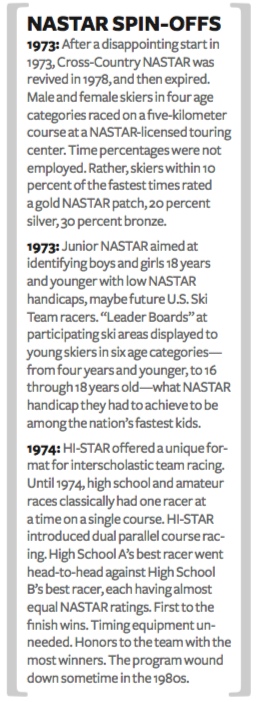
By 1973, under the direction of former U.S. Ski Team coach and director Bob Beattie, NASTAR had expanded from the original eight to 80 ski areas, attracting recreational skiers to make 80,000 runs. With such rapid growth, Beattie—who was also running the World Pro Ski Tour—needed to expand his staff.

In the mid-winter of 1973, Bob Beattie decided to hire a public relations director for NASTAR, a job that had been held by Aspenite Greg Lewis. When Beattie tapped Lewis to announce his World Pro Ski Tour races, the NASTAR job opened, and I took it. By that spring, I’d been promoted to NASTAR national coordinator. 

It was a swift change of gears for me, a totally new world of big money, credit cards, expense accounts, fancy restaurants and lodges. “Nothing like going to restaurants where no entrée is under $7!,” I remember thinking at the time. But it wasn’t hard to get used to.

Back then, NASTAR operated in a low-tech world. To process results, we used a futuristic computer something akin to “Hal” of the then-popular film 2001 Space Odyssey. Hal sat in a cool, dark facility in Boulder. At our headquarters near the Aspen airport, we sorted hand-written weekly race results that we then shipped via courier to Boulder for punch-card processing, ultimately determining national finalists and other awards. Our office ran on Selectric typewriters, land lines, snail mail and hand labor.

SETTING THE PACE

The NASTAR season got underway each year with the December pacesetting trials to determine the national zero handicapper against whom all NASTAR scores were compared.

We traveled the country to run these events. Some memorable moments: torrential rain and impenetrable fog at Crystal Mountain, Washington; Indianhead, Michigan, where the local drink was cheap brandy and soda; too much snow and broken timing equipment at Sugarbush, Vermont; perfect venues and perfect hosts at Waterville Valley (New Hampshire), Alpine Meadows (California) and Vail (Colorado); and the Eastern Slopes Inn at Mt. Cranmore, where the pacesetters flocked to the indoor gym and pool after midnight.   

Austrian triple Olympic medalist Pepi Stiegler, director of skiing at Jackson Hole, was the perennial zero handicapper during my NASTAR stint, 1973 through 1977. He wasn’t unseated in my era. I recall watching Pepi slip effortlessly through the gates on Vail’s Golden Peak, with World Pro champion Spider Sabich waiting at the bottom, holding the lead. Pepi won again. “He doesn’t even look fast,” said Spider. “How the hell does he do it?” 

Spider and other stars of the World Pro Ski Tour—Olympians Hank Kashiwa, Otto Tschudi and Moose Barrows among them—brought PR glitz and personality to NASTAR. Touring pacesetter Barrows stood inside the day lodge atop the Indianhead slopes one year, skis and goggles on, fully suited and booted up. It was 30 below zero. He ventured outside only long enough to make his runs. Another time, we arrived in the dark of night at the massive Telemark Lodge in Cable, Wisconsin, with Alpine Meadows pacesetter Jorge Dutschke in tow. When we headed outside the next morning, he said, “I can’t see the ski hill; the lodge is in the way.” Hill vertical: about 300 feet.

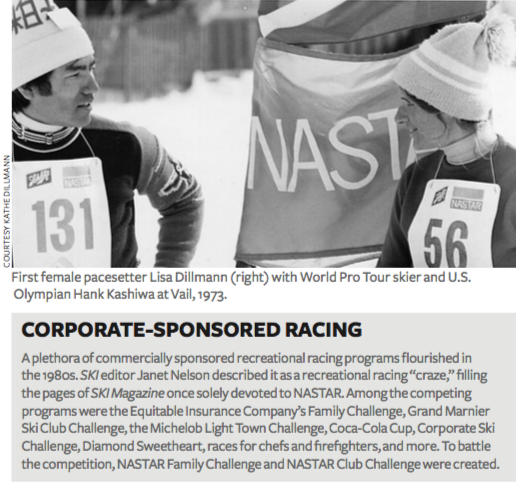
Early on my twin sister Lisa was the only female pacesetter running with the men pacesetters, at the Vail trials, before Bonne Bell initiated its women’s pacesetter program. Keystone founder Max Dercum was perennially our oldest pacesetter, in his 50s at the time. Max personified NASTAR’s raison d’etre: pacesetters and racers alike all earned their handicaps when scored against Pepi’s time, adjusted by age.

SPONSORS COME AND GO

My first big NASTAR road trip was to Vail in mid-season 1973 to jumpstart the new Johnnie Walker Red Cross-Country NASTAR, with its own pacesetting trials. With my NASTAR colleagues, we welcomed a stalwart group of cross-country pros, including the hard-charging Ned Gillette, out of the Trapp Family Lodge in Stowe, who would go on to become one of the most successful big-mountain climbers and skiers of his generation.  

That sport was still in its infancy in the U.S. and this sponsorship was a mismatch lasting but one season. Granola-crunching Nordic skiers and ski bums were not scotch drinkers. As the corporate bigwigs feted us, we quietly poured their sponsored beverages into nearby potted plants. 

Doral cigarettes came on board the alpine NASTAR early on with a special windshirt prize. There was no such thing as an anti-smoking movement back then. Their execs in Winston-Salem had rarely seen snow and none of them skied. Small wonder they soon left NASTAR for bowling and stock car sponsorships.  

Bonne Bell was the first successful promoter of colorless sunblock lotion. No more zinc-covered clown noses. Their all-female Ski Team supplied glamour along with cases of product. 

Pepsi got what it wanted from its sponsorship of Junior NASTAR: NASTAR resorts had to agree to pour Pepsi, not the other big brand. With NASTAR’s growing popularity, it was a profitable deal for their regional distributors.  

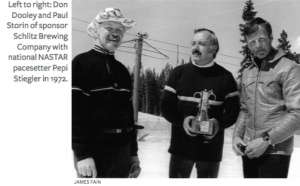
We enjoyed a great relationship with Schlitz beer. Their white-haired, mild-mannered PR pro Don Dooley was an avid skier and a real workhorse who helped us through many a mad scramble posting Finals press releases, working alongside us well past midnight every year. We snail-mailed at least one release per competitor, with photograph, to each finalist’s hometown newspaper—more than 100 pieces, all handled manually.

SNAFUS IN THE OFFICE

The shared headquarters of NASTAR and the World Wide Ski Corporation was always chaotic and never dull. The office was ably managed by the colorful Jenni Seidel, who kept things rolling through storm and calm. She was infamous for kicking the copier to “fix” it; when that failed, she dumped wine into the toner. It worked!  

Imagine what it cost NASTAR for a marketing director’s blunder in ordering thousands of promotional posters he’d commissioned—a cartoon facsimile of Superman donning ski clothing in a phone booth—“From skier to racer in a single bound.” We were issued a cease-and-desist order by Marvel Comics and the whole truckload had to be dumped.  

One season a large batch of enameled NASTAR medals incurred serious chipping. There were a lot of unhappy customers. We got the problem fixed in a hurry, sent nice letters out with new medals and put that issue behind us. But I’ll never forget the charming hand-written note from one seven-year-old Squaw Valley girl thanking us for sending her a new medal. “Your letter is funny. The metal [sic] is pretty,” scribbled little Edie Thys [Morgan]. I always like to think NASTAR was Edie’s jumping-off point to the U.S. Ski Team and the 1988 and ’92 Olympics and her subsequent career as a ski writer.

THE SCHLITZ NASTAR FINALS 

The Schlitz NASTAR Finals were a big deal. How we managed it all without computers, email and fax machines is amazing to contemplate in today’s high-tech world.

Hal the computer spit out the results by mid-March, tapping the top regional recreational racers with the lowest handicaps, male and female, in adult age classes. The biggest miracle was how we got all of them to the same airport, at around the same time, from all points of the compass. We had to telephone each of 80 winners and arrange for their travel, coordinated by the doggedly efficient Aspen Travel agency.  

The NASTAR Finals of that era were an expense-paid trip for the finalists—free air, lodging, and bus to the venue from the airport. Nothing was more gratifying than calling up a winner and announcing, “You’ve won a free trip to the NASTAR Finals.” The responses were hilarious, some thinking we were a crank call, others screaming to family members in the background, but all buckling down to help us get them to the big event. Their excitement was contagious, even though we were exhausted by then.  

They came from all over the country, from all walks of life, of all ages, body shapes and sizes. There were no racing suits, no helmets, no special racing skis. It was competing for the pure fun of it. Out of hundreds of finalists in my NASTAR days, two come to mind who may jog the memories of Skiing History readers.

Goldie Slutzky, wife of Izzy, founder of Hunter Mountain with brother Orville, made the cut in 1974. The Finals were at Sun Valley, where four different weather patterns assaulted us—rain, hail, snow, fierce winds. There was no sun in Sun Valley. But our finalists were undaunted, least of all Goldie, whose bubbly personality buoyed all of us. When she completed her first run, she collapsed in a heap past the finish line. We rushed to her aid, only to hear her giggling. When we got her on her feet, she whispered, “I’ve split my stretch pants.” Quickly remedied with a draped wind jacket, Goldie carried on.

Then there was 10th Mountain Division veteran J. Arthur Doucette from the Mt. Washington Valley of New Hampshire. He qualified for the Snowmass finals in 1976, at age 68 the oldest competitor I remember. He was on his sixth pacemaker and, at altitude, required an occasional nip from an oxygen tank. After completing his race runs, Arthur donned his full 10th Mountain rucksack and white-camouflage uniform and skied the course again to wild cheers. 


The NASTAR finalists loved to ski and loved NASTAR. Though they came to compete, winning was not foremost in most of their minds. It was the spirit of NASTAR that bonded us all. Such memories last a lifetime.

Feature Image
Category
Open to Public?
Off
Feature Image Media
Image
Timestamp

In northern Vermont, a “crazy idea” has become a world-class, award-winning cross-country and outdoor center. By Peggy Shinn

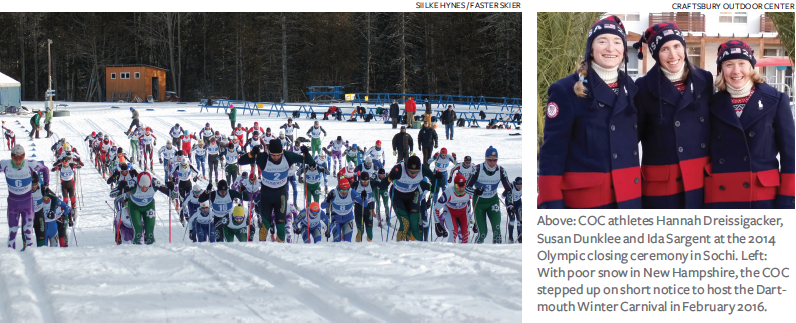
In February 2014, as the Olympic torch was lit in Sochi, Russia, the Craftsbury Outdoor Center in northern Vermont was having an opening ceremony of its own. Around a bonfire, locals raised glasses of cider and toasted Hannah Dreissigacker, Susan Dunklee and Ida Sargent, three of Craftsbury’s own who were competing in biathlon and cross-country skiing at the Winter Games. 

The three athletes, who grew up skiing at the Craftsbury Outdoor Center (COC) and went on to compete for its elite Craftsbury Green Racing Project, were the first of many Olympians that the COC hopes to celebrate. This past winter, Sargent scored several top 20s in World Cup sprint races, including a fifth in a team sprint with former Dartmouth teammate Sophie Caldwell. In biathlon, Dunklee earned her second World Cup podium, finishing second in a sprint race in Presque Isle, Maine. Teammate Dreissigacker competed in her third world championships, with her best result coming in the sprint race (she finished 18th). 

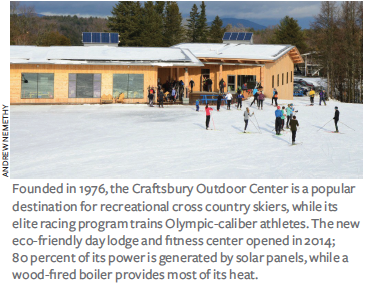
These three world-class athletes symbolize how far the COC has come from its humble beginnings. In 2015, Craftsbury Nordic was named the Cross Country Club of the Year by the U.S. Ski and Snowboard Association, honored for “stepping up to host national-level events” like the U.S. Masters National Championships and two USSA Super Tour weekends with nearly 800 starts each weekend. COC also won the 2015 John Caldwell Award, the highest honor given by the New England Nordic Ski Association. Both organizations lauded COC for its superior organizational skills, homologated race courses with snowmaking, its new eco-friendly day lodge and training facilities, and its commitment to developing the next generation of racers. It’s also a popular destination for recreational skiers, who stay for a weekend—or longer—in the dorm-style lodge, lakeside cottages and brand-new cabins.

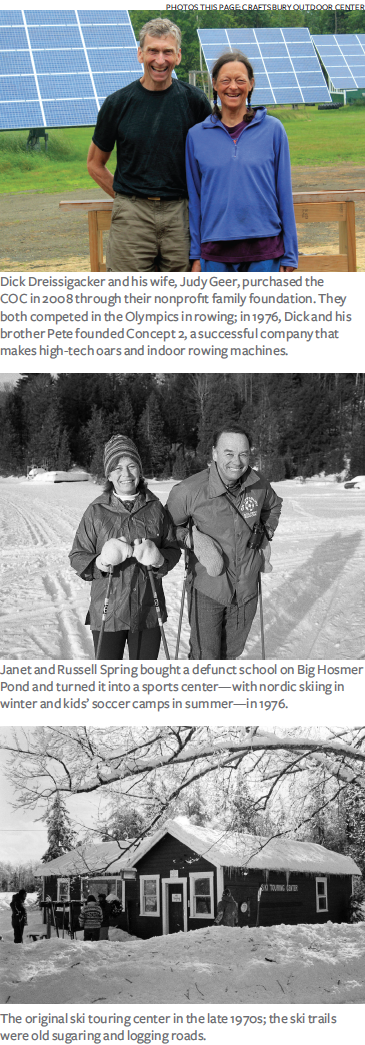
The story begins in 1973 when, as family lore goes, Russell and Janet Spring wanted to escape the “rat race” of Stowe, Vermont. After graduating from Yale, Russell—the brother of ski market-research pioneer and former ISHA chairman Jim Spring—had moved there to become an alpine ski instructor in 1950. A few years later, he met and married Janet. They started a family, and Russell became a stockbroker for F.I. DuPont in its Burlington office.

“He was driving back and forth to Burlington every day to lose lots of money,” says his son, Russ. “The market was doing poorly, and he got sick of it.”

So Russell and Janet bought half of a cattle ranch in Wyoming. But the deal fell through when their partner’s husband ran off with a hired hand. Instead, the Springs moved to Craftsbury, where Russell founded the Craftsbury campus of Windridge Tennis Camp. 

Driving back and forth to Windridge every day, Russell passed Cutler Academy, a defunct boys school on Big Hosmer Pond. He proposed an idea to his family: buy the property and start a sports center. “We all voted a resounding no,” remembers Russ with a laugh. “But in our family, it wasn’t really a democracy. [Dad] voted yes, and we obviously know what happened.”

With two partners, Arlen Smith and Dean Brown, Russell leased the property in 1975 and purchased it a year later. Thus was born the Craftsbury Sports and Learning Center, soon to be renamed the Craftsbury Outdoor Center. The center offered cross-country skiing in the winter and kids’ soccer camps in summer. Campers and skiers stayed in Cutler Academy’s former dorms and ate in the dining hall, where the Springs served famously delicious food.

“We started with one rickety snowmobile and one little piece of stuff to drag behind it,” said Russ. “I was the snowmobile driver, and Russell and Janet were the ski instructors.” 

The 25 kilometers of trails were mostly old sugaring and logging roads. But the trail layout and grooming were better than at other nordic centers at the time, and they had an experienced director, John Brodhead, to help maintain them. A former Middlebury College nordic combined skier, Brodhead started in 1980 and is retiring in December 2016. 

The operation saw very few guests in its early years. Undeterred, the Springs kept expanding the trail network. Russell also expanded the Center’s programs, including a summer sculling camp—the “crazy idea” of a long-time friend who saw Big Hosmer Pond as an ideal rowing venue. Two of their first sculling coaches were Olympic rowers Dick Dreissigacker and Judy Geer; Dick and his brother, Pete, had recently started an oar-building business in nearby Morrisville. They would soon come out with the Concept 2 indoor rowing machine that’s now ubiquitous in fitness centers across the country. 

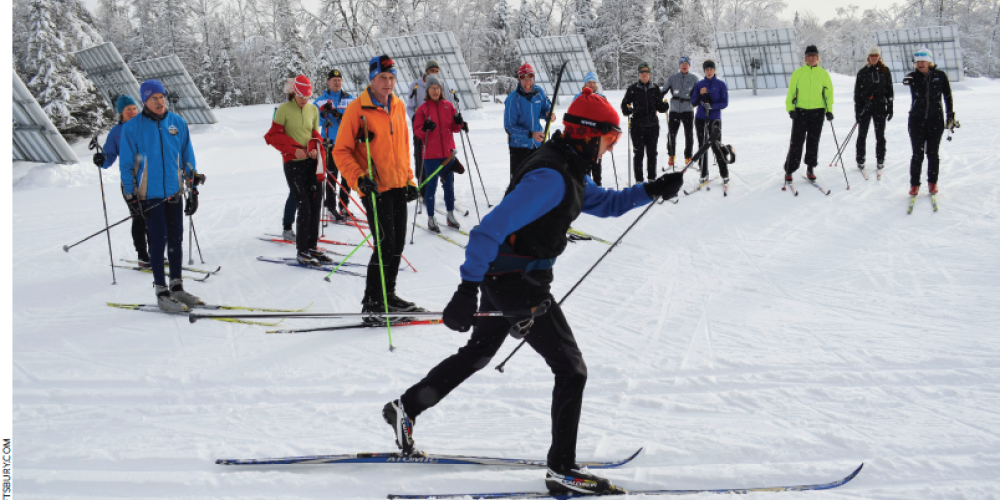
In 1981, Brodhead started an event that’s now an annual institution at the COC: the 50-kilometer Craftsbury Marathon. The race now attracts around 500 skiers each year, including some of the nation’s top cross-country skiers, past and present. He also started nordic programs for both kids and adults that brought the community to the COC, including the Dreissigackers with their three kids, the Dunklees, and the Sargents. 

In 1994, Russell let his son Russ have a hand in running the COC. “He was still actively involved, but he stopped making all the decisions unilaterally, which was the only real difference,” says Russ. “I was allowed to make decisions as long as he agreed with them.” 

In 2007, Dreissigacker and Geer proposed buying the COC through a family foundation. Russ and his sisters thought it was a good idea. But Russell was opposed to it. “He was bound and determined to keep it in the family,” said Russ.

After a few years of conversation, Russell conceded when he realized that Dreissigacker and Geer believed in his original vision and wanted to improve it, not change it. They were all for simple, comfortable lodging and a focus on outdoor, human-powered sports. They also wanted to start a resident program for elite athletes and add more community fitness programming.

Dreissigacker’s and Geer’s nonprofit foundation purchased the COC in 2008. A year later, the Craftsbury Green Racing Project was born. Funded by the COC, Dick and Judy’s foundation, and corporate sponsors, the CGRP typically attracts NCAA Division I graduates who aspire to compete at the World Cup level in cross-country skiing and biathlon (as well as rowing). In addition to Hannah Dreissigacker, Dunklee, and Ida Sargent, CGRP’s Caitlin Patterson and Kaitlynn Miller have competed in World Cups. 

Conceived by Middlebury graduate Tim Reynolds, the CGRP allows athletes to train full-time while earning their keep by working at the COC. They teach fitness programs, coach kids in the popular Craftsbury Nordic Ski Club, and maintain the garden, among other chores. They also helped to design the new energy-efficient, spacious fitness center and ski lodge that opened in June 2014.

In 2012, the CGRP added a year-round rowing team, and CGRP rower Peter Graves (no relation to the well-known ski announcer) finished 13th in the quad scull at the London Olympics. Four CGRP rowers won 2016 Olympic Trials, but in the end, failed to qualify the men’s quad for the Rio Games.

While Olympians ski the trails and ply the water of Big Hosmer Pond, the Craftsbury Outdoor Center remains a community resource—and a community itself.

“Its success is primarily built on the vision and generosity of Dick and Judy, who are way too humble to tell you that,” says Lindy Sargent, Ida’s mom. “We call it our ski family, and it includes all the racers and parents of racers around New England and now the U.S. Ski Team. But it started with the club, and everyone who skis at Craftsbury is part of the family.”  

Category
Open to Public?
On
Feature Image Media
Image
Timestamp
Author Text
Adam Leonard

On the occasion of Harry Leonard's 90th birthday, his son Adam offers a charming retrospective video, full of great old photos and clips. 

Feature Image
Category
Open to Public?
On
Full Access Article for Public

Many racers believe they need downsized, super-stiff, ultra-narrow boots. The most accomplished alpine ski boot designer of the plastic era, Sven Coomer, believes that’s changing. 

By Jackson Hogen
Photos by Sven Coomer

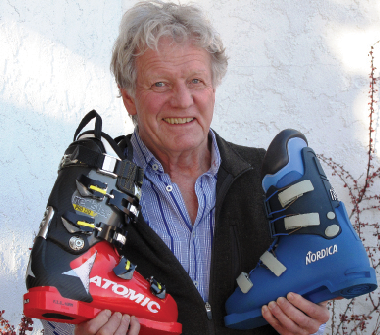
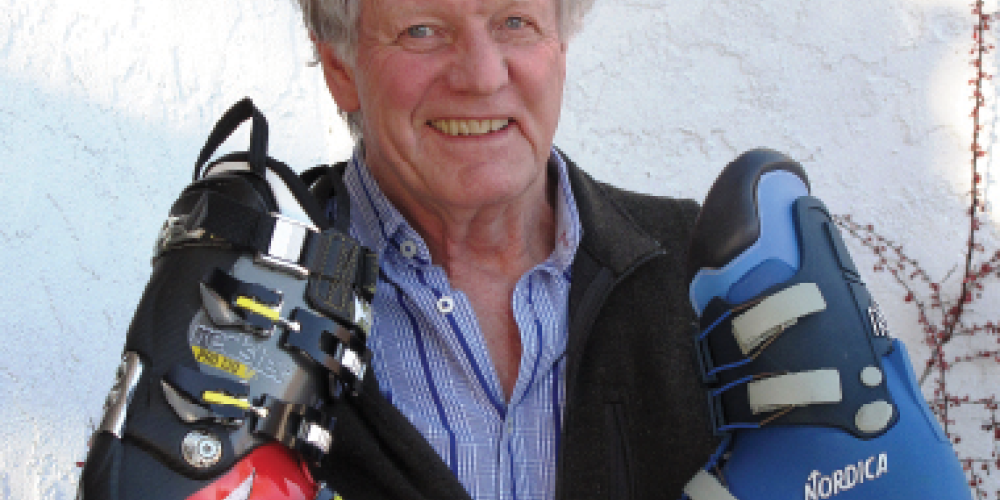
While there have been several seminal figures in the creation of the modern plastic ski boot, including Bob Lange, Hans Heierling, Mel Dalebout and brothers Chris and Denny Hanson, a case could be made that none has left as large a footprint as the puckish Australian, Sven Coomer. Over the course of a career that began when he competed in the modern pentathlon at the 1956 Summer Olympics in Melbourne at the age of 16, the autodidact Coomer studied the foot and its function in a variety of athletic environments. From his first contract with Puma in 1965 to his recent work with Atomic, Coomer has left a trail of innovations, many of which enjoy a considerable market presence today. From his home base in Aspen, Colorado, where he has lived since 1997, the last ten years with wife Mary Dominick, Coomer continues to contribute to various boot development projects. 
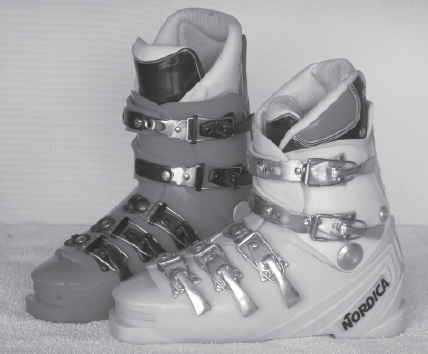

Above: The Astral Slalom and Racer (1971) became best-sellers, launching the craft of ski-shop custom fitting.


One of Coomer’s designs, the Nordica Comp-3, was the inspiration for the external tongue originally licensed to Raichle and sold by the Swiss brand as the Flexon series. This three-piece shell design still exists intact in the Full Tilt collection, and its imprint is all over the mainstays in Dalbello’s current line. Coomer’s work in the field of molded athletic orthotics, first marketed under the Superfeet brand, virtually created the custom insole category that he still competes in with his unique Down Unders line. 

The groundbreaking models Coomer helped develop for Nordica in the late 1960s began with the one-piece Olympic, followed by the two-piece Astral Racer and Slalom, also known as the benchmark “banana” boots. The Olympic was the first ski boot with a removable liner, a breakthrough that enabled inner boot customization. Then came the iconic Grand Prix and GT, a suite of successes that put the erstwhile middle-of-the-pack leather boot brand on the path to market dominance in the dawning era of plastics. Modern ski boots don’t just echo these designs; they’re based on them. When Coomer claims, “These boots established the fundamental technology and functional design criteria that remains standard in every ski boot today,” he’s not exaggerating. 

Coomer’s influence isn’t limited to the impact of his legacy. A recent collaboration with Atomic resulted in the patented Hawx series of non-race boots that has become the world’s biggest seller, followed up by a reconceived race boot, the Redster. 


AN OLYMPIC PENTATHLETE LEARNS TO SKI IN SWEDEN

Born in Sydney in 1940 to a Swedish mother and Australian father, Coomer soon became deeply involved in multiple athletic pursuits, including swimming and his particular passion, modern pentathlon. His precocious talents earned him a spot in the 1956 Melbourne Olympics, for which he felt well prepared. Disaster struck when Coomer was knocked unconscious and hospitalized after a tree separated him from his mount during the cross-country event. Coomer wasn’t about to miss the next four days of competition, so despite bruises that covered half his body, he slipped out of the hospital before dawn and limped back to team headquarters. He ended up 32nd out of 40 entries, a remarkable achievement considering his condition. 

The International Pentathlon Union Secretary General Willi Grut, the 1948 Olympic gold medalist in modern pentathlon, tried to convince Coomer to compete for Sweden, the world leaders in the sport. After finishing high school, Coomer worked his way to Sweden on a merchant ship so he could continue his specialized training while studying mechanical engineering at Stockholm’s Tekniska Institut with an eye towards a career in product design. Impressive competition results had Coomer on track to compete for his native country for the 1960 Rome Games when Australian authorities informed him that he would have to return home to train. Since competing for Sweden was no longer a viable option and as there wasn’t time to find work on a merchant ship for the six- to eight-week trip back to Australia, Coomer was out of luck. “So I gave up on that idea, for the time being,” says Coomer with just a trace of resignation. 

To help take his protégé’s mind off his disappointment, Grut suggested Coomer come up to his cabin in Åre over spring break and learn to alpine ski. “I was instantly smitten with skiing, the new challenge and the possibility of competing in winter pentathlon (giant slalom, cross country, shooting, fencing and riding). When I returned to Stockholm I was determined to finish school, catch a merchant ship back to Sydney, get a job in a ski area and train to be a serious skier.” 

While he never competed in winter pentathlon, Coomer did become proficient enough to train at the national ski team level, which he did with both French and Swiss team members. He counted among his friends Jean-Claude Killy, François Bonlieu, Emile Allais and Leo Lacroix. He frequently cut first tracks with Junior Bounous in Utah and coached the McKinney kids when he ran the ski school at Mt. Rose, Nevada. 

Back in Stockholm, Coomer submitted his ideas on improved track and field shoe design to an influential sports shop that put him in touch with Puma. At the conclusion of a 1965 ski expedition across the Alps from Innsbruck to Grenoble, Coomer was invited to Puma’s factory for a five-day meeting about applying emerging technologies of performance footwear to artificial track surfaces. Coomer’s interest in product development had borne its first fruits.

Each of the next four winters were spent running ski schools, beginning with the PSIA experimental ski school in Solitude, Utah. This position was followed by three years at Mt. Rose and contiguous Slide Mountain near Lake Tahoe. The seasons culminated each spring in a six-week ski test with SKIING magazine editor Doug Pfeiffer at Mammoth Mountain. “It was the first magazine ski testing program,” Coomer recalls. “We’d spend April and May testing and go retreat to New York to write about the skis and ski technique.” 


LEAP FROM LEATHER TO PLASTIC
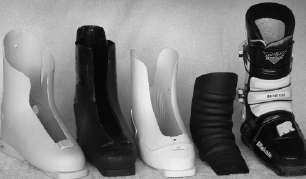

In turn, the Nordica Comp-3 led to the Raichle Flexon, a favorite of downhillers, mogul and extreme skiers. This photo shows how the boot’s parts evolved.


In 1968, Norm MacCleod from Beconta, distributor of both Puma and Nordica, came to observe the ski tests. MacCleod was sufficiently impressed with Coomer’s ideas about boot and ski design that he invited Coomer down to San Francisco for an interview, which led to Coomer’s signing on with Nordica the following year. Initially MacCleod would carry or mail Coomer’s detailed designs to Italy until Nordica, eager to move ahead quickly, proposed he move there and oversee developments directly in the factory, instead of by correspondence.

When Coomer began with Nordica, the transition from leather to plastic boots was stalled in its infancy. Many racers preferred the close fit of leather, as the first plastic boots were often shapeless inside. Nordica’s initial effort at a plastic shell Coomer describes as “miserably unwearable, really awful.” The first task was to make the best possible leather boot based on all the custom models he designed from each U.S. Ski Team member’s input and then consolidating all the versions into one model, the Sapporo. The Sapporo—worn by Paquito Ochoa when he won slalom gold at the Games for which the boot was named—would serve as the foundation for the first plastic boot that would be anatomically accurate and would take full advantage of all the new materials had to offer, delivering both comfort and performance without compromising either. 

While assembling a wish list for the ideal plastic boot, Coomer delineated, “173 criteria and details that had to be attended to for every model in every size, so it would function correctly,” he recalls. “The key was how to stabilize the foot and lower leg, fore and aft, for a balanced stance and flex. Until that time boots were very low, just over the ankle high, and scary as hell going fast. As we built up the boots, front and back, we called the extensions ‘spoilers’ because they were so effective at helping retain balance, stability and leverage that they spoiled you.”

In 1973, during his tenure at Nordica, Coomer attended an Athlete’s Overuse Syndrome seminar in San Francisco. There he met Dr. Chris Smith, a lecturer in biomechanics at the California College of Podiatry, and Dennis Brown, owner of Northwest Podiatric Labs. Together they would forge Superfeet, presenting their proprietary ideas to leading ski dealers in 1976. Their custom-molded insoles, vacuum-cast in plaster, found a fast following; however, the 3/4-length orthotics were made of hard plastic or fiberglass and took weeks to get back from the lab. Coomer continued tinkering, looking for a better solution that could be molded in situ using a similar process as the vacuum plaster casting. At a trade show in 1979, Coomer found the plaster substitute he’d been searching for the: Birkenstock cork in sheet form. The on-the-spot cork Skithotic was born. 

Meanwhile, by the late 1970s Coomer’s R&D position at Nordica had become untenable after Mariano Sartor was brought in from Caber to run the rapidly expanding design department. Sartor was a skilled draftsman but not a skier, and he succumbed to the pressures of a marketing department who declared four-buckle boots passé and one- and two-buckle boots the future. “It began the Dark Ages of boot design,” Coomer laments, “and it lasted until the mid-1990s.” Nordica ditched the functional design principles that had guided Coomer’s work. His final project, in 1976, the three-piece Comp-3, was the first plastic boot to feature a supportive, lace-up inner boot. 

Coomer quit Nordica to further advance the three-piece shell concept, molding samples with the intent of interesting a boot manufacturer in licensing the innovative boot design. The partner he recruited to sell the concept eventually shut Coomer out of the deal “when he realized he had all he needed and it ended up licensed to Raichle. So 1978 became the year to move on.”


FOCUSING ON R&D AT FOOTLOOSE
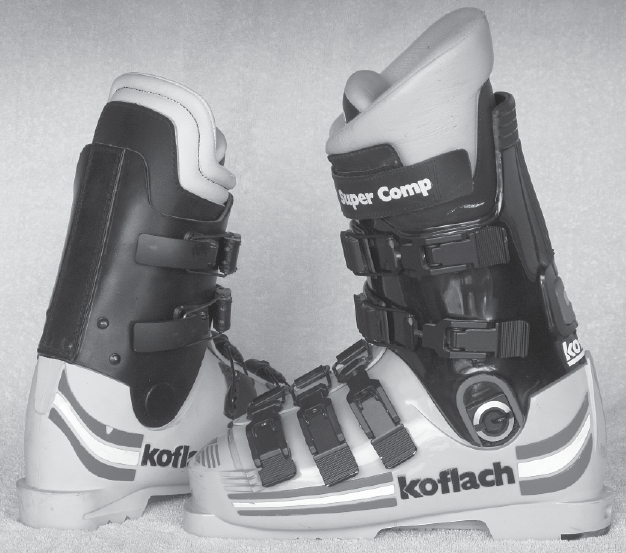
The Koflach Super Comp (1983) introduced the power strap. The DH version, left, used a leather cuff because downhill racers of the period found it gave smoother ankle articulation in absorbing bumps at high speed.

He relocated his family (first wife Kathleen, daughter Robin, now 38, and son Seth, 36) from San Francisco to Mammoth to concentrate on perfecting Superfeet orthotics and shell modification technology. His tiny on-slope testing and R&D facility was “an instant success” leading to the creation of Footloose Sports, a specialty ski shop that continues to be rated among the best in the country. Coomer’s partner, Tony Colasardo, still a hands-on co-owner, concentrated on the retail operation, allowing Coomer to continue to work in the R&D arena. Coomer sold his interest in Footloose to Corty Lawrence, Andrea Mead’s son, in 1995.


Following a successful product overhaul at Koflach, Coomer found an outlet for his Mammoth research into custom-fit concepts in his next consulting relationship, with San Marco and Munari, brands made at the Brixia factory in Montebelluna, Italy. 

It was while working with Munari on a new rear-entry model and subsequently on an overlap boot design that used all 173 of Coomer’s design criteria, that he began perfecting and producing his patented silicone-injection liners with Brixia’s encouragement. When the Silicone Personalization System (SPS) was introduced to Swiss dealers by their local Head distributor, the rebound in San Marco sales was so sensational that Head bought the brand new Brixia boot factory and marketed SPS internationally under the Head brand. 

Coomer continued to produce his silicone liners under his own ZIPFIT brand (for Zero Injection Pressure Fitting), while pursuing a new objective: eliminating all mixing and injecting of volatile chemicals. The latest result of his pursuit of perfection is “a pre-packed dynamic-response fit system that fits by actively molding a granular cork and proprietary clay-like composite according to the skier’s personal dynamic anatomy. The formula cannot catalyze, harden, pack-out or droop, and can be effectively refitted perfectly every day, rather than the familiar progressive deterioration, and it’s durable enough to last a thousand days, or longer than your shells.” 

To assist the daily fitting process, Coomer created the Hot Gear Bag, a clever accessory that heats boots and other ski paraphernalia. The bag warms both shells and liners to an optimum temperature so the skier can slip easily into any boot. It’s been an essential accessory among the World Cup racers for a decade. 

While there isn’t an overlap or three-piece shell made today that doesn’t owe some debt to Coomer’s trailblazing designs, the current Atomic collection has his fingerprints all over it. The Hawx series evolved from concepts developed in partnership with Hans-Martin Heierling and drafted by the Claudio Franco design studio in Montebelluna. The Redster race boot concentrates on stabilizing the rear foot with an ultra-solid spoiler so the skier’s forefoot is allowed to flex and move naturally within the confines of the shell. This liberation of the previously stunted, frozen and crushed forefoot is what allows for the subtle edging and foot steering that initiates the slalom turns of World Cup champions Marcel Hirscher and Mikaela Shiffrin. Coomer suspects that if racers would only fit their boots more accurately, coupled with a dynamic molding inner boot medium between the foot and shell, and without down-sizing into short, narrow, thick-sidewall shells, their results just might improve. 

But then, Coomer, the Cassandra of the ski boot world for the last forty-five years, knows all too well that just because you can prove you’re right, doesn’t mean your advice will be heeded.  


Jackson Hogen is the editor of realskiers.com and co-author of Snowbird Secrets: A Guide to Big Mountain Skiing. His career includes stints as a ski designer, binding and boot product manager, freestyle competitor, ski instructor, marketing director, ski tester for 25 years and boot tester for 20. As a freelancer writer over the past four decades, he has regularly contributed articles to magazines including SKI, Daily Mail Ski, Snow Country and Skiing History.

Are today’s boots really any better? In a November 2014 editorial on RealSkiers.com, author Jackson Hogen observes that alpine ski boots haven’t evolved much in the past 25 years. To read the article, click here.
Feature Image Media
Image
Timestamp

Many racers believe they need downsized, super-stiff, ultra-narrow boots. The most accomplished alpine ski boot designer of the plastic era, Sven Coomer, believes that’s changing. 

By Jackson Hogen
Photos by Sven Coomer

While there have been several seminal figures in the creation of the modern plastic ski boot, including Bob Lange, Hans Heierling, Mel Dalebout and brothers Chris and Denny Hanson, a case could be made that none has left as large a footprint as the puckish Australian, Sven Coomer. Over the course of a career that began when he competed in the modern pentathlon at the 1956 Summer Olympics in Melbourne at the age of 16, the autodidact Coomer studied the foot and its function in a variety of athletic environments. From his first contract with Puma in 1965 to his recent work with Atomic, Coomer has left a trail of innovations, many of which enjoy a considerable market presence today. From his home base in Aspen, Colorado, where he has lived since 1997, the last ten years with wife Mary Dominick, Coomer continues to contribute to various boot development projects. 


Above: The Astral Slalom and Racer (1971) became best-sellers, launching the craft of ski-shop custom fitting.


One of Coomer’s designs, the Nordica Comp-3, was the inspiration for the external tongue originally licensed to Raichle and sold by the Swiss brand as the Flexon series. This three-piece shell design still exists intact in the Full Tilt collection, and its imprint is all over the mainstays in Dalbello’s current line. Coomer’s work in the field of molded athletic orthotics, first marketed under the Superfeet brand, virtually created the custom insole category that he still competes in with his unique Down Unders line. 

The groundbreaking models Coomer helped develop for Nordica in the late 1960s began with the one-piece Olympic, followed by the two-piece Astral Racer and Slalom, also known as the benchmark “banana” boots. The Olympic was the first ski boot with a removable liner, a breakthrough that enabled inner boot customization. Then came the iconic Grand Prix and GT, a suite of successes that put the erstwhile middle-of-the-pack leather boot brand on the path to market dominance in the dawning era of plastics. Modern ski boots don’t just echo these designs; they’re based on them. When Coomer claims, “These boots established the fundamental technology and functional design criteria that remains standard in every ski boot today,” he’s not exaggerating. 

Coomer’s influence isn’t limited to the impact of his legacy. A recent collaboration with Atomic resulted in the patented Hawx series of non-race boots that has become the world’s biggest seller, followed up by a reconceived race boot, the Redster. 


AN OLYMPIC PENTATHLETE LEARNS TO SKI IN SWEDEN

Born in Sydney in 1940 to a Swedish mother and Australian father, Coomer soon became deeply involved in multiple athletic pursuits, including swimming and his particular passion, modern pentathlon. His precocious talents earned him a spot in the 1956 Melbourne Olympics, for which he felt well prepared. Disaster struck when Coomer was knocked unconscious and hospitalized after a tree separated him from his mount during the cross-country event. Coomer wasn’t about to miss the next four days of competition, so despite bruises that covered half his body, he slipped out of the hospital before dawn and limped back to team headquarters. He ended up 32nd out of 40 entries, a remarkable achievement considering his condition. 

The International Pentathlon Union Secretary General Willi Grut, the 1948 Olympic gold medalist in modern pentathlon, tried to convince Coomer to compete for Sweden, the world leaders in the sport. After finishing high school, Coomer worked his way to Sweden on a merchant ship so he could continue his specialized training while studying mechanical engineering at Stockholm’s Tekniska Institut with an eye towards a career in product design. Impressive competition results had Coomer on track to compete for his native country for the 1960 Rome Games when Australian authorities informed him that he would have to return home to train. Since competing for Sweden was no longer a viable option and as there wasn’t time to find work on a merchant ship for the six- to eight-week trip back to Australia, Coomer was out of luck. “So I gave up on that idea, for the time being,” says Coomer with just a trace of resignation. 

To help take his protégé’s mind off his disappointment, Grut suggested Coomer come up to his cabin in Åre over spring break and learn to alpine ski. “I was instantly smitten with skiing, the new challenge and the possibility of competing in winter pentathlon (giant slalom, cross country, shooting, fencing and riding). When I returned to Stockholm I was determined to finish school, catch a merchant ship back to Sydney, get a job in a ski area and train to be a serious skier.” 

While he never competed in winter pentathlon, Coomer did become proficient enough to train at the national ski team level, which he did with both French and Swiss team members. He counted among his friends Jean-Claude Killy, François Bonlieu, Emile Allais and Leo Lacroix. He frequently cut first tracks with Junior Bounous in Utah and coached the McKinney kids when he ran the ski school at Mt. Rose, Nevada. 

Back in Stockholm, Coomer submitted his ideas on improved track and field shoe design to an influential sports shop that put him in touch with Puma. At the conclusion of a 1965 ski expedition across the Alps from Innsbruck to Grenoble, Coomer was invited to Puma’s factory for a five-day meeting about applying emerging technologies of performance footwear to artificial track surfaces. Coomer’s interest in product development had borne its first fruits.

Each of the next four winters were spent running ski schools, beginning with the PSIA experimental ski school in Solitude, Utah. This position was followed by three years at Mt. Rose and contiguous Slide Mountain near Lake Tahoe. The seasons culminated each spring in a six-week ski test with SKIING magazine editor Doug Pfeiffer at Mammoth Mountain. “It was the first magazine ski testing program,” Coomer recalls. “We’d spend April and May testing and go retreat to New York to write about the skis and ski technique.” 


LEAP FROM LEATHER TO PLASTIC


In turn, the Nordica Comp-3 led to the Raichle Flexon, a favorite of downhillers, mogul and extreme skiers. This photo shows how the boot’s parts evolved.


In 1968, Norm MacCleod from Beconta, distributor of both Puma and Nordica, came to observe the ski tests. MacCleod was sufficiently impressed with Coomer’s ideas about boot and ski design that he invited Coomer down to San Francisco for an interview, which led to Coomer’s signing on with Nordica the following year. Initially MacCleod would carry or mail Coomer’s detailed designs to Italy until Nordica, eager to move ahead quickly, proposed he move there and oversee developments directly in the factory, instead of by correspondence.

When Coomer began with Nordica, the transition from leather to plastic boots was stalled in its infancy. Many racers preferred the close fit of leather, as the first plastic boots were often shapeless inside. Nordica’s initial effort at a plastic shell Coomer describes as “miserably unwearable, really awful.” The first task was to make the best possible leather boot based on all the custom models he designed from each U.S. Ski Team member’s input and then consolidating all the versions into one model, the Sapporo. The Sapporo—worn by Paquito Ochoa when he won slalom gold at the Games for which the boot was named—would serve as the foundation for the first plastic boot that would be anatomically accurate and would take full advantage of all the new materials had to offer, delivering both comfort and performance without compromising either. 

While assembling a wish list for the ideal plastic boot, Coomer delineated, “173 criteria and details that had to be attended to for every model in every size, so it would function correctly,” he recalls. “The key was how to stabilize the foot and lower leg, fore and aft, for a balanced stance and flex. Until that time boots were very low, just over the ankle high, and scary as hell going fast. As we built up the boots, front and back, we called the extensions ‘spoilers’ because they were so effective at helping retain balance, stability and leverage that they spoiled you.”

In 1973, during his tenure at Nordica, Coomer attended an Athlete’s Overuse Syndrome seminar in San Francisco. There he met Dr. Chris Smith, a lecturer in biomechanics at the California College of Podiatry, and Dennis Brown, owner of Northwest Podiatric Labs. Together they would forge Superfeet, presenting their proprietary ideas to leading ski dealers in 1976. Their custom-molded insoles, vacuum-cast in plaster, found a fast following; however, the 3/4-length orthotics were made of hard plastic or fiberglass and took weeks to get back from the lab. Coomer continued tinkering, looking for a better solution that could be molded in situ using a similar process as the vacuum plaster casting. At a trade show in 1979, Coomer found the plaster substitute he’d been searching for the: Birkenstock cork in sheet form. The on-the-spot cork Skithotic was born. 

Meanwhile, by the late 1970s Coomer’s R&D position at Nordica had become untenable after Mariano Sartor was brought in from Caber to run the rapidly expanding design department. Sartor was a skilled draftsman but not a skier, and he succumbed to the pressures of a marketing department who declared four-buckle boots passé and one- and two-buckle boots the future. “It began the Dark Ages of boot design,” Coomer laments, “and it lasted until the mid-1990s.” Nordica ditched the functional design principles that had guided Coomer’s work. His final project, in 1976, the three-piece Comp-3, was the first plastic boot to feature a supportive, lace-up inner boot. 

Coomer quit Nordica to further advance the three-piece shell concept, molding samples with the intent of interesting a boot manufacturer in licensing the innovative boot design. The partner he recruited to sell the concept eventually shut Coomer out of the deal “when he realized he had all he needed and it ended up licensed to Raichle. So 1978 became the year to move on.”


FOCUSING ON R&D AT FOOTLOOSE

The Koflach Super Comp (1983) introduced the power strap. The DH version, left, used a leather cuff because downhill racers of the period found it gave smoother ankle articulation in absorbing bumps at high speed.

He relocated his family (first wife Kathleen, daughter Robin, now 38, and son Seth, 36) from San Francisco to Mammoth to concentrate on perfecting Superfeet orthotics and shell modification technology. His tiny on-slope testing and R&D facility was “an instant success” leading to the creation of Footloose Sports, a specialty ski shop that continues to be rated among the best in the country. Coomer’s partner, Tony Colasardo, still a hands-on co-owner, concentrated on the retail operation, allowing Coomer to continue to work in the R&D arena. Coomer sold his interest in Footloose to Corty Lawrence, Andrea Mead’s son, in 1995.


Following a successful product overhaul at Koflach, Coomer found an outlet for his Mammoth research into custom-fit concepts in his next consulting relationship, with San Marco and Munari, brands made at the Brixia factory in Montebelluna, Italy. 

It was while working with Munari on a new rear-entry model and subsequently on an overlap boot design that used all 173 of Coomer’s design criteria, that he began perfecting and producing his patented silicone-injection liners with Brixia’s encouragement. When the Silicone Personalization System (SPS) was introduced to Swiss dealers by their local Head distributor, the rebound in San Marco sales was so sensational that Head bought the brand new Brixia boot factory and marketed SPS internationally under the Head brand. 

Coomer continued to produce his silicone liners under his own ZIPFIT brand (for Zero Injection Pressure Fitting), while pursuing a new objective: eliminating all mixing and injecting of volatile chemicals. The latest result of his pursuit of perfection is “a pre-packed dynamic-response fit system that fits by actively molding a granular cork and proprietary clay-like composite according to the skier’s personal dynamic anatomy. The formula cannot catalyze, harden, pack-out or droop, and can be effectively refitted perfectly every day, rather than the familiar progressive deterioration, and it’s durable enough to last a thousand days, or longer than your shells.” 

To assist the daily fitting process, Coomer created the Hot Gear Bag, a clever accessory that heats boots and other ski paraphernalia. The bag warms both shells and liners to an optimum temperature so the skier can slip easily into any boot. It’s been an essential accessory among the World Cup racers for a decade. 

While there isn’t an overlap or three-piece shell made today that doesn’t owe some debt to Coomer’s trailblazing designs, the current Atomic collection has his fingerprints all over it. The Hawx series evolved from concepts developed in partnership with Hans-Martin Heierling and drafted by the Claudio Franco design studio in Montebelluna. The Redster race boot concentrates on stabilizing the rear foot with an ultra-solid spoiler so the skier’s forefoot is allowed to flex and move naturally within the confines of the shell. This liberation of the previously stunted, frozen and crushed forefoot is what allows for the subtle edging and foot steering that initiates the slalom turns of World Cup champions Marcel Hirscher and Mikaela Shiffrin. Coomer suspects that if racers would only fit their boots more accurately, coupled with a dynamic molding inner boot medium between the foot and shell, and without down-sizing into short, narrow, thick-sidewall shells, their results just might improve. 

But then, Coomer, the Cassandra of the ski boot world for the last forty-five years, knows all too well that just because you can prove you’re right, doesn’t mean your advice will be heeded.  


Jackson Hogen is the editor of realskiers.com and co-author of Snowbird Secrets: A Guide to Big Mountain Skiing. His career includes stints as a ski designer, binding and boot product manager, freestyle competitor, ski instructor, marketing director, ski tester for 25 years and boot tester for 20. As a freelancer writer over the past four decades, he has regularly contributed articles to magazines including SKI, Daily Mail Ski, Snow Country and Skiing History.

Are today’s boots really any better? In a November 2014 editorial on RealSkiers.com, author Jackson Hogen observes that alpine ski boots haven’t evolved much in the past 25 years. To read the article, click here.
Open to Public?
Off
Feature Image Media
Image
Timestamp
An outraged IOC czar, an impenitent ski racer. Their loathing was mutual.

BY JOHN FRY

Prize money in a single World Cup race is now in six figures. Competitors openly negotiate contracts to promote skis and boots and snowboards, and earn mega-buck bonuses for winning Olympic medals. Commercialized racing on this scale didn’t exist under the FIS (Federation Internationale de Ski) 45 years ago, and prize money was forbidden. Nonetheless, at the 1972 Winter Games in Sapporo, Japan, members of the International Olympic Committee (IOC) regarded ski racing as so tainted by money that it perhaps no longer belonged in the Winter Games.

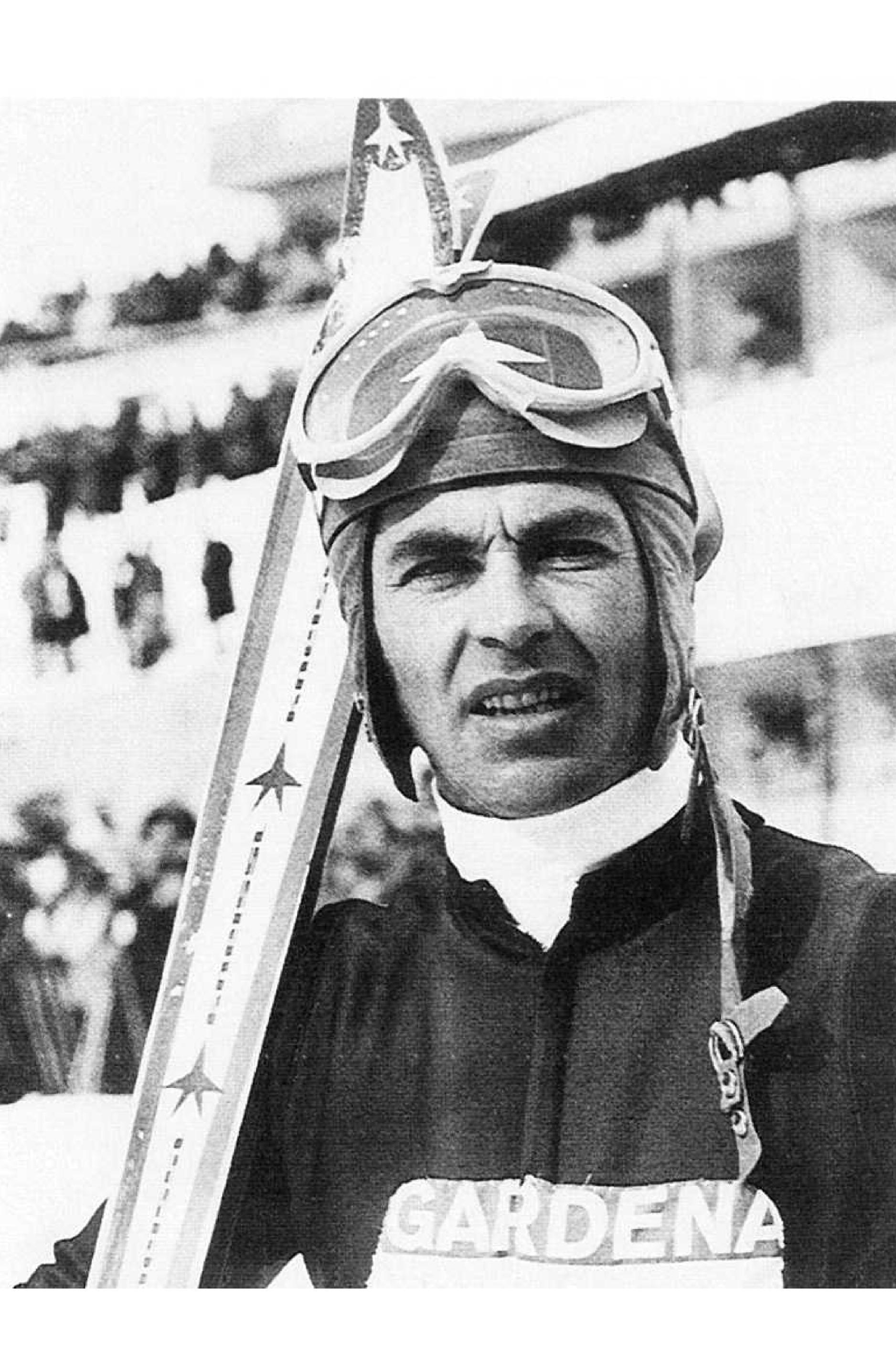
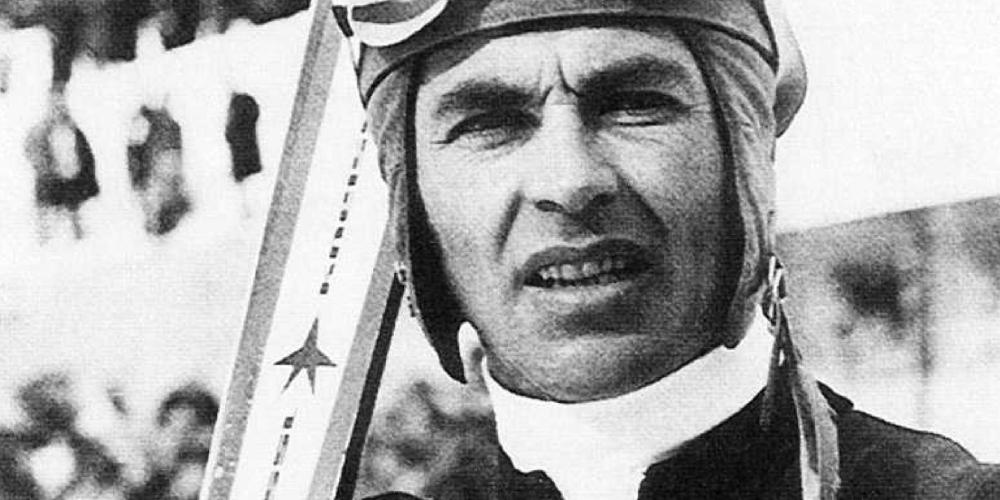
At the storm’s center were IOC president Avery Brundage, a wealthy, autocratic American businessman, and Austrian racer Karl Schranz, two-time overall champion of alpine World Cup skiing and a favorite to win the Sapporo downhill. Their loathing was mutual. An outraged Brundage saw Schranz as someone who had to be ejected because he stood for the professionalism that would ruin the Olympic movement. An impenitent Schranz mocked the wealthy Brundage, branding him a hypocrite for denying athletes the opportunity to make money from their sport. Today, surveying the often obscene array of corporate logos smothering clothing and banners at Olympic sports venues, the dispute seems laughable. But it attracted world-wide attention at the time.

For some, the story began in 1968 with another controversy. . . perhaps the greatest surrounding the finish of any ski race ever held. Karl Schranz was again the central character. On the final day of the Winter Olympics above Grenoble, France’s national hero Jean-Claude Killy was poised to win the last of the three alpine skiing gold medals. The conditions for the slalom, however, were atrocious. Fog shrouded the course. Gatekeepers often could not see if a racer had made it around a pole. Racing in the second run,  Schranz claimed a figure crossed the course and interfered with his descent, although no official saw anyone. Climbing back to the top, he received permission to re-start his run, and beat Killy by a full half-second. Within hours, though, the jury disqualified him. The next day, I attended a press conference organized by the Kneissl ski factory for Schranz so he could protest his gold medal loss. It was an act that specially irritated IOC chief Brundage, who had earlier attacked the commercial relations between ski manufacturers and racers.

In the four years between the French and Japanese Winter Olympics, the FIS did little to appease Brundage. Among all the sports federations concerned with finding ways to allow athletes to earn money, the FIS proved itself the most inventive and liberal. It began to permit national ski federations, for example, to organize the present-day manufacturer pools through which sponsors funnel money to racers. In return, it allowed the racers to wear commercial logos.

To Brundage, all this was a clear violation of Olympic standards. At 84, after running the IOC for 20 years, he was determined to end the commercial abuses of skiing. . .if necessary, even by throwing as many as 40 of the leading racers out of the Olympics. Not surprisingly, the skiers kept a low public profile.

Except for Schranz. He attacked Brundage and his wealthy, senescent Olympic Committee members directly.  “How can they understand the situation of top ski racers,” he asked the press, “when these officials have never been poor?” That was enough for Brundage, who easily persuaded the IOC to to expel him from the Olympics.

Back in the Tyrolean Alps, prodded by incendiary newspaper headlines, infuriated Austrians called for their racers to leave Sapporo and come home in sympathy. But they didn’t. The tough, embittered Schranz was not popular with his teammates, despite his ranking as the number one alpine skier of the post-Killy era.

When the racers didn’t return, threats were made to burn down the home of the Ski Federation’s chief. Another official’s children were beaten up at school. Austrians perceived Schranz as a hero from a small country, bullied by bigger nations. Stores were flooded with Schranz T-shirts. When he flew back to a parade in Vienna, a horde of 200,000 people welcomed him home, chanting “Karl is richtig, Brundage is nichtig.” A beaming Schranz raised his arms in vindication.

The ski events at Sapporo took place on schedule. Petite Barbara Ann Cochran won America’s only gold, in the slalom. Brundage died in 1975. Efforts by International Management to market Schranz in America failed . . something of an irony. Today he operates a small hotel in St. Anton. To anyone timorous enough to ask, he will affirm that he was robbed of his gold medal in 1968 and that Brundage was wrong.

The truth? I’m certain he never won the Grenoble slalom.

On the other hand, Schranz-- a leftist with a keen sense of class strife -- won the battle to allow succeeding generations of skiers the right to make money. He also helped open the door for legions of sports marketers, lawyers, athlete agents, product sponsors and manufacturers, to say nothing of conflicted IOC officials, to make millions. Is this progress? No. Despite the influx of big money, ski racing was as exciting without it as with it. 

Karl Schranz
Category
Open to Public?
Off
Feature Image Media
Image
Timestamp
Author Text
Seth Masia

In 1977, a fake sheik fooled the crowds — and the press — at Winter Park.

In the winter of 1977, a pro-am charity race atWinter Park,Colorado, made international headlines for its unexpected celebrity competitor. It wasn’t Ingemar Stenmark, who dominated the World Cup season. It was Sheik Abdul Haddad, who swept through the slalom gates atWinter Park, robes and burnoose flapping, and captured his fifteen minutes of fame.

Clint Eastwood, Olympian Bruce Jenner, and Sheik Abdul Haddad

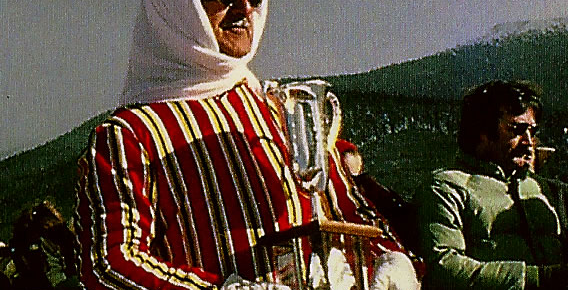
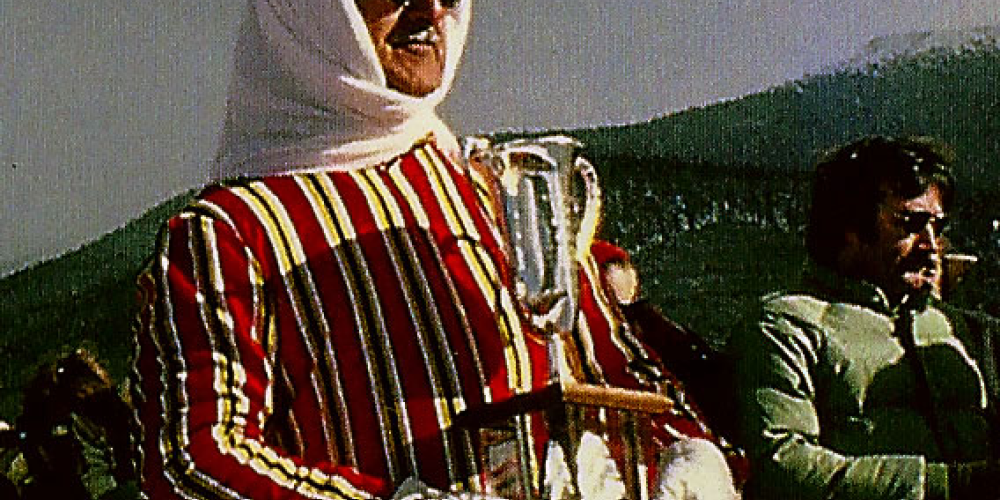
Sheik Abdul showed up unannounced to compete in the Pro-Am charity race held during the First of Denver Pro Race weekend. The fundraiser supported Hal O’Leary’s innovative Winter Park Handicapped Program. The sheik was placed on the team captained by pro racer Jake Hoeschler (who was also director of skiing atWinter Park), with Heisman Trophy-winning football player Doak Walker and Andy Love, son of former Colorado Governor John Arthur Love. As the sheik flapped and fluttered across the finish line, the press corps clustered around him. The sheik was a sensation: in the aftermath of the OPEC crisis, the very idea of an oil sheik carried the aura of vast wealth and veiled threat. The press wanted pictures, and quotes. All the VIPs wanted to meet him. The sheik’s bodyguard and translator intervened, explaining that Haddad spoke no English.

It turned out he spoke no Arabic, either. When photos and stories about the skiing sheik went out over the AP and UPI wires people inDuluth,Minn., chuckled. Color photos of Sheik Abdul made the papers inParis, Moscow and Tokyo. But the Duluth papers quickly identified him as George S. Haddad, 56, owner of the Haddad Family Shoe Store and of Lebanese descent. The shoe store was located a few doors up from the Continental Ski Shop, where George was a frequent customer. He was also a well-known figure at Lutsen and other local ski areas, where he often skied in his “Arab” robes, no doubt avoiding entanglement in rope tows. The robes had been sewn by his wife, Dorothy Marie Haddad. Haddad even owned a U.S. patent on a bit of ski equipment he had designed: a retractable crampon to help a skier climb.

When the Duluth papers had their say, the story unwound. Hoeschler had arranged for Gerald Ford, Ethel Kennedy and Clint Eastwood to ski in the Pro-Am, but when Winter Park shifted the dates, Ford and Kennedy cancelled in favor of previous obligations.

Jake Hoeschler, George Haddad and "translator" George Abdullah

A few days of panic ensued, and then Hoeschler, passing through Continental Ski Shop, spotted a poster of Haddad skiing inAspen, robes and all. If he couldn’t get an ex-president onto Eastwood’s team, Hoeschler figured he could get a sheik.

And so, with the complicity of Winter Park President Gerry Groswold, Sheik Haddad arrived at Winter Park in a limousine. He came with a bodyguard in the person of Jim Bach of the Continental Ski Shop, and with translator George Abdullah, who taught at Drake University in Iowa. Haddad later claimed he was scared to run the course: With oil prices so high, he was afraid “some fanatic” might take a shot at him.

When the Duluth papers broke the story of the hoax, officials at AP and UPI were furious. UPI, in particular, had been burned in 1976 when Vail sent them a photo of a blizzard that had been taken two years earlier. They felt that the reputation of the press was at stake. But no one from any of the papers or wire services had bothered to fact-check any of the “oil sheik” stories.

The fallout for Hal O’Leary’s program was spectacular. People around the world saw the story and felt inspired to send checks to the handicapped ski team. “We raised 20 times as much over the course of the year as we had ever done before,” O’Leary told Hoeschler.

Haddad went back to his shoe store, and to Lutsen, where he was now a local hero. Hoeschler ran out his contract with Winter Park and returned to his law practice in Minneapolis.

A year passed. Ingemar Stenmark won the World Cup Championship for his third and last time. Groswold invited Haddad, and Hoeschler, back to Winter Park for the Pro-Am. And Dorothy Marie sewed up a new set of robes, edged in gold.

Today, of course, skiing sheiks are a dime a dozen. They all own homes in Aspen. But there’s not a burnoose to be seen: they wear Bogner.

This story appears in the May-June 2013 issue of Skiing History magazine. To read more of Skiing History, subscribe today.


Feature Image
Category