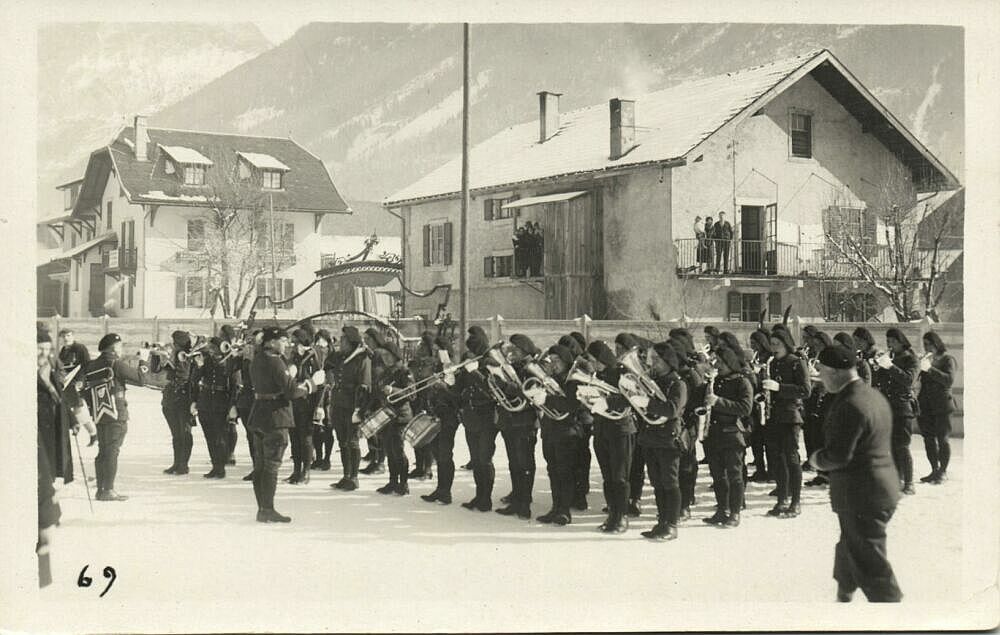
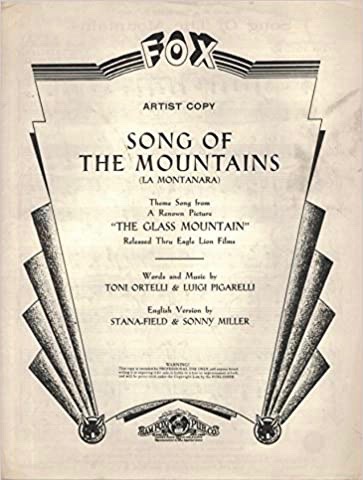
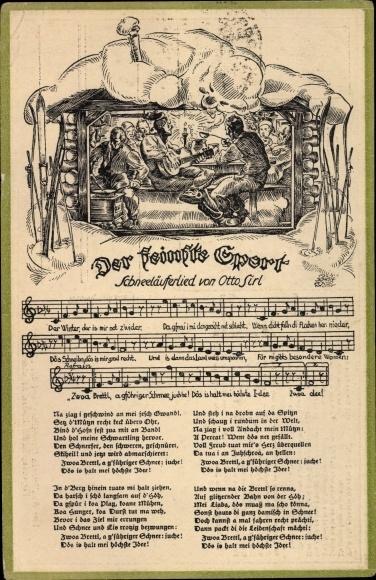
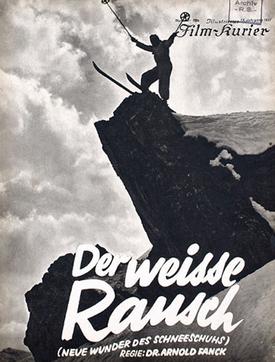
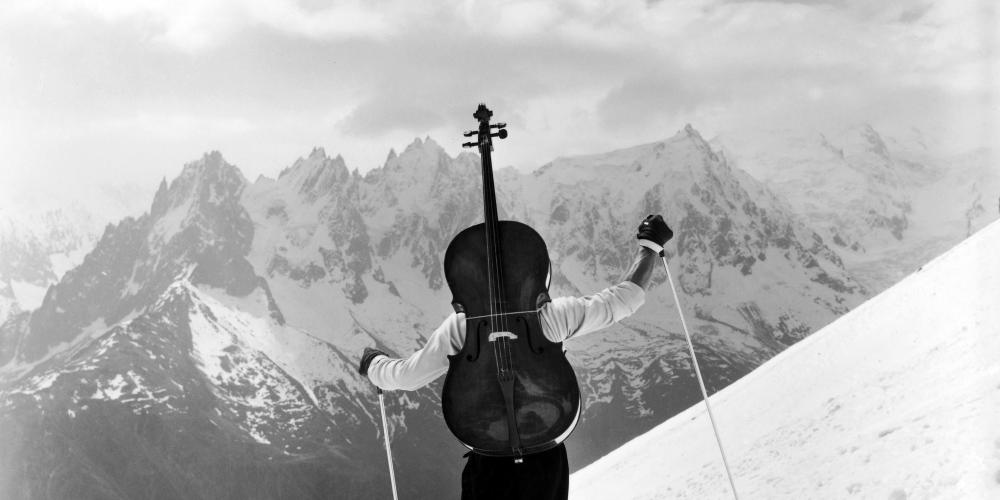
By the mid-1930s, like the singing von Trapp family, Hannes Schneider could feel the Tirolian snows shifting beneath him. So could many of the instructors at his world-famous ski school in St. Anton, Austria. One by one, Austrian ski heroes Otto Lang, Friedl Pfeifer, Benno Rybyzka, Sepp Froelich, Sigi Engl, Toni Matt and a host of others departed for the United States in search of greater economic opportunity, and to avoid being caught in the Nazi vise-grip slowly tightening around the fiercely anti-fascist Schneider. They emigrated with his blessings to establish Arlberg Method ski schools throughout America, and he remained in Europe with their prayers that he avoid the reprisals being directed against those with the courage to speak out against Nazism.
Safety for Schneider, however, was no longer possible. Purportedly at the urging of his vindictive, former co-star Leni Riefenstahl (with whom he had feuded over politics and lifestyle), the world-famous ski-meister was placed under house arrest by Nazi leaders after the Austrian annexation. Only with the aid of American financier and ski resort entrepreneur Harvey Dow Gibson was Schneider released in 1939, and along with his family, permitted to emigrate to the Mount Washington Valley of New Hampshire and Gibson’s Eastern Slope Inn. With Schneider’s arrival came not only the highest level of Alpine ski instruction in the world, but also the pre-fascist cultural and singing traditions that had defined ski music in Europe since the 19th century. Suddenly, all things Austrian (including Schneider himself) were now de rigueur in US skiing circles, both on and off the slopes.
Gibson even honored Schneider with a small measure of musical revenge against his former captors. When an important German diplomat came for a visit to the Eastern Slope Inn in the spring of 1939, the proprietor secretly told his hotel’s bandleader that he was to play at dinner that evening only music written by “non-Aryan” composers. After a full night showcasing the works of George Gershwin, Irving Berlin, Yip Harburg, and the expelled German composer and lyricist Kurt Weil (most famous for “Mack the Knife”), the Nazi statesman and his entourage stomped out of the dining room after realizing the insult. According to Hannes’ son Herbert, the Schneider family was genuinely elated over Gibson’s gesture.
***
Prior to the arrival of Schneider’s ski school in exile, the catalog of American and Canadian ski tunes was limited nearly exclusively to humorous and sometimes risqué parodies of popular songs, lyrically transfigured by the members of local college ski teams and winter outing clubs to promote bonding among their members. Here and there were smatterings of German language mountain lyrics and melodies carried home by those few who had skied in Europe, but even those compositions were frequently, tipsily translated into American-ese for local consumption.
The famed Carcajou Ski Club --co-founded in 1935 by veterans of the national champion Dartmouth College Ski Teams and local skiers of Hanover, New Hampshire-- was the prime example. (Current members of the team were forbidden to attend meetings.) The members no doubt did ski together, but the real point of the club, according to the lyrics of its favorite ski songs, was gathering on cold, New England evenings to sing parodies until the glüwein ran out. Even Dartmouth’s most sacred, fraternal hymn, the “Hanover Winter Song,”[1] falls hard into the “drinks by the fire” category of both Ivy League and hardscrabble, Northeastern fellowship.
Bill Briggs on banjo
Bill Briggs, the esteemed Dartmouth ski mountaineer, singer and musician (famous for his climb and first ski descent from the summit of the Grand Teton in Jackson Hole), preserved several of those Carcajou ditties in his popular 1950s ski songbook “Crud and Corruption.” That included the Yankee favorite “No Falls at All,” an ode to skiing New Hampshire’s treacherous Tuckerman Ravine headwall. The “F” in the song’s title, Briggs confided to the audience at one of his cherished International Skiing History Association performances, was always pronounced with the traditional Hanover inflection as a “B.”
Briggs likewise included the club’s eponymous theme song in his set, noting its early, tongue-in-cheek endorsement of a healthy lifestyle in the great outdoors:
Here’s to the Ski Club Carcajou, the social skiing bums,
We can wiggle round those turns, take anything that comes.
With a timber, track and long ski heil, we’ll jump right to the gun,
We drink…And then we have another.
Hurrah Hurrah We’re schussing down the trails.
Hurrah Hurrah We’re landing on our tails.
Here’s to the Ski Club Carcajou, we’re rough and tough as nails,
We drink…and then we have another.
The historic Red Birds Ski Club, quartered in the Laurentian Mountains of Quebec close to McGill University, had its own, Canadian lager-soaked versions of similar ski tunes (often bilingually performed in French). The club’s official “Red Birds Ski Club Song,” for example, is ample proof of its members’ noble intentions to uphold tradition both on and off the hill:
We all owe a debt to a Norseman of old,
Who came from a land that was snowy and cold,
He fashioned a couple of planks to his feet,
A scheme that I think you’ll admit was quite neat
The lads of the village were at quite a loss,
For during the winter the feminine Norse,
Were at the disposal of Herman the skier,
And that is the reason the Red Birds are he-ere.
Chorus
o on with our skis and get out in the snow,
We don’t give a damn if it’s forty below,
For what can life offer that starts to compare,
With the joys of the snow and the bite of the air?
If you think we other accomplishments lack,
You should just spend a night at our St. Sauver shack
You can count on an evening of song and good cheer,
When we start to confine our attentions to beer….
So here’s to [your] health with a rousing “ski heil!”
Let us drink “bottoms up” in the best Red Bird style.
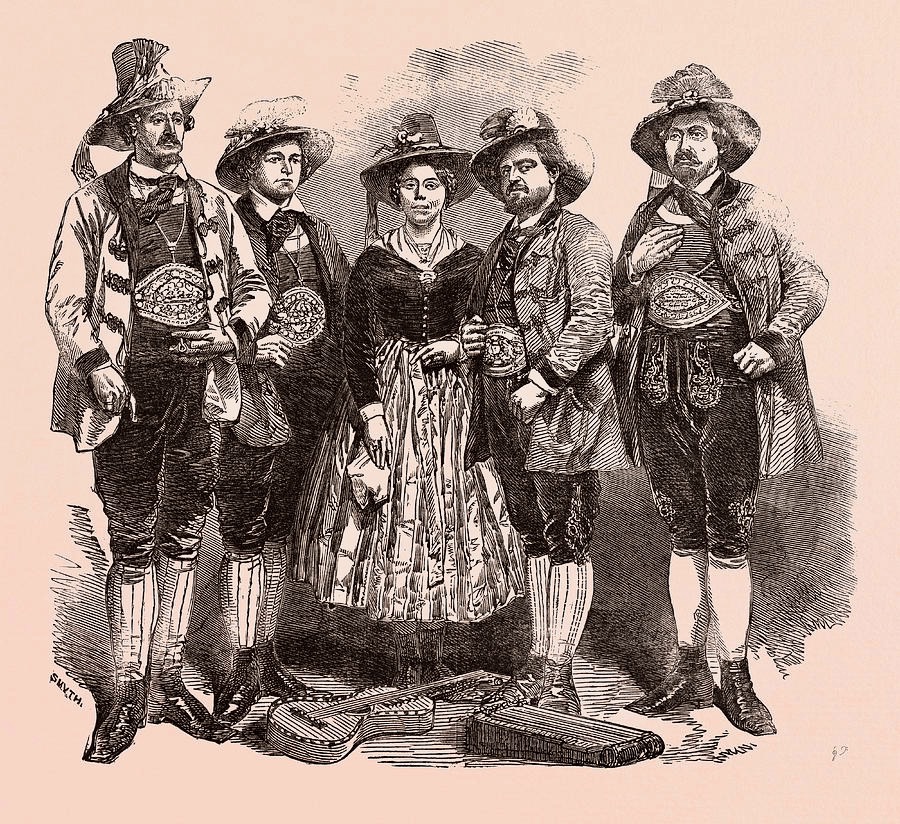
Into this boozy musical mix had come Schneider’s Austrian ski instructors, seeking to assist Gibson in turning the Mount Washington Valley into the eastern version of America’s first destination ski resort, Sun Valley. Gibson, himself a semi-professional musician as well as a gifted promoter, seized upon musical performance as yet another way to import Alpine European ambiance to New Hampshire as the counterpoint to its frat-based, musical ski culture. He soon had the instructors yodeling and singing to guests on a regular basis at near-by Mount Cranmore, and drinking with them deep into the evenings.
Charlie Zumstein's Eastern Slope
Orchestra recorded a series of 78rpm
"Ski Time Jingles" in 1940.
When that wasn’t enough, Gibson snatched Switzerland’s award-winning mountain music star Charlie Zumstein and his yodel group from the 1939 New York World’s Fair to serve as the Eastern Slope Inn’s house band. Zumstein actually made several recordings for the Decca record label in the early 1940s featuring corny yet historically interesting, original ski songs, collected in the LP “Ski Time Jingles.”[2] He was also captured on film performing a set with his band and Gibson himself in the 1940 Eastern Slope Inn promotional movie short “Ski Larks.”
Not to be outdone by their European counterparts, local New Englanders seized upon every chance to lampoon the occasional haughtiness on the slopes and around the fire of their new Austrian and Swiss friends. One of the cleverest of these musical jabs was the faux “Arlberg Ski School Song,” whose lyrics sought to skewer the sharply dressed, equally hard-drinking progenitors of the Hannes Schneider ski method:
Oh, we’re from the Arlberg Ski School,
An honorable clan are we,
We’ll iron out your faults for a dollar,
For a dollar we’ll teach you to ski
Pressed pants for fifty cents extra,
We throw in the ski school pin free….
And when you hear the cry “slalom,”
Rally round if you’re able,
And if you find the beer’s all gone,
You’ll find us under the table.
***
Sun Valley's swing star Eddie Duchin
The musical culture developing out west in Sun Valley, Idaho took off in an entirely different direction. With the US in the midst of a 1930s big band craze that thoroughly dominated the national radio airwaves, railroad magnate and resort owner W. Averell Harriman opted to utilize America’s own, native genre of jazz as his mountain’s musical signature. Big band leader Eddy Duchin, an immensely popular swing pianist, was hired to headline at the Sun Valley Lodge in what became known as the “Duchin Room” (named for his wife Marjorie, who designed many of the resort’s fashion accents). He and his band invariably received rave reviews from the torrent of glamourous guests flooding in from Hollywood. Even hard-to-please local celebrity Ernest Hemingway swore by the unique ambiance that the band brought to Dollar Mountain, although he privately admitted that his love for the Duchin Room was rooted primarily in his conviction that “drinking makes other people so much more interesting.”
It was, in fact, a Hollywood motion picture focused entirely on music, skiing, and the resort itself that indelibly stamped Sun Valley on the global ski map. The film Sun Valley Serenade (1941)[3] featured one of the world’s most popular bands led by trombonist Glenn Miller, and was tremendously successful not only in branding the Lodge as one of the world’s premier celebrity and ski destinations, but also in further linking both the resort and the sport of skiingto the free spirit of swing.
The Glenn Miller Orchestra's "Sun
Valley Serenade," released in 1941
Aside from the spectacular mountain backdrops that accompanied the on-screen performance of the song “It Happened in Sun Valley”[4] --and the popularity of the instrumental sensation
Glenn Miller Orchestra, circa 1941
“Sun Valley Jump”[5] subsequently chosen as the Glenn Miller Army Air Force Band theme-- the film also introduced the hit “Chattanooga Choo-Choo.”[6] That 78 rpm recording stayed at the top of the US music charts for fourteen consecutive weeks, and became the first record since the beginning of the Great Depression to sell over a million copies. It also helped Sun Valley continue to boom, even as ominous signs of American involvement in yet another global conflict loomed on the horizon.
Like Harvey Gibson, Harriman not only grasped the enormous value of musical branding, he also recognized the wisdom of cultural diversification. He was therefore quick to join Gibson in incorporating subtle, European musical touches into his American-centric resort beyond its swing-time beginnings. Yodeling accordionists were no strangers to the sun decks and ice rinks of Sun Valley, any more than were the indigenous, local Native American dancers and chanters he hired to entertain. The guests wanted mountain ambiance and music in abundance, and Harriman gave it to them in every form in which it was available.
Actual Austrians were never in short supply at the Sun Valley Resort, either. To the contrary, there were as many Hannes Schneider proteges teaching at Sun Valley as in New England, led primarily by champion ski racer Friedl Pfeifer and ski-stylist turned film-maker Otto Lang.
Lang was already famous for having produced the block-buster ski instruction documentary Snow Flight[7] (edited into the movie short Ski Flight during its extended run at New York City’s Radio City Music Hall in 1938). The film, a cinematic homage to the work of Arnold Fanck, was shot in the spectacular Cascade Range of the Pacific Northwest. Its symphonic soundtrack featured as its main theme the equally majestic “Die Moldau”[8] by Bohemian composer Bedrich Smetana, continuing the central European tradition of linking classical music to images of big mountain skiing.
That same musical trend carried over to other films linked in various ways to Sun Valley during its inaugural era, including the bravely anti-Nazi classic The Mortal Storm (shot there in 1940 and starring future war hero Jimmy Stewart). It featured both a Tirolian folk and classical music score to heighten the tension of its traumatic final ski chase scene,[9] and an unsettling sing-along in a crowded mountain bar featuring the Nazi anthem Der Fahne Hoch.[10] These films were all regularly screened at the resort, adding to the glitz provided by the regular visits of stars and celebrities ranging from Gary Cooper and Clark Gable to Claudette Colbert and Sonja Hennie. All that came to an abrupt end, however, with the arrival of the Second World War.
***
It was already autumn of 1941 when former Dartmouth Ski Team Captain and Glee Club member Charles McLane showed up at Fort Lewis near Mount Rainier straight from Sun Valley. He was looking for the US 87th Mountain Regiment, the group that had only recently been designated as America’s first, specialized mountain warfare unit and for which he had volunteered. He was met by the legendary retort from the grizzled gate sentry after scouring the roster: “Son, according to my list, you ARE the 87th Mountain Regiment.”
With attacks by the Nazi and Japanese militaries already underway throughout Europe and East Asia, however, it wasn’t long before McLane’s one-man unit was joined by hundreds of other US ski troop volunteers now billeted at Mount Rainier National Park’s Paradise Inn. That group, often jokingly referred to as the greatest ski club ever assembled in the largest fraternity house ever built, included many of the world’s best Alpine and Nordic skiers. It also, incidentally, featured some of its finest (or at least most enthusiastic) creators and singers of ski songs that had ever gathered in one place.
87th Regiment Glee Club, soon to be}
the 10th Mountain Division Chorus,
featuring the Latrine Quartet. Ralph
Broneghin is guitarist, Charlie McLane
third from right.
Among the illustrious new arrivals from colleges and ski clubs around the nation were three individuals who would soon carve their names alongside McLane’s into the ski music history books: Charlie Bradley of the skiing Bradley family from Madison, Wisconsin; Sun Valley ski racer Glen Stanley; and another Sun Valley instructor and Otto Lang protégé from the University of Washington, Ralph Bromaghin. Led by Bromaghin’s skilled guitar and vocal arrangements, the four together formed the legendary Latrine Quartet and began singing on local radio stations, creating parodies that would eventually evolve into some of the most humorous and popular American ski songs of the era.
To dissuade the Army from considering the use of snowshoes as a dreaded alternative to skiing, Bromaghin (himself of Norwegian descent) adapted the stock characters “Oola and Sven” as foils to star in his songs, representative of the large number of newly arrived volunteers of Scandinavian heritage. The parody “Sven”[11] (sung to the tune of "A Bold Bad Man") included a race between Oola on skis and Sven on the other, hated contraptions:
Two seconds later Oola finished in a mighty schuss,
Passing on the way poor Sven a-lying on his puss.
The moral of this story is that snowshoes have no use,
And poor old Sven no longer gives his war whoop.
Chorus
Oh, give me skis and some poles and klister
And let me ski way up on Alta Vista
You can take your snowshoes and burn them, sister
And everywhere I go you'll hear my war whoop.
This gag poster used an illustration
by Howard Scott, originally created
for a USO fundraiser.
The song played an important part in convincing the Army to stick with skiing as mountain military transport for the sake of the unit’s morale and safety.
“Oola, Ski Yumper From Norvay”[12] (the protagonist of which many believed was a composite caricature of the unit’s beloved world ski jumping champion Torger Tokle), was a related Bromaghin parody with music by Sverre Elmso. In it, Oola this time proclaimed his love for the US ski troops (soon to be re-named the US 10th Mountain Division) despite its unfathomable preference for Alpine over Nordic skiing. The chorus was a mountaineer favorite:
I’m Oola, they all call me Oola,
Don’t know where dey get hold of my name,
I never told any ‘dem fellas,
But dey call me Oola, yust the same
Yet another classic Bromaghin and McLane lyric, “A Happy Lad” (sung to the “Yodeling Song”[13] from Snow White and the Seven Dwarfs), summed up the views of Army life held by ski troopers with perhaps a bit too much honesty for some military higher-ups, especially following the Pearl Harbor attack on December 7, 1941 by the Japanese that commenced formal US involvement in the Second World War:
A happy lad and just eighteen, I got into the Army
By official poop to the Mountain Troops, so the enemy couldn't harm me.
Ho hum, I'm not so dumb, the Mountain Troops for me.
Men are made in defilade, but I would rather ski. (Yodel)….
Every morning, half past eight, we take our calisthenics.
The ladies sigh as we pass by, we are so photogenic.
Ho hum, I'm not so dumb, the Mountain Troops for me.
Other guys may fight this war, but I would rather ski. (Yodel)
By far the most enduring tune written for the 10th Mountain Division is its ubiquitous anthem, “90 Pounds of Rucksack”[14] (sung to the tune of “Bell Bottom Trousers”). Oddly, however, it is the one 10th Mountain Division song whose provenance is most difficult to trace. McLane was certain that he and Bromaghin had a strong hand in creating the parody lyrics. Other sources, including “The Skier’s Songbook” (a revered collection compiled by David Kemp and published in 1950), credit the song as “Never Trust A Skier An Inch Above the Knee” to 10th Mountaineers Billy Neidner, Dick Johnson and Don Hawkins. Regardless of its various sources and titles, no history of American ski music is complete without devout reference to it, if for no other reason than its unique, life-long popularity among those who came home from war, founded the North American ski industry, and invented a good deal of the post-war skiing culture that it sparked:
Ninety Pounds of Rucksack
I was a barmaid in a mountain inn
There I learned the wages, of miseries of sin.
Along came a skier fresh from off the slopes,
He's the one that ruined me and shattered all my hopes.
CHORUS
Singin' ninety pounds of rucksack, a pound of grub or two,
He'll schuss the mountains like his daddy used to do.
He asked me for a candle to light his way to bed,
He asked me for a 'kerchief to cover up his head.
I like a foolish maid thinking it no harm,
Jumped into the skier’s bed to keep the skier warm.
CHORUS
Early in the morning before the break of day,
He handed me a five note and with it he did say;
Take this my darling for the damage I have done.
You may have a daughter, or you may have a son.
Now if you have a daughter, bounce her on your knee.
And if you have a son, send the bastard out to ski.
CHORUS
The moral of the story, as you can plainly see,
Is never trust a skier an inch above your knee.
For I trusted one and now look at me,
I've got a bastard in the Mountain Infantry.
According to Bromaghin’s best friend in the ski troops, Captain Ralph Lafferty, it was these musical parodies that helped turn the 10th Mountain into one of the most well-trained and tight-knit outfits in US Army history. “Those songs helped get us through three years of extremely tough, high-altitude winter training at Rainier and Camp Hale in Colorado,” he recalled, “and then kept our spirits up through months of tough mountain combat in which we lost a lot of good buddies. That’s why we’ve sung them, and will keep singing them, for the rest of our lives.”
It’s worth noting that the 90 Pounds of Rucksack tradition continues within the 10th Mountain Division, even as the number of living, original members dwindles to a precious few. A new, albeit bowdlerized version of the song was recorded by the 10th Mountain Division Light Band[15] to honor their forbearers in 2021, the year after two new versions faithful to the original were recorded by Mark Anderson and WWII veteran Dick Over for an Icelantic Ski Company promotional film[16] honoring the Division’s history.
Sadly, the war took the life of Major Glenn Miller of the US Army Air Corps, whose plane was shot down off the English coast just before Christmas in 1944. It also took the lives of Sergeant Torger Tokle, and of Captain Ralph Bromaghin, both of whom were killed in action as the 10th Mountain Division helped liberate the Apennine Mountains up to Lake Garda at the foot of the Italian Alps at the end of the War. Nearly a thousand other young, American ski troopers suffered that same, heart-breaking fate in the brutal process of vanquishing genocidal fascism.
In some small way, the continuing knowledge and performance of these songs among skiers has served to keep the sacrifices and contributions of their original creators and singers alive these many years. Of no less importance, the fact that these songs survive today is indisputable proof they fulfilled their original intent: making us smile just a little bit at the sharp-witted humor that marked American ski music before, during, and after those exhilarating, terrible and tragic days of sport and war.
***
When the surviving members of the US ski troops returned home in 1945 to establish the modern American ski industry, they arrived with both their aspirations and their sing-along repertoires to find a nation whose entertainment industry had already re-embraced the romance of the ski lodge lifestyle. It now figured prominently not only in films (such as the light-hearted Barbara Stanwick feature My Reputation[17]), but also in the lyrics of one of the most popular songs of the era.
Holiday Inn was released in 1942.
In 1944, Alaskan native Karl Suessdorf and his writing partner John Blackburn had utilized nostalgic, Currier and Ives imagery to help capture the winter spirit of New England in their sophisticated masterpiece, “Moonlight in Vermont.” The poetic second verse, which remains perhaps the most prominent reference to skiing (however brief) in any pop music composition in the great American songbook, was memorably released first by Margaret Whiting and then as a duet by Frank Sinatra and Ella Fitzgerald:[18]
Frozen winter streams,
Withered leaves of sycamore,
Moonlight in Vermont,
Icy finger waves,
Ski trails down a mountain side,
Snow light in Vermont.
As a matter of lasting popularity, however, the most beloved version was recorded in 1956 by the great American ballad singer Jo Stafford[19]on her classic album, “Ski Trails,”[20] dedicated entirely to songs of winter romance. Also included in that landmark collection was Stafford’s cover of Ray Noble’s 1930s hit “By the Fireside,”[21] and her stellar version of the Sammy Cahn and Jule Styne 1946 smash “Let it Snow.”[22] While the latter does not overtly mention skiing, its triple tag line has remained a rallying cry for skiers around the world for eight decades or more.
The re-discovered romance of the ski lodge was similarly celebrated in the 1954 hit film White Christmas,[23] a loose remake of the earlier Irving Berlin musical Holiday Inn, about a New England resort saved from bankruptcy by a Christmas Eve snowfall. Aside from the title song by Berlin being one of the most popular musical compositions in history, a four-part round by stars Bing Crosby, Danny Kaye, Marjorie Reynolds and Virginia Dale entitled “Snow”[24] emphatically proclaimed skiing to be one of the great joys of winter life.
The year 1954 also marked the release of Canadian “cowboy music” legend Wilf Carter’s “My Mountain High Yodel Song,”[25] illustrating that the country and western yodeling genre pioneered by the father of American country music, Jimmie Rodgers, was still very much alive. The song, telling the story of a cowboy’s love for a yodeling, skiing Swiss mountain girl, represented Carter’s nod back to Rodgers’ groundbreaking hit single, “Blue Yodel #9”[26] (recorded with jazz genius Louis Armstrong in 1930). It also proved that the romance of skiing as a theme was so pervasive in post-War North America that it could serve as a popular lyrical topic, even in the country music market.
***
While not in any way minimizing America’s deadly serious struggles over civil rights, the Korean War, and McCarthyism, when it came to skiing as a cultural reference point, a significant segment of the US public was clearly enjoying idyllic depictions of snowy days of winter sport followed by cold nights of fireside cheer in the post-War era. Those Rockwellian moments in songs and films remained standard entertainment fare in America throughout the late 1940s and across the decade that followed.
In stark contrast, the situation in devastated Europe remained fraught with poverty and political turmoil. Though superstar Bavarian yodeler Franzl Lang succeeded in recording some upbeat, post-War tributes to regional mountain beauty --including his popular recording of Karl Ganzer's love letter to the Tirolean village of Kufstein (“Kufsteiner Lied”[27]) and a new cover of “Schi Heil”[28]-- the two most popular mountain songs to emerge from the post-War period in Austria and Germany more accurately symbolized the complexities of the times.
The Happy Wanderer, released 1955
The first was a world-wide hit recasting Bavarians and Tiroleans (now ostensibly living under western Allied occupation in West Germany and Austria) as the carefree vagabonds of the Alps. Based upon a 19th century German lyric composed by Florenz Friedrich Sigismund, the song “Der Frohliche Wanderer”[29] (“The Happy Wanderer”) was reworked from a military tune popular with Nazi mountain troops into a faux Bavarian folk song in the early 1950s by songwriter Friedrich-Wilhelm Möller.
Möller’s sister happened to be the conductor of a West German youth singing group known as the Obernkirchen Children’s Choir, comprised mainly of war orphans. In 1953, the group was recorded by the BBC singing the refashioned song, which upon broadcast back in England became an instant, global sensation. At a time when Cold War tensions between the Soviet Union and the US over nuclear arms and control of divided Berlin were raging, the record stayed at the top of the British pop charts for nearly six months, and transformed the choir (constantly replenished with younger members) into a popular international attraction.
If a propagandist had wanted to rehabilitate the image of West Germans --particularly Bavarians-- in the post-War world, it would be difficult to imagine a scenario more compelling than the playing of “Happy Wanderer” at practically every international youth, skiing and mountaineering gathering in the western world. And that is exactly what transpired, whether by happenstance or design:
I love to go a-wandering,
Along the mountain track,
And as I go, I love to sing,
My knapsack on my back.
Chorus:
Val-deri, Val-dera, Val-deri,
Val-dera-ha-ha-ha-ha-ha
Val-deri,Val-dera.
My knapsack on my back.[30]
The secret Tirolian-pride anthem,
circa 1954
The second post-War, German-language mountain hit was an oddly traditional march entitled “Dem Treue die Land Tirol (Loyalty to Tirol).”[31] Penned by composers Florian and Sepp Pedarnig in the mid-1950s, and like “Happy Wanderer” sounding very much like a traditional Alpine song of much earlier vintage, it represented an unmistakably aggressive celebration of renewed Tirolian pride.
Having expected as a result of the Third Reich’s World War II alliance with fascist Italy to achieve the reunification of the Tirolian Alps they had been seeking since 1918, Austrians had instead once again witnessed the bloody liberation of the region’s southern tier by the Western Allies. American and international army units (including the US 10th Mountain Division), fighting alongside Italian partisans and Alpini who had overthrown Italian dictator Benito Mussolini, reclaimed and occupied the Sud Tirol and restored it to democratic, Italian control as the Alto Adige in the spring of 1945.
The lyrics of “Dem Treue die Land Tirol” controversially revived laments over Austria’s loss of the region in World War I. That disappointment was presented in a manner that some also viewed as both incompatible with de-Nazification efforts, and potentially even threatening to the post-War political balance when read in the context of the song’s pledge of Austrian and Bavarian loyalty to the whole of a reunified Tirol:
A hard fight broke you in two,
South Tirol was torn from you.
The Dolomites greet us from afar,
in red glow for our last farewell.
You are the country that I am loyal to,
because you are so beautiful, my Tirolean land!
The composition’s adoption as the “Secret National Anthem”[32] of Tirol eventually moved its creators to suggest that it not be performed on certain celebratory occasions because of the passions it stirs. In 2017, however, the song was nevertheless judged still to be among the three most popular at the Munich Octoberfest, just as it has been over the past several decades, and so it is expected to remain for the foreseeable future.
***
In post-War Japan, meanwhile, pressure to vanquish the militaristic extremism that had led to the country’s near complete destruction placed an even greater emphasis on music as a calming influence under American occupation. New Japanese musical works of the 1950s tended, as a result, toward flowing melodies and lyrics of hope for peace in the mountains, including the updated re-emergence of the traditional folk favorite “Aoi Sanmyaku”[33] (Song of the Blue-Green Mountains).
Overall, as the horrendous suffering that the two world wars had inflicted slowly began to recede into history, the world was clearly eager to move on. Even though tensions over international political ideologies continued to simmer, humankind across the globe seemed finally poised to recreate outdoors again, and perhaps to relax a bit by the fireside with guitars after a day in the mountains. As with so many other aspects of the new age, however, this shift included a general recognition that in the realms of both skiing and music, the spotlight had for the time being shifted definitively to North America.
***
It was the commencement of a US folk music boom in the late 1950s --which coincided with the explosion in popularity of North American skiing-- that created the opportunity for the first real star of American ski music to emerge. His name was Samuel Robert “Bob” Gibson, a Pete Seeger acolyte from Brooklyn, NY, who possessed genuine street cred as a leader of the new American folk movement.
Gibson had migrated to Chicago in the mid-1950s, where he met and impressed club owner and music manager Albert Grossman (later the molder of the careers of Bob Dylan, Janis Joplin, The Band, Peter Paul & Mary, and Gordon Lightfoot, among others). Grossman launched Gibson’s professional singing career, which included a stint in Aspen where the singer fell madly in love with skiing. Leading a double life by commuting between Ajax Mountain and the folk circuit, Gibson managed to become a creditable Colorado downhiller, discover and introduce Joan Baez to the world at the 1959 Newport Folk Festival, and become instrumental in getting Judy Collins to sign with him to Jac Holzman’s up-and-coming Elektra Records.
He also found time in 1959 to co-write and record the album “Ski Songs,”[34] containing both original and classic, skiing-based compositions mainly in the 1930s New England frat-style. The selections were so humorously impressive that (along with his socially conscious “straight” folk performances), they influenced an entire generation of future singer-songwriters. His fans and disciples stretched from The Byrds and Paul Simon (who covered his non-skiing songs) to Collins, Harry Chapin, John Denver and James Taylor (who accepted his 2021 Grammy Award for the album “American Standards” on a chairlift[35]). According to Peter Yarrow of Peter Paul & Mary, the New York folk icon who has spent most of his post-folk era life skiing in Telluride, Colorado, “when you listened to us, you were hearing Bob Gibson.”
The album cover of Ski Songs featured Gibson, his skis leaning against a sizable fireplace, seated in an armchair holding a banjo and sporting an enormous leg cast. A blond woman in ski clothing lies nearby, choosing to cuddle a St. Bernard rather than offer so much as a glance in his direction. The liner notes reflect that same, tongue-in-cheek spirit:
There may be, somewhere on this improbable planet, sports enthusiasts who are more fanatical than skiers. Fishermen, croquet players and golfers have been known to develop some nasty, though clinically interesting, obsessions. But few addicts to other sporting vices are deliberately willing to risk life, limb, body and soul to satisfy their caprices. The skier, however, … is…. All for the thrill of barreling downhill at 70 miles an hour, balanced precariously on a pair of wooden slats…. And so to YOU --intrepid, impetuous, damn-fool skier-- this album is dedicated. The songs herein are certain to pluck the heartstrings of any true devotee. Many of them are akin to the stories oft told by hearth-light in the lodges from Squaw Valley to Aspen to Stowe. That is to say, they are outright and outrageous lies. Set to music.
The lead off song, “Celebrated Skier,”[36] continued the joke with pointed reference to the penchant of certain skiers to exhibit more courage in spinning tales of athletic daring while sitting in the bar than they demonstrate on the hill. Other comedic cuts poking fun at everything from ski clothing, patrollers, instructors, and the various physical ineptitudes of skiers themselves, included the traditional “Super Skier’s Last Race (Gory, Gory It’s A Helluva Way to Die),”[37] “Talking Skier (Blues),”[38] “Ski Patrol,”[39] and the cult-inspiring “Super Skier,”[40] which features the solemn opening verse:
They called him “Super Skier,” as he sat around the sun deck,
And he swore that he’d never spill,
When they finally took him down, they had to use three toboggins,
To carry all the pieces down the hill.
Gibson really shone brightest, however, when he turned to serious reflection about the sport he loved. His song “In This White World”[41] profoundly influenced --and presaged by well over a decade-- John Denver’s musical contemplations on skiing and ecological conservation. It includes the lyrics (with co-writer credits extended to Denver Post journalists Shirley Sealy, Gail Pitts and Blanche Hardin):
In this white world, that reaches the sky,
I found a future for me.
Just standing there, on a high mountainside,
I’m ruler of all I can see.
The snow is my lover, the sun is her kiss,
The wind sings a love song to me.
With the wind and the sun, and a vast, snowy run,
Just like an eagle, I’m free.
Similarly, the album’s closing song, “Skol to the Skier,”[42] foreshadowed Denver’s remindful hit “Calypso”[43] by some fifteen years.
Unfortunately, Gibson struggled with substance abuse issues that severely impacted the remainder of his career, and though he later formed a lasting, collaborative writing partnership with renown poet Shel Silverstein, he never achieved the promise that his talents might otherwise have dictated. For the entirety of skiing’s explosive growth period in the United States and Canada during the 1960s, however, Bob Gibson’s music rang from ski trains and lodges to apres-ski bars and ski club parties with a regularity that would not be matched until the appearance of John Denver himself.
***
Ray Conrad's 1962 release "The
Cotton-Pickin' Lift Tower and other
Skiing Songs"
Elektra Records’ willingness to take a chance on Gibson’s ski song project resulted in opportunities for several, similarly oriented folk singers at competing labels. Alta, Utah humorist and folk singer Ray Conrad (then working as a chef in the base village’s Gold Miner’s Daughter) got his big break from the Prestige jazz imprint, which released his album “The Cotton-Pickin’ Lift Tower”[44] in 1962. He was joined on the project by respected folk-circuit regular Rosalie Sorrells. The humor was genuine, if derivative, and included a classic new take on the old drinking standard “Two Boards Upon Cold Powder Snow/ Der Feinste Sport,” re-titled “Two Cubes and a Shot of V.O.”[45]
Two cubes and a slug of V.O., yo ho
Is better than cold powder snow
Two cubes and a slug of V.O., yo ho
What else does a man need to know?
…So let’s have a couple more snorts,
Cause drinking’s the safest of sports
Other solid efforts included an outdated re-casting of “Ninety Pounds of Rucksack/Bell Bottom Trousers” into a ski instructor’s appreciation of female skiers in stretch pants entitled “Round Bottomed Trousers,”[46] and the title track, “The Cotton-Pickin’ Lift Tower,”[47] which reprised the time-honored theme of skiing being hard and sustaining catastrophic injury being easy. For instance, Conrad sang, poor results are produced by hitting a lift tower at the speed of a “runaway guided missile:”
With broken bones, and injuries internal,
I made page one of the medical journal
My doctor said how I survived was a mystery
A little book that dealt with my affliction
Got the Pulitzer Prize for fantastic fiction
But it was just the simple facts of my case-history
Oscar Brand's 1963 release "A Snow
Job for Skiers"
New York City folk music star Oscar Brand was next in 1963, with Electra’s release of Snow Job For Skiers: Ribald Songs for the Stretch Pants Set, which featured the philosophically rhetorical “Why the Hell Do We Ski?”[48] and included a version of Ray Conrad’s serious, contemplative ballad “Skier’s Daydream.”[49] Brand, who had been blacklisted for his activism in the 1950s civil rights movement, took time out to appear on the album cover leaping off an imaginary ski jump with his ski pants around his ankles, before heading off to participate in the Selma, Alabama freedom marches in 1965.
Meanwhile, the aforementioned Dartmouth and Wyoming skiing legend BillBriggs was busy organizing historic ski sing-alongs at Snow King Mountain and the Stagecoach Bar[50] in Jackson Hole featuring classics like “Bend In His Knees.”[51] At Sugarloaf in Maine, Jud Strunk[52] was doing the same with songs such as the wistful “Farethewell,”[53] and John Winn was singing his mountain songs from the Rockies to New England, including his popular yodeling parody “We Sing Yahoo When We Ski.”[54] All three were key members of a folk circuit that now extended to ski area bars and lodge lounges throughout the US and Canada. So were the University of Colorado-based band The Hustlers, who chipped in with the classic travelogue LP “In Ski Country”[55] in 1965.
By the mid-1960s, the popularity of both folk music and traditional ski tunes had reached its North American zenith. The time was right for a new ski songbook to catalog for posterity all of this sudden fireside, musical creativity. Into that breach stepped Mike Cohen, an environmental activist who also happened to be an avid skier, songwriter, and co-founder of the highly respected Greenwich Village, NY folk trio known as “The Shanty Boys.”
Shanty Boys, with Mike Cohen, 1958
Cohen was at the time also running the Trailside Ski Camp at Killington Ski Resort, where he had become a beloved figure among New York and New England city kids experiencing ski life in Vermont for the first time. According to US Ski and Snowboard Hall of Famer Bernie Weichsel, ski music was an integral part of the Trailside experience. “Mike would wake all of us up from the bunks by singing folk songs in the morning, and everyone would join the hootenanny sing-alongs until late at night. He wanted skiing to be a communal experience, with everyone participating together on the slopes during the day, and socially bonding through music in the evenings. If there was one ski program in the world that tried to blend those experiences, it was Trailside.”
Cohen’s 1967 book, To Hell With Skiing: A Tragic-Comic Collection of Some 70-Odd Ski Songs of the USA, is now a treasured collector’s item not only for the lyrics and sheet music he preserved, but also for its vivid narrative of ski life in the golden age of American skiing and the music and lyrics that accompanied it. Strikingly, however, the philosophical introduction to this bible of ski music at once both lovingly celebrated the genre, and conversely mourned its anticipated passing. With the fading of public singing into a relic of a more innocent time, Cohen seemed to fear he was more writing an elegy for a doomed cultural era than a paean to the genre’s future:
With skiing now a major form of recreation in America, newcomers to the sport, vastly outnumbering the old, have flocked…to an active, fashionable and well-organized ski industry…. Before the sport was revolutionized into…a chic form of diversion, singing was a natural counterpoint…. Somehow, however, neo-skiers have let the tradition of song fall by the wayside, preferring, it would appear, to be a spectator to their entertainment, rather than part of it. It might be that they feel ski songs are obscure…known only to an “in” group. For whatever reason, they don’t seem to sing…. [But there still] exists a solid core of rugged individuals to whom skiing is a very meaningful way of life…. These are their songs. They were written by them for the fun of communicating and sharing experience. They are sung to relive all the fun of skiing they contain. The songs thrive on the joviality of an after-ski evening by the hearth and are close to the heart of all ski enthusiasts….
Cohen ended his remarks by asserting with the deepest conviction that “this book is published with the hopes of encouraging a ski-sing revival.” Whether his last-ditch effort succeeded in that mission or not, To Hell With Skiiing preserved many of the most pointedly humorous ski songs of the golden age of North American skiing, including the quintessentially sardonic, “Have You Skied Tuckerman’s?” That song skewered poseurs of every variety by recreating barroom conversations about New England’s most notorious, off-piste ski challenge (accessed only by hours of icy climbing on Mount Washington), and included the crushing Len Steiner lyrics:
Oh, have you skied on Tuckerman’s, and how did you get there?
Did you ride the poma lift or go up in the chair?
So did I, So did I, I rode up in the chair!
And were you in the novice class, and weren’t you a wow?
Flying down the headwall trail, learning to snowplow?
So you were, so you were, I can see it now!
***
Even as Mike Cohen (who would later be recognized as one of America’s most revered environmental scientists) was grieving over the decline in group singing as part of the ski experience, yodeling was making an unlikely comeback of sorts in both Southern California and Southern Vermont. That odd development first emerged at Anaheim, California, of all places, in the early 1960s.
It was there that skiing enthusiast Walt Disney had constructed his famous Disneyland amusement park, and lovingly incorporated as one of its centerpieces the “Matterhorn Bobsled” ride, built inside of a fifteen-story scale replica of the emblematic Swiss peak. Disney, in fact, had such a strong affinity for the Alps and skiing that he had been an early investor in Sugar Bowl ski area at Lake Tahoe during the 1930s, and boosted the sport in the 1940s through his cartoon shorts, including one famously starring Goofy[56] as a hapless Alpine skier. Now, decades later, he was hoping to build a new, Swiss-themed ski resort in the Sierras a few hours east of Disneyland near what is now Sequoia National Park, to augment his expanding entertainment empire.
While pursuing that eventually unsuccessful venture, Disney decided to use his faux granite mountain in Anaheim to try out various Alpine-themed entertainment gimmicks he anticipated might come in handy at the Sequoia site. That included hiring live, “on-mountain” yodelers, and blaring out an inescapable soundtrack of Swiss music[57] over the Matterhorn section of the park. In that manner were millions of Disneyland devotees first hypnotized by the music of the Alps. After more than fifty years, when recalling what they remember most about visiting Disneyland as children, many adults still cite the incessant background music of Alpine Switzerland as among their most evocative memories, absorbed subliminally while awaiting their turn in the Matterhorn queue.
On the other side of the country, a parallel trend emerged near Manchester, Vermont. There, Stratton Mountain owner and Tirol aficionado Frank Snyder decided in the early 1960s that with The Sound of Music recently having set box office records on Broadway (and with the real von Trapp family still singing at their lodge in nearby Stowe), the time was right to fulfill his dream of building a retro ski resort focused on Austrian mountain and musical culture.
Stefan Schernthaner organized the
Stratton Mountain Boys.
Snyder hired émigré Austrian ski instructor Emo Henrich to put his plan into action, and within months there were yodeling tunes blasting from the resort’s slope-side loudspeakers, and sing-along musicians in lederhosen and dirndls entertaining in the crowded bars and restaurants. In the midst of the British Invasion led by the Beatles and the Rolling Stones, “imitation Tirolean” wasn’t a cultural or musical direction that appealed to everyone, but the contrast managed to intrigue enough skiers to send thousands streaming there by mid-decade.
With its Austrian-themed marketing strategy established, Stratton next hired Austrian bandleader and trick skier Stefan Schernthaner and accordionist Otto Egger to teach at the ski school, at the same time forming the nucleus of a resort house band that became famously known as “The Stratton Mountain Boys.”[58] More than a half century later, and with several self-produced albums featuring traditional Tirolean and Swiss mountain songs to their credit, the band (with revolving membership) was still performing at Northeastern ski resorts in the 2020s.
***
Despite these occasional, nostalgic revivals, it remains clear that Michael Cohen’s doubts about the future of ski music had been prescient. The Stratton strategy would turn out to be a relatively short-lived anomaly, as the novelty of imported Tirolean kitsch wore thin and eventually faded away within a few years.
In the end, there was no real movement leading back to apres-ski musical sing-alongs elsewhere in the country, and the ski song tradition continued its long slide toward a more jaded, spectator-oriented entertainment model. Rather than following Stratton’s lead, nearly all other ski resorts (including Vail, whose new, mid-1960s village was the realization of 10th Mountaineer Pete Seibert’s vision of an Austrian ski station) opted instead for an updated version of the old Sun Valley approach: a professional, apres-ski musical atmosphere principally to be listened to, imbibed by, and looked at, but generally not to be touched.
Author Charlie Sanders is a director of ISHA and the U.S. Ski and Snowboard Hall of Fame and serves on the advisory board of Protect Our Winters. He is author of the award-winning book Boys of Winter: Life and Death in the U.S. Ski Troops During the Second World War, and of “Skiing the Seven Continents” (Skiing History supplement, March 2020).
The careful, almost technical, depiction of Norwegians skijoring behind motorcycles in 1906 shows a passion for detail learned when William Russell Flint was a medical illustrator in London from 1900 to 1902. Born in Scotland, Flint had come south from Edinburgh’s Daniel Stewart College and the Edinburgh Institute to study at Heatherley’s Art School and The British Museum.
Flint’s national recognition began when he became an artist for the Illustrated London News, the well-to-do’s glossy weekly that covered politics, society, fashion, and sport. In 1906, Flint had been intrigued by skiing and then had learned how the speed and excitement of skijoring behind motorcycles was opening up a new sport in Norway.
Skijoring behind horses originated to transport military dispatches. It was a new social sport taken up in the St. Moritz area in the early years of the 20th century. Would motorcycle skijoring become the latest attraction? Enough to titillate the English skiing class, for certain. But not, in fact, enough to make it part of the skiing holiday, at least not in Switzerland, nor in Norway.
This was not Flint’s only skiing work. Years later he painted “Winter Sport,” in his own words a “big watercolor of five girls skiing on the practice slopes of Flims in the Engadine” of Switzerland. Flint also illustrated Ryder Haggard’s King Solomon’s Mines (1907), W. S. Gilbert’s Savoy Opera (1909) and a 1913 edition of Chaucer’s Canterbury Tales.
Flint exhibited five watercolors in the 1922 International Exhibition in Chicago and in 1936 was elected president of the Royal Society of Painters in Watercolours (now the Royal
Watercolour Society), a post he held for 20 years.
In 1947, he was knighted for his contributions to art. Details of Flint’s art life can be found in In Pursuit: An Autobiography, published in London by the Medici Society in 1970. —E. John Allen
Billie Holiday performed in
Aspen’s Red Onion in 1952.
Patrick Henry photo, courtesy
of the Henry Family.
Lady Day Hits the Slopes
In 1952, John Sihler, owner of the Red Onion Bar and Restaurant in Aspen, Colorado, hired Billie Holiday to sing at the Onion as part of the Wintersköl events in January. The town was already attracting Hollywood stars and famous musicians. In the 1950s, the Onion alone hosted greats Ella Fitzgerald, Duke Ellington, Oscar Peterson and Ray Brown. Holiday performed for six nights and put Aspen firmly on the live-music map.
“My mother was a waitress at the Red Onion when Billie sang there,” says artist and former longtime Aspen local Judy Haas. “There used to be a photo of her on the walls of the Red Onion, with Billie Holiday singing on stage!” At the peak of her fame, Holiday got to know some of the Onion’s employees who were aspiring performers, and after closing each night would sit and watch and give them tips while they sang. It wasn’t the usual behavior for a huge star and those who were there never forgot it.
It also wasn’t standard for visiting performers to learn to ski, but Holiday did that as well. This image shows her in a fur coat with a pair of what appear to be 10th Mountain Division signature white skis slung over one shoulder and 10th Mountain poles to match over the other. The photographer was the late Patrick Henry, who worked with the Berko studio in Aspen, and as far as anyone knows never provided many details on the shoot.
While this may have been a publicity photo for her Red Onion booking, she was seen by many people taking a lesson with a ski instructor on Aspen Mountain.
Billie Holiday took a spill on skis
in Zurich in 1954, making the
UPI wire service.
During her 1954 European tour, UPI distributed a photo of Holiday getting up from a tumble on skis. The shot ran in Jet magazine, on February 25, 1954. The UPI caption read: “Billie Holiday Clobbers. While satisfying her newfound enthusiasm for skiing, singer Billie Holiday—now touring Europe—takes a spill in Zurich, Switzerland. Miss Holiday first tried skiing in Aspen, Colo.”
The Red Onion, built in 1892, at the height of Aspen’s silver boom, closed briefly in 2007. At that time it had been serving guests for 115 years, making it the oldest such business in Aspen. It reopened in 2009 but closed for Covid-19, and needs renovation before reopening.
Honoring the Red Onion’s legacy as a music venue, Jazz Aspen Snowmass (JAS) has purchased space above and adjacent to the Onion that will host the JAS offices, as well as rehearsal, lesson and performance spaces—and a gallery featuring some of its thousands of images of legendary artists. This photo is one of its prizes.— Jay Cowan
Rites of Spring
At the end of April, about 1,800 enthusiasts celebrated the end of the Siberian winter by skiing Sheregesh resort in swimwear. It was the eighth annual Grelka Fest, named for a Russian hot-water bottle. Numbers didn’t quite reach the Guinness-certified world record of 1,835 set here in 2015, according to The Siberian Times. Originally billed as a bikini-skiing event, the rules were relaxed to allow one-piece swimwear for women and trunks for men. Swimwear skiing has been a rite of spring around the world at least since 1948 when Mt. Baker, Washington, staged its first Slush Cup pond-skimming contest. Inevitably, bikini slaloms followed, held at dozens of resorts on all continents. Many of these are charity
fundraisers. Some skiers go too far. For a quarter century, Crested Butte allowed nude skiing on the last day of the season, but after a few rowdies got drunk and disorderly, a dress code was enforced around 1996.
Courtesy Red Bull Media
Two First Descents
On April 30, Polish mountaineer Andrzej Bargiel made the first ascent of 20,269-foot (6,178m) Yawash Sar II in the South Ghujerab Mountains in Karakorum, Pakistan. He immediately skied back to base camp and turned his attention to nearby 20,000-foot (6,096m) Laila Peak. With Jędrek Baranowski, he summitted on May 10. They then made the first ski descent, from just below the summit.
Bargiel, 33, is most famous for the 2018 first ski descent of K2, the second-highest peak in the world and considered by many as the most dangerous. He reported that his descent of Yawash Sar II was an altogether different experience. “The wall was very demanding, especially in the summit cone, but the descent was quite enjoyable,” Bargiel posted. “The descent itself took about 2 hours; It was icy at the summit, ropes were needed. Jędrek Baranowski, who also took part in the summit attack, waited for me halfway.”
Snapshots in Time
1955 A RELAXED NEED FOR SPEED
When the news came over the radio that Ralph Miller had just skied 109.04 miles per hour on August 26, SKI editors phoned him in Portillo, Chile, to get the story straight from the horse’s mouth. What did it feel like? “Pretty fast.” What were you wearing? “Oh, just goggles and a t-shirt.” —“SPEED RECORD” (SKI MAGAZINE, October 1955)
1981 TEACUP STEEPS
The headwall of Tuckerman Ravine on Mount Washington in New Hampshire is shaped like the inside of a teacup—and it is just about as steep, relatively speaking. On Memorial Day weekend, the most populous time for the headwall, skiers at various stages of paralysis, bravado and skill will be found adhering to the slope one way or another. —PETER MILLER, “SKIING THE STEEPS” (NEW YORK TIMES, JANUARY 25, 1981)
1996 YOU SAY YOU WANT A REVOLUTION
The Shaped Ski Revolution is here and it will make skiing more fun. It’s a revolution that will free thousands of skiers from the drudgery of the skidded turn, and thousands more will ski longer, stronger and faster. —JACKSON HOGEN, “REVOLUTION” (SNOW COUNTRY MAGAZINE, OCTOBER 1996)
2018 ONE MORE REASON TO KEEP SKIING
Skiing is a form of interval training, which has lately become one of the hottest fads in the fitness world. After pushing yourself for anywhere from 20 seconds to 15 minutes during a run, you get a nice break as you ride back up the hill. A growing body of evidence suggests this on-off style of training—working hard for a few minutes, then taking a breather—can provide a range of benefits, from extending your life to improving your fitness levels. —MARKHAM HEID, “WHY SKIING IS A RIDICULOUSLY GOOD WORKOUT” (TIME MAGAZINE, JANUARY 25, 2018)
2021 50 YEARS A COWBOY William Winston Kidd celebrated his 50th anniversary as the indefatigable Director of Skiing at Colorado’s Steamboat Resort in April. At the 1964 Innsbruck Games, Kidd and teammate Jimmie Heuga were the first American men to win Olympic medals in alpine skiing, taking home slalom silver and bronze, respectively. Ever since, the always approachable Kidd, now 78, has helped bring skiing to the masses. He also influenced ski fashion—as only he could.
1958 What a Life!
In the ski film business, the work sometimes resembles an iceberg—seven-eighths of it lies hidden and never appears to the gay crowds who come so see the shows. They see a two-hour finished product, enjoy the laughs and the excitement, and go home chattering, “What a life! Why don’t we get into it?” Why not indeed. —John Jay, “The Glamorous Life” (SKI Magazine, October 1958)
1959 Do you need $100 Boots?
You can pay up to $100 for a pair of ski boots, but there is so much value to be had in the lower price ranges that it hardly seems worthwhile to spend that much—except for the discriminating expert who insists on the very best of everything. If you ski only a couple of weekends a season, the least expensive double boot will serve nicely. They are soft and require almost no breaking in. And provided you have a good fit in them, they give adequate support with minimum discomfort. —“What to Look for in Basic Equipment:” (SKI Magazine, October 1959)
1981 Sibling Rivalry
They always had each other and the snow. Their father still manages the ski area at White Pass, Wash., in the Cascade Mountains, where the Mahre twins grew up. From the beginning, Phil and Steve never had to search for somebody to ski with. Or against. “We started racing when we were 8,” Phil Mahre recalls. “He’d win or I’d win. He pushed me and I pushed him. Even if there was nobody else around, there was always him. I always had to go faster.” —Dave Anderson “The Skiing Twins” (Sports of the Times, New York Times, Dec 3, 1981)
1997 IPO v. Freshies
Vail went public today and nobody on Vail Mountain seems to give a damn. It’s a powder day—14 inches of fluff fell overnight—and we’re more interested in getting our share of fresh tracks than shares of Vail Resorts stock. All around me, skiers are tasting their own little slice of heaven somewhere on Vail’s 4,000 acres. But nowhere do I hear talk of Vail’s IPO, which is happening 2,000 miles away on Wall Street this early February day. Not in the liftlines, not on the lifts, not at Two Elk Restaurant over lunch, not even at Vendetta’s during après-ski.” —Reade Bailey, “Something for Everyone” (SKI Magazine, February 1997)
2021 And the Winner Is….
Berkshires-based singer-songwriter James Taylor is the winner of his sixth Grammy Award, for his most recent studio album, “American Standard,” released in February 2020. The citation is for Best Traditional Pop Vocal Album. The Grammys were handed out in a nationally televised ceremony Sunday night. “What an embarrassment of riches to be here in the mountains skiing and just getting the news,” Taylor said in a video message posted on Twitter as he rode a ski lift in Montana. “I’m tickled pink, and very grateful.” —(The Berkshire Eagle, March 15, 2021)
Learning to paint while recovering from tuberculosis, Paul Sample painted what he knew best: rural ski scenes.
Paul Sample, Dartmouth College’s heavyweight boxing champion, class of ’21, came late to painting. While recovering from tuberculosis at Saranac Lake, New York, he studied painting under the Norwegian artist Jonas Lie in the early 1920s. From 1925, he taught in the art department at the University of Southern California, before taking up the appointment of ‘artist in residence’ at his alma mater in 1938. Other than his war service as an artist-correspondent, he remained at Dartmouth until 1962. He died of a heart attack in 1974.
Sample started exhibiting in 1927. In 1934, Time ranked him as “one of America’s most important living painters.” Between 1927 and his death he had more than 30 solo exhibitions and was involved in about 75 group shows.
He painted “Winter Holiday” in the late 1940s. By this time, he had become a member of the Associated American Artists, which include luminaries Thomas Hart Benton and Grant Wood. This organization marketed its members’ works, and “Winter Holiday” fit into the regional category, with Sample’s art exhibiting the pleasures of skiing in and around Dartmouth.
Rural joys and story-book New England towns (this one looks quite like Stowe), were typical of Sample’s style. “Winter Holiday” was chosen by the West Virginia Inspirations for Printers, a magazine that advertised paper products to designers, artists and teachers. The printer’s guide always had a special cover, which was common in the 1950s for calendars, magazines and trade publications. Sample joined Charles Dana Gibson, N. C. Wyeth, Maxfield Parrish and Saul Steinberg as cover artists in 1950.
Some of Sample’s skiing paintings are held in Dartmouth’s Hood Museum of Art, including “The ski jump” and the “Slope near the bridge.” Dartmouth’s Rauner Library holds Sample’s papers. — E. John B. Allen
The Winter Army, Les Peuples du Ski, Marcel Hirscher
Ullr Award: The Winter Army, by Maurice Isserman
With the publication of his new work, The Winter Army (a 2020 ISHA Ullr Award Winner), Professor Maurice Isserman of Hamilton College has made a valuable contribution to the substantial body of literature tracing the history of the US 10th Mountain Division in the Second World War. Using a variety of available sources written by both historians and the troopers themselves, he has woven a readable history of America’s ski troops from their founding in a New England tavern in 1940, through their rigorous training at Mount Rainier and Camp Hale in the Colorado Rockies, and to their very bloody but victorious campaign in Northern Italy at the very end of the war.
Though the book’s concentration is on the military rather than the skiing aspects of the 10th Mountain Division story, there are still many interesting references to the giants of American ski lore connected to the 10th, including Minnie Dole, Friedl Pfeifer, Pete Seibert and the rest. The author’s real strength is realized, however, when he explores aspects of the 10th Mountain Division’s combat experience that have not been fully covered in the many past works on the famous unit.
Isserman relies heavily on the memoirs of several Division members, especially Marty Daneman’s superb autobiography Do Well or Die. First-hand accounts detail unexplored events, notably the utter carnage on Mount della Torraccia immediately following the Division’s victories on Riva Ridge and Belvedere in February of 1945. Lt. Colonel John Stone made a tragic tactical error, placing his men in a forest to conceal them from German mortar and artillery fire. Isserman cites Daneman’s account of the horrendous results caused to hundreds of soldiers when explosives hit trees above and rained shrapnel into their foxholes and dugouts. While the 10th was perhaps the most well-conditioned and best-educated unit in the U.S. Army, no training could have avoided that catastrophe of failed battlefield leadership.
Another valuable contribution is Isserman’s focus on often-overlooked Nazi atrocities against the local Italian population. In Ronchidoso and elsewhere, SS units had recently murdered Italian children as retribution for partisan activity. When American troops found the bodies, they reacted with a renewed sense of urgency to beat back the Nazis and end the war in Europe.
Despite a few minor quibbles and oversights (the failure to note that ski champion Torger Tokle’s death was caused by friendly fire, the specific insistence that the 10th was not populated with an abnormally high percentage of Catholic, Jewish and Native American members when anecdotally it clearly was), The Winter Army is a fine addition to any ski and 10th Mountain Division library. —Charles J. Sanders
The Winter Army: The World War II Odyssey of the 10th Mountain Division, America’s Elite Alpine Warriors by Maurice Isserman. From Houghton Mifflin Harcourt, 336 pages. Hardcover, $33; softcover $16.99, and Kindle editions.
Ullr Award: Skiing Peoples: 10,000 years of history, by Maurice Woerhlé
Where and when did skiing originate? The Ullr Award-winning Les Peuples du Ski: 10,000 ans d’histoire (Skiing Peoples: 10,000 years of history) tackles that question. In 1888, Fridtjof Nansen and his friend, the amateur philologist Andreas Hansen, theorized that it arose in the region between Lake Baikal and the Altai Mountains of Central Asia. From there, they surmised, it spread with migrating tribes to the rest of Siberia and Europe. In recent decades this theory has been accepted and promoted by Chinese and Mongolian anthropologists. Archaeological evidence for skiing in Central Asia goes back about 5,000 years, to the local bronze age.
But archaeological sites in European Russia and recent DNA evidence suggest that skiing began in the Southern Baltic region at the close of the last Ice Age. It then spread eastward all the way across Asia before Arctic tribes settled in what is now Finland, teaching their Scandinavian neighbors to ski.
This is the argument proposed by Maurice Woerhlé in this exhaustively researched book. Drawing on 50 years of Russian archaeology not previously published in the West, and on copious new DNA research, Woerhlé reconstructs the migrations of prehistoric tribes across Eurasia. As glaciers retreated from Europe beginning 15,000 years ago, nomadic hunters moved northeast from near the Pyrenees, and northwest from what is now Ukraine, to create a stable culture south and east of the Baltic. Here, flat marshy land promoted winter travel using sleds and dogs, snowshoes and skis. Tribes so equipped migrated quickly to the Urals and beyond. The Russian archaeologist Grigori Birov has unearthed sled runners and skis carbon dated more than 9,000 years old.
Woerhlé retired 20 years ago after a four-decade career as research engineer at Rossignol (he helped to create the Strato, and all alpine race skis thereafter). Since 2000, he has been traveling to archaeological sites, interviewing scientists, arranging for translations of their studies, and compiling this impressive book (in French). Skiing History will publish, in English, an extract later this year. –Seth Masia
Les Peuples du Ski: 10,000 Ans d’Histoire by Maurice Woehrlé. From Books on Demand, 324 pages, illustrated. €33 softcover, €11.99 e-book.
The 2021 ISHA Awards will be presented April 29 via webinar. See skiinghistory.org/events for details..
Marcel Hirscher: The Biography, edited by Alex Hofstetter
This is the official biography, in German, of Marcel Hirscher, Austria’s recently retired most celebrated skier. Assembled by sports journalist Alex Hofstetter, it draws on diary entries by trainer Michael Pircher, and input from PR chief Stefan Illek. They offer an explanation of the extraordinariness of Hirscher’s skiing career. “Sometimes,” as Hirscher himself said, “I found myself a puzzle.”
The book contains many short essays illustrated by numerous black and white photographs and several sixteen-page folios of photos. At the end are 27 pages of statistics, followed by 17 pages covering the years from Hirscher’s birth in 1989 to his first race in 1996, and on to his retirement in September 2019: a phenomenal career. For those who do not read German, these appendices are easily understandable.
One of the first photos shows airport wagons loaded with equipment, and five members of Team-H setting off for the 2019 Olympics in PyongChang, where Hirscher won gold medals in giant slalom and combined. The photo illustrates that Hirscher’s success was tied to people he trusted implicitly: the vital service-man, ski trainer, physical trainer, psychotherapist, and media man.
Hirscher also relied on the Ferdl-Factor, referring to his father Ferdinand, well known on Austrian television. Ferdinand ran a ski school at Annaberg and had put Marcel on skis at age two. As he grew up, Ferdinand recognized his son’s talent. “It was unbelievable how fast the kid skied,” said Ferdinand.
Ferdinand shot endless videos, piled up notes on equipment used, snow conditions, training. (“Our feet fit in the same shoes”). By 2006, Michael Pircher, at that time training the Austrian World Cup slalom team, saw “einen neuen Star kommen!” And so they worked on “Project Speed,” racing trips in America, all chronicled in Pircher’s diary entries, which give the tale immediacy.
Hirscher had also become an internet star: 605,000 followers on Instagram, 582,000 on Facebook, 179,000 on Twitter. His ‘retirement’ press conference in 2019 was held on prime-time ORF television and live-streamed around the world. It would not surprise me if his flashing style soon graces an Austrian postage stamp, joining the likes of Hermann Maier, Karl Schranz, Benjamin Raich, and Elisabeth Görgl.
In attempting to answer the puzzle of Hirscher, the authors have chosen the “race of all races,” the world championship slalom at Schladming in 2013. The previous winter Hirscher had won his first (of eight) overall World Cup titles. Now all of Austria waited for him to win gold, on native soil. The night before the race, he had not slept, had a stiff neck, migraine and was absolutely washed out. But the next day, 55.47 seconds after he left the starting gate, the 1.9 million Austrians watching on television and 50,000 watching from the side-lines let loose; Hirscher had not failed them.
If he had not skied to the gold medal, he said, “They will slaughter me.” The Schladming race, where he had felt that “a herd of wild dogs was at his heels,” remained for him “the most emotional, impressive victory of my career.” The authors conclude that Marcel no longer has to function like a machine, but has to learn how to live. He will manage all right, “ganz sicher,” that’s certain. —E. John B. Allen
Marcel Hirscher, die biografie, by Alex Hofstetter, Stefan Illek and Michael Pricher. Available from: Egoth Verlag (egot.at). € 29.90
In 2020, donors dug deep to help ISHA weather trying times. Fundraising set a new record.
For the seventh year in a row, donors to the nonprofit International Skiing History Association set a record for unrestricted donations. Thanks to the generosity of ISHA members, individual donations in 2020 rose 15.6 percent over the previous best year (2019).
The 2020 Fundraising Campaign raised a total of $136,857 in gifts from 443 individuals. The ISHA Board of Directors thanks Christin Cooper and Penny Pitou for leading the annual drive.
Fifty-four companies and organizations contributed $35,000. Due to the Covid-19 pandemic, many ski industry firms lost customer traffic, with the result that ISHA’s corporate sponsorship revenue fell 33 percent for the year. However, total unrestricted donations rose .3 percent.
In 2020, membership dues covered about 18.6 percent of ISHA’s annual costs for publishing the magazine, maintaining the website, producing the annual ISHA Awards program, and maintaining communications with the membership. The balance of the budget was met through charitable contributions, corporate sponsorships, bulk sales of the magazine to our museum partners, foundation grants and revenue from investment funds.
On the expense side of the ledger, 67 percent of the budget went to support ISHA programs (magazine and website publishing, awards program). The remainder went to administration (member service, bookkeeping and audit, fundraising, member recruitment).
ISHA is a 501( c )( 3 ) public charity, eligible to receive grants from family and community foundations, donor-advised funds and corporate matching programs, in addition to direct contributions from individuals.
If you’re interested in supporting a specific ISHA program, please contact president Seth Masia at (303) 594-1657. If your firm would like to be a corporate sponsor, contact Peter Kirkpatrick at (541) 488-1933.
ISHA Income 2020
Individual donations $132,506 (59%)
Memberships $50,694 (23%)
Corporate Sponsorships $35,000 (16%)
Magazine sales (museums, other partners $6,399 (3%)
Total revenue $224,599
ISHA Expenditures 2020
Magazine content, editorial $74,397 (30%)
Magazine printing, distribution $45,598 (19%)
Events, ISHA Awards program $36,501 (15%)
Website content, management $7,169 (3%)
Administration, bookkeeping $63,542 (26%)
Fundraising, member recruitment $13,158 (5%)
Audit, tax preparation $3,725 (2%)
Total $244,090
HONOR ROLL
Listed here are the donors who supported ISHA’s mission with tax-free donations and gift memberships above and beyond their membership dues in 2018. –Seth Masia, President
Pinnacle Club
$10,000 and up
Barry & Kristine Stott
Chairman's Circle
$5,000 to $9,999
Elliot Cooperstone
Renie & Dave Gorsuch
Jake & Maureen Hoeschler
Jean-Claude Killy
Nicholas Paumgarten
Nicholas Skinner
SuperG(ivers)
$2,000 to $4,999
John J. Byrne
Mike & Carol Hundert
Liza-Lee & George Kremer
Stephanie McLennan
Jack Nixon In memory of Gwen James Nixon
Charles Sanders
History Leader
$1,000 to $1,999
Osvaldo & Eddy Ancinas In memory of John Fry
Skip Beitzel, Hickory & Tweed Ski Shop
Albert & Gretchen Rous Besser
Christin Cooper-Tach & Mark Tach In memory of John Fry
Chris & Eileen Diamond
Charles Ferries
E. Nicholas Giustina
Adolph Imboden
Peter Looram
Seth Masia In memory of John Fry & Dick Bohr
Judy McLennan
Marvin & Renee Melville
Janet Mosser
Richard & Deborah Pearce
Penny Pitou
Barbara Alley Simon
Bob Soden
John Stahler
Carol & Barry Stone In memory of John Fry &
Jeff Stone
Stephen Storey
Ivan Wagner, Swiss Academic Ski Club
Thomas Wilkins
Gold Medalist
$500 to $999
Michael & Diana Brooks
Jeffrey Burnham
Michael & Jennifer Calderone
Robert Craven In honor of Penny Pitou
Jack & Kathleen Eck
Curtis Emerson
Tania & Tom Evans
Peter Fischer
Mitch & Kim Fleischer
Jim & Barbara Gaddis
Vernon Greco
Hugh Harley In memory of John Fry
Robert Irwin
Joe Jay & Susan Jalbert, Jalbert Productions In memory of Calvin Beisswanger
Nigel Jones
Jim & Dorothy Klein
Winston Lauder
Win Lockwood
Robert & Alice Looney
J. Howard Marshall III
Debby McClenahan
Andy & Linda McLane,
McLane Harper Charitable Foundation
David Moffett
Chauncey & Edith Morgan
Stan & Sally Morse
David Moulton
Trygve Myhrven
Bradley Olch
Peter Pell Sr.
Charles & Janet Perkins
Lee Perry Jr.
Doug & Ginny Pfeiffer
William Polleys
Nancy Greene Raine
David Scott
Jay Stagg
Einar Sunde
Otto Tschudi
Lee Turlington In honor of Marcel Barel
U.S. Ski and Snowboard Hall of Fame
Roger Wangen
Silver Medalist
$100 to $499
Peter Abramson In memory of John Fry
Guy Alexander
Graham Anderson In memory of John Fry
Coralue Anderson
Gordon Arwine
Carol Atha
Michelle Avery
Alan Baker
Brian Balusek
F. Michael Bannon
Pat Bauman
Phil Bayly
Tom Beachman
Kevin & Cyndy Beardsley
Bob Beattie
Stephen & Louise Berry
Nicholas & Ellen Besobrasow
Michael Bing
Rick & Judy Birk
Heather Black
Tom Blair
Jeff Blumenfeld, NASJA
Spencer Bocks
Bruce Boeder
Junior & Maxine Bounous
Charles Bowen
Bob & Christana Boyle In memory of Gus Gnehm
Sally Brew
Michael Briggs
Jerome Britton
G. Stanley Brown
Jan & Judith Brunvand
Jackie & John Bucksbaum,
John and Jacolyn Bucksbaum Family Foundation
Eddie Bunch,
The Bunch Family (Alpine Ski Shop)
Frank Cammack
Doug Campbell
Duncan Campbell
Chris Cannon
Dorothy Cantor
Rick Carter
Warren & Gretchen Cash
Harvey & Reserl Chalker, Alpine Sports
Kathryn & Charles Chamberlain
Barbara Clark
Jaycee & Patty Clark
Cal Conniff
Sven & Mary Dominick-Coomer
Jay Cowan
Art & Sharon Currier
Chris & Jessica Davenport
George & Jean Davies
Michael & Vicki Dawson
Mike Day
Mike Dederer
Yves Desgouttes
Kathe Dillmann In memory of John Fry
Peter Dirkes
Dave Donaldson
Mike Douglas
Alex Douglas, Mount Seymour History Project
James Duke
Robert Ebling III
John Eichenour
Rett Ertl
Gregory Fangel, Woodenskis.com
John Farley
Sally Faulkner
Anthony & Barbara Favale
Diane & Jim Fisher
Ingie Franberg
W. D. Frank
Victor & Karin Frohlich
Dick Frost
Marlies Fry
Tony Gagliardi In memory of Andy Nault
Ken Gallard In memory of John Fry
Caleb & Sidney Gates
Hans Geier In memory of John Fry
Pepi & Sheika Gramshammer
Ellen Greer
Larry Gubb
Aleš Guček In memory of John Fry
Edson Hackett
H. Fred Haemisegger
Susie Hagemeister
Mike Halstead In memory of John Fry
John Hansen
Erica Hansen In memory of Hank Garza
Stefi Hastings In memory of John Fry
Bettie Hastings
Robert Havard
Cathy Hay, Alpine Sport Shop
Irene & Michael Healy
Tom & Roberta Heinrich
Jim & Linda Henderson
John Hoagland
Karin Hock Baker In memory of Nick Hock
Randy Hoffman
Ron Hoffman
David Holton
Steve Irwin
Joe Irwin
David Jacobs
Bill & Cheryl Jensen
Phil & Brigitte Johnson
Wini Jones
Donald Jones
David Kaufman
Hank Kaufmann
John & Denise Kelley
Paul Kenny
LeRoy Kingland
Leon Kirschner
Pete Kolp
Mike Korologos
Madi Kraus
Ivo Krupka
Erik Kvarsten
Michael Lafferty
William Lash
Jeffrey & Martha Leich
John Lewis
Tom & Laurel Lippert
Alan Lizee
John Lovett
Jean Luce
Phil Lutey
John Maas
James & Dianne Mahaffey
Tom Malmgren
James Mangan
Garrett R. Martin
Bob & Trudy Matarese
Jeff Mayfield
Sloan McBurney
Stephen McGrath
Sandra McMahon
John McMurtry In memory of John Fry
Christine McRoy
Charlie McWilliams
Paul Mehrtens Jr.
Peter Miller
Louisa & Steve Moats
Gregory Morrill
Halsted Morris
Roger Moyer
Paul Naeseth
Carolyn Nally
Michael Neal
Connie Nelson, Alf Engen Ski Museum Foundation
Timothy Nelson
New York Museum of Skiing Hall of Fame
Paul Oliver
Gary & JoAnn Olson
George Page
Philip Palmedo
Tom Parrott
Fred Passmore
Tom & Sally Patterson
Albert & Carol Pierce
LuAnn Dillon & Tom Pierce
Brian Poster
Glen Poulsen
Bob Presson
Michael Prinster
Peggy Proctor Dean
Christian & Joanie Raaum In memory of Gus Raaum
Carey & A. Todd Rash
Ken Read
Stuart Rempel
Ken Rendell
Jim Renkert In memory of John Fry
Grant Reynolds
Thomas Rhodes
Wilbur Rice
Alex Riddell
Bill Roberts
Albert & Julia Rosenblatt In memory of John Fry
Jan Rozendaal
William Rude In memory of John Fry & Pat Doran
Paul Ryan
Mary Sargent
David Schames
Rod Schrage
Don Schwamb
Bill Scott
Allan & Sally Seymour
Tom & Sandy Sharp
Christopher Shining
Peggy Shinn In memory of John Fry
Brad Simmons
Donald Simonds
Richard Sippel
Constantine Siversky In honor of the Siverskys
Ski Barn In memory of Carol and Richard Fallon
Lowell Skoog
Michael Smith
Terrell & Tammie Smith
Alicia Smith
Ann Soden
Robert Sorvaag
Glenn Spiller
Rick Stark
Arthur Stegen
Nancy Stone, Buck Hill, Inc.
Rick Stoner
John Stout
Sam Stout
Robert Tengdin
Joannie & Mark Ter Molen
Robert & Sue Thibault
Simeon Thomas
Brent & Bonnie Tregaskis, Snow Summit Ski Corp
Bradford & Una Tuck
Charles Upson
Juris Vagners
Paul Vesterstein
Susan Voorhees
Bruce Wadsworth
Dick & Barbara Wagner
Karl Wallach
Lawrence Walsh In memory of Walt Roessing and John Fry
Patrick Walsh
Annie Ward
Ray Dave Watkins
William Webster
James Wick
Thomas Wies
Alice & Brad Williams
Heggie Wilson
Maurice Woehrlé
Carmen Yonn
Bronze Medalist
Up to $99
Horst & Kit Abraham
Michel Achard
Drew Adams, Glacier
Ski Shop
Steve Adams
Robert & Margaret Albrecht
Boyd Allen III In memory of John Fry
Vicki Andersen, NASJA West
Tom Andrews
Larry Asay
Nat Barker
Peter Birkeland
Jim Bogner
Richard Boutelle
Rouene Brown
Frank Brown
Nancy Brucken
Charlie & Mary Seaton Brush
William Burns Jr. In memory of James Reilly
Frank Carrannante
Thomas Clark
Ned & Jan Cochran In memory of Tage Pedersen
Ron Costabile
Larry Daniels
Chris Dawkins
Dennis De Cuir
Thomas Dillon
David Downs
Randy Draper
Duane Ecker
Murray & Gretchen Fins
Margaret Fuller
Bill Fundy
Bruce Gaisford
Tracy Gibbons Sturtevant’s
Martin Glendon
Austen Gray
Wende Gray
John Greenwood
Jim Hamblin
D. Anne Heggtveit Hamilton
Alden Hanson, Apex Ski Boots
Sherri Harkin
Brett Heineman
Nathan & Monica Hill
Suzanne Hoffmann, Blizzard Ski Club In memory of Calvin Beisswanger
Sandy Hogan
John Holland
William & Linda Holman
Kris Husted
Julien & Trudie Hutchinson
David Ingemie
Walter Jackson
John Jacobs,
Reliable Racing Supply
Kathleen James
Karen Jeisi
JJ Johansson
Kirk Johnson
Richard Jones
Jeff Kahn
Peter Kirkpatrick,
PK Company
Earl Kishida
Bill La Couter
Joseph LaBarbera
Duane Larson
Charlie Leavitt
Mimi Levitt, Alta Lodge
Nicholas Lewin
Sandy & Colleen Liman
John Lutz
Nina MacLeod
Dick & Jo Anne Malmgren
Constance Marshall
Nick Martini
Richard Mason In memory of David E. Mason, Sr.
Jessie McAleer
Woods McCahill
Christian McDonald
James & Barbara McHale
Leslie McLennan
Millie Merrill
Donald & Susan Miller
Louis Miller
Mark & Janet Miller, Antique Skis
Michael Moore
Rick & Melinda Moulton
Keith Nelson
Christopher Newell In Honor of Chris Newell
Greg Newton
Allen Pachmayer
Deanna & Val Painter
Ruth Parton
Scott Peer
Nancy Pesman
Paul & Margie Prutzman, Pinnacle Sports
Evelyn Pitt
Roland Puton
Thomas Quinn
Edward Rengers
Marsha Rich
Reinhard Richter
Joseph & Cynthia Riggs
Gary Rivers
Jack Robbins
Paul Rogers
Bruce Rosenoff
Fred Runne
Rick Rust
Fred Schaaff
Jake Schuler
Greg Sewell
Peter Shelton
John & Judy Sherman
Geoff Smith
Linda Socher
Sheila Spalding
Gretchen Sproehnle
Mark & Janet Standley
Audrey Staniforth
William Stecker
Robert Sullivan
Rod Tatsuno
Polly Thompson
Richard Tillema
Louise Van Winkle
Lucile Vaughan
Janet Wadsworth Evans In memory of Donald Wadsworth
John Waring
Doug Webb
Tom West
Lisa West
Lon Whitman
Scott Willingham
Jack Wolber
Bob Woodward
Frederick Yost
Leading the Way
The following ISHA members have kick-started our 2021 fundraising by giving $100 or more by March 1, 2021.
Karin Hock Baker
Michael Bannon
Beekley Family Foundation
John Byrne | In honor of the Byrne Family
Chris Cannon
James Clarke
Richard Crumb
Caleb Gates
Nick Giustina
Scott Jackson
Jean Claude Killy
William Lash
Caroline & Serge Lussi | Adirondack Foundation
Juliette Clagett Maclennan
Thomas & Diane Malmgren
Seth Masia
Stephanie Mclennan
Marvin & Renee Melville
Trygve & Vicki Myhren
Carolyn Nally
Thomas Pierce & Luann Dillon
Barbara Thornton
Lawrence Walsh | In memory of Walt “The Wordsmith” Roessing
Carmen Yonn
2021 Corporate Sponsors
ISHA deeply appreciates your generous support!
World Championship ($3,000 and up)
Gorsuch
Polartec
World Cup ($1,000)
Aspen Skiing Company
BEWI Productions
Bogner
Boyne Resorts
Dale of Norway
Darn Tough Vermont
Dynastar | Lange | Look
Fairbank Group: Bromley, Cranmore,
Jiminy Peak
Gordini USA Inc. | Kombi LTD
HEAD Wintersports
Hickory & Tweed Ski Shop
Intuition Sports, Inc.
Mammoth Mountain
Marker-Volkl USA
National Ski Areas Association (NSAA)
Outdoor Retailer
Rossignol
Ski Area Management
Ski Country Sports
Snowsports Merchandising Corporation
Sport Obermeyer
Sports Specialists, Ltd.
Sun Valley Resort
Vintage Ski World
Warren and Laurie Miller
World Cup Supply, Inc.
Gold ($700)
Gold ($700)
Race Place | BEAST Tuning Tools
The Ski Company (Rochester, NY)
Thule
Silver ($500)
Alta Ski Area
Boden Architecture PLLC
Dalbello Sports
Ecosign Mountain Resort Planners
Fera International
Holiday Valley
Hotronic USA, Inc. | Wintersteiger
MasterFit Enterprises
McWhorter Driscoll, LLC
Metropolitan New York Ski Council
Mt. Bachelor
New Jersey Ski & Snowboard Council
Russell Mace Vacation Homes
Schoeller Textile USA
Scott Sports
Seirus Innovations
SeniorsSkiing.com
Ski Utah
Swiss Academic Ski Club
Tecnica Group USA
Trapp Family Lodge
Western Winter Sports Reps Association
World Pro Ski Tour
ISHA Heritage Partners
These museums and organizations actively support ISHA by providing our journal, Skiing History, as a benefit to their members and donors. We’re proud to share our mission of preserving skiing history with these institutions, and we encourage you to support them!
U.S. Ski and Snowboard Hall of Fame & Museum www.skihall.com
For the first time, Swann’s annual vintage ski poster auction featured only remote bidding. No matter. Prices and spirits were high.
Above: “Zermatt,” by Swiss artist Emil Cardinaux, led off the 2021 Swann auction. The rare 1908 poster combines the majestic Matterhorn and the Art Nouveau style of its times. All images courtesy Swann Galleries.
With the 1920 “Palace Hotel,” Cardinaux
focused on telling a narrative about the
Palace’s bored patrons, rather than
depicting the hotel itself—an innovative,
narrative approach to promotional travel
posters.
Early Swiss masterpieces and classic American and Canadian designs were standouts at the annual sale of vintage ski and winter posters at Swann Auction Galleries in New York City in February. It was a live auction, though accommodations were made due to the ongoing pandemic. Bidders made their offers via web or phone.
Precautions aside, the bidding for the 49 lots on offer was as lively as usual, and led by Nicholas Lowry, president, principal auctioneer, and director of the poster department at Swann. Lowry is a familiar figure from PBS’s Antiques Roadshow, where his role as a poster expert is buttressed by his trademark three-piece checked suits, carnival barker mustache and baritone. Particularly passionate about ski posters, he has an uncanny recollection of an individual poster’s history at auction.
Directed by Lowry, it was Swann Galleries, along with Christie’s East in London, that primarily drove the resurgence in the popularity of vintage ski and travel posters in the early 2000s. The best posters combine sports, fashion, exotic destinations and compelling graphics, a powerful combination. Art insiders note that the Boomer generation, in particular, has an affinity for vintage ski posters, reflected in appreciating sale prices.
“Zermatt Matterhorn 4505m Schweiz,” a 1908 poster by the great Swiss artist Emil Cardinaux, kicked off the auction. Described by Lowry as “an extraordinary image,” the poster is a dramatic depiction of the Matterhorn at dawn, shining bright over the still slumbering ski resort below. Of the many Matterhorn posters, this Art Nouveau image may well be the most iconic and consequently, the most in demand by collectors. Lowry noted that this poster adapts the style of the German Sachsplakat (Object Poster) from before the First World War, and presages the Swiss Realism of the early 1920s, a game changer for poster design.
“It’s a rare poster,” Lowry added, “but still, we have had it four times since 2014. It’s also really early, from 1908, and it’s a travel brochure really, selling the Matterhorn.” With a price estimated at $7,000 to $10,000, it sold for $13,750 (including the buyer’s premium, which is 25% of the hammer price).
Looking to escape city soot and smog?
This circa-1935 poster suggests
Adelboden.
A classic of the ski-hotel genre followed, also by Emil Cardinaux, with the “Palace Hotel, St. Moritz.” This 1920 poster depicts an ice skater on frozen Lake St. Moritz and a few bystanders on the sidelines. There’s no image of Badrutt’s Palace Hotel itself, just a few examples of the beau monde in striking 1920’s fashions who are guests of this five-star property.
“This is very painterly and it depicts the idle rich bored out of their minds,” Lowry observed. “It’s grade A ennui. None of the main subjects are paying attention to the winter sport happening around them. There’s storytelling going on there and a lot of subliminal messaging,” he noted about the poster, which sold for $9,375, just shy of its estimate of $10,000.
Lowry singled out a rarity by the great Swiss graphic artist Martin Peikert. Titled “Sonniges Adelboden,” or Sunny Adelboden, it shows a brilliant view of the snowcovered Alps as if in a dreamy cloud, emerging from a grim background of factories, apartments and smokestacks, perhaps in Berlin or Hamburg, where this poster would have been seen at a tram stop. Estimated at $500 to $750, it went for $875. “It’s a very posterly poster,” said Lowry. “You’ve got the smog in the crowded city, smokestacks belching smoke, but it clears onto this glorious alpine vista.”
1932 Art Deco poster hits all the high
points: fashion, skiing, a fancy hotel.
Sometimes, it’s not the resort that makes a poster desirable but the image itself. That was the case with lot 177, an Art Deco poster from 1932 by Mariette Chauffard-Hugues. Entitled “Le Markstein,” it was for a small family resort in the Vosges Mountains of France. With an estimate of $1,000 to $1,500, it sold for $1,063. Lowry described this image as “everything you could want in a ski poster. You’ve got fashion, a sexy lady, skis and a ski hotel in the background. It’s been 11 years since we’ve had it at auction. It checks all the boxes of what a ski poster should be.”
Artist Peter Ewart sells the rush of the sport.
North American posters also made a strong showing at the sale. A 1950’s poster by Canadian artist Peter Ewart drew praise from Lowry, who declared “This is so rare. He did a lot of ski posters and we’ve had a bunch of his other works. But it’s been 17 years since we had this one, an entire generation if you think about it. This is all about the action, all about the sport.” “Canadian Rockies,” for Banff-Lake Louise, went for $4,250, above its $3,000 estimate.
Image and artist, of course, are paramount in estimating the value—or desirability—of a poster. But the historical context of the piece also comes into play. “Sun Valley, Idaho” by Augustus Moser, a circa 1936 poster with the emblem of the Union Pacific Railroad on it, was estimated at $6,000 to $9,000 and sold for $8,125. “One reason it had such a high estimate is that it’s a great image,” Lowry said. “It also is a very early piece in the history of Sun Valley, published the winter that it opened.”
Published in 1936, the year the resort
opened, this poster commanded one
of the day's top prices.
Moser was an interesting choice for marketing an American resort, Lowry noted. A native of Salzburg, Austria, he may never have laid eyes on Sun Valley. Resort founder, and Union Pacific Railroad Chairman, Averell Harriman liked to hire Austrians, from Count Felix Schaffgotsch, who scouted the resort’s location, to Sun Valley’s original six ski instructors.
A cinematic image in 1938.
A classic of the ski manufacturers line of ski posters was one for “Northland Skis/ Internationally Famous” by an artist known only as Krämer, circa 1938. Estimated at $800 to $1,200, it sold for $1,875. A strong image of a smiling man standing on a pair of wooden Northland skis, it is “not valuable, not famous and from a graphic point of view, is oddly un-copied,” Lowry noted. “Yet it has a remarkable cinematic viewpoint, with the viewer looking up and catching the Northland imprint under the tip of each ski, as well as depicting the skier.”
Then there’s Lou Hechenberger’s famous “New Hampshire” poster, showing a skier in a peaked visor cap skiing at an angle. Anyone who knows New Hampshire skiing will recognize the half-moon dip behind him as the lip of Tuckerman Ravine on Mt. Washington, which also explains the sun visor. (Tuckerman in springtime is notorious for its glaring sun.) Rendered in blocks of color with no facial detail, it’s a powerful image and sold for $3,500, above its $3,000 top estimate.
Lowry’s personal favorite in the sale was Sascha Maurer’s “Ski at Lake Placid” from 1938. Maurer was a German-born artist best known for his work for the New Haven Railroad, New England ski resorts and ski manufacturers. In fact, there were three other Maurer posters in this sale, one for Stowe and two for the New Haven Railroad, including a 1937 classic of woman in a striped gaiter.
This 1938 poster used design elements
in place of type.
Those stripes echo the ski tracks behind her, foreshadowing this Lake Placid design of three skiers descending a steep slope and improbably spelling out the word “ski” with their tracks. It is what Lowry referred to as “the well source of so many other great images about skiing. As far as I know, this was the first time something so simple and so obvious was done, of using design elements and spelling in the snow. It’s simple, pure genius and dynamic. This is hyper well-designed. It’s the Citizen Kane of ski posters, doing first what later became commonplace.” It sold for $4,750, well above its high estimate of $3,500.
Ascot stripes echo the railroad tracks.
Lowry also made a point of calling out “Ski Big Bromley/3 Lifts/ Manchester, Vermont,” circa 1939, by an unknown artist. “It’s a tiny piece, a counter card with a cardboard stand on the back that would have been used in a travel agency,” he said of this mini-poster, which sold for $438, just above its $400 low estimate. “I like it because in 1939 using photomontage, which was very much a European style, was a very progressive way to advertise an American resort.”
Besides, “I’m especially fond of this,” he added, “because I used to ski there as a kid.”
Everett Potter, a travel columnist for Forbes and the editor of Everett Potter’s Travel Report, is a long- time contributor to Skiing History, and a collector of vintage ski posters. Visit swanngalleries.com for information on upcoming auctions.
Photo: Robert Doisneau: Maurice Baquet a Chamonix, 1957
Getty Images
Sunshine On My Shoulders, Part 1: From Yodeling to Soldiering
By Charles J. Sanders
Aspen’s most beloved centenarian, the world-class yodeler and ski apparel legend Klaus Obermeyer, has a theory why skiing and music will always be inextricably linked. “To express feelings as happy as sliding down a mountain through powder snow and sunshine,” he philosophized through his million-watt smile, “they must be sung. Words alone can’t convey that much joy.”
Yodeling Klaus Obermeyer.
Sport-Obermeyer photo.
The relationship between skiing and music remains as intimate today as when it began centuries ago, running the gamut from classical odes to the Alps to the pounding rock and hip-hop coursing through the soundtracks of cutting-edge ski porn and the earbuds of World Cup racers. And though the exact origins of this union of sport and art are hard to pinpoint, Obermeyer has a pretty convincing theory about that, too. “Yodeling,” he insists, “was the beginning. Absolutely.”
Obermeyer is among those who believe that while the use of that falsetto vocal technique among Swiss alpine herders to communicate may have been crucial in ancient times, its most lasting importance is as the root of the folk-art form that grew into ski music, and its evolution parallels the history of the sport. “Those shepherds were isolated up there with the herds in the high meadows, calling back and forth all day,” he continued. “Eventually, they began to pass those summers by making up yodeling songs about how beautiful life is in the Alps, and performing them back down in the valleys. When skiing became popular years later, those same yodeling tunes were turned into songs about the happiness you feel when you reach the summit and go flying down. Sometimes you yodel out loud, sometimes inside. But we all sing in our own way. That’s the basis of all ski music. It’s yodeling for the pure joy of playing in the snow.”
***
Tyrolese Minstrels of Innsbruck
It was nevertheless economics that first drove the mountain yodel’s ascendance to international popularity in the mid-19th century. With the emergence of the Romantic movement and its back-to-nature sensibilities, the impresarios of Europe quickly realized there was money to be made by exporting the most successful, local Alpine performers to foreign stages.
By the 1850s, Bavarian, Swiss and Austrian yodeling and singing groups such as the Tirolese Minstrels of Innsbruck had already been embraced by North American audiences. The public flocked to see them on tour, performing beloved mountain songs including Ernst Anshutz’s soon-to-be classic “Oh, Tannenbaum.”[1] Among their fans, many of whom had only recently emigrated from central Europe, that nostalgic song of the Alpine forests grew rapidly into a ubiquitous Christmas favorite. So did the popularity of traditional Bavarian, Swiss and Tirolian yodeling tunes, frequently backed by accordion, zither, harp or Alpine horns.[2]
London concert
Reflecting their divergent cultural traditions, Swiss renditions[3] of mountain songs tended toward staid ballads, while the more up-tempo Austrian andBavarian arrangements[4] were filled with rowdy, vocal pyrotechnics. The Tirolean performances were even joined on occasion with schuplattler[5](slap dancing), lending a tinge of aggression to the artform that would later be warmly embraced by the pan-German fascist movement. For the time being, however, yodeling performances in both Europe and North America tended toward spiritually uplifting, apolitical drinking songs, dramatically staged against colorful backdrops of the Alps.
***
The surge of public interest in the mystique of the high mountains eventually also caught the attention of Europe’s 19th century musical giants, many of whom had been raised on the early Romantic, mountain poetry of Goethe and the Dolomite melodies of Vivaldi. Seizing the renewed opportunity to draw creative inspiration from the awesome, glaciated peaks of the Alps (while not-so-incidentally boosting concert revenues), these “serious” contemporary composers began writing and performing what they considered to be more fitting tributes to sublime, Alpine majesty.
Musical works such as Richard Wagner’s “Ride of the Valkyries,”[6] Edvard Grieg’s “Hall of the Mountain King,”[7] Modest Mussorgsky’s “Night on Bald Mountain,”[8] and Richard Strauss’ “Alpine Symphony” [9] catapulted their composers to even wider appeal in the cultured quarters of Europe. That, in turn, helped foster a trend toward the creation of lighter, more accessible winter and mountain tunes by popular songwriters of the late 1800s. At least two of those fin-de-siecle pieces became such seasonal favorites that they remain part of the contemporary winter repertoire a century and a half later.
RCA Victor 78 rpm record
The first, written by French composer Émile Waldteufel, is “The Skaters’ Waltz,”[10] which remains a late December musical staple in outdoor ice rinks and ski towns around the world. The other is the instantly recognizable “Schneewalzer”[11] (“SnowWaltz”) by Thomas Koschat of the Vienna State Opera. As much as any musical composition of that era, it presaged the emergence of ski music as its own genre. The chorus, including the lyrics “In the snow, snow, snow, snow, waltzing in the snow,” would later exert influence on such skiing-related classics as the Austrian waltz “Kufsteiner Lied” and the American standard “Let it Snow.”
A more recent version of “Schneewalzer”performed by singer Rufus Wainwright was used as the musical theme to the award-winning documentary film Ski Heil[12] in 2009, depicting the complicated history of military mountaineering in the German-speaking nations of central Europe. And it was that same culture of perpetual warfare that served as the catalyst for the first generation of mountain songs that focused directly on skiing.
***
Prior to the late 19th century when skiing first became widely popularized, the skill had been regarded throughout Europe as purely utilitarian, handy only for cold-weather transport, hunting, and border defense. The lone exception was Norway. As the generally recognized inventors of skiing, Norwegians believed the practice to be a unifying aspect of their culture, serving essentially as their national pastime. They also viewed broadening the sport’s international popularity as a way to re-establish a heroic national identity, demonstrating the virtue of their homeland’s struggle for recognition as a sovereign state free from Swedish rule.
When polar explorer Fridtjof Nansen of Norway famously crossed the ice sheets of Greenland on skis in 1888, highlighting the Viking tradition of exploration stretching back a thousand years to Erik the Red, it was a journey undertaken in part to support his nation’s independence movement. To the great satisfaction of Norwegians, reports of Nansen’s valiant exploits captivated all of Alpine Europe.
Reflecting admiration for the spirit of adventure that the explorer personified, those whom Nansen inspired began joining local European skiing and mountaineering clubs in record numbers. Many such converts were likewise seduced by the Norse ideal of a life on snow, and quickly embraced the associated Norwegian and Saami customs of soprano mountain singing that emphasized short vocal calls often layered in harmonies. It was a style that blended seamlessly with the now well-established, central European yodeling tradition.
The more spiritual Norwegian mountain music style known as “yoik” --typified by such Nordic folk songs as “Vuelie”[13] (featured in the 2013 Disney film Frozen) and the Viking-influenced funeral chant “Helvegen”[14] (still hauntingly performed in outdoor fjord venues north of Bergen today)-- soon took its place in the development of world ski music. So did the geographically related, traditional music of Sweden, a style parodied by good-humored folk-dancing tunes such as the “Kiss Polka.”[15]
To most Europeans outdoorsmen and women, the combination of Norwegian, Swedish and Danish folk music (typified today by the multi-national “Norse” lullaby “Vargsangen”)[16] had always been part of a vague, unified Scandinavian culture they now accepted as a staple of the modern skiing and musical landscapes. Through the prodding of Nansen, however, they also came to grasp Scandinavia’s unique mountain traditions as being distinctly Norwegian. Whether by coincidence or not, Norway indeed achieved its political independence in 1905.
***
Band of the Chasseurs alpins, WWI
By the turn of the 20th century, the growing popularity of ski mountaineering had also come to the notice of European military leaders. With the Age of Romance disintegrating into an era of rabid nationalism across the continent, it had become obvious that the flashpoints of confrontation among rival nations would inevitably be at their shared borders. Those frontiers were often defined by natural features, such as mountain ranges, whose passes required guarding. It was only a matter of time before recruitment from among the fresh crop of skiers emerging in Nansen’s wake became standard military practice.
Before long, German Gebirgsjäger troops and French members of the Chasseur Alpin were warily monitoring one another on skis across
the Vosges Mountains near Alsace, while Italian Alpinis were tracking French military movements on the Savoyard border. The British and Swiss had their own arrangements for protecting their Alpine tourist trade through the safeguarding of the Swiss borders with Germany, Austria, Italy, Lichtenstein and France. Still, relations remained relatively calm. Even the interactions between
Italian Alpini in training, WWI
soldiers stationed on the more intensely disputed southern frontier between Italy and Austria --where Italian mountaineers and Austrian Alpinjägers had mingled for decades-- retained their friendly, non-military flavor.
Amid all this temporary stability in the Alps, it soon became an object of great amusement to military observers that while regular army units had always merely tolerated musical pomp and circumstance, ski and mountain troops seemed to regard group singing as their lifeblood. Songs were an indispensable aspect of their unusual esprit de corps, a natural outgrowth of shared, civilian traditions tracing back to yodeling shepherds, mountain-valley festivals, and the inspiration of modern-day ski Vikings.
The result of the continued upholding of these traditions of Alpine fellowship and song was a general belief among the ski troops that all this international military maneuvering represented nothing more than history’s largest gathering of mountaineering clubs. That is not to say that signs of a possible conflagration were not apparent, but thoughts of serious wartime dangers were blatantly downplayed in the expanding catalog of song lyrics that now specifically recognized skiing as a tie that bound all mountaineers together, regardless of national boundries.
German troops on Christmas leave, WWI
The German and Austrian mountain troops, under the civilian tutelage of their combined, pan-Germanic mountaineering organization known as the Alpenverein, tended to emphasize melodic and upbeat songs of Teutonic brotherhood such as the “Alpinjäger Marsch.”[17] Typical lyrics, usually sung in unison, accentuated the anticipated adventure of mountain military service rather than the terrors that might also await:
Of the great ski troops we’re all a part,
With whiten tunic and speedy ski,
We rush against foe with gladden heart
And sing “ski heil” with friends we see![18]
The Italian Alpini favored more intricate choral arrangements filled with reverence for their extraordinary Dolomite surroundings. The lyrics, however, still often referenced jovial fearlessness as an essential military virtue.
Accepting an invitation to attend the annual gathering of their French mountain troop counterparts in 1912, the Italians were only too happy to regale the Chasseurs with period pieces such as “Va L’alpin,”[19] and the sacred Dolomiti “skier’s hymn,” “Inno Degli Sciatori.”[20] The cheerfully fatalistic lyrics of the latter included homages to skiing “over shining, cloudless fields so fair, of everlasting snow,” andpledges to go “smiling always, toward fate and foe.”
Though the facts are lost to history, the members of the Chasseur Alpin likely answered their Italian guests with a sentimental hymn of their own, perhaps their anthem “La Montagne.”[21] The lyrics of that melancholy song describe the resolve of a French soldier to survive hard service in the Alps so that he may return home to his own beautiful mountains and the woman he loves.[22]
The songs of the neutral Swiss mountain troops were predictably the most optimistic of all. As the Graubunden theme “High On A Mountain”[23] indicates, without the concern of direct military confrontation, members of the Swiss ski troops adopted lyrics that often omitted reference to the potential of armed conflict altogether:
High on a mountain so happy and free,
There lives a maid, and she dearly loves me,
Down in the valley we’re learning to ski,
Upon a mountain high
Oh, the bells they are ringing (yodel)
And the birds they are singing (yodel)
Upon a mountain high.
The Swiss composers J. Rudolf Krenger and Gottfried Strasser similarly invented a popular tune that perfectly captured the spirit of fellowship in the Alps during the pre-war eras. Like various German language songs, it took as the heart of its lyric the exuberant, traditional greeting throughout the mountains of Europe as a wish for a great day on the slopes: “Schy-Heil.[24]
How times have changed since we were younger
O half the world now shouts, “Ski Heil!”
For everyone’s a two-board rider,
And slides over bumps with style.
The adoption a few years later by the Austro-German Nazi party of the phrase sieg heil as its victory salute cast a dark shadow over the use of the ski heil greeting throughout the world’s mountain communities in the decades that followed. But in the years prior to the development of that unfortunate linguistic anomaly, both the ski phrase and its appearance in song were guaranteed to raise a smile --and perhaps a glass or two of schnapps-- in honor of the sport. Equally fascinating, many in the German jazz community would later adopt the greeting swing heil in the early 1930s nightclubs of Berlin as an ironic protest against the growing sieg heil mentality, even as the use of the ski version fell out of fashion among anti-fascist mountaineers. This curious phenomenon was captured in the 1993 film “Swing Kids,”[25] a film interesting as well for its faithful recreation of Berlin’s underground, interwar music scene.
***
German Alpenkorps, WWI
Military conditions in the Alps inevitably began to grow more complex as the clouds of World War I gathered in 1914. According to the accounts of the great Austrian ski-technique pioneer and “Father of Modern Skiing” Hannes Schneider, who served as a trainer of his nation’s ski troops on the Sud Tirolean front, many of the men about to face one another in combat had grown up climbing, skiing, and singing together in those same mountains. Going into battle against each other would literally pit friend against friend, an eventuality they sought to avoid for as long as possible.
As a result, even after the First World War began in earnest that autumn, the ski heil spirit of camaraderie among mountain troops persisted. That was especially true after Italy declared its neutrality in the struggle between the Western Allies and Russia on one side and Germany, Austria-Hungary and Turkey on the other. Austrian and Italian ski troops on either end of the Dolomite border continued to chat bilingually, trade food and bottles of wine, and drink and sing together. Maintaining a code of fellowship in wartime, however, was simply not possible. That reality was later starkly depicted in German actor-director Luis Trenker’s 1931 mountain film Berge in Flammen[26](Mountain on Fire), which featured military singing as part of its grueling and dramatic war reenactments.
Brutal war in the Dolomites, WWI
Following the famous, unauthorized “Christmas Eve Truce”[27] of 1914 arranged by German, British and French officers as their men poignantly sang carols to one another on the western front, several German mountain units promptly arrived to put a stop to the Austro-Italian fraternization in the Dolomites. Shortly afterward, Italy secretly disclosed to England and France its desire to annex the entirety of the mountainous, Austrian-controlled border region known as the Sud Tirol. That coveted territory, to which the Italians now referred as the “Alto Adige,” included the spectacular Brenta Alps, Bozen (Bolzano) and Trent (Trento). After a bargain was reached in support of Italy’s aims, the Italians declared war on Austria-Hungary and Germany in early 1915, joining the Western Allies.
What ensued was an unmitigated, three-year Alpine bloodbath, with fighting every bit as vicious and lethal as the muddy trench warfare that characterized the struggle in the lowlands. Tens of thousands of mountain troops, including entire regiments, died beneath avalanches intentionally triggered during artillery duels. Hundreds of thousands of others were killed as a result of conventional mountain warfare, including those vaporized in an explosion detonated by the Alpini in tunnels burrowed below the barracks of the Austrian troops quartered high on the Col di Lana. The blast was of such force that it blew the top of the mountain apart. In all, over half a million soldiers perished on the Alpine front, and well over a million more were wounded before the war came to a merciful end with the surrender of Germany and Austria in November of 1918.
Friends had indeed killed friends by the tens of thousands in the Dolomites, whether they had once sung together or not. By war’s end, the horror of death and defeat was summed up in the oft-heard Austro-German mountain and military dirge “Wo Alle Strassen Enden.”[28] It concludes with the refrain repeated over and again by the mountain soldiers who sang it as they departed the Dolomites. “Wir sind verloren.” We are forsaken.
***
Under the terms of the Treaty of Versailles, Italy as promised was granted possession of the Sud Tirol by the French, British and American victors. After the million-plus wartime casualties suffered in defeat by the Austrians (now no longer part of the dissolved Austria-Hungarian Empire whose combined war dead numbered close to two million), their additional, humiliating loss of that beloved region was an indignity that would have far-reaching and calamitous consequences. The march toward yet another, greater catastrophe two decades later had already begun.
La Montanara
In the meanwhile, however, the Alpini celebrated by commemorating their 1918 victory in song. Continuing their trademark tradition of performing harmonious tributes to the Dolomites themselves, the skiers and climbers of the Italian military adopted as their post-World War I anthem a new composition by composer Antonio Ortelli, “La Montanara.”[29] The beautiful melody quickly became known as “the Hymn of the Alps,” its lyrics, by Luigi Pigarelli, appreciated for their nostalgic return to Romance-age aesthetics:
Up there in the mountains
Amid forests and valleys of gold
Amid rugged rocks, there echoes
A love song that never grows old
Many other additions to the Alpini repertoire followed, including the sadly melodic war laments “Sui Monte Scarpazi”[30] and “Sul Capello.”[31] All are still regularly performed at 21st century civilian and military gatherings in ski towns throughout the mountains of central and northern Italy, including Cortina D’Ampezzo, Val Gardena (Wolkenstein), and Madonna di Campiglio.
***
In contrast, beginning in 1919, Austro-German ski music immediately lurched toward extreme militaristic nationalism. Its new lyrics reflected a pervasive aching for revenge, a reality that would help usher in one of the darkest periods in human history. It would also prompt a degradation in the comradeship-oriented European ski song tradition that would last for generations.
This radical shift in the musical culture of the defeated can be traced in part to Austrian mountaineer Eduard Pichl, an exceptionally accomplished climber and extreme, pan-German Nationalist who had recently been elected as head of the powerful Vienna Section of the Alpenverein. Aside from a mutual rage over the loss of the Sud Tirol, Pichl also happened to share with a certain, fellow Austrian --the newly transplanted Munich rabble rouser Adolph Hitler-- an adoration of Austria’s most fanatical fascist and anti-Semite, Georg von Schönerer.
As a presumed Christmas and welcome home gift to Hitler in 1924, less than a week before the future German Fuhrer’s release from prison for attempting to overthrow the government of Bavaria, Pichl arranged for the expulsion from the Alpenverein of the huge Austrian-Jewish Section known as “Donauland.” The vote, pre-arranged to take place in Munich, was the culmination of several Pichl victories that had already resulted in the exclusion of all “non-Aryans” from every other Alpenverein section in Austria.
Before, during and after the First World War, though Austrians of Jewish heritage comprised less than three percent of the nation’s total population, they were hugely represented in the Alpenverein. The Vienna section, especially, had included hundreds of Judeo-Austrians who served in combat on the Sud Tirolean front. It also had been the favored chapter of Austria’s greatest climber, Dr. Paul Preuss, an Austrian Jew from Altausee who had died in a Salzburg region free-climbing accident in 1913, and whose iconic status Pichl now also sought to erase.
Through Pichl’s efforts, a bond was now forged between the self-proclaimed Aryan mountaineers of Austria and the burgeoning Bavarian Nazi Party, turning the “racial purification” movement throughout the Germanic Alps into a reality. The Alpenverein chapters in Austria and Bavaria swiftly transformed themselves into what amounted to para-military training organizations for the Nazi Party. In appreciation, Hitler later financed Pischl’s dream of completing his four-volume biography of von Schönerer.
There was a second, parallel goal of the Nazi Party-Alpenverein coalition: to fashion out of whole cloth a myth of historic, Austro-German Alpine supremacy. That Romantic fabrication stood in complete contradiction to the fact that the British, French and Swiss had dominated nearly the entire history of exploration and climbing in the mountains of western and central Europe prior to the 20th century. Germany, in fact, had not even unified as a nation until 1871, and Austria (outside of Vienna) had been predominantly a provincial, Habsburg fiefdom for centuries. To overcome these factual impediments, it was determined by Nazi leaders (including soon-to-be propaganda minister Joseph Goebbels) that music’s power to influence would have to play an instrumental role in accelerating Hitler’s revisionist, Alpine crusade.
Violent clashes on the mountain trails of Bavaria, the Rax near Vienna, and what remained of the northern Austrian Tirol soon became the norm, as the Aryanized Alpenverein attempted to re-brand themselves as the sole, rightful heirs to the Alps. Consistent with that purpose, the mountain music of Bavaria and Austria under Nazi influence rapidly devolved into a collection of fascist anthems saluting Germanic superiority in mountaineering and skiing, skills they claimed to have inherited from their vague, pan-Germanic ancestors whom legend said had emerged from the Tirolean mountains to seize global leadership from the fallen Roman Empire. Even songs celebrating Alpine beauty, such as the German mountain favorite “Erika,”[32] were soon converted to political use in the 1930s as marches for the brownshirt (SA) Nazi militia movement and the Alpenverein.
Perhaps most chilling of all the Austro-German “mountain” songs in this horrifying era was the anthem of the Hitlerjugend (Hitler Youth), which could be heard echoing from every hiking and skiing trail in Germany and Austria throughout the decade of Nazi ascendance. Though its lyrics are now tragically cliché, the effect at the time on the young teenagers singing it, and those non-Aryans in the mountains hearing it, was profound.
Known as "Es Zittern die Morschen Knochen"[33] ("The Frail Bones Are Trembling") and written by schutzstaffel (Nazi SS) member Hans Baumann, its message speaks for itself. In any other era, it could hardly have qualified as a ski or mountain tune, but such is what became of the ski heil spirit under the Third Reich:
Die faulen knochen zittern ... Für uns großer Sieg!
Wir werden weiter marschieren. Auch wenn alles zerbricht.
Denn heute gehört Deutschland uns, und morgen die Welt.
(The frail bones are trembling…For us great victory!
We will continue to march. Even if everything shatters.
Because today Germany is ours, And tomorrow, the world.)
***
Der Feinste Sport became Two
Boards Upon Cold Powder Snow
Of course, there were exceptions to this dark musical trend, the most famous of which was the celebratory “Der Feinste Sport”[34] (“The Finest Sport”), credited to Bavarian composer Otto Sirl. The chorus of that Alpine evergreen would shortly be recast by American parodists as one of the first, widely known US ski songs, “Two Boards Upon Cold Powder Snow:”[35]
Zwoa breittl gefrueigher Schnee, Juch-he
Das ist meine hochste idee!
(Two boards upon cold powder snow, yoho! That’s all a man needs to know!)
Another of the more upbeat German songs of the era was the theme of the 1938 Luis Trenker film Love Letters From the Engadin, in which a second song entitled “Schi-heil”[36] debuted. This one, which became better known than the Swiss original of the same title, was composed by renown Sud Tirolean film composer Guissepe Becce (with lyrics by Hanns Sassmann), and apparently intended under Goebbels’ guidance to emphasize the lighter, good-humored side of fascism. Similarly, as late as 1940 (a full year after the commencement of German battlefield aggressions in World War II), propagandistic Nazi feature films were still highlighting mountain folk songs. These included “Hoch Droben Auf Dem Berg”[37] (High Up On the Mountain) from the youthfully symbolic opening scene of Rosen In Tirol, which played in theaters throughout Germany and Austria even as Luftwaffe bombs fell nightly on London.
Such rare deviations aside, more malignant expressions of aspirational, Aryan domination remained the rule among Germans and Austrians eager to sing away their past defeats and prepare their citizens for total war. That plan was emboldened by German alpine ski victories in the 1936 Winter Olympic Games at Garmisch-Partenkirchen, and the triumph of an Austro-German climbing team that finally succeeded (following numerous and fatal international attempts) in conquering the North face of the Swiss Eiger for the first time in 1938. Each such victory was greeted with ever louder choruses of Germany’s Haydn-inspired national anthem, “Deutschlandlied,”[38] which at the time commenced with the infamously ominous lyric “Deutschland, Deutschland Uber Alles.” Germany, Germany Above All Else.
By the start of the Second World War in 1939, Goebbels had taken Nansen’s inspiring dream of achieving freedom for Norway through heroic feats of mountain sport and exploration, and converted it into a nightmarish, self-delusional belief in an Austro-German master race of singing mountaineers whose righteous destiny was to rule the world. The thousand-year Roman Empire would be surpassed, the Nazis prophesized, by a thousand-year, Pan-German Reich directed by the Fuhrer from the Eagle’s Nest above Berchtesgaden in the Bavarian Alps.
During these later years of Hitler’s rise, the musical repertoires of the Alpenverein and Hitlerugend eventually grew to include even the feared Nazi SS anthem “Horst Wessel Lied” (also known as “Der Fahne Hoch”) which was frequently sung in combination with the “Deutschlandlied” anthem). Championed by Goebbels as the most sacred, pan-Germanic musical composition of modern times, the “Horst Wessel Song” was used to stunning effect by film director Leni Riefenstahl in her infamous, 1935 propaganda masterwork, Triumph des Willens (Triumph of the Will).[39] The song accompanies the parting of clouds in the opening scene to reveal the old German city of Nuremberg, an ironic and unforeseen foreshadowing unsurpassed in film history. Additional use of the song at the Nuremburg rallies is also included at the film’s conclusion. Suffice it to say that performance of the composition and exhibition of the film are still generally outlawed in Germany and Austria today, for the political hatred they remain capable of inspiring.
***
White Ecstasy was based on the
earlier Wonder of Skis
Director Leni Riefenstahl was not merely the Third Reich’s most popular, young film propagandist. Her previous career as a German mountain and ski film star had also intersected repeatedly with the shaping of ski culture and music in Alpine Europe, and by extension, the rest of the skiing world.
Working with famed mountain film pioneer Dr. Arnold Fanck in producing some of history’s most influential cinematic depictions of skiing, she headlined in numerous silent alpine features of the 1920s, and then starred with Hannes Schneider in the sound motion picture epics Storm Over Mt. Blanc (1930)[40] and Der Weisse Rauch (The White Ecstasy) (1931).[41] The music for both films was created by revered German composer Paul Dessau, who used light, classical motifs to tie Fanck’s sublime, alpine skiing images to the music of the Romantic German composers of the 19th century. He also seamlessly blended Tirolian folk music into his work, utilizing the melody of the aforementioned Bavarian classic “Der Feinste Sport”[42] as one of the central themes of of both films, including the opening and closing scenes of the White Ecstasy soundtrack.
Sadly, Dessau’s substantial contributions to ski music were largely forgotten for many decades due to the successful efforts in 1930s Germany and Austria to eliminate screen credits for all Jewish composers and artists, especially those involved in projects dear to the Alpenverein. When occasionally challenged to defend their actions (Fanck indeed objected to credit removals from his films), the Nazis often traced the precedence for such obliterations to the writings of the Reich’s most revered musical figure, Richard Wagner. In 1850, with his essay entitled Das Judentum in der Musik (Judaism in Music), Wagner had ruthlessly attacked acclaimed Jewish-German composer Felix Mendelssohn for allegedly having diluted the Romantic mountain traditions of the German and Austrian “heimat und volk” (native culture and its people). His recommendation to Mendelssohn, that he consider engaging promptly in “the bloody struggle of self-annihilation,” remains breathtaking in its viciousness.
It is therefore one of the most ironic twists in musical history that the two most famous, musical symbols of Austro-German mountain culture in the 1930s are neither of that era, nor of those nations. Rather, the song “Edelweis”[43] --frequently mistaken as the Austrian national anthem and perhaps the world’s most famous and beloved mountain song-- was written by American composers Richard Rodgers and Oscar Hammerstein (both of Jewish heritage) for the Broadway production The Sound of Music in 1959.[44] That show celebrated the escape from their native Austria of the members of the musical von Trapp family[45] of Stowe, Vermont, who had fled the Nazi Anschluss (“annexation”) in 1938. The opening sequence in the popular movie version featuring the title song “(The Hills are Alive With) The Sound of Music,”[46] and the closing credits that feature the brilliant composition “Climb Every Mountain,”[47] also remain some of the most emblematic portrayals of the high Alpine ever filmed.
The second example of musical misidentification concerning Nazi Germany is the sinister yet hauntingly beautiful “Tomorrow Belongs to Me.”[48] Almost universally assumed to be an authentic German mountain anthem and often showcased to demonstrate the turn in Germany and Austria toward genocidal fascism, it was actually composed in 1966 by Jewish-American songwriters John Kander and Fred Ebb for the Broadway show Cabaret. Drawing inspiration from the soundtrack of the 1939 film 21 Days,[49]the song so effectively parodies the Alpenverein and Hitlerugend mountain musical culture of the Nazi era that even 21st century neo-fascist groups -- not recognizing it as scathing satire-- have used it at rallies to their subsequent embarrassment and anger.
Such is the redemptive power of music to cleanse and rehabilitate even the most monstrous of historical periods through songs of hope, and warnings of lessons learned, as so poignantly illustrated in Cabaret.[50]
***
Unsurprisingly, an eerily similar pattern of extreme nationalism in military ski and mountain music developed during the 1930s in Japan. At the time, it, too was a nation on the march toward fascist totalitarianism.
Still suffering from the shame of the forced opening of their nation to Western trade by American Naval Commodore Matthew Perry in the mid-19th century, the members of the Japanese military suffered yet another crisis of confidence following the 1902 tragedy known as the Hakkōda Mountains incident. In that action, nearly the entirety of a 200-soldier detachment of Japanese mountain and ski troops died of hypothermia while on maneuvers in the mountains of Northern Honshu (directly across the Tsuaru Strait from Hokkaido). Those deaths were due, it was acknowledged, to gross unpreparedness and incompetent leadership in the face of a severe and unexpected blizzard.
Compounding the effects of this tragedy, the Japanese military leadership was at the time still subject to humiliation by the popularity of a bitterly sarcastic Japanese military ski song, “Yuki No Shingun”[51] (The Snow March). Its lyrics condemned the misuse of poorly equipped Japanese mountain troops in their victorious 1895 war with China, a failure that had similarly resulted in thousands of unnecessary Japanese casualties in the cold and snow. The song ends with a blistering accusation against Japan’s highest military ranks:
Because we came here offering our lives…
If the fortunes of war so wish, we must die in battle…
The donated padded clothes..slowly, slowly, fastened upon our necks
Show the intention wasn't to let us return alive
It took until 1935 (and an apolitical visit from Hannes Schneider who taught thousands of Japanese civilian and military skiers his Arlberg technique) before the most fanatical members of the Japanese military finally effected the banning of “Yuki No Shingun.” In an effort to bury the song for all time, the Army introduced and popularized in its place a new gunka (military march), “Anthem of the Kwangtung Army,”[52] reflective of Japan’s intention to dominate its neighbors as a matter of right, might and destiny.
The anthem’s specific subject was the celebration of an elite Japanese Army unit, including specialized mountain and cold-weather ski and shock troops, presently engaged in performing ethnic cleansing in the newly occupied Japanese territories of Manchuria and Mongolia. Lyrically proclaiming the cultural superiority of Japan as it pursued the domination of East Asia, and in a foreshadowing of the horrors to come, the new Imperial Japanese “mountain song” concluded with the dire sentiment:
Forward unto the reclaim of rot,
And the majesty of a Greater Asia,
The Flower of the Empire of Japan,The Kwangtung Army
Author Charlie Sanders is a director of ISHA and the U.S. Ski and Snowboard Hall of Fame and serves on the advisory board of Protect Our Winters. He is author of the award-winning book Boys of Winter: Life and Death in the U.S. Ski Troops During the Second World War, and of “Skiing the Seven Continents” (Skiing History supplement, March 2020).
Photo above: At its finest, skiing is both an art and a science—as is effective marketing. In 1993, Killington commissioned six artists to customize 45 cabins as part of the launch of the Vermont resort’s new Skyeship gondola. The public relations score was hauling a cabin to the Whitney Museum in New York City for an evening of celebration and national exposure. A legal kerfuffle ensued when an enterprising illustrator artfully claimed that his work had been exhibited at the Whitney. Mark D. Phillips photo
For skiing’s P.T. Barnums, no news is bad news.
It was about 6 a.m. on a chilly morning in the early 1970’s when then-Sugarbush marketing director Chan Weller and Gary Black Jr. of the Baltimore Sun began a slow hike to the top of the Sugarbush Snowball ski trail to witness an event which may have been a first at any ski area in the East.
John Macone landing his 1951 Piper Super
Cub on Snowball trail at Sugarbush. The
perpetrators of the early 1970s stunt have
all moved on, but the airplane still flies in
Montana. Chan Weller photo.
After lighting smoke flares, the friends used an old wind-up 16mm film camera to record pilot John Macone, perhaps best known as the top PR executive at the Squaw Valley Olympic Winter Games in 1960, perform one of the most audacious PR capers of all-time: landing a ski-equipped airplane on a ski trail.
After a short flight from nearby Warren-Sugarbush Airport, Macone guided the plane to an uphill landing, bouncing across the moguls. He managed not to bury the prop in a pile of snow, according to Weller’s 2019 account on Sugarbush.com.
Soon, they realized their folly.
“Macone could get busted and his flight ticket pulled. I could lose my job as marketing director at Sugarbush. Black would be the only survivor,” Weller wrote.
“John cranks her up, I get ready to release the rope, Gary rewinds the 16mm and points it at the plane for posterity and we have ‘lift off.’”
The two later chuckled that the Ski Patrol, none the wiser, were puzzled about two straight tracks down the mountain that simply vanished.
It remained a secret until the internet came along, and the clandestine escapade could be shared in all its grainy black and white glory with the world. (See it at https://tinyurl.com/sugarbushstunt)
Channeling Barnum
You’ll find them at Sugarbush and every other ski resort. At X-C touring centers. At gear and apparel manufacturers and at ski shows. Promotional stunts are skiing’s modern-day version of P.T. Barnum, the American showman who in the 1800s sewed a monkey’s torso and head onto a fish and called it a mermaid, and toured the country with a woman he said was George Washington’s 161-year-old wet nurse.
In the ski business, promoters went to extreme lengths to grab attention. The goal was to stage events so outrageous, so over the top, no media outlet could ignore it.
Consider some of the wackiest ski promotions of the mid-20th and early 21st centuries, which, so far, looks to be the golden age of ski stunts.
Bombs Away
At the head of any publicity parade would certainly be Walt Schoenknecht (1919-1987), the entrepreneur who opened Mohawk Mountain in Connecticut in 1947, then ventured north to purchase a 500-acre farm from the man with the perfect name: Reuben Snow. Mount Snow, opened in 1954, went to extraordinary lengths to generate awareness, according to Thad Quimby, writing in the Burlington Free Press (Feb. 12, 2016).
“He put a pool outside in the cold and a skating rink inside. He started a ski club in Florida. He allowed a fountain to run in the winter to create a mound of ice large enough to ski down (and people did ski it). A showman? Maybe. Crazy? That’s fair,” Quimby writes.
“He even commissioned the Atomic Energy Commission to explode an underground nuclear bomb to create a bowl for skiing and add more vertical feet to the resort. Thankfully, calmer heads prevailed, and his request was denied,” according to Quimby.
By the 1970s, publicity stunts were as much a part of skiing as stretch pants and bota bags.
For Pete’s Sake
In an inspired bit of Barnumesque showmanship, in 1977, Crested Butte promoters enlisted Tom Pulaski, then the 20-year-old director of the Gunnison Climbing School and Guide Service, to impersonate the fictional “Crested Butte Pete,” then camp at Crested Butte’s Monument Hill with his Siberian husky mix Charlie.
The plan called for Pete to remain on top from early November until he could ski all the way down, certainly no later than Thanksgiving Day.
He was only supposed to be there for 10 days, but needed to resupply to cover an eight-day delay. On Thanksgiving, a flock of sixth graders brought him a turkey. Meanwhile, thanks to a telephone line in his tent, he conducted radio and TV interviews nationwide, racking up publicity for happy Crested Butte executives. Even Charlie became a star of Colorado TV weather reports.
After 18 days, there was enough snow to make the first triumphant run of the year, all filmed by three TV stations and witnessed by numerous fans, according to Skiing Magazine (February 1978).
Recently contacted in Gunnison, Colorado, where he is a retired woodworker and property manager, Pulaski says he still hears from people annually who remember the stunt.
“The promotion really worked. It was just kooky enough that it caught everybody’s eye,” he tells Skiing History.
Billy Kidd took the first run of the 1977 season
on a ribbon of crushed ice in Central Park for
NBC’s Today Show. Arranged by Steamboat
and the Ski the Rockies Association, the stunt
did make it onto the show, though a heavy rain
persuaded co-anchor Tom Brokaw not to
partake in a planned ski lesson from Kidd.
Tamsin Venn photo
Speaking of first runs, Olympian Billy Kidd took the first run of the 1977-78 season in New York’s Central Park when Steamboat Ski Area and the Ski The Rockies association purchased a truckload of crushed ice and spread it on a tiny hill near Fifth Avenue and 72nd Street, exclusively for the NBC Today Show.
The idea was to give skiing enthusiast Tom Brokaw, co-anchor of the show, lessons in slalom racing. Steamboat flew in 550 pounds of powder, which had congealed into hardpack, then spread it atop 8-1/2 tons of more hardpack ice purchased in Manhattan.
It didn’t rain that day, it poured, adding to the not exactly prime conditions. Promoters asked the ice vendor whether he thought they should go ahead and spread the ice. “Why not?” he said, according to a story about the event in Ski Magazine (February 1982). “You paid for it.”
To his credit, Brokaw showed up in a business suit, apologized and begged off the stunt.
Ski The Rockies promoters were as crushed as the ice. But there was a happy ending: later in the season, Brokaw and a film crew visited Steamboat to ski on the real stuff.
Eye in the Sky
In the early 1990s, war broke out among New England ski resorts regarding who had the most trails. If a trail from top to bottom is defined as Upper Middlebrook and Lower Middlebrook, is that one or two trails? Some resorts increased their trail counts by creative naming, without cutting a single tree. Killington, determined to put an end to the nonsense, hired an independent aerial surveillance company to fly over their competitors’ terrain and count trails.
Former Killington marketing director John Clifford recalls, “We picked the top 10 ski resorts in the Northeast and left the smaller areas alone.”
Some fellow marketers thanked Killington for actually expanding their terrain; others requested that the “Beast of the East” mind its own business. The New York Times and Boston Globe lapped it up when the results were released.
In 1993, Killington created its high-speed heated Skyeship gondola. To add some sizzle, they commissioned six artists to create 45 artsy designs for the exteriors of 139 cabins, calling the result an “art gallery in the sky.” So what better way to launch the new lift than at a private event at New York’s Whitney Museum of American Art? A gondola cabin was trucked to the Whitney to impress otherwise blasé New Yorkers. The event generated enormous exposure for the resort but later resulted in a lawsuit. It seems one of the gondola artists claimed his work was exhibited at the Whitney. Technically yes, for one evening. But the buyer of one of the artist’s other works sued for misrepresentation. Killington was happy about the promotion. The buyer of the artwork, not so much.
Human Snow Globe
How could this possibly fail? To create excitement at the annual Ski Dazzle ski show in Los Angeles in 2002, Greg Murtha, then the marketing director of Sugar Bowl, near Lake Tahoe, created an inflatable 18-foot Human Snow Globe. Visitors could step inside to enjoy a “blizzard” of shredded Styrofoam. Jeep, a corporate sponsor, parked a new car inside. It was a huge hit, although Guinness World Records turned down their submission because the globe didn’t contain water.
The plastic see-through attraction toured California ski and auto shows until Murtha realized that it might not be healthy for visitors to breathe in Styrofoam dust. Later, Sugar Bowl turned the giant plastic globe into a sumo wrestling arena. People lined up to don one-size-fits-all inflated sumo suits and have a go at it.
“It was hysterically funny. People would watch for hours,” says Murtha, who now runs Xplorit, an interactive virtual travel company in Incline Village, Nevada.
“We succeeded in putting a smile on people’s faces as they engaged with our brand. There were a few drunk rounds of faux wrestling, but those stories are best untold.”
What better way to cultivate industry
esprit de corps, and some publicity,
than sponsoring a cow chip throwing
contest? SIA and DuPont thought so
at the 1983 show. Then-SIA president
David Ingemie still has the 2nd place
plaque on his wall to prove it.
How Now Brown Cow
It’s not just ski shows and resorts that resorted to press stunts. The largest ski industry association also succumbed to the siren song of publicity. During a 1983 trade show, DuPont and Ski Industries America (SIA) hosted a cow-chip tossing competition in the Rotunda of the Las Vegas Convention Center. In the same hall where the Beatles performed in 1964, SIA encouraged the industry to bond and create publicity by throwing dried cow excrement, for distance.
“The rules were simple,” said then-SIA president David Ingemie. “Reps competed against retailers in an event well-lubricated by free alcohol.”
Ingemie remembers the cow chips, on arrival, were, “very fresh – right off the ranch.” They had, however, dried into fragile discus-shaped pies. It turned out that mere strength wouldn’t win the contest: throw too hard and the pie disintegrated. Finesse and technique ruled the day.
I was in the room where it happened. After about an hour I looked at Ingemie. He looked at me through a cloud of dry cow chip dust, and we both realized how disgusting the event was becoming. The name of the winner is lost to skiing history.
But Ingemie managed to nail second place and has the plaque to prove it. “To this day, my wife still gives me, er, crap about hanging a cow chip on the wall, but I remember it as one of the funniest events we ever did at the Ski Show.”
The author in polyester splendor,
Poly Party 1983.
Another legendary SIA Show escapade began in 1982. A boom was on in polyester fleece and Gore-Tex skiwear, so journalist Bob Woodward (not the Washington Post Woodward) and friends thought it would be a hoot to dress for dinner in polyester leisure suits. Woodward dubbed himself The Right Reverend Lester Polyester of the Holy Church of Synthetics, and his flock convened at El Sombrero, a far-off-the-Strip Mexican restaurant. Dozens of reps and retailers dressed like extras in a John Waters movie for an evening of debauchery that is fondly recalled to this day. The Poly Party became a tradition.
“The ’83 party was a ripper as word spread around the SIA Show that good times were to be had at a totally out-of-kilter party which would be the complete opposite of the typical corporate big bash,” Woodward told the trade publication SNEWS.
By 1986 the party drew dozens of staid corporate ski executives channeling their inner Saturday Night Fever. Woodward needed a larger venue. In April 1987 Sports Illustrated reported, “One highlight of the convention was the ‘Polyester Party’ at the El Rancho bowling alley. People who never wear anything but cotton turtlenecks and wool sweaters raided the Vegas boutiques for synthetic shirts and shorts, and prizes were awarded for the flashiest getups.”
Woodward recalls, “The realization that we had created something really big came while waiting for baggage at the Las Vegas airport, and watching a ski show attendee’s bowling ball rolling out onto the conveyor belt.”
Speed-skiing record holder C.J.
Mueller donned a pink speed suit
and a tuck on a car moving at
non-record-breaking speeds to
promote skiing.
So next time you read about a crazy ski industry stunt involving former speed skiing legend C.J. Mueller strapped on top of a moving car, or click on a viral video of a two-year-old snowboarder at Jiminy Peak, or watch TV coverage of a ski area’s sled dogs hauling along Central Park South, remember these stunts don’t just happen. Behind the scenes is a ski promoter risking a job, just to get you to slide a little more often.
ISHA vice president Jeff Blumenfeld, a resident of Boulder, Colorado, is the president of the North American Snowsports Journalists Association (NASJA.org). He is author of Travel With Purpose: A Field Guide to Voluntourism (Rowman & Littlefield, 2019). Learn more at travelwithpurposebook.com.
Since 2004, ski historian and ISHA Award winner Ingrid Wicken has housed her California Ski Library in a 960-foot modular building behind her home in Norco, California. The library has grown steadily over the years and is now one of the most extensive collections of ski books, magazines, photographs and paper memorabilia in the United States. The photo archive, for example, includes images of U.S. skiing from the 1930s through the 2000s, covering Sun Valley, Aspen, Squaw Valley, Mammoth Mountain, Yosemite, Mount Hood, American ski jumping, and many California ski areas, large and small. Her book collection numbers 4,500 titles from around the globe. She also has located many rare and hard-to-find brochures, programs, research documents and correspondence from ski racers, writers and resort developers.
Now Ingrid needs our help! Freestyle pioneer Doug Pfeiffer—honored member of both the U.S. and Canadian Ski and Snowboard Halls of Fame—has recently donated 99 boxes of one-of-a-kind ski books and vintage magazines. The building is chock full, and Wicken has launched a Go Fund Me page to add another 480 square feet of display and storage space.
The California Ski Library is a 501(c)(3) nonprofit, so donations are tax-deductible. Chip in to the fundraising campaign online at: https://tinyurl.com/CASkiLibrary. Learn more about Ingrid’s library at skilibrary.com.
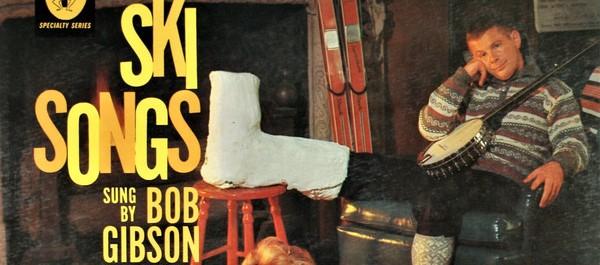

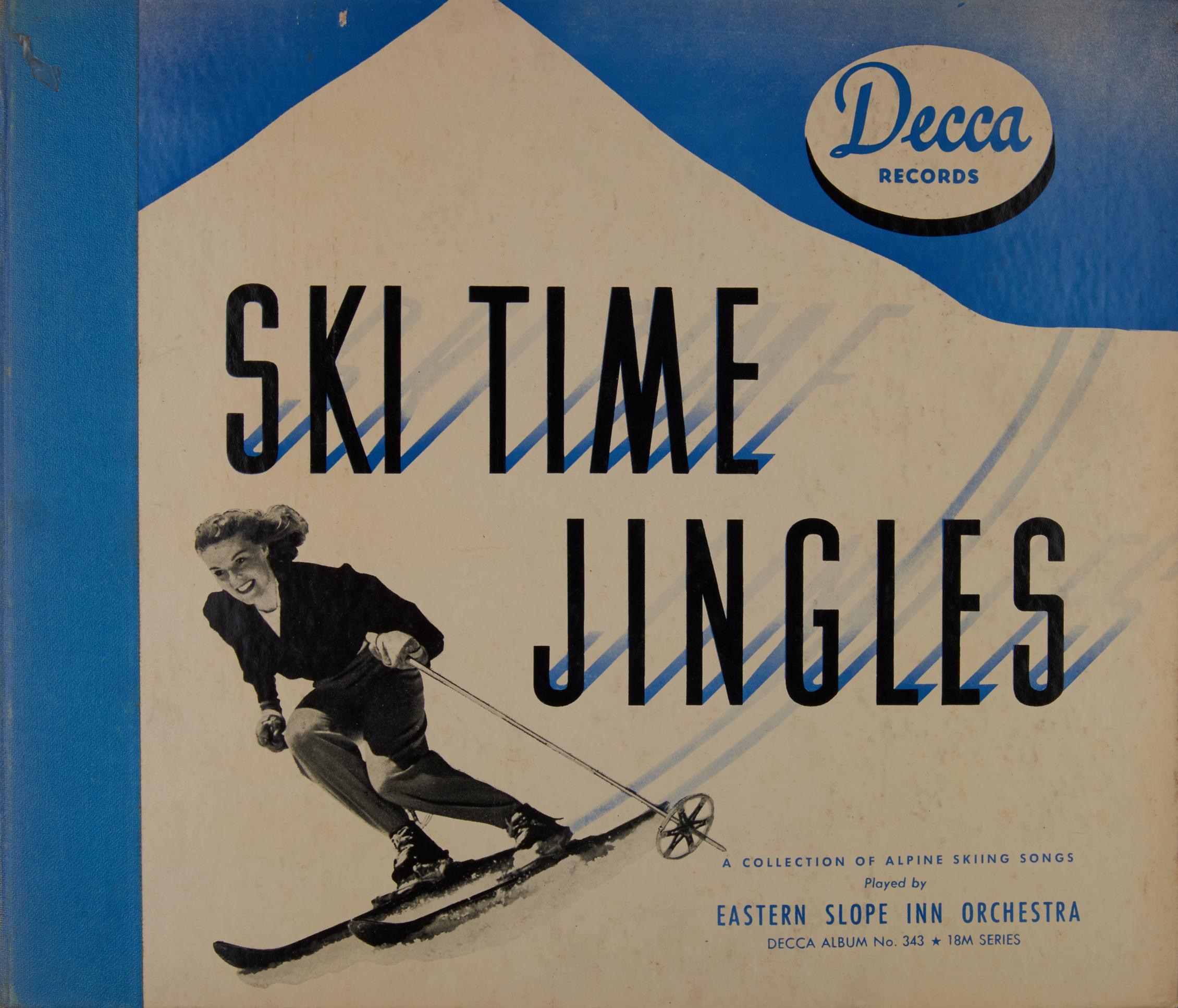
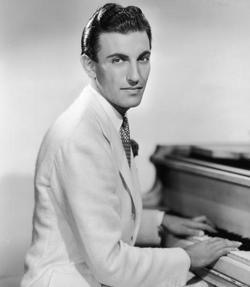

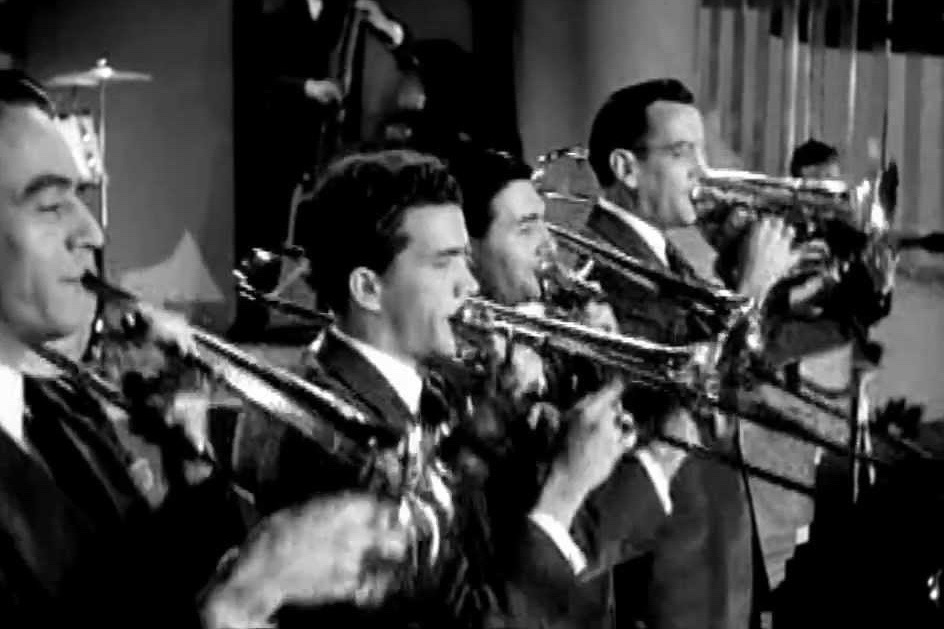
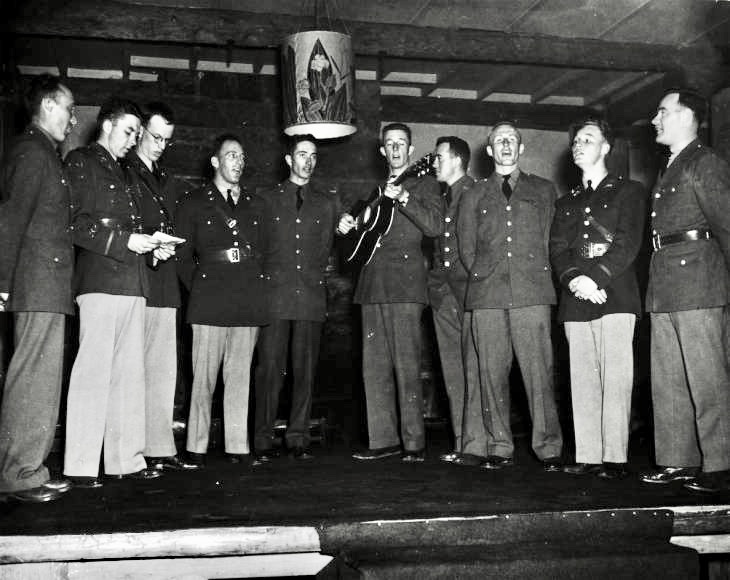
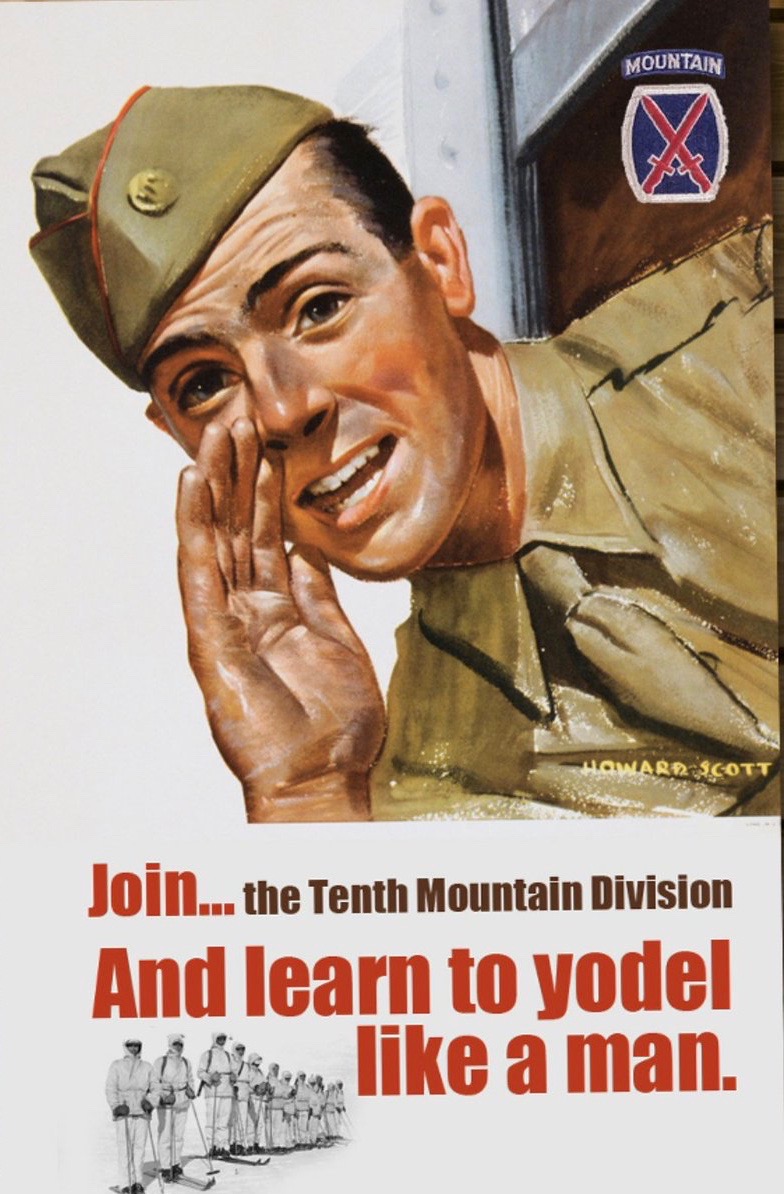
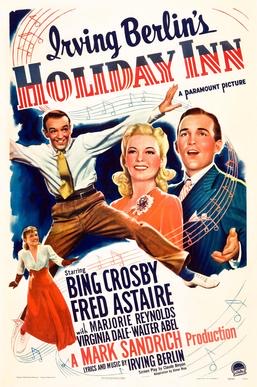
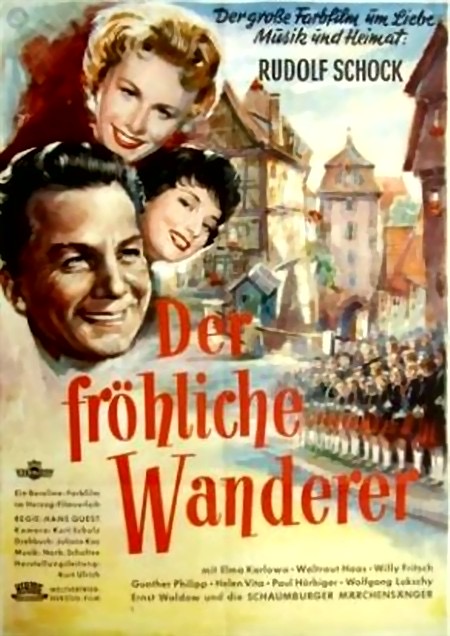

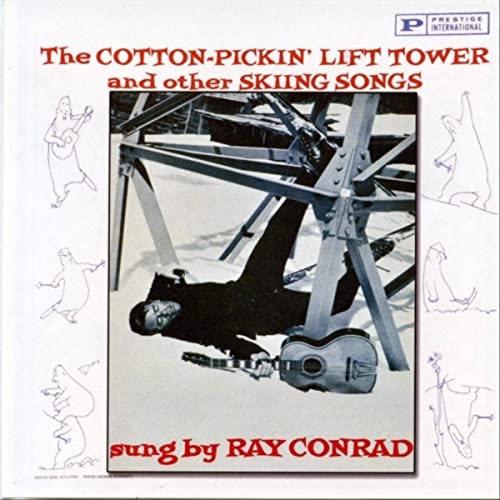
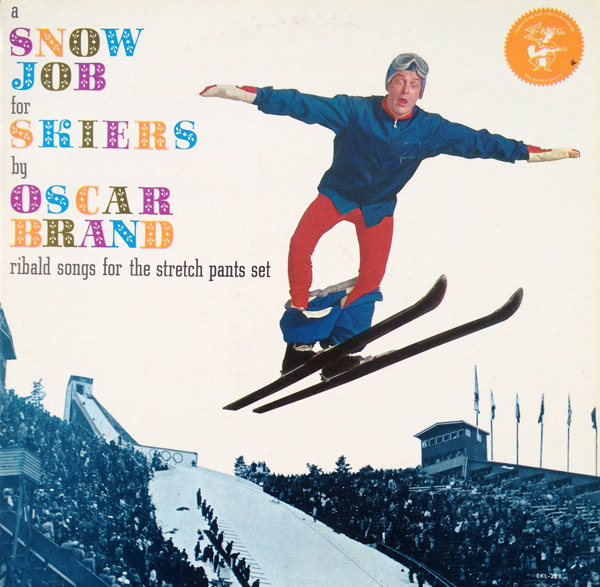
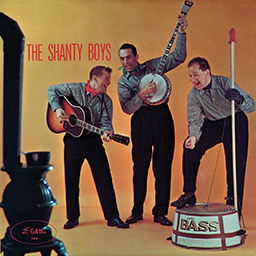
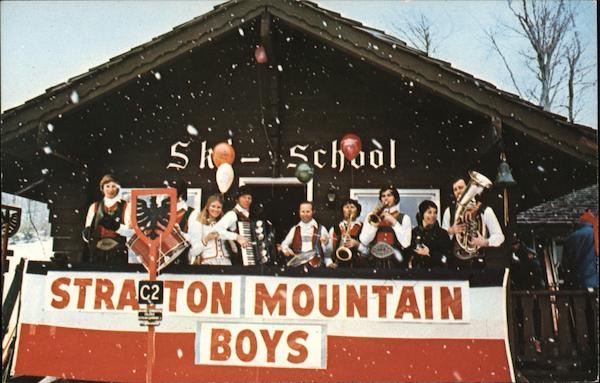
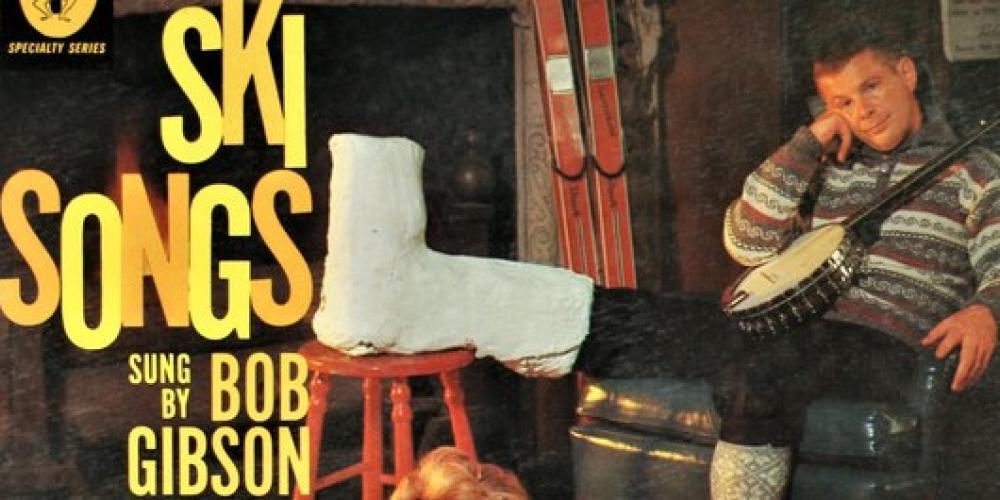
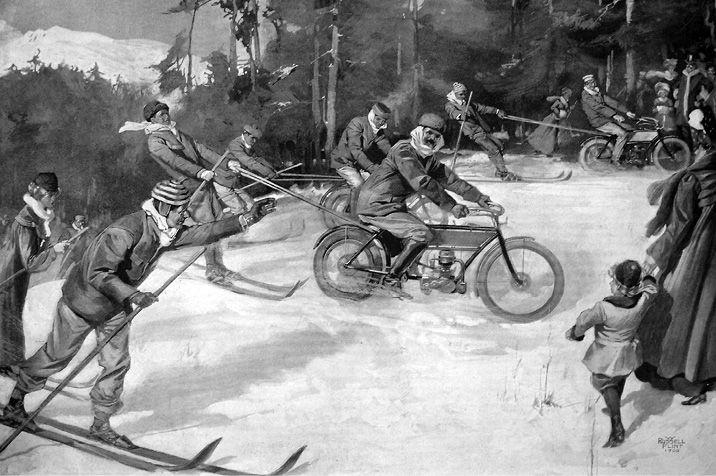
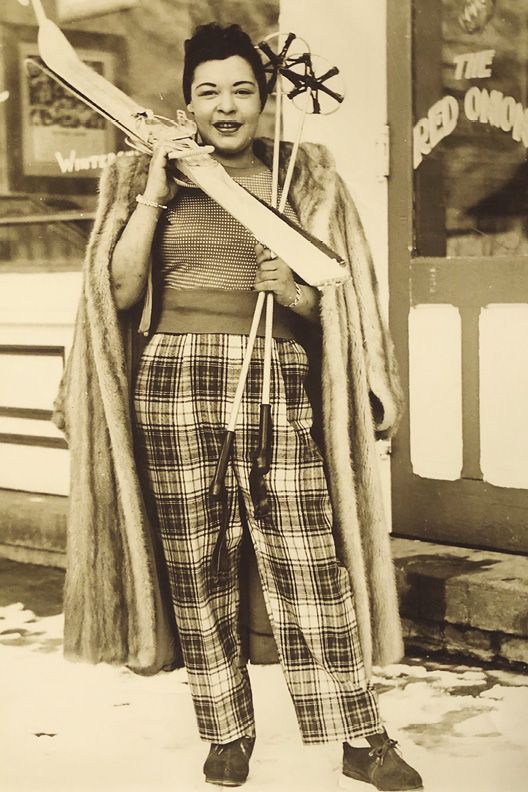
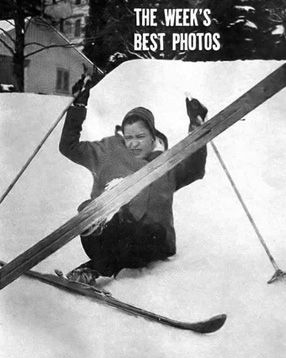
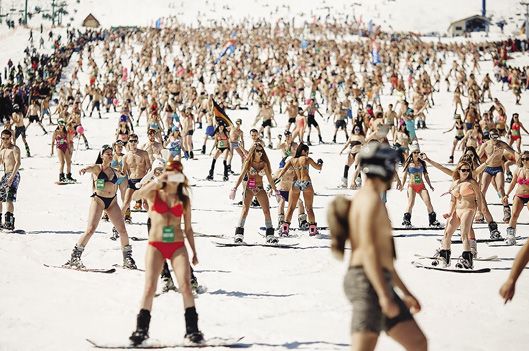 Rites of Spring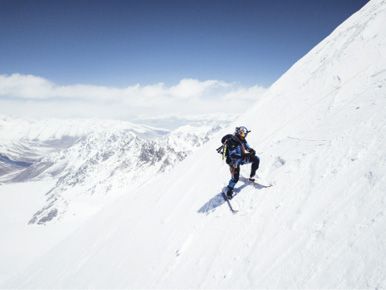
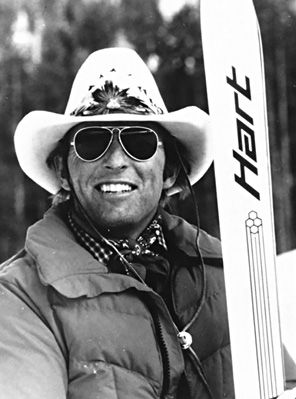 2021 50 YEARS A COWBOY William Winston Kidd celebrated his 50th anniversary as the indefatigable Director of Skiing at Colorado’s Steamboat Resort in April. At the 1964 Innsbruck Games, Kidd and teammate Jimmie Heuga were the first American men to win Olympic medals in alpine skiing, taking home slalom silver and bronze, respectively. Ever since, the always approachable Kidd, now 78, has helped bring skiing to the masses. He also influenced ski fashion—as only he could.
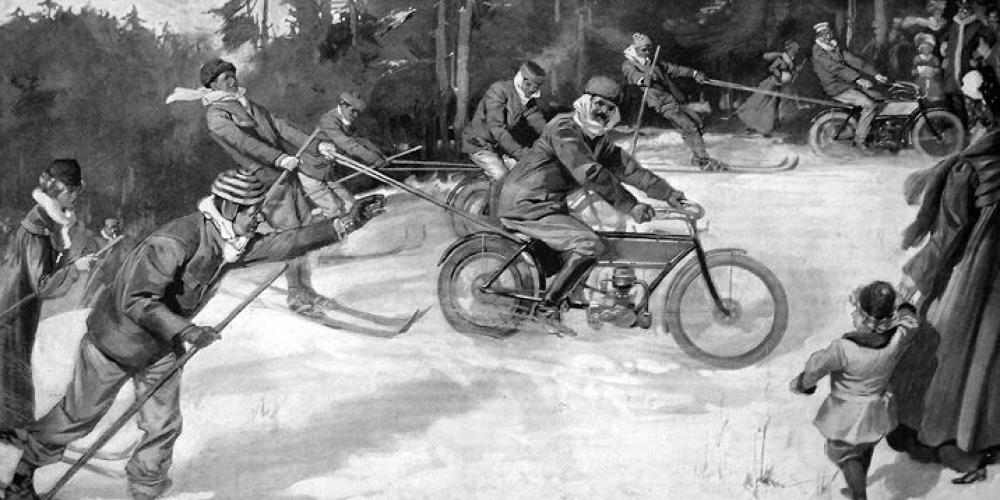
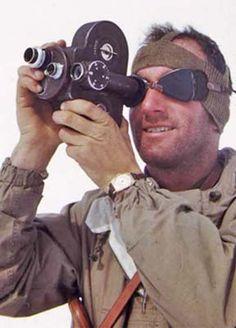

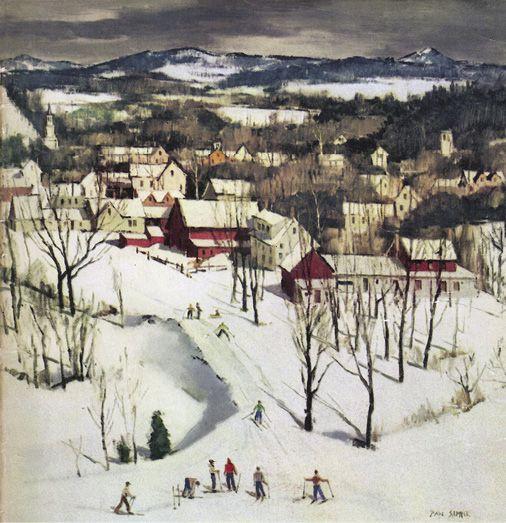
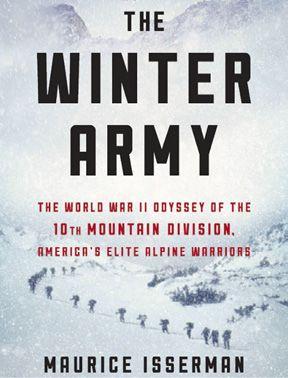
 Ullr Award: Skiing Peoples: 10,000 years of history, by Maurice Woerhlé
 Marcel Hirscher: The Biography, edited by Alex Hofstetter



 –Seth Masia, President