Competition

All forms. Use in place of Racing, Race Results etc

Open to Public?
Off
Feature Image Media
Image
Timestamp
Author Text
By Paul J. MacArthur

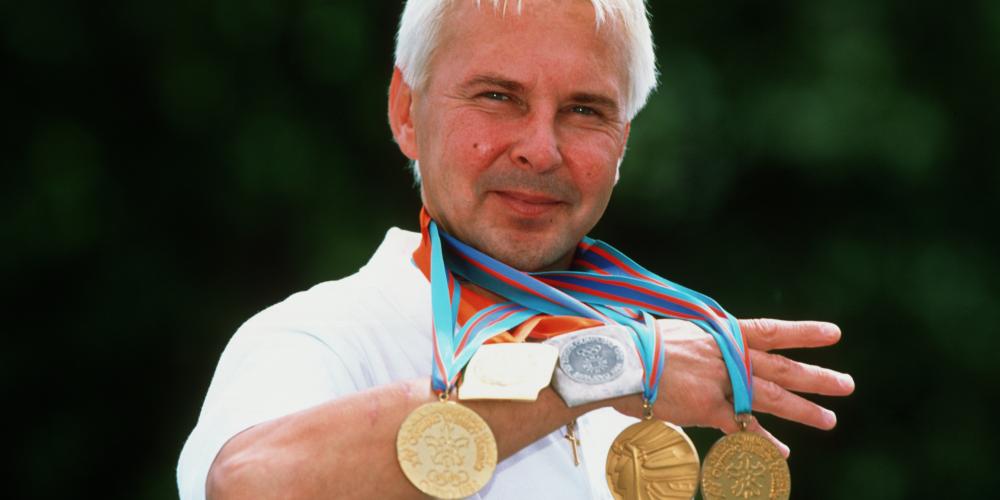
HARRACHOV, Czech Republic (March 10, 2011) — A 47-year-old ski jumper stands atop a HS-40 ski jumping hill. His body isn’t what it used to be, abused by thousands of jumps and landings and a seemingly lifelong battle with alcohol. Still, he’s hopeful. The Finnish legend, whose likeness has appeared on his country’s postage stamps, has given up the bottle, been training hard, and believes he may be peaking for this competition. He proceeds to jump 34 and 36.5 meters. His longest jump on that hill is less than 20 percent of his former world record, but it’s good enough. Matti Nykänen, arguably the greatest ski jumper ever to step into a pair of boots, has won the gold medal at the Unofficial World Championship of Veterans.

Born on July 17, 1963, in Jyväskylä, Finland, Nykänen was eight years old when his father dared him to try a ski jump near the family home. Matti obliged and ski jumping quickly became an obsession. “The only thing I wanted was to jump,” Nykänen says in Matti: The Biography of Matti Nykänen by Egon Theiner. “And to jump, and to jump again.” On March 19, 1974, Nykänen entered his first contest, on a small eight-meter hill, and took first place in his age group. 

By the 1975­–76 season, Nykänen was jumping from 11 a.m. to 8 p.m. every day of the week. The ski jumping hill in Jyväskylä had a chairlift and floodlight, allowing him to put in more jumps per day than rivals who lived elsewhere. Theiner credits this local advantage, Nykänen’s singular focus on ski jumping, and new training techniques developed by Nykänen’s coach, Matti Pulli, such as having his jumpers wear weight vests, for the Finn’s future success in the sport. There were also many subtle technical aspects to Nykänen’s jumps that enabled him to fly farther than anyone else.

Nykänen’s domination of the ski jumping world began on February 11, 1981, when he took home gold at the FIS Junior World Championships. He claimed his first victory in a World Cup competition on December 30, 1981 and his first World Cup title in 1983. At the 1984 Olympic Games in Sarajevo, Nykänen won gold on the large hill and silver on the normal hill. His 17.5-point margin of victory on the large hill remains the largest in Olympic history. “No one could really touch him, it seemed,” says former competitive ski jumper Michael Collins. “He was definitely the guy you looked to, you watched for technique, because he did stuff no one else did.”

In March 1984, Nykänen broke the ski jumping distance record twice at Oberstdorf, Germany. He repeated that feat in 1985 while becoming the first person to clear the 190-meter barrier with a 191-meter jump. He also took home the World Ski Flying Championship in the process. Nykänen added more World Cup titles to his collection in 1985, 1986 and 1988. At the 1988 Winter Games in Calgary, he became the first ski jumper to score three gold medals in a single Olympic competition as he won the normal hill by 17 points, the large hill by 16.5 points, and led Finland to gold in the team event. On the large hill, 23 percent of Nykänen’s flight was beyond the K-point, a record in the parallel style era. 

By the time Nykänen retired, he’d rewritten the ski jumping record book in his own image with five Olympic medals, 46 World Cup victories, four Olympic gold medals (since tied by Simon Ammann), three individual Olympic gold medals (since passed by Ammann), four World Cup gold medals (since tied by Adam Malysz) and 76 World Cup podium appearances (since passed by Janne Ahonen and Malysz). “He was kind of a savant," says former USSA ski jumping coach Larry Stone. “He couldn’t tell you what he was doing, but he was absolutely the best in the world by so much for those years…He was a genius. Absolute genius.”

Flying high and falling far

Nykänen, however, possessed an Achilles heel: alcohol. The ski jumper started drinking when he was 14. By the mid 1980s, drinking was having negative impacts on his behavior and, occasionally, his performance. Fights, breaking windows with his bare hands, lockups in police holding tanks, drunken interviews, being sent home early from competitions—they were all part of a perpetual Nykänen hangover.

“They tried everything with Nykänen,” Stone says of the superstar’s coaches. “They made him take pills that would make him violently nauseous when he would take a drink. For every athlete that’s a wild man, you’ve got to find a balance that doesn’t destroy what makes them great, but by the same token try to keep them from destroying themselves. And sometimes you find that there’s no way.”

Alcohol abuse combined with the cumulative effects of injuries fueled Nykänen’s competitive decline. By 1991 the last great star of the parallel era was finished, but retirement didn’t calm him. Lacking an outlet for his hyperactivity, Nykänen did not adjust to post ski jumping life well and became even wilder. “I changed from a well-known system into a phase of insecurity,” Nykänen says in the biography Matti. “For all my life I had been doing something else and now that did not matter any longer … The world away from ski jumps was absolutely different from the one I knew so far.”

A stint as a pop singer in the early 1990s had a promising start, but soon fizzled. Financial problems quickly befell Nykänen, who peaked before big time prize and sponsor money was part of the ski jumping circuit. To deal with various debts, he reportedly bartered his gold medals, worked for a phone sex line and stripped at a Järvenpää casino. Nykänen’s been married five times, twice to millionaire sausage heiress Mervi Tapola, with whom he’s had a stormy relationship that has involved fights, restraining orders and more than a dozen filings for divorce.

Nykänen’s alcohol induced rages have led to brawls, knifings and domestic violence. He’s been incarcerated on several occasions, including a 13-month sentence in 2004 for stabbing a friend in a drunken brawl. Less than five days after his release on that charge, Nykänen was in prison again, this time for assaulting Tapola. “He’s Dr. Jekyll and Mr. Hyde,” Theiner says. “When sober, he’s one of the nicest and friendliest people I've ever met. When drunk, he’s dangerous and aggressive.”  

A return to the senior circuit and an International Masters Championship victory in February 2008 did not solve Nykänen’s problems. He was arrested again in December 2009, when, in yet another drunken rage, he reportedly drew a knife on Tapola and tried to strangle her with a bathrobe belt on Christmas Day. In August 2010, he was sentenced to 16 months in prison. The decision was recently upheld by the Court of Appeals, and at press time, he was appealing the sentence to the Supreme Court.

Still, there may be hope. The most recent reports about Nykänen are positive. He’s engaged to Susanna Ruotsalainen, a brand manager who gained some notoriety appearing on the Finnish version of The Apprentice.  Reportedly, Ruotsalainen has helped Nykänen give up alcohol and live a healthier lifestyle; his recent success on the veterans circuit being one sign of his healthy living. Nykänen also restarted his on again off again singing career and continues to make more positive headlines in Finland. The wedding between the two celebrities, however, has been postponed due to Nykänen’s legal issues.

“It won't last,” says Theiner of Nykänen’s new leaf. “Nobody can deal with the phenomenon Nykänen forever. And when you give him the possibility, he will drink and fight again.” 

Feature Image
Category
Open to Public?
Off
Feature Image Media
Image
Timestamp
Author Text
By Byron Rempel

A century-and-a-half after a Norwegian woman soared 20 feet in the world’s first recorded ski-jumping event, female flyers were still fighting for international recognition.

At the first recorded event in history dedicated solely to ski jumping, one of the jumpers wore a skirt. Ingrid Olavsdottir Vestby probably left the ground for around six meters, or almost 20 feet—“past the point where many a brave lad had lost his balance earlier in the competition.” Spectators shouted bravos because “they had never seen a girl jump on skis and they had been more than a little anxious as she flew over their heads.” She jumped in Trysil, Norway. She jumped in 1862. She landed in obscurity.

Today the history of women’s ski jumping has just begun to be written. Only in the 1990s were women first allowed to fully participate in international jumping competitions. For more than a century after Vestby’s historic jump, the spectacle of woman soaring on skis was widely regarded as dangerous, unhealthy, immoral, unladylike and unattractive. Of course, there’s a good explanation for the latter: the horror of mussed-up hair. Austrian Paula Lamberg, the “Floating Baroness” who set a world record in women’s ski jumping at 22 meters, was given grudging admiration in her country’s Illustrierte Zeitung magazine in 1910. But the quote provides a glimpse into the on-again, off-again history of women’s ski jumping—and the stubborn prejudice with which the sport has long been forced to contend.

“Jumps of this length are very good, even for men. It is understandable that ski jumping is performed very rarely by women, and taking a close look, not really a recommendable sport. One prefers to see women with nicely mellifluous movements, which show elegance and grace, like in ice skating or lawn tennis…and it is not enjoyable or aesthetic to see how a representative of the fair sex falls when jumping from a hill, flips over and with mussed-up hair glides down towards the valley in a snow cloud.”

How embarrassing was that?

Women’s jumping were not on the schedule at the 2010 Winter Olympics in Vancouver, but they will be in 2014 at Sochi, Russia.

In November of 2006, in response to a proposal from the Fédération International de Ski (FIS), the International Olympic Committee (IOC) ruled that there was not enough technical merit among women ski jumpers to allow them on the jumps, and then immediately stated that the decision had nothing to do with gender. “There is no discrimination whatsoever,” IOC President Jacques Rogge said.

With a quick look at history, it becomes obvious that women’s exclusion has everything to do with gender. The reason too few women have been able to develop enough technical merit for the IOC’s standards is because they have been actively discouraged from ski jumping, from 1862 until today.

Under today’s helmets, nobody’s hair gets mussed, so that can’t be the problem. Could there be another reason why women have been kept from this last fortress of manliness?

Ladies Can’t Jump

At the beginning of the last century, the infant sport of skiing was introduced to North America by immigrant Norwegian miners and lumberjacks. They had a name for their sport: Ski-Idraet, meaning the sport of skiing that showcased high ethics, courage, discipline and physical fitness. By contrast, they preferred their women sweet, pleasant and soothing—and safely tucked away at home.

“To keep women away from sports and primarily men’s sports, medical arguments were quite often used,” says Annette Hofmann in her paper, “Female Eagles of the Air: Developments in Women’s Ski Jumping,” published in New Aspects of Sport History in 2007. “Vital energy theory,” for instance, said that women were born with a limited amount of energy; as child-bearers their bodies were reduced to “a morbid state” and thus were at risk when performing jumps, said Norwegian Christian Døderlein in 1896.

By the 1920s, doctors and female physical educators began to understand the importance of physical activity for women. They encouraged them to get out in winter, and enjoy themselves with skating, snowshoeing and skiing. But jumping was still out of the question. The latest medical concerns focused on the jolt of landing or a possible fall; at the time, uterine stress was believed to cause sterility. “Ski-jumping is not good for the female organism,” declared Gustave Klein-Doppler in the 1926 Wintersports Yearbook.

“This might be physiologically explained by the different construction of this sex. At this time there is no need or reason to organize jumping competitions for the ladies. Because of this unanswered medical question as to whether ski jumping agrees with the female organism, this would be a very daring experiment and should be strongly advised against.”

Those that spoke out against women in ski jumping even included sports women, like Germany’s Alpine World Champion skier Christl Cranz: “Cross-country skiing and ski jumping are athletic performances…for which a lot of strength and endurance is necessary, more than women can give without harming themselves…Certainly no reasonably sporting girl would think about participating in a marathon or boxing, and that is how it is with us women skiers; there is no interest in running or jumping competitions.”

Spooked mothers kept their daughters off ski jumps for more than half a century. Those fears and excuses seem positively Jurassic more than eighty years later. Imagine someone today saying, for instance: “Ski-jumping is like jumping down from, let’s say, about two meters off the ground about a thousand times a year, which seems not to be appropriate for ladies from a medical point of view.”

Yet that’s what FIS and IOC official Gian Carlo Kasper said—in February of 2006. Meanwhile, women are participating in much more dangerous Olympic ski events, such as the downhill, in which racers are occasionally killed, and in the brand new skicross and snowboard cross, where four racers hurtle down a twisting, bumpy track at the same time.

At the 2006 Winter Olympics in Torino, Alissa Johnson sat on the sidelines and watched her brother slide down the inrun instead. “So far, we’ve been told every excuse in the book. That it’s too ‘dangerous’ for girls. That there aren’t enough of us. That we’re not good enough. That it would damage our ovaries and uterus and we won’t be able to have children, even though that’s not true. It’s so outdated; it’s kind of funny in a way. And then it’s not.”

To Make a Long History Short

Ingrid Vestby may have made a daring venture into ski jumping in 1862, but she certainly didn’t jump into any history books. She must have influenced a few of her fellow Norwegian women, however, because by 1896 there were enough of them to organize the first (unofficial) national ski-jumping competition for women.

The self-proclaimed Mecca of ski jumping, the mighty Holmenkollen, was built in 1892 to host the Norwegian national cross-country and jumping competitions, and Scandinavians held tight to their tradition. Even as they immigrated to North America, particularly the American Midwest, they set up their rickety scaffolding and continued to dominate the sport. Early men’s competitions literally put Norwegians in their own class to give newcomers a fighting chance at winning a prize of their own. Women didn’t have any class at all, on either side of the Atlantic. No woman would “diminish the allure of the sport” by being allowed to jump at Holmenkollen in Norway until 1978.

Official recognition didn’t stop them from jumping. In 1904, a Norwegian Miss Strang jumped 14.5 meters; Tim Ashburner’s History of Ski Jumping (Quiller Press, 2003) noted that the English Miss Hockin jumped “very gallantly” at the first British Ski Championship in 1911, landing seven meters without falling.

Probably the best-known woman jumper of the era—even of the century—was “the Floating Baroness” Paula Lamberg, from Kitzbühl, Austria. She set a record of 24 meters in the 1920s. By 1926, the Norwegian Olga Balsted Eggen had jumped 4.5 meters further.

The extent of the Baroness’ fame was obvious even in Canada in 1921. That year at an Ottawa jumping championship, the Montreal Star reported, spectators were shocked to see that the world title for ski jumping was going to be challenged by a woman. The flamboyant “Countess Alma Stang” soared off the platform, looking to set a new record—until her wig fell off and revealed her as a man in drag. It was a backhanded compliment to the Baroness.

Queens of the Skies

Before the 1990s, ski jumping for women probably enjoyed its biggest surge of popularity in the Roaring Twenties. When a new jump was built in 1922 in Brattleboro, Vermont, the first person to fly off it was the man who got it built, Fred Harris, founder of the Dartmouth Outing Club; the second person was his sister Evelyn. All over town, the local papers reported, “youthful interest manifested itself by the innumerable ski jumps built all over town by the boys and girls.”

It may have sounded like equal opportunity, but during the 1920s and 1930s women were kept off the official jumping programs. Norwegian stars like 14-year-old Hilda Braskerud and 17-year-old Johanne Kolstad matched the boys in their distances, but were regulated to jumping “outside” as “trail jumpers” during the breaks. After a decade of constant scolding by the Norwegian Ski Federation that “women’s cross-country skiing and ski jumping are not desirable,” Kolstad left for the USA. Re-christened the “Queen of the Skies,” she proved it by jumping a world record of 72 meters in 1938.

When women did go off the same jumps as men, they often went as “glider girls,” taking off while holding hands with a male partner—a trick that seems more dangerous than going solo.

One woman who didn’t want her hand held was Isabel Coursier. Born in Revelstoke, British Columbia, Isabel watched the boys leaping off the new jump there, but nobody thought to ask her to join them. Instead, at a winter carnival she entered the “ski-joring” competition, a race in which the skier is pulled behind a galloping horse. “She beat all the boys,” says Wendy Bryden in her book Canada at the Olympic Winter Games. That finally got her the invitation to jump on the “Boy’s Hill” on Mount Revelstoke.

By 1923 Coursier got on the big jump, and promptly bested the Baroness’ world record by jumping 25.5 meters (84 feet). She was the only woman on the jump that year to compete unassisted, and went on to soar from numerous jumps across North America. Her fame led to a jumping exhibition with men’s world-record holder Nels Nelson for then U.S. President Warren G. Harding.

Like Coursier, many other women were able to jump throughout North America, for the most part in winter carnivals. At Colorado’s Steamboat Springs, for example, “ladies and girls” had their own jumping events. One of the most notable jumpers was Beatrice (Bea) Kirby. Since 1993, a trophy in her name as been awarded to the best jumper.

Another exceptional (in every sense of the word) American jumper of the period was Dorothy Graves of Berlin, New Hampshire. After jumping with the Queen of the Skies at an indoor international meet at Madison Square Garden in 1938, she went on to a career competing with men in both Class A and B during the 1940s.

In 1924 at the first Winter Olympics (which weren’t given that title until a year later) in Chamonix, France, ski jumping was one of the original six sports. But despite all the proof of women’s skill and bravery in making world record jumps—despite the Floating Baroness, despite the Queen of the Skies, despite Isabel Coursier’s Presidential jumps—women’s ski jumping was banned from those first Games.

It would take the IOC until 1991 to rule that each event must have a female equivalent. They made an exception, of course, if the sport was “grandfathered” in without a women’s component…like jumping.

With such a lack of respect for their abilities, and without encouragement for future generations, women’s jumping soon faded into the background. Over the next decades even men’s ski jumping (with its high insurance premiums) lost popularity to slalom, downhill racing and ever more extreme sports. It took until 1972 for a woman to beat the 72-meter jump record of Johanne Kolstad. Anita Wold of Norway, who had started during men’s competitions and was the first woman to jump at Holmenkollen, jumped over 80 meters that year. Four years later, while trying to bust the 100-meter mark, she reached a world record of 97.7 meters in Sapporo, Japan. In 1981 Finnish jumper Tiina Lethola soared 110 meters. Then things got quiet again, until a girl who had begun ski jumping at six years old entered the scene and began to forever change the complexion of women’s ski jumping.

The First Competitions

A modern ski jumper slides onto a horizontal start bar. Beneath the skis drops a narrow strip of snow and ice 90 meters (300 feet) long, with two perfect tracks and only one way to go. As the light turns from red to green, the jumper shifts forward and commits to sliding down the track at 60 miles an hour. When the tracks end and the slope flattens at the take-off, the jumper springs forward, arms pinned to the sides, head just above the ski tips, splayed skis slicing the air.

And then, a few seconds later, they land back in reality.

In 1991, Austrian Eva Ganster and her friend Michaela Schmidt, who had both headed down those slick slopes since they were young girls, began ski jumping at competitions. Only there weren’t any competitions for women. They jumped at men’s events as pre-jumpers, or jumped against men, or if they were lucky, like Karla Keck in the United States, they jumped in junior competitions. At every turn, like most women before them, they fought against officials who did not want the girls to jump, no matter how successful they were.

But by the mid-1990s, both Ganster and Schmidt had secret weapons: their fathers. Dr. Edgar Ganster and Hans-Georg Schmidt saw no reason why their daughters were not allowed to compete.

FIS officials trotted out that century-old scare of the female uterus bursting upon landing, but Dr. Ganster was having none of it. He and Schmidt began to push towards getting women their own jumping competitions so their daughters would have a place to show their stuff.

It soon paid off. Eva Ganster made a pre-jumper appearance at the famed Viersschanzentournee (Four Hills Tournament) in Europe, and then in 1994 made a breakthrough by starting as a pre-jumper at the Olympics in Lillehammer, Norway. She was 16 years old, and set a women’s world record of 113.5 meters at that event.

The FIS cautiously began to notice the girls, and in 1994 set up a group to study the possibility of accepting women. Meanwhile, in 1995 women were allowed demonstration jumps at the FIS Nordic World Cup in Thunder Bay, Canada, and again in 1997 in Trondheim, Norway.

By that time Ganster had set another record by being the first woman to jump on a ski-flying hill, designed for long jumps; she set a new women’s world record of 167 meters. Six years later fellow Austrian Daniela Iraschko would break the record with a 200-meter jump.

That summer of 1997, the first international meet for young female jumpers was held in Voukatti, Finland. It was a slow start; the competition was unofficial, the girls jumped in the men’s pre-program, and they were given no score. Not content with that, Dr. Ganster and Mr. Schmidt then organized a girls-only competition at the Junior World Championships in St. Moritz in 1998, hosting 17 jumpers from seven countries on a 90-meter jump. It was not sanctioned by the FIS.

With that minor success, the fathers put together a Ladies’ Grand Prix as a counterpart to the Four Hills Tournament for 1999. The 13-day tourney hosted 29 women from nine countries, with five different competitions. That year too, the US Ski Association included for the first time a women’s class in the US Ski Jumping Championships.

By the 2002-2003 season, the Ladies’ Grand Prix became the FIS Ladies’ Tour Ski Jumping; that summer a Summer-Tournee Ski-Jumping was established as well, and in the United States, FIS-sanctioned ski jumping competitions were held with five competing nations. But the USSA still refused women the opportunity to win prize money at the national level, even though they did so in all other skiing disciplines.

At the Nordic National Jumping Championships in Steamboat Springs, Colorado that season, coaches and parents pressured the USSA to get a prize together for the girls. The organization yielded, and a big deal was made of presenting a check so large three people had to hold it up. The amount first place winner Jessica Jerome received was $150. The men’s winner took home $1,200.

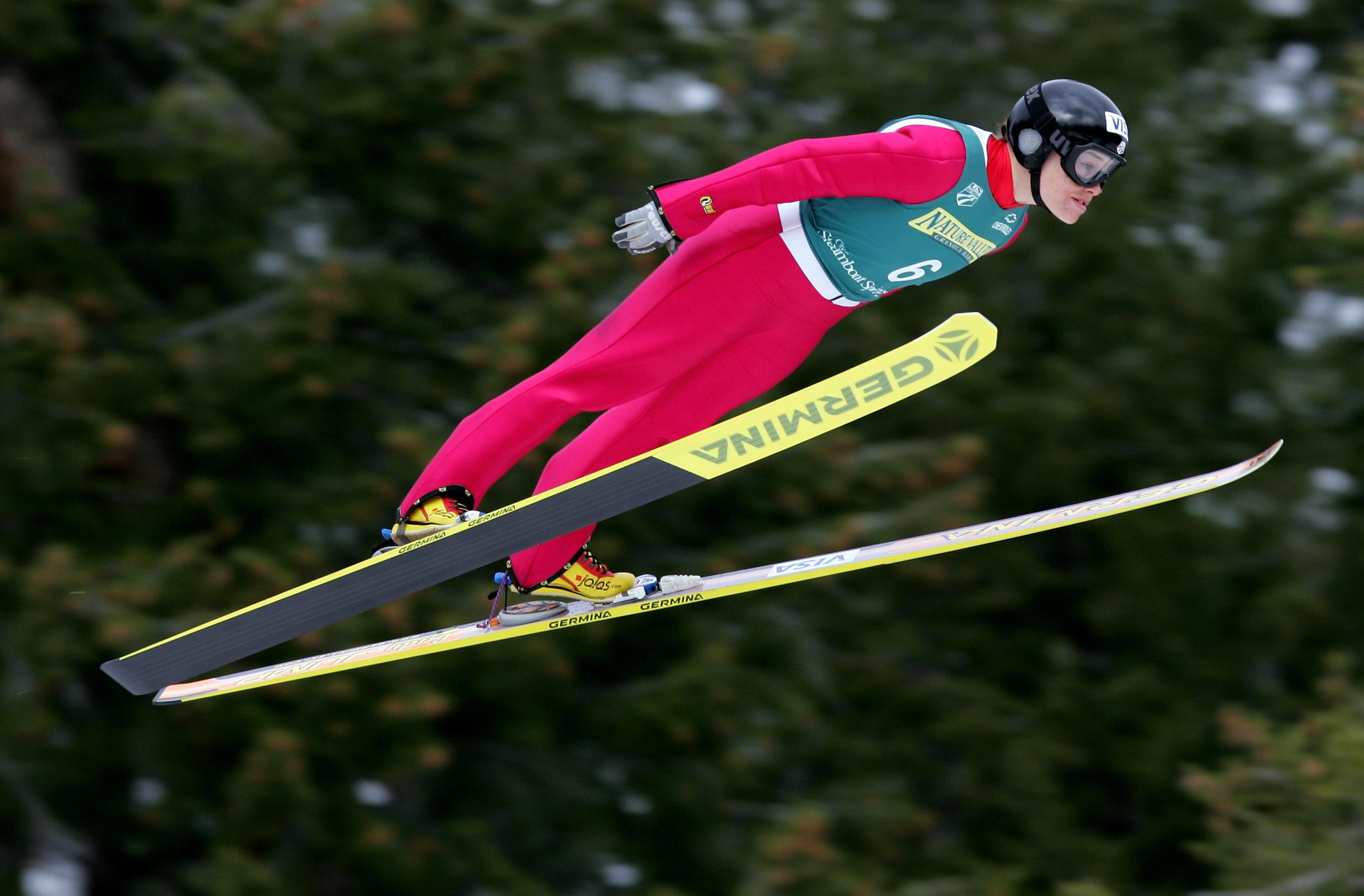
Thanks to Eva Ganster’s record-making jumps and her father’s history-making stubbornness, the Austrian Ski Federation became the first country to form a national female ski-jumping team in 2000, with its first members Ganster and Iraschko (Ganster retired in 2005). The next year, both Norway and Japan had national teams too, followed by Canada in 2004 and Germany in 2005. Although the United States had a team by 2004 (and a regular sponsor in VISA), the USSA accepted the American team in 2006. Since then, the Germans have ranked first in the world in women’s ski jumping, followed closely by the United States.

Another event in 2004 triggered more attention for the women jumpers. One of the best female jumpers of all time who had already won the Holmenkollen women’s title in 2004 and 2005, Norwegian Anette Sagen, was not allowed to jump K185, the Ski Flying platform in Vikersund. Torbjørn Yggeseth, FIS chairman of the ski jump committee, opposed Sagen, saying the jumping ability of women was not good enough to jump at international venues like this one. Media coverage was ferocious, and the debate led to an open battle over women’s rights in sports.

That same year, the FIS allowed the women the “B” category. The points won during the Grand Prix count for the Grand Prix and the total score of the Continental Cup, now the closest thing to a World Cup and “A” status for women jumpers. In 2006, women had their own category at the Junior World Championships in Slovenia.

All that was missing was their own World Cup, and inclusion in the Olympics.

The Real Fear Factor

By the mid-1990s, men’s ski jumping was in a deep crisis. Fabled Norway had more ski jumps than jumpers in the Norwegian Federation. Sexy and more dangerous sports like inverted aerials, skicross and snowboard cross were all over the place—and women were doing them. Those factors may have contributed to the FIS finally recognizing the first women’s ski jumping event on the eve of the new millennium. What took them so long?

There are a few theories, but it’s the way officials act towards the athletes themselves that gives the broadest clues. When FIS ski-jump chairman Yggeseth denied the “little girls” the right to ski fly, he said most jumpers were “doing something similar to sledding. They should stay on the small hills,” he counseled.

This kind of belittling of women jumpers happens, says Annette Hofmann, because “There is a hidden fear that women will be as good as men, and thus threaten men’s dominance.” A study published in the Journal of Biomechanics (commissioned by the FIS and IOC) proved that women jumpers could become “a real competitive threat,” thanks to their lower body weight. Both organizations introduced strict rules in 2004 to take away any weight advantage—men were already “dieting to the point of illness,” said an official in SKI magazine. Anorexia in men, traditionally a female disorder, has contributed to the fear that the sport (judged not only on distance but by mellifluous style as well) will be taken over by women. More concretely, there’s a real fear that women asking for a piece of the pie would cut into resources like contracts, prize money and positions.

Not in My Olympics

Nothing helped get women into the Olympics in 2010, including the fact that women’s ski jumping was a demonstration sport at the 2006 Olympics. Not even the historic decision on May 26, 2006, when the FIS accepted that women jumpers would have their own World Cup at the 2009 Nordic World Ski Championships in Liberec, Czech Republic. Or the FIS decision to let women have a team event at the 2011 World Championships.

The IOC’s decision to ban women from ski jumping in the Games (they had done it in 1998, 2002 and 2006 as well) were:

• Women’s jumping was still developing in its early stages

• It lacked a sufficient number of countries participating

• It didn’t meet the technical standards required

Also cited was the problem that two world championships had not been held. That rule seemed flexible—women’s cross-country skiing had its first world championship two years after it was accepted in the Olympics in 1952. Then one year after the IOC’s decision to disallow women, the rules were changed to a sport only needing one world championship.

“There are 80 women” ski jumping, IOC President Jacques Rogge said. “In any other sport you are speaking about hundreds of thousands, if not tens of millions of athletes, at a very high level, competing for one single medal. We do not want the medals to be diluted and watered down.”

Those in the sport come up with different numbers than the IOC. Jumpers claimed there were 135 elite female ski jumpers registered internationally, in 16 countries. To put that in perspective, snowboard cross had 34 female competitors in ten countries; bobsled had 26 women in 13 countries; and the new skicross had 30 women in 11 countries.

In 2006 Women’s Ski Jumping USA said that “there are more women jumpers worldwide, and competing on a higher scale, now than there were women competing in bobsled or skeleton at the time those sports were added to the Olympic program for women.”

A Legal Right?

American downhill and World Cup overall champion Lindsey Van is a fighter, and she’s hungry. She’s been jumping internationally since she was 13 in a sport that itself is fighting for recognition. She parties hard, she works hard at her sport, and she works hard at keeping her weight in line. “I’ve been hungry for twelve years,” she says.

In May of 2008, a who’s who of international women’s jumping stars filed lawsuit in the British Columbia Supreme Court against the Vancouver Organizing Committee (VANOC), the host of the 2010 Olympics. Canadian taxpayers footed a $580 million bill, they claim, for facilities with a men’s only sign; lawyer Ross Clark said that the absence of a women's competition is a violation of Canada's equal rights law, which is guaranteed in the Canadian Charter of Rights.

The plaintiffs included Lindsey Van, along with Americans Jessica Jerome and Karla Keck, Annette Sagen of Norway, Daniela Iraschko of Austria, Jenna Mohr and Ulrike Grassler of Germany, Monika Planinc of Slovenia, and retired Canadian Marie-Pierre Morin (who had earlier moved to the U.S. after facing discrimination in Canada). Seventeen-year old Canadian Zoya Lynch joined the lawsuit later, but has since resigned from the Canadian team “out of frustration.”

“We're not asking for a new sport,” said Jessica Jerome's father, Peter, the vice president of Women's Ski Jumping USA. “We're not asking for a new discipline. We're just asking that an existing Olympic event allow women to compete.”

Yet the protests of women ski jumpers  did not fly. “It’s not a human rights case,” says Dick Pound, the Montreal lawyer and chancellor of McGill University—and member of the IOC since 1978. “It’s a decision on the part of the IOC. And it’s not going to stand them in good stead to sue a bunch of grumpy old men.”

Pound is no stranger to controversy and protests, and may even include himself in the Grumpy Old Men category. He was a mediator on the Court of Arbitration for Sport, the Chair of the Anti-Doping Agency, and as the ethics watchdog for the IOC, the investigator of the Salt Lake City Olympic scandal.

“They’ve missed the mark,” he said of the plaintiffs’ suing VANOC for not letting women use a Canadian facility, “because women will use the jump before and after the Olympics.” (The Continental Cup for women took place at Whistler in the middle of December 2008.) Conversely, “The International Committee is using that facility for just one event.”

Instead, Pound says women jumpers should look to the real source of their problem: the FIS. “We looked at the proposal from the FIS [in 2006]. It was made without much enthusiasm. It was made with them knowing the IOC would refuse it. The FIS have not done their job in promoting women’s jumping.”

Do the Right Thing

The long struggle of women jumpers for recognition is not the first time the FIS has dug in its heels against new sports. There was that incident in the last century where an upstart and extreme version of skiing tried for recognition too, and came up hard against a “Scandinavian ski aristocracy.” The new-fangled thing—out of Britain, mind you—was slalom and downhill skiing, first raced in 1921. The FIS banned slalom and downhill from the first “international world ski championship” (only later called the Winter Olympics) in 1924 at Chamonix, as founding editor Morten Lund has written in these pages. Those new sports missed two more Olympics, those in 1928 at St. Moritz and in 19832 at Lake Placid, and Alpine ski racing’s acceptance into official world competition came only in 1936 at the Garmisch Olympics after having been “delayed at least ten years past the time when it was ripe.” There was, however, a plus side: At Garmisch, for the first time, women had their own slalom and downhill competitions.

Cold comfort for women ski jumpers, perhaps, but what else do they have to hold on to? Well, for one thing, perhaps the International Olympic Committee’s own mission statement and charter?

First there was the new equality rule of 1991 that called for each sport to have male and female components. That didn’t work. Then there was the announcement in 1996 that “The IOC strongly encourages by appropriate means, the promotion of women in sport at all levels and in all structures, particularly in the executive bodies of national and international sports organizations with a view to the strict application of the principle of equality of men and women.” That from the IOC, an executive body consisting of 15 men and one woman.

And then there’s the part of the Official Mission and Role of the IOC that says the Olympics will:

6. Act against any form of discrimination affecting the Olympic Movement;

7. Encourage and support the promotion of women in sport at all levels and in all structures with a view to implementing the principle of equality of men and women.

Feature Image
Category
Open to Public?
Off
Feature Image Media
Image
Timestamp
Author Text
By Bengt Erik Bengtsson

Few sports have changed as rapidly and dramatically as did cross-country skiing in the 1980s. For more than a hundred years cross-country competitors had universally raced with the ancient diagonal stride, alternately kicking and gliding. In retrospect, it was remarkable that no one saw how much faster a skier could move if he propelled himself by skating with his skis, in the manner of an ice skater. America’s Bill Koch first observed the skate step at a Swedish marathon, then applied it to win the 1982 World Cup of Cross Country skiing. Immediately the sport was engulfed in controversy over the new technique. Within five years, World Championship and Olympic cross-country skiing was utterly transformed. Now there were as many medals for Freestyle, in which skating is permitted, as would be awarded for Classic, in which skating was prohibited. And in three more years, the freestyle revolution was so powerful that it led to the Pursuit competition, with a totally new way of starting racers and climaxing in a telegenic finish.  No one was better situated to observe the revolution than Bengt Erik Bengtsson, Chief of the Nordic Office of the Swiss-based International Ski Federation (FIS) from 1984 to 2004.

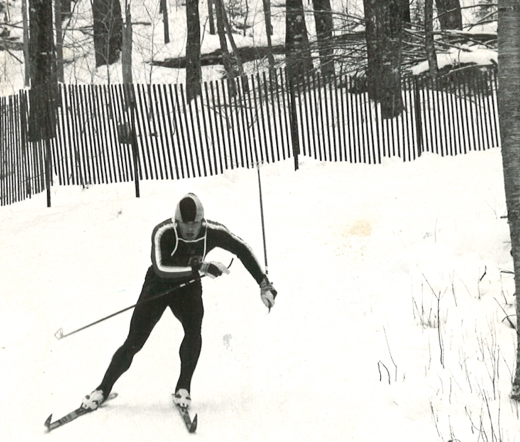
The use of a skating technique to ski across snow is hardly new. In the 1930s, when bindings were adaptable to both downhill and cross-country, skiers commonly skated across flat areas, in the style of an ice skater. For a long time cross-country ski racers skated in order to take advantage of terrain or to combat poor wax, although it was difficult to do over grooved tracks and in a narrow corridor.

In the 1960s, participants in the relatively new sport of ski orienteering – I was one of them – commonly skated.  In orienteering we use a map and compass to travel between designated points as fast as possible. The shortest route isn’t necessarily the fastest -- for example, if it’s a bushwhack. If a road is available, the competitor can  switch from traditional kick and glide skiing to propelling himself like an ice skater, going from ski to ski. Some participants even mounted thin steel edges on their skis to get a better bite on the hard snow and go faster.

The Finnish skier Pauli Siitonen was a top competitor in ski orienteering, and when he turned to marathon or Loppet racing in the 1970s he brought the technique of skating to it. But with a difference. Now, in soft snow, Siitonen would leave one ski in the track, and propel himself with the other ski, pushing off repeatedly as primitive hunters had done centuries earlier using the short Andor ski.

Other marathon skiers soon followed Siitonen. They caught the attention of America’s Bill Koch when he was participating in a 1980 Swedish marathon on flat terrain following a river. The race pitted classic World Cup skiers competed against marathon or Loppet skiers. The distance-racers by now were commonly skating. A light bulb went off in Koch’s head. Why not apply skating to standard 15, 30 and 50 kilometer FIS-sanctioned races?

At the 1982 World Ski Championships in Oslo, I was responsible for the split timing. Early in the 30-kilometer race we had a leader, Thomas Eriksson. In one special part of the track he lost so much time to Koch that we thought there was a timing error. We did not know why, but obviously it was due to Koch skating. Eriksson was the gold medalist. Koch not only won the bronze, he went on to skate his way to victory in the season-long World Cup of cross-country skiing. 

By now, the skating technique -- sometimes leaving a ski in the track, more often double-skating (called the V2 skate)-- was spreading through the sport. Officials, especially the Norwegians, were concerned that traditional cross-country racing was going to be corrupted. They wanted to ban skating entirely wherever prepared tracks existed. The ban did not happen, but at the 1983 FIS Congress the

following rules were imposed:

·      No skating in the first 100 meters after the start.

·      No skating within 200 meters of the finish.

·      No skating in the relay race 200 meters before and after the racer exchange.

Not coincidentally, the starting and finishing areas are where TV cameras and photographers are primarily located, so that the ban on skating ensured that the corrupting new technique would be less visibly public.

The issue of skating engendered bitter division within the world of Nordic skiing. On the one hand, Sweden’s Bengt Herman Nilsson, the chairman of the prestigious FIS Cross-Country Committee, welcomed the new technique. “The skating step has come to stay,” he wrote in a 1983 report. “It is even beautiful when three to four skiers in a row race with forceful skating steps - they remind me of exotic butterflies fluttering in the wind.”

On the other hand, Norwegian traditionalists were opposed to the heretical new technique. Ivar Formo, the 1976 Olympic gold medalist, who succeeded Nilsson as chairman of the FIS Cross-Country Committee, wanted to ban skating as soon as possible, and he had the emphatic support of his fellow Norwegians. A victim of their rule-making, ironically, was a Norwegian, Ove Aunli. At the 1984 Sarajevo Olympic Winter Games, Aunli recorded a time in the 30-kilometer race that made him the bronze medalist, but he was disqualified for skating in a prohibited area.

While skating wasn’t allowed in the start and finish areas, it was a free-for-all over the rest of the course, with racers calculating the benefits of waxing to promote kicking, or waxing the entire ski with glide wax for skating. By now, they had mostly abandoned the old Siitonen one-ski-in-the track technique. The gliding ski was now outside of the track, riding on the snow at a slight angle, while the racer used the other ski for propulsion in a furious repetitive move. It came to be known as V-1. No more kick wax. In a late-season meet at Kiruna, Sweden, near the Arctic Circle, the 30-kilometer winner Ove Aunli, and the winner of the women’s 10 km, Anette Boe – both Norwegians – enjoyed decisive victories on skis prepared only with glide wax. . . no kick wax.

Skating raised all kinds of issues. Would it lead to injuries, such as hip displacement. A Swiss wag called skating “the Sulzer step,” after the name of a manufacturer of artificial hip joints.

Did there need to be specialized skis, boots, bindings and poles? Should not limits be placed on shortening ski length and making poles too long? How should tracks be prepared? Since skating speed slows dramatically when temperatures fall below minus 13 degrees Fahrenheit, would not farther north nations be at a disadvantage? What kind of special training was needed, not only in winter, but in summer? What if the radical new technique spread to recreational cross-country skiing?

A whole new situation had emerged, none of it finding favor with the FIS CCC (Cross-Country Committee). The majority on the committee was driven by the fear that skating would kill classic cross-country skiing.  They were resolute in wanting to restrict skating as much as possible. One way was to create narrower courses through the forest, necessarily restricting the size of machines to prepare the tracks. “Back to nature,” was the battle cry. Another idea to discourage skating was to make sure the uphills were so demanding and steep that the skier could not skate, but must herring-bone. But the preventive method most tested was the erection of nets and snow walls to narrow the track so much that skating was impossible.

On December 7, 1984, the FIS Council, the supreme governing body of the international ski federation, directed the Cross-Country Committee to test the use of small nets between the tracks, and to set courses in such a way “that the skating step will physically not be applicable on all parts of the course.”

Dutifully I purchased netting in order to test the application of the proposed new FIS rule. I still remember when I presented the invoice of five thousand dollars to my boss, FIS Secretary General Gian Franco Kasper. Skeptical, shaking his head, he asked me, “Do you really believe in this?”  He sighed and signed the check. A month later I knew that he was right, and I was wrong.

We made our first test in Davos, erecting 12 nets. One was thrown in a river by two athletes whose names were revealed to me just a couple of years ago.

Today, we can laugh about it. The winner of the race, Ove Aunli, made a mockery of the test in another way. In a very steep section, we had not thought it necessary to put netting because no one imagined anyone could skate up such a hill. But the super-strong Aunli did it with the new technique, without grip wax, double-poling and skating.

Ambiguity was in the air when the 1984-85 season opened. In a December World Cup race at Davos, the wife of Ove Aunli, Berit, said to me, “Mr. Bengtsson, you must take away this skating.” She won the ladies’ competition on skis with grip wax. Two hours later, at a press conference, she was asked, “How do you like the skating step?” I thought she would say the same as she did to me, but to my great disappointment she answered, “It is okay for me”.

The next evening I called a meeting of athletes and coaches. Present were 

the two 1984 Olympic gold medalists at Sarajevo -- Thomas Wassberg of Sweden and Nikolai Zimjatov of the Soviet Union. Dan Simoneau of the U.S. took the place of  Bill Koch. America’s Mike Gallagher was among four coaches at the meeting.

Simoneau said that the American athletes wanted skating.  After all, the Olympics are about “faster, higher and longer. ” Soviet coach Venedikt Kamenskij countered by saying that the Olympics are also about offering “an equal chance for all athletes.” As skating destroys the tracks for the later starters, they will not have that chance.

During the meeting, Thomas Wassberg passed me a note which, in retrospect, was prophetic. Cross-country, Wassberg wrote, should become two disciplines: a classical one in which the skating step is not allowed, and another one with no restriction and even allowing specialized equipment. It was an intriguing idea, but ahead of its time.

At the end of the meeting, the entire group, except the U.S.A., wanted a questionnaire sent to the national associations proposing a ban on skating at the upcoming 1985 World Nordic Championships at Seefeld, Austria. There wasn’t much time to act. FIS President Marc Hodler decreed that a skating ban at the forthcoming World Championships was only possible if all officials and all national ski associations accepted it.

The day of the captains’ meeting came. The question was introduced: “Do you agree to any restrictions concerning the skating step during the upcoming championships?”  The voting was carried out in alphabetical order.

Australia? Answer, NO. The question was dead.

Cross-country was back to where it was at the 1984 Sarajevo Olympics the year before, except for one significant new equipment rule that had never existed before in cross-country skiing. To eliminate the possibility that skating could be unfairly speeded up by the abbreviating the length of skis, it was ruled that skis could be no shorter than the competitor’s height less 10 centimeters. Also, poles could be no longer than the skier’s height. In reality, nothing was going to stop the revolution in nordic ski technique. Classic-only cross-country by now had become almost indefensible.  Racers adopted the superior two-ski skating technique. They were abandoning the use of kicker wax, and switching to preparing their skis entirely with glide wax. In the men’s 30-kilometer in the ’85 World Championships, the best athlete on skis prepared with grip wax was the Russian Vladimir Smirnov, who placed 24th.

“A revolution has swept away the ancient regime,” wrote Arnold Kaech,  former FIS General Secretary, in Sport Zuerich. “A requiem for the cross-country sport should be sung.”

An advantage of the 1985 championships at Seefeld was that everyone --  spectators, media and above all, the FIS’s own officials -- could now discuss the skating controversy based on actual observation, on something they’d seen for themselves. The FIS Council met in Seefeld, and a group of experts was formed to define the future of cross-country. The immediate outcome was to test more ideas during the rest of the 1985 winter. As before, silliness as well as sanity ruled. Skate-ban zones were tested at a race in the Ural Mountains.  In a competition at Falun, Sweden, in order to prevent skating, officials put soldiers with shovels and rakes to work creating virtual tunnels along the track. Angered, U.S. coach Marty Hall threatened to withdraw his team from the race unless the tunnels were removed. They were. The press unjustly blamed the FIS for conducting an idiotic test.

At Lahti, Finland, in another World Cup race, skate-less zones were created. When an Italian racer skated through one, the Finnish coach grabbed him and threw him off the track. In the ladies’ relay race, restricted to classical technique, two teams skated from the start, hooted at by spectators. At the jury meeting afterwards, one coach reported no violations, even though he observed them.

At the winter’s last competition at the Holmenkollen in Oslo, the course was divided into classic and skating-permitted zones. At the top of a long uphill, Thomas Wassberg stopped and removed from the bottom of his skis duct tape on which he had put grip wax. Now, equipped only with glide wax, he had an advantage over the other competitors.

By the end of the winter of ’85, we concluded that none of the methods that we’d tested for limiting the skate step skating was effective. Nor could it be done by limiting the size of machines approved for track-setting.

Meanwhile, the pressure for change was mounting. Ski manufacturers were readying specialized models of skating skis to be introduced on the market. The skis would be shorter than classical cross-country skis. A decisive moment was approaching with the FIS Congress, the summit meeting of the sport of skiing, taking place in Vancouver, British Columbia.

When the FIS held its Congress in Vancouver in the summer of 1985, a record number of people showed up at the Cross-Country Committee meeting. The forces opposed to skating included Norway, the Soviet Union and Finland. Nations favoring the new technique included the U.S., Canada and Italy. Germany’s Helmut Weinbuch, influential chairman of the Nordic Combined Committee, was in favor of skating in short distance races and the relay. Out of the meeting emerged a proposal to be presented to the Congress. The most radical proposal was that half of the World Cup races over the season be in classical technique and half in freestyle, and the same for Junior World Championships. The format for other international competitions would be at the discretion of the national associations in the host countries.

I had never before taken a stand in the discussion but now I asked for the floor and declared my opinion. We don’t have enough experience. Before proceeding, the most important thing to do, I said, is to formulate rules for the two techniques, and see how they work in practice.

A Working Group was formed under the chairmanship of 1968 Olympic champion Odd Martinsen of Norway. By April 1986 it delivered a framework for the future acceptable not only to the FIS Council, but also to the entire cross-country world. Biathlon and Nordic Combined moved swiftly. The two sports chose freestyle for their competitions.

A major problem remained, however. How to police the classical competitions so that the racers didn’t cheat by skating? One faction thought the classics would be self-policing. The athletes themselves would act as police, reporting incidents of racers breaking out of the kick and stride to skate. Swiss journalist Toni Noetzli, on the other hand, wrote in the influential Sport Zurich that self-policing would never work. The winner will not necessarily be the best athlete, but the one who escaped observation and did not get caught skating. As a result of track police, there will be protests, disqualifications and endless appeals. “It will be the death of cross-country skiing,” wrote Noetzli. Even to this day, America’s Bill Koch agrees. “For the first time, cross-country skiing became a judged event, the woods filled with police looking for skating violations. The very nature of cross-country skiing changed.”

Koch’s and Noetzli’s worst fears of an entanglement of jury decisions, however, were not realized. The 1985-86 competitive World Cup season produced no major protests. Satisfied with the progress, the FIS Council in May, 1986, took formal action. After 63 years of World Championship and Olympic cross-country skiing, the FIS voted for  revolution. It officially divided the sport into classic and freestyle disciplines.

For the 1987 FIS World Nordic Championships at Oberstdorf, Germany, and for the 1988 Olympic Winter Games at Calgary, Canada, the men’s 15 and 30 kilometer races would be classic, no-skating races; the 50 kilometer and the relay (four men each racing 10-kilometers) would be freestyle, with unlimited skating allowed. The women’s 5 and 10 kilometer races would be classic; the 20 kilometer and the relay (four women each racing 5 kilometers)

For those who wondered how different nations would perform in the freshly transformed sport, surprise was in store. At the 1987 World Championships, the German Democratic Republic (GDR) did not participate at all in the classic races. The East Germans believed that classic cross-country was finished as a discipline. With their focus entirely on freestyle, wearing tight-fitting, streamlined suits, both men and women were expected to dominate the 50-kilometer and relay races. But the East Germans failed miserably, and the top coach was fired.

Italy too had been unenthusiastic about the continuance of races in which skating was prohibited. Yet to everyone’s astonishment the Italian cross-country racer Marco Alberello won the gold medal in the 15-kilometer classic at Oberstdorf. As a result, Italy came around to favor both classic as well as freestyle. And so did the rest of the world.

The sport of cross-country was uprooted, shaken, renewed. The Nordic Combined and Biathlon adopted skating. Recreational skiers took it up. Nordic fashion switched from classic knickers to sleek, tight-fitting pants and jackets that suited the faster speeds and dynamic athleticism of skating.

Nor was the rapid change followed by a pause. The spontaneous success, together with the FIS’s desire to discourage specialization in classic or freestyle, inspired the idea of combining the two in one competition, which led to the 1990 introduction of the Pursuit. The finish order of one establishes the start order for a second race. The leader from the first race or from a jumping competition becomes the hare chased. The Pursuit result is a tumultuous finish, appealing to spectators and television.

Nordic skiing has been changed forever. The decision-making, in the end, was wise. I am happy to have been involved in re-invention of what is now the world’s most dynamic sport.

Author Bengt Erik Bengtsson, retired, lives today in his native Sweden. His job at the FIS is now divided into cross-country, jumping and Nordic combined. Special thanks to Bill Koch and ISHA editorial board member John Fry for their contribution to the editing.  

Feature Image
Category
Open to Public?
Off
Feature Image Media
Image
Timestamp
Author Text
By JIM FAIN

In the beginning, there was the vision of John Fry.

He was the youthful editor-in-chief of SKI Magazine during the 1960s. The United States ski industry was young in the 1960s - and growing fast.

Fry saw some things that disturbed him about American ski instruction and ski area management, including:

  • Ski schools concentrated on teaching "style" with no definite scoring system to measure a student's progress or a skier's general proficiency.
  • There was no organized national competition for the recreational skier when, all research indicated, the recreational skier comprised 95 per cent of the total skiing population.
  • Certain areas refused even to allow the setting of gates for race practice.

In the October, 1967 edition of SKI, Fry wrote a strongly-worded editorial deploring the "sorry state of affairs" of skiing at that time.

"We have forgotten that skiing is a sport, sport is competition, and that is what the fun and excitement is all about." He went on to say that the forbidding of practice in gates "is a policy that surpasses imbecility."

"Somewhere along the line, skiing has lost touch with competition. When it happened, we snuffed out a flame that should light our sport. It is sorely in need of re-ignition."

Fifteen years later, John described the tone of his words as "somewhat irascible." Maybe so, but his opinion of those ski industry practices was right on the mark. And that editorial carried in it the seed of the idea for Nastar.

During the 1967-68 winter, he pressed forward with his idea about establishing a program for recreational skiers with a national standard. "Wherever I went - to ski areas or meetings of ski industry people - I asked people if they had any ideas about how skiers could measure their speed, ability or performance on some kind of a common basis."

The French Connection

On a trip to Vermont, Fry was told by Bob Gratton, the ski school director at Mt. Snow, that he might gain some valuable insight by studying the French Chamois Races.

NASTAR uses the principal of time percentages to calibrate a skier's ability, a concept pioneered by France's Ecole de Ski Nationale Chamois program. For certification, a ski instructor had to perform well enough in the Ecole's annual Challenge to earn a silver medal.. . be less than 25 percent behind the time recorded by the fastest instructor. The Chamois  was a regular slalom race course with hairpins and flushes. A certified instructor, back at his home area, could set the pace for local participants  in Chamois races. His time was not re-calibrated or speeded up, as in Nastar, by the amount he lagged behind the winning time in the annual Challenge. The Nastar idea of adjusting a local pacesetter's time to a national standard was introduced in France 20 years later,in the winter of 1987-88. SNMSF (Syndicat National des Moniteurs de Ski Francais) introduced Fleche, an open-gated giant slalom, during the same winter that Nastar began, though unknown to Nastar's founder Fry. 

Fry envisioned another possibility. "It didn't take long for the dim bulb in my cerebrum to light up and see that simple, open-gate giant slalom races on intermediate slopes could attract hundreds of thousands of people to measure their skiing ability."

The idea for the new program had now crystallized in John's mind.

First, top racers and instructors nationwide would come together at the beginning of the season to rate their performance against the best U.S. racer of the time. Then they would return to their home resorts as pacesetters.

The times recorded by these local pacesetters, adjusted by the amount of their percentage ratings, would create a national standard. And that standard could be used to compare the performances of recreational racers throughout the country.

If pacesetter Roger at Steamboat was originally 6 per cent slower than the nation's fastest racer, and a Steamboat guest was 20 per cent slower than Roger, then he or she was about 26 per cent slower than America's fastest skier would have been if he'd skied the Steamboat course that day. The guest had a 26 handicap.

In addition to comparing skiers around the nation, handicaps would be used as the basis for awarding pins (gold, silver, bronze) according to a racer's level of proficiency.

Naming the Program

Top management at SKI Magazine was very supportive of Fry and his idea, which he wanted to call the National Standard Race, with the acronym "Nastar." Together, they decided to organize a pilot program for the 1968-69 season.

Of primary importance was finding a sponsor capable and willing to fund a national program. "We found out that the advertising agency for the Joseph Schlitz Brewing Co. was interested in sponsoring some kind of ski program," recalled Fry. "I flew to Chicago and we presented it to them."

The ad agency people were very interested, but they absolutely insisted on calling the program "the Schlitz Open." When John returned to New York and told his German-speaking wife about the negotiations, she burst into laughter. "What's so funny?," he asked. She informed him that Schlitz is the German word for the fly on a man's pants.

Armed with his new linguistic expertise, Fry telephoned the ad agency to re-open negotiations. "Ski areas employ many German-speaking instructors," he told them. "You guys would be laughed off the mountain."

Schlitz finally decided to support the program with the name "Nastar." They also would sponsor an invitational final event, named "The Schlitz Giant Slalom," to which the best Nastar ski racers of the winter would be invited - at no cost to the competitors.

The Original Eight

The program really began to take shape in the fall of 1968 when eight ski areas signed on to take part in the inaugural season. They represented a geographical cross section of American ski country: Alpental, Washington; Boyne Country, Michigan: Heavenly Valley, California; Mt. Snow, Vermont; Mt. Telemark, Wisconsin; Song Mountain, New York; Vail, Colorado; and Waterville Valley, New Hampshire. Jimmie Heuga, an American hero since winning a medal in the 1964 Olympics, signed on as the first national pacesetter. Gloria Chadwick, who had just left the USSA, took on the job of secretary/coordinator of Nastar.

Tom Corcoran organized and hosted the first Pacesetter Trials, which were held at Waterville Valley in early December. The eight areas sent their top pros to earn a pacesetter rating. At those trials, Manfred Krings of Mt. Snow equalled Heuga's zero handicap.

Computer specialist Charlie Gibson programmed the original Nastar handicap tables used by ski areas to determine gold, silver and bronze pin winners.

Bob Beattie

Only 2,297 persons took part in Nastar that first season. However, by the time of the March Finals at Heavenly Valley, word-of-mouth praise was attracting the interest of many more recreational skiers. For the second year of operation, plans called for expansion to 35 participating ski areas. This would mean increased costs, and thus a need for more sponsors to share the greater financial load. Nastar needed a salesman who could move easily in the atmosphere of top-level management.

Bob Beattie, who had recently resigned as head coach of the U.S. Alpine Team, was just such a man. He became Nastar commissioner, a position he would hold for 30 years.

By the start of the 1969-70 season, Beattie had sponsorship agreements with TWA, Bonne Bell and Hertz to ease the financial load on Schlitz and SKI Magazine (owner of Nastar). He and Gloria Chadwick had signed up 39 areas, and the program was really rolling.

Then and Now: Different Practices

The basic Nastar system has remained the same for 35 years. But a few practices in the early seasons may be surprising to modern racers, including:

No age divisions. Although the percentages needed to earn pins varied slightly from men to women, there were no age divisions whatsoever the first year.

That meant a 70-year-old racer had to ski just as fast as one who was 25 years old in order to win any kind of pin.

Nastar leaders discovered this was not very practical, and the format was soon changed. Adults were split into ten-year age divisions with varying handicaps needed to earn pins. The ten-year brackets would continue until 1999, when adult divisions started being split every five years.

A program for junior racers (originally sponsored by Pepsi Cola) was started in the early 1970s. Like the adults, there were several age divisions with varying handicaps needed to win pins.

Presentation of pins. In modern times, most ski areas give pins to winners at the bottom of the course at the time of the race. A much bigger production was made of the Nastar pin presentation process in the early years.

Racers were allowed to earn only one pin per year in each of the three (gold, silver, bronze) categories. Those pins were mailed to the winners at the end of the season, and their names were published in SKI Magazine.

In the program's second season (1969-70), SKI reported that 664 gold pins were awarded. The number grew to nearly 3,000 by 1972-73.

Changing Role

With Beattie and his World Wide Ski Corp. staff on board to manage the administration of the program, the role of Fry and SKI Magazine changed to one of editorial support.

And SKI has given plenty of publicity, running stories about Nastar very regularly.

"I have always believed that a special interest magazine like SKI should not only report journalistically," Fry said, "but should get actively involved in advancing programs which are good for the sport. I think that Nastar has more than fulfilled that role." The editorial support helped propel participation in the program to an even higher level than was dreamed by its pioneering founders in the 1960s.

Feature Image
Category
Open to Public?
Off
Feature Image Media
Image
Timestamp
Author Text
Compiled by Jim Fain

Overview of Leading Racers at the NASTAR Championships

This page contains an overview of leading racers in three categories:  (1)  number of first-place medals;  (2)  number of podium appearances;  and (3)  number of years participating in the Finals.  Details can be found elsewhere in the book.

All-Time Leaders  (1969 – 2012)

First-Place Medals.   Only six racers have won six or more first-place medals.        Helen Brace leads with  nine victories.

Podiums.   Six racers have won medals in ten or more years.  Dennis Novak  leads with  16 podium appearances.

Best Overall Handicaps.  For  four consecutive Finals events, Rob Zehner  recorded the best handicap in all age groups to become the all-time male leader in that category.

Ewa Dzieduszycki and  Nicole Taylor  have done it twice to lead women.

Participation.    Dennis Novak  leads with 16 trips to the Finals.

“Modern-Era” Leaders  (1998 – 2012)

First-Place Medals.   Helen Brace won eight of her nine first-place medals during the “modern” era to lead all other competitors.

Podiums.   Six  racers have won medals in ten or more years at the “modern-era” Finals.  Bernhard Palm  and  Dennis Novak  have been on the podium in all 15 events.

Alternative Sliders.   Snowboarder  Scott Maynard  has nine victories to lead all other competitors.  Peggy Martin  has eight wins.

Junior Racers.   Three alpine racers – Bridger Gile,  Scott Snow and Brianna

Trudeau – have five wins apiece to lead all other junior alpine competitors.  Snowboarder  Katie Crawley  also has five wins to lead junior Alternative Sliders.

Participation.  Three racers – Doris Jones, Bernhard Palm and Dennis Novak – have competed in all 15 Championships since 1998.  Starting in 2000 (when juniors were first included)  Danny Elkins  has raced thirteen times.

“Schlitz/Miller Lite” Leaders  (1969 – 1991)

First-Place Medals.   During an era when there were strict limitations on how often a racer could be invited to the Finals,   Maria Morant  won five first-place medals, and  George Hovland won three during the  Schlitz/Miller Lite years.  (Hovland  returned in the “modern era,”  winning in 1998 and 2012, for five total victories.)

Podiums.   Hovland  and  Morant  made the podium seven times each in the “Schlitz/Miller Lite era.”

Best Individual Handicap of All Time.   In 1977 at Keystone, Perry Bryant recorded several times that were faster than those of Ken Corrock, the national pacesetter.  Bryant was awarded a handicap listed as “0.00.”  It was actually a negative number.

Participation.   Hovland  competed eight times in the “Schlitz/Miller Lite” years,        and  Morant  raced  seven.

Leading Alpine Winners (6-Plus Years)

 (1969 through 2012)

Since the beginning of the NASTAR National Championships in 1969, there have been more than 14,000 persons who have competed in 37 Finals events. Yet 

only six elite alpine ski racers have won their age-and-ability division six or more times.  Helen Brace leads with nine victories.   Details of the Top Six are shown on this page.  Other racers with two through five wins are listed on pages that follow.

               Racer  (2012 Div. – Home State)         Years as First-Place Winner

Nine-Year  Winner  – One Racer

               Brace, Helen   (F 80 – MI)                    1990 – 98 – 01 – 03 – 04 – 05 – 06 – 07 – 09

Eight-Year  Winner  – One Racer

               Novak, Dennis  (M 65 – WI)                1998 – 99 – 04 – 05 – 07 – 08 – 09 – 12

Seven-Year  Winners  – 2 Racers

               A – Cooley, Bob  (M 80 – NM)            2003 – 05 – 06 – 07 – 08 – 09 – 10

               Palm, Bernhard  (M 75 – WI)             1999 – 03 – 04 – 05 – 06 – 09 – 12

Six-Year  Winners  – 2 Racers

               A – Beckstrom, Erica  (F 30 – UT)        2003 – 05 – 06 – 07 – 10 – 11

A – Elkins, Danny  (M 21 – NJ)            2006 – 07 – 08 – 09 – 10 – 12


Note A:  Multiple Flights.   From its beginning in 1969 through 2001, the NASTAR Finals had only one flight.  Racers needed to record the best handicap in their age division to be declared “national champions.”   A flighting system based on qualifying handicap was introduced in 2002 which has since grown to four flights.   Although many racers win first-place medals without achieving the best handicap in their age divisions, all winners are called “national champions” by NASTAR headquarters.   This chart  differentiates  between the top-performing champion on the race course used by the leading divisions and other first-place winners with poorer handicaps.  In most age brackets, that race course was used by Platinum and Gold divisions through 2011.  In 2012, Platinum racers had their own course exclusively.

  • If a racer’s name is printed in bold face WITHOUT an “A,” it signifies that the racer recorded the best handicap on the top race course in his/her age division EVERY YEAR  he/she  won.
  • Conversely, when a racer’s name is printed in light-face type with an “A,” it signifies that on AT LEAST ONE OCCASION the racer won a lower flight and/or recorded a handicap that was NOT the best in his/her age division on the top race course.

5- and 4-Year Alpine Winners

(1969 through 2012)

                             Racer  (Age Div. of Recent Victory – St.)      Winning Years

Five-Year Winners   –   17 Racers

A – Coulter, Steven  (M 35 – MO)       2005 – 08 – 09 – 10 – 12

Fuchsberger, Franz  (M 50 – CO)      2006 – 08 – 10 – 11 – 12

Fushimi, Fred  (M 75 – OH)               2001 – 04 – 05 – 06 – 07

Gile, Bridger  (M 11 – CO)                 2004 – 06 – 08 – 10 – 12

Hovland, George  (M 85 – MN)         1971 – 78 – 87 – 98 – 12

A – Jones, Doris  (F 75 – MO)             2008 – 09 – 10 – 11 – 12

A – Langer, Brigitte  (F 80 – MA)        2002 – 05 – 07 – 09 – 10

Morant, Maria  (deceased)                 1979 – 83 – 87 – 89 – 91

A – Murer, Abigail  (F 13 – MO)         2008 – 09 – 10 – 11 – 12

A – Olen, Marilyn  (F 75 – CO)           2004 – 09 – 10 – 11 – 12

A – Parcheta, Mary  (F 70 – MN)        2008 – 09 – 10 – 11 – 12

A – Patty, Margaret  (F 75 – CO)         2005 – 06 – 07 – 08 – 11

Sherman, Sharron  (F 65 – CO)         2006 – 07 – 09 – 10 – 11

Snow, Scott  (M 13 – ID)                    2001 – 02 – 04 – 05 – 06

Trudeau, Brianna  (F 11 – CO)          2007 – 08 – 09 – 11 – 12

A – Wolk, Rosvita  (F 65 – MN)          2001 – 03 – 04 – 06 – 11

Zehner, Rob  (M 21 – CO)                  2006 – 08 – 09 – 10 – 11

Four-Year Winners    –   15 Racers

A – Black, James C.  (M 70 – AZ)       2006 – 08 – 10 – 12

A – Coulter, David  (M 65 – MO)        2006 – 07 – 11 – 12

A – Dooley, James  (M 90 – TX)         2003 – 05 – 06 – 12

A – Huff, Ian   (M 17 – CO)                2007 – 08 – 09 – 10

Laxar, Pat   (F 80 – PA)                     2003 – 04 – 05 – 06

A – Mairle, Herbert   (M 75 – NY)      2007 – 08 – 11 – 12

McKay, Janet   (F 70 – NM)              2004 – 05 – 07 – 10

A – Morgan, Jessica   (F 21 – NJ)        2008 – 09 – 10 – 11

Ruskin, Lisa   (F 55 – UT)                  2003 – 05 – 06 – 08

Russell, Douglas  (M 85 – HI)             2000 – 01 – 03 – 05

A – Schillig, Ken  (M 80 – CA)           2007 – 08 – 09 – 10

A – Thieme-Weinberg, Joni (F70-CO) 2007 – 08 – 09 – 11

A – Vehik, Jaan   (M 70 – AZ)            2009 – 10 – 11 – 12

Whitney, Riley   (F 13 – WI)               2003 – 05 – 07 – 08

A – Zehner, Patti  (F 65 – CO)             2007 – 09 – 10 – 12

Note A:  Boldface and Lightface Listings.  This chart  differentiates  between champions who have the best handicap in their age division and other first-place winners.   For complete details, please see the previous page.

Note B:  Possible Omissions.   Because of the very large number of racers  (more than 14,000 since 1969) and divisions, it is very possible that some deserving competitors may have been overlooked inadvertently and are missing from these lists.  We apologize for this when it happens.  If any errors or omissions are discovered,        please advise by telephone at  214-691-8802.

“Fabulous 15” Multi-Year Winners in the Schlitz/Miller Lite Era

Since the NASTAR National Championships were revived in 1998, racers have been allowed to qualify and compete as often as they wish.   Because of the current rules, several individuals have already built an impressive record of first-place medals won, podium appearances, etc.  (Some persons have raced in every NASTAR Finals since 1998, and a few have made the podium each year.)

That definitely was not the practice during the 22 years the Finals were sponsored by either the Schlitz or Miller Lite beer companies.  Management leaders of both companies and the NASTAR organization wanted to make the Championships – and the all-expenses-paid trip that went with it – as accessible to as many different persons as possible.

So stringent regulations were imposed regarding how often an individual could be invited to compete.  With such restrictions, only

15 elite ski racers – nicknamed “the Fabulous 15” by a NASTAR publicist – were able to win more than one national championship during the period.  The list includes:

Racer (Home Town)                                             Years as Champion

5-Time National Champion – One Racer

Maria Morant  (Windham,NY)                1979 – 83 – 87 – 89 – 91

3-Time National Champion – One Racer

x – George Hovland  (Duluth,MN)                    1971 – 78 – 87

2-Time National Champions – 13 Racers

Margi Albrecht   (Seattle,WA)                           1973 – 88

Ernie Alger   (East Haven,CT)                                     1976 – 90

Beverly Francis   (Bend,OR)                              1983 – 89

Lilla Gidlow   (Wayzata,MN)                                      1986 – 91

George Goodrich   (Cincinatti,OH)                    1977 – 86

Steve  Graham   (Strafford, PA)                        1986 – 90

George Hulbert   (Sun Valley,ID)                      1980 – 84

Margareta Lambert   (Dillon,CO)                     1975 – 86

Phil Letourneau   (Duluth,MN)                          1984 – 88

Andrea Neiley   (Langdon,NH)                           1978 – 87

Margarethe Richter   (New Haven,CT)              1979 – 89

Carol Sweeney   (Rocky Hill, CT)                       1978 – 87

Tom Temple   (Bend,OR)                                   1973 – 83

          x – In 1998, George Hovland won a fourth national title in the inaugural season of the “Modern” championships.  Fourteen years later (in 2012) George returned to win a fifth title.


Leading Non-Alpine Sliders (4-Plus Wins)

2001 through 2012                                               

Numerical victory totals include Alternative Slider races only.  When a racer  also has a win in alpine, it is explained in a footnote.  Wins include only Friday-Saturday results;  Sunday races are NOT included.


Racer   (2012 Division – Home State)                                        Winning Years               

9-Time First-Place Winner – One Racer

Scott Maynard (M 40  Snowboard – VT)      03 – 04 – 05 – 07 – 08 – 09 – 10 – 11 – 12

8-Time First-Place Winner – One Racer

X – Martin, Peggy  (F 45  Two Categories – CO)                 08 – 09 – 10 – 11

7-Time First-Place Winners – 2 Racers

Y – DeGroff, Tom   (M 60   Telemark – CO)                       06 – 07 – 08 – 09 – 10 – 11 – 12

Y – Moore, Patrick   (M 60   Snowboard – CT)                   04 – 05 – 08 – 09 – 10 – 11 – 12

6-Time First-Place Winners – 3 Racers

Heid, Ray   (M 70   Telemark – CO)                                        07 – 08 – 09 – 10 – 11 – 12

Randolph, Gary  (M 65 Two-Track Skier – CO)                   01 – 03 – 06 – 08 – 10 – 11

Stansbury, David   (M 50 Upper Extremity Impaired – CO)     06 – 07 – 08 – 09 – 10 – 12


5-Time First-Place Winners – 3 Racers

Crawley, Katie  (F 15  Snowboard – AZ)                              07 – 08 – 09 – 11 – 12

Keem, Mike   (M 65   Snowboard – MI)                                02 – 06 – 07 – 09 – 12

Simonson, Ron  ((M 50  Four-Track Skier – DE)                  03 – 04 – 05 – 06 – 07

4-Time First-Place Winners – 6 Racers

Anderson, Zach  (M 21  Telemark – WI)                               01 – 02 – 03 – 04

Carlson, Arne  (M 60  Snowboard – CO)                               09 – 10 – 11 – 12

Hancock, Cameron  (M 55  Snowboard – CO)                     02 – 03 – 09 – 12

Lembitz, Alan   (M 50  Telemark – CO)                                 03 – 04 – 08 – 12

Silverman, Myles   (M 13  Snowboard – ME)                      09 – 10 – 11 – 12

Spink, Brian   (M 35   Snowboard – CT)                                04 – 05 – 07 – 12   

Note X:   For four years  (2008 through 2011),  Peggy Martin  had victories in both Snowboarding and Upper Extremity Impaired skiing for eight total wins.

Note Y:   Both  Tom DeGroff  and  Patrick Moore  have one Alpine victory to make their total wins eight apiece.


National Pacesetters   (from 2007-08)


2007-08.    Daron Rahlves was the national pacesetter.   A. J. Kitt was the traveling pacesetter.   Six racers were used as pacesetters at the Finals.   Included were  Phil Mahre, 

A. J. Kitt,  Kaylin Richardson,  Kristina Koznick,  Debbie Armstrong  and  Chad Fleischer.  Billy Kidd  spoke at many of the activities.


2008-09.   Phil Mahre was the national pacesetter.   A. J. Kitt  was the traveling pacesetter.   Five racers were used as pacesetters at the Finals.   Included were  A. J. Kitt, 

Daron Rahlves,  Diann Roffe,  Doug Lewis  and  Heidi Voelker.   Special guests at the activities included  Billy Kidd and former U.S. Men’s Team Coach  Phil McNichol.


2009-10.   Daron Rahlves was the national pacesetter.   A. J. Kitt  was the traveling pacesetter.   Seven racers were used as pacesetters at the Finals.   Included were Steve Nyman,

A. J. Kitt, Phil Mahre, Kaylin Richardson, Doug Lewis, Heidi Voelker and Jimmy Cochran.

Former U.S Men’s Team Coach  Phil McNichol  was a special guest who conducted race clinics.


2010-11.   Steve Nyman  was the national pacesetter.   A. J. Kitt  was the traveling pacesetter.   Six racers were used as pacesetters at the Finals.   Included were  Heidi Voelker,  Kaylin Richardson,  Doug Lewis,  Jimmy Cochran,  A.J. Kitt, and  Steve Nyman.


2011-12.     Steve Nyman  won the Pacesetter Trials and was declared national pacesetter for 2011-12  (his second consecutive year).   However, Nyman was injured in October and  missed the entire ski season.   A. J. Kitt was the traveling  pacesetter.  Seven racers were used as pacesetters at the Finals.  Among them were  Picabo Street,  A. J. Kitt,  Jake Fialla,

Ted Ligety,  Heidi Voelker,  Sarah Schleper and  Doug Lewis.


2012-13.      Ted Ligety  won the national Pacesetter Trials at Winter Park in March, 2012, and will serve as national pacesetter.   Ligety has already had a superb racing season in 2012-13  (still in progress).   In February at Schladming, Austria, Ted captured  three gold medals  at the World Alpine Championships.  He became the first man to achieve that feat          in 45 years.                                                                                                                                       


A. J. Kitt  will be the traveling pacesetter (his 14th season in that capacity starting in 2000-01).   From early December, 2012,   the NASTAR  program conducted a series of regional Pacesetter Trials to calibrate accurately   the handicaps of local pacesetters throughout the nation.   Leading all  these regional events   were   A. J. Kitt and NASTAR Director  Bill Madsen. 


National Pacesetters  (1991 – 2007)

Note A:  Starting in the 1991-92 season, all pacesetter listings are verified by Bill Madsen, director of operations for NASTAR.  The information is also supported by official NASTAR documents and by many participating racers.

1991-92.     Matt Grosjean  was the national pacesetter, and  Mike Brown  was the traveling pacesetter.  No Finals event was held.

1992-93.     Eric Schlopy  was the national pacesetter, and  Bill Madsen  was the traveling pacesetter.  No Finals event was held.

1993-94.     Daron Rahlves  was the national pacesetter, and  Bill Madsen  was the traveling pacesetter.  No Finals event was held.

1994-95.    Tommy Moe  was the national pacesetter, and  Bill Madsen  was the traveling pacesetter.  No Finals event was held.

1995-96.    The national pacesetter was listed as “the U.S. Ski Team.”   Jack Miller  was the traveling pacesetter.  No Finals event was held.

1996-97.     The  U.S. Ski Team  was listed as the national pacesetter.   Jack Miller  was the traveling pacesetter.  No Finals event was held.

1997-98.     The  U.S. Ski Team  was listed as the national pacesetter.   Jack Miller  was the traveling pacesetter.  After a six-year interruption, the National Championships were resumed.   Jack Miller  was the only pacesetter.

1998-99.     The  U.S. Ski Team  was the national pacesetter.   Jack Miller  was the traveling pacesetter and also at the National Finals.

1999-2000.   Picabo Street  joined NASTAR  as a special spokesperson and was called the “national pacesetter.”  Jack Miller  was the “zero” handicapper, and  A. J. Kitt  was the traveling pacesetter.   Three pacesetters were used at the Finals, including  Jack Miller, 

A. J. Kitt  and  Chad Fleischer.

2000-01.    Chad Fleischer  was the national pacesetter.   A. J. Kitt  was the traveling pacesetter.   Four racers were used to paceset the Finals.  Included were  Tommy Moe, 

A. J. Kitt,  Picabo Street  and  Chad Fleischer.

2001-02.     Eric Schlopy   was the national pacesetter.   A.  J. Kitt  was the traveling pacesetter.  Pacesetting at the Finals were  Phil Mahre,  Tommy Moe,  A. J. Kitt  and

Eric Schlopy.

2002-03.     Bode Miller  was the national pacesetter.   A. J. Kitt  was the traveling pacesetter.   Six racers were used to paceset the Finals.   Included were  Bode Miller,

Steve Nyman,  Jake Zamanski,  A. J. Kitt,  Doug Lewis  and  Resi Stiegler  (daughter of  1970s pacesetter  Pepi Stiegler).

2003-04.     Bode Miller  was the national pacesetter.  A. J. Kitt  was the traveling pacesetter.   Five racers were used as pacesetters at the Finals.  Included were  Daron Rahlves,  A. J. Kitt,  Casey Puckett,  Doug Lewis  and  Bryon Friedman.

2004-05.     Daron Rahlves  was the national pacesetter.  A. J. Kitt  was the traveling pacesetter.  Five racers were used as pacesetters at the Finals.  Included were Daron Rahlves,

A. J. Kitt,  Kristina Koznick,  Doug Lewis  and  Casey Puckett.

2005-06.     Daron Rahlves  was the national pacesetter.  A. J. Kitt  was the traveling pacesetter.  There were five pacesetters, including  A. J. Kitt,  Phil Mahre, Diann Roffe, 

Jake Fiala  and  Doug Lewis.  Olympic silver medalist  Billy Kidd  spoke at many activities.

2006-07.   Daron Rahlves  was the national pacesetter.   A. J. Kitt  was the traveling pacesetter.  Seven racers were used as pacesetters at the Finals.  Included were Daron Rahlves,  A. J. Kitt, Phil Mahre, Diann Roffe, Doug Lewis, Kaylin Richardson  and Steve Nyman.  Billy  Kidd,  the first American male to win an Olympic alpine medal, spoke at many activities.

National Pacesetters  (1968 – 1991)

(Years NASTAR was sponsored by Schlitz or Miller Lite)

Note A:   Verification is shown in parenthesis for several pacesetters in the early NASTAR years.

Schlitz-Sponsored Years  (1968-69 through 1981-82)

1968-69.         Jimmie Heuga,  the 1964 Olympic bronze medalist in slalom, was NASTAR’s first national pacesetter.  He performed that function at both the first Pacesetter Trials at Waterville Valley and at the first Championships at Heavenly.  (Verified in personal interviews with Heuga and by many magazine articles.)

1969-70.      Austrian  Pepi Stiegler,  an Olympic medal winner at both the 1960 and 1964 Games, took over as national pacesetter.  (Verified by many documents.)

1970-71.      Pepi Stiegler.   The seven-year reign of  Stiegler  as NASTAR’s “zero” handicapper is the longest in the history of the program.   (Verified in personal interviews with Stiegler  and by many magazine articles.)

1971-72.      Pepi Stiegler.

1972-73.      Pepi Stiegler.

1973-74.      Pepi Stiegler.

1974-75.      Pepi Stiegler  was the national pacesetter.   Jim “Moose” Barrows  was pacesetter for the Finals.  (Verified by a NASTAR press release.)

1975-76.      Pepi Stiegler.

1976-77.      Ken Corrock was the national pacesetter and also at the Finals. 

Tyler Palmer was the “eastern” traveling pacesetter.  (Verified by SKI Magazine, Oct., 1977.)

1977-78.      Otto Tschudi  paceset the Finals.  (Verified by Ski Racing,  April, 1978.)

Ken Corrock, Hank Kashiwa and Tyler Palmer were also listed as national pacesetters in a NASTAR press release.

1978-79.      Doug Woodcock was the “zero” handicapper. (SKI Magazine, March, 1979.)

1979-80.      Cary  Adgate was the national pacesetter and also at the Finals.  (Verified by the records of  Bill Madsen  at NASTAR headquarters.)

1980-81.      Lonnie Vanatta was the national pacesetter, and Bill Shaw paceset the Finals.  (Verified by NASTAR press release and racer Ken McKenna.)

1981-82.     Peter Dodge and Bill Shaw  were listed as national pacesetters.  No Finals event was held.  (Verified by a NASTAR press release and several public racers.)

Miller Lite-Sponsored Years  (1982-83 through 1990-91)

Note B:   Starting with  the 1982-83 season, all pacesetter listings have been verified by official NASTAR documents,  Bill Madsen,  Zeno Beattie  and/or several racers at the Finals.

1982-83.      Mack Lyons.

1983-84.      Mack Lyons,  Reidar Wahl  and  Jan Stenstadvold  (at Finals).

1984-85.      Jan Stenstadvold.

1985-86.      Jarle Halsnes,  Gunnar Grassl  (at Finals).

1986-87.      Gunnar Grassl,  Reidar Wahl,  Jan Stenstadvold  (at Finals).

1987-88.      Troy Watts,  Jan Stenstadvold,  Reidar Wahl  (at Finals).

1988-89.      Tiger Shaw,  Reidar Wahl,  Mike Brown  (at Finals).

1989-90.      Bob Ormsby,   Felix McGrath,  Mike Brown and Nate Bryan  (at Finals).

1990-91.      Nate Bryan, Mike Brown  (at Finals).
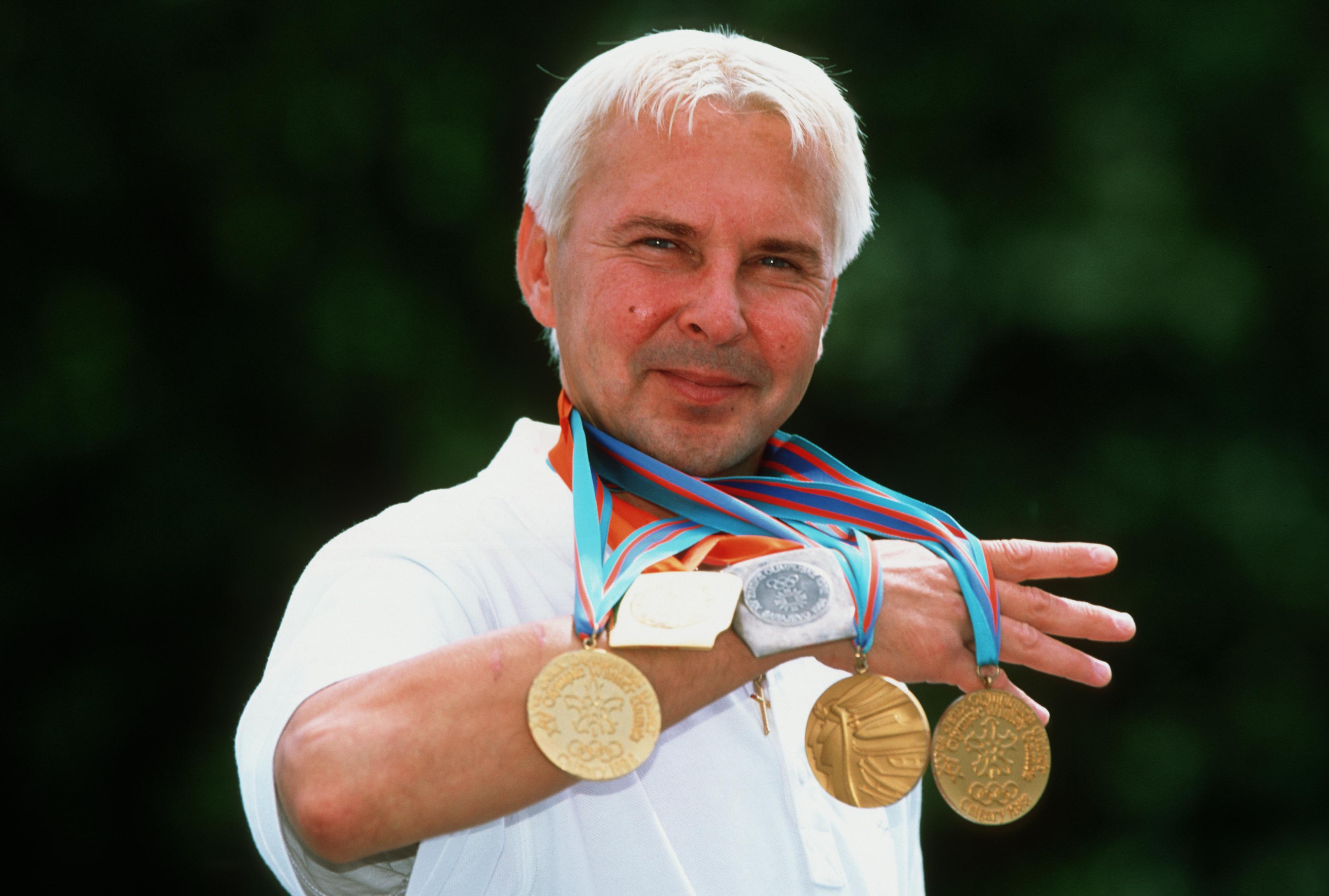
 

Feature Image
Category
Open to Public?
Off
Feature Image Media
Image
Timestamp
Author Text
Seth Masia

Crans-Montana, Kitzbühel dispute first downhill race

In early April 2011, a commemorative race was held on the ski slopes of Crans-Montana, Switzerland, to mark the 100th anniversary of the first Roberts of Kandahar downhill. Some 260 participants, organized into 60 teams, descended eight miles from the Plaine-Morte to Montana-Violettes, most of them wearing vintage skis and clothing, including retro glacier glasses. In the promotional flyer, event organizers said the race also marked the centennial of the “first official alpine ski race in history.”

This claim is contested by ski historians in Kitzbühel, who produced documents from the Kitzbühel Winter Sports Club, which held a “Ski Race for the Club Master Title” on the Hahnenkamm in April 1906. The timed downhill race covered three kilometers (1.86 miles) with a vertical drop of 624 meters (2,047 feet). It was won by Sebastian Monitzer in eight minutes, one second. “The quoted difference in altitude and route are almost identical to [the course] used for the ladies downhill in the 1940s and 1950s, as well as the Super G of today,” says the club’s letter of rebuttal. “Further ‘pure downhill’ races were held in subsequent years,” including a team downhill in February 1910. –John Fry

Feature Image
Category
Open to Public?
Off
Feature Image Media
Image
Timestamp

FOUNDER CALLS IT A DISSERVICE TO GUESTS

 The National Standard Race, NASTAR –designed in 1968 – brought the equivalent of golf’s par to skiing. Now, one of the eight original NASTAR ski areas, Vail, has decided to pull itself and its other Colorado ski resorts out of the 44-year-old national recreation racing program. NASTAR founder John Fry calls Vail’s decision “a disservice to its guests.”

The NASTAR handicap is the percentage gap between a recreational skier’s time and that of the local pacesetter, whose own handicap derives from his performance against a top racer on the U.S. Ski Team. NASTAR races are short, open giant slalom-type courses, usually on intermediate terrain. Last season, a skier could compare his or her rating – gold, silver, bronze — to that of anyone at any of 120 resorts across North America.

In 2011-12, nearly 100,000 skiers compared their race times to pacesetter and U.S. Ski Team racer Steve Nyman. Due to the poor snow season, participation was down 8.4 percent from the 568,428 runs of the 2010-11 season. During that big year, Vail ranked as the most NASTAR-crazy resort in the nation, posting 29,310 runs. Beaver Creek was second, with 20,062 runs. Together, four Vail Resorts in Colorado accounted for more than 13 percent of all NASTAR runs in 2010-11.

That won’t be the case in 2012-13. This coming season, Vail is abandoning NASTAR in order to create its own standard race linked to the company’s EpicMix online skier-tracking program. The program will operate at Vail, Beaver Creek, Breckenridge and Keystone in Colorado, and at Heavenly, Kirkwood and Northstar at Lake Tahoe.

NASTAR director Bill Madsen takes Vail’s exit philosophically. “Vail’s business model is to own everything that happens on the mountain. We will miss them. We think of NASTAR as a unifying force for the ski industry as a whole, and our championships as a unifying event.”

Four years ago, in a similar action, Vail Resorts withdrew its participation and funding from Colorado Ski Country USA, which promotes skiing at Colorado resorts.

NASTAR’s creator John Fry, former Editor-in-chief of SKI Magazine whose publisher came to own the program, is puzzled by Vail’s decision. “In the past, Vail guests coming from the East, Midwest or Far West, could enhance their NASTAR standings earned at their home ski area. That’ll no longer be possible.

“It’s difficult to see why Vail resorts would be doing this to their guests,” Fry continues. “Vail Resorts owns seven golf resorts. I doubt it would stop recognizing the handicaps guests hold at their home courses.”

Pacesetter for the EpicMix race season will be Vail skiing ambassador Lindsey Vonn, current World Cup women’s champion. EpicMix will hold a finale championship, to compete with NASTAR’s national championship, scheduled for Aspen/Snowmass at the end of March. The U.S. Ski Team, of which Vonn is a member, plays a prominent role in the Nastar championships, and even uses the handicap ratings of sub-teen racers to spot future talent.

EpicMix will rate racers by the number of seconds they’re behind the pacesetter, whose time is calibrated to Lindsey Vonn. Performance through the season is recorded on the skier’s pass, which is equipped with a radio-frequency identifying chip that also records lift rides and keeps a running total of vertical footage skied. Now the chip will automatically register the racer at the starting gate, billing the racer for each run ($5 or $6, according to a Vail press release). Finish times will post automatically to the EpicMix database. Race times, digital medals, leaderboards and race photos will be viewable on the EpicMix website and on the smart-phone app. Results can also be sent to a racer’s Facebook page or Twitter account.

It’s not the first time NASTAR has faced competition. The Equitable Family Ski Challenge, launched in the 1970s, ultimately failed.

The national pacesetter for NASTAR in the original 1968 season was Jimmie Heuga. The pacesetters for the upcoming 2012-13 season are U.S. Ski Team stars Ted Ligety and Julia Mancuso.


Category
Open to Public?
Off
Feature Image Media
Image
Timestamp

Giant slalom was invented in Italy in 1935 —  the result of an accident of weather, according to a recent article in the magazineSciare.  It happened when a downhill race, scheduled to take place on January 19, 1935, in Mottarone, above Lake Maggiore in Piedmont, had to be modified because of lack of snow.

In place of the classic, open downhill of the time, the FISI (Italian Ski Federation) commissioner Gianni Albertini decided

Helmuth Lantschner at Kitzbuehel, 1939

to prepare a new course with gates, forcing the racers to follow a specific path down the mountain.  The vertical drop was quite small, 300 meters (a thousand feet), so he decided that the race should be in two runs.  The winner, Austria’s Helmuth Lantschner took two minutes thirty-one and one-fifth seconds. Giacinto Sertorelli, the Italian ace, was third, six seconds behind.

FISI was so satisfied with the new formula that they officially introduced the giant slalom race in the Italian championships at Cortina, February 12, 1935.  A course was prepared on the Olympia delle Tofane, 900 meters vertical drop, course setter, once again, Gianni Albertini.  Twenty-six male competitors started.  The race was won by Giacinto Sertorelli, in six-and-a-half minutes.  Six women competed.  The winner was Paula Wiesinger, in eight minutes 19.8 seconds.

A recent article in Skiing Heritage gave attention to the American contribution to the development of the GS —  a 1937 race at Mt. Washington. Yet it was the Italians who sponsored an annual—and international—race.  In 1936 there was one on a shortened course on the Marmolada, won  by Eberhardt Kneissl of Austria. Full 50-gate slaloms were won in 1937 by Josef Gstrein (AUT),  in 1939 by Vittorio Chierroni (ITA).  Women’s races took place in 1935 with Gabriella Dreher (ITA) winning, Elvira Osirnig (SUI) in 1936.

Aspen in 1950 marked the first FIS World Alpine Ski Championships to include giant slalom. The gold medal was won by Italy’s Zeno Colò, who also won the downhill and took a silver in slalom. From the FIS GS at Aspenonward the GS was a one-run race until the World Championships at Portillo,Chile, in August 1966 when the men raced two runs, the women still one run. Four years later at Val Gardena, Italy, women began to race two runs in world championship GS.

Matteo Pacor, who operates the superb racing results website www.ski-db.com, recalls his first experience of watching a two-run giant slalom during the Innsbruck Olympics in 1976, held over two days.  “I was ten years old and a huge fan of Ingemar Stenmark.  He skied badly in the first run.  I didn’t sleep well.”

(Matteo Pacor, John Allen and John Fry contributed to this article. Photo of Helmuth Lantschner shot in Kitzbuehel, 1939)

Helmut Lantschner
Category
Open to Public?
Off
Feature Image Media
Image
Timestamp

2011 an historic year for ski jumping.

By Seth Masia

Ski Flying Record

On Feb. 11, 2011 Johan Remen Evensen took advantage of the newly-enlarged Vikersund 225-meter ski-flying hill in Norway, to set a new world record of 246.5 meters. That surpassed the previous record of 239m, set by Bjoern Einar Romoeren in March 2005 on the 215-meter hill at Planica, Slovenia.

Evensen, 25, went on to win his first-ever World Cup victory the following day, and finished the season 11th in World Cup points. Regarded by his Norwegian teammates as a late bloomer, Evensen’s previous career includes a bronze medal at the Vancouver Olympics and three silver medals at World Championships in 2009, 2010 and 2011 – all in team jumping events.

For video of Evensen’s record jump, see http://www.youtube.com/watch?v=453UBJjB1jc

College Ski Jumping Returns

On Mar. 5, the United States Collegiate Ski and Snowboard Association revived intercollegiate ski jumping, moribund in the United States since 1980, when the National Collegiate Athletic Association abandoned the sport. Alissa Johnson and Willy Graves, both of Utah’s Westminster College, won the first USCSSA National Championships, held on the K90 hill at the Olympic Training Park in Park City, Utah. Longest jumps of the day belonged to J1-class athletes Eric Mitchell (241.5 points, 90.5m and 102m), a member of Canada’s national ski team, and Sarah Hendrickson (225.5 points, 99m and 89.5m) of the U.S. Ski Team.

The results underscored the new strength of women in the jumping world: Hendrickson’s performance would have beaten Graves (281.5 points, 84.5m and 94m), had they been competing in the same class, and would have put her second in the men’s J1 class.

Twenty-eight athletes from Westminster College, University of Utah, University of Colorado, Carelton College, Utah Valley University and the University of Minnesota launched off the K90 ski jump. Officially, NCAA dropped ski jumping three decades ago due to liability concerns and a purported deficit of elite American jumpers. Insiders, however, say that colleges with weak jumping squads voted to kill jumping to strengthen the chances that points earned in alpine and cross country events would move them up in NCAA championship point standings.

Women to Jump at 2014 Olympics

Finally, on April 6, the International Olympic Committee approved the addition of women’s ski jumping as a medal event for the Sochi Games in 2014. The decision capped a decade of lobbying to bring women’s jumping to World Championship and Olympic venues. FIS upgraded women’s jumping to Continental Cup status for the 2004-05 season, and in 2006 added it to the World Championship schedule (for 2009, when the first gold medal was won by Utah’s Lindsey Van). Women will have their own World Cup circuit beginning in the 2011-12 season.

Nine women currently jump for the U.S. Ski Team, and 87 women from around the world competed in 20 Continental Cup events during the past season. In an era when light weight equates to long jumps, women have consistently jumped within about 3 percent of championship distances by men on the same hills, and have occasionally set hill records.

For now, the Olympic event for women is confined to individual medals on the small hill, but it opens the door for future women’s Olympic competition in team events and Nordic combined. It also remains to be seen if mainstream sports reporters can distinguish between jumping champion Lindsey Van and alpine champion Lindsey Vonn.

Women’s ski jumping has a long history. Writing in the March, 2009 issue of Skiing Heritage, Byron Rempel traced it back to 1862, when Ingrid Olavsdottir Vestby participated in the first recorded ski jump competition, in Trysil, Norway. While a number of women managed to jump in exhibitions and winter carnivals, especially in North America, it wasn’t until 1972 that Norway’s Anita Wold was allowed to jump at Holmenkollen. A breakthrough came in 1991, when Austrians Eva Ganster and Michaela Schmidt began pre-jumping for FIS competitions, thanks in part to pressure brought on FIS by their fathers. In 1994, at 16, Ganster jumped 113.5 meters on the Lillehammer Olympic hill. Thereafter, FIS allowed women to jump in demonstration events. In 1999, the U.S. Ski Association added a women’s class in the U.S. Ski Jumping Championships, and in 2002 FIS launched its Ladies’ Tour Ski Jumping series.


Johan REmen Evensen
Category
Open to Public?
Off
Feature Image Media
Image
Timestamp

By John Fry

The overall World Cup championship was to have been determined by a single giant slalom race, to be held on Saturday, March 19th, 2011 in the 4,921-foot high Swiss ski resort of Lenzerheide. On the eve of the race, Germany’s Maria Riesch led America’s Lindsey Vonn by just three points.

Vonn and Riesch were the only two women racers who competed in all of last winter’s 33 World Cup women’s races. Vonn had recorded eight wins, Riesch six; each enjoyed 16 podium finishes. You can’t get much closer than that. The result of a whole season was to be determined by three minutes of highly technical skiing that would test the outer limits of mental strength. For the press and fans, the March 19 GS promised to be a race to be savored for all time.

So what happened?

The FIS canceled the race.

Weather, warm temperature, rain, fog, crusted and rotting snow would have made the GS course dangerous to ski. It was a sound decision for safety. The FIS awarded the 2011 overall World Cup to Riesch without her ever entering the starting gate.

Why wasn’t the race held later. . a postponement rather than a cancellation? And what of the fact that the FIS held a men’s slalom later in the day, and a team competition the next? And what of the reasoning of officials that the rules governing specialist titles, like season-long downhill champion, apply to the overall title? After all, only two racers were in a position to win it.

Finally, why did the FIS not stage for the world a two-woman Vonn-Riesch race the following week at a resort where the snow conditions were better? Such a race would have combined all of the elements of emotional suspense and of the athletes’ abilities to handle pressure that were originally contained in the canceled gs. Was justice served? Or outraged?


Category