Competition

All forms. Use in place of Racing, Race Results etc

Open to Public?
Off
Feature Image Media
Image
Timestamp

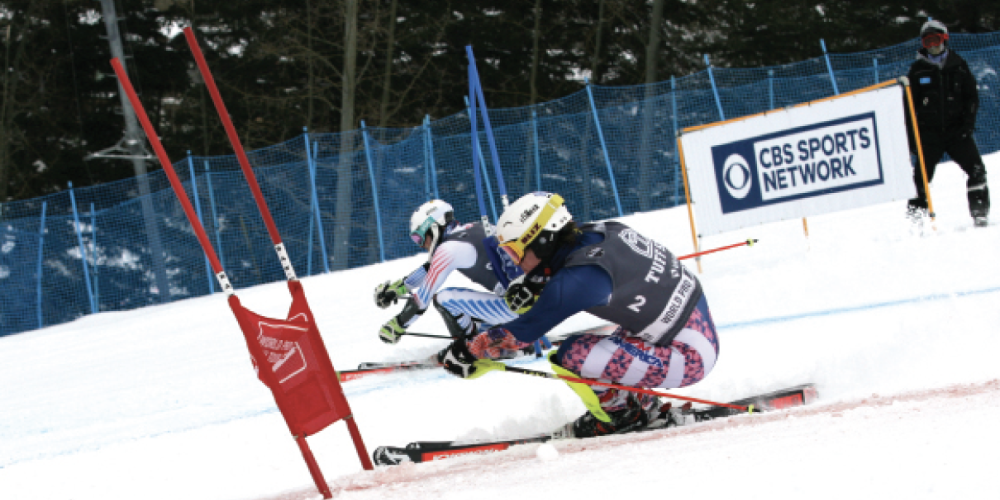
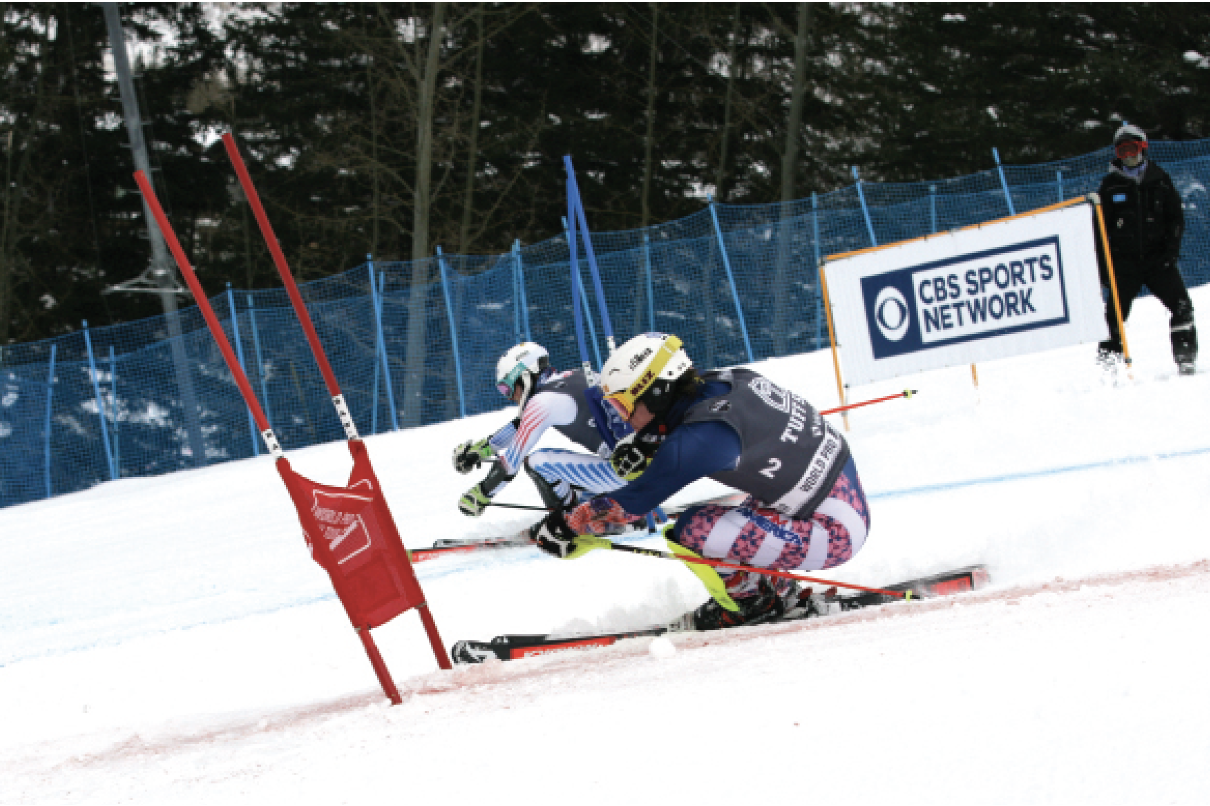
World Pro Ski Tour draws star athletes but suffers short season due to COVID-19.

The World Pro Ski Tour never got to the meat of its season, which would have seen seven-time gold medalist Ted Ligety contending with silver-and-bronze Olympian Andrew Weibrecht for $150,000 in championship prize money. 

Before the pro season was canceled, Ligety, at age 35, did break away from the World Cup season to compete in two Pro Tour races at Steamboat’s Howelsen Hill and Eldora. He had trouble learning to time the barn-door starting gates and his best finish was a fourth place at Steamboat—proving, he said, that the Tour was serious competition.

The Tour entered its third season with six events scheduled. A long list of sponsors, led by Tito’s Handmade Vodka, offered $300,000 in prize money. When COVID-19 canceled the final three events, Rob Cone of Killington and Middlebury College, a former NCAA champ and U.S. Ski Team Europa Cup racer, topped the field of 21 racers who finished in the money, winning $30,200 for the truncated season. Michael Ankeny, of Buck Hill and Dartmouth College, a veteran of eight years on the U.S. Ski Team, came second ($12,200). Garrett Driller of Squaw Valley and Montana State, an NCAA All American and U.S. Alpine Championship parallel slalom winner, finished third ($8,350). 

The Tour Finals at Sunday River and the World Pro Championships at Taos were scheduled for April, after the close of the World Cup and national championships. Ligety and Weinbrecht were on the schedule to compete at those races. “To succeed, the tour needs those top athletes,” said tour chief Jon Franklin, who earned his chops managing top skiers for International Marketing Group. Because the Taos championship event would have awarded $150,000 in prize money, the participation of FIS superstars might have upended the full-season leaderboard. All the events were televised by CBS Sports Network (see season highlights at https://worldproskitour.com/multimedia/).

Franklin predicts a longer, richer tour for the 2020-2021 season. “We don’t have a schedule yet because it has to fit around the NorAm and World Cup schedules,” he points out. He hopes to open the season before the Beaver Creek World Cup in November. 

Pro skiing has always depended on the star power of World Cup racers, beginning when Bob Beattie’s new World Pro Skiing circuit recruited the likes of Jean-Claude Killy and Billy Kidd. Fifty years ago, in 1970, Kidd won the FIS World Championship combined gold medal, promptly turned pro and then won the WPS championship the same season. He’s still the only skier to pull that one off. —Seth Masia

Category
Open to Public?
On
Full Access Article for Public

FIS calls for a ban on all fluorinated waxes for next season. By Greg Ditrinco

The International Ski Federation (FIS) surprised some ski-race insiders by calling for a ban on the use of all fluorinated ski waxes for next season. The announcement, made at the Federation’s annual fall meeting in Constance, Germany, will catalyze changes in race ski-prep procedures and technology.  

“The use of fluorinated ski waxes, which have been shown to have a negative environmental and health impact, were banned for all FIS disciplines from the 2020–2021 season,” according to a FIS press statement released in November 2019. A working group will be formed to establish the new regulations.

The ban originated from the Committee for Competition Equipment, a panel that defines the technical specifications used across the FIS snow sports spectrum: alpine, cross-country skiing, nordic combined, ski jumping, snowboard, freestyle and freeski. The new working group has a rugged road ahead to unite a diverse array of nations and competitive disciplines to agree upon compliance standards.

The Norwegian Ski Federation banned the use of “fluoros” for all racers U16 and under last season, which was used as a test case by FIS to determine if a widespread ban was feasible, according to Ski Racing. Apparently, the answer was yes.  

Fluorinated waxes significantly decrease friction and increase glide, and can be used across all ski and snowboard disciplines. As with all bans involving athletic performance or equipment, the success of a prohibition greatly depends on the ability to enforce the ban in the field and reliably test for non-compliance. 

The waxes contain perfluoroalkyl and polyfluoroalkyl substances, collectively known as PFAS, which have been linked to a growing list of health concerns. The chemicals are found in drinking water and persistently remain in the food chain. Sometimes called “forever chemicals,” PFAS are resistant to moisture and extremely slow to break down. These are the same qualities that make them so effective in ski waxes. 

From pine tar to fluorocarbons, waxing to win has been a constant in ski competitions. Ski waxing, however, long predates alpine skiing. It arose in the early days of Scandinavian ski-sport, from the coincidence that waterproofing wood also helps it to glide on snow. Whether you’re building a ship or a ski, you need to apply a preservative to wood. The earliest known preservative was pine tar, often called pitch.

Waxing evolved along with ski gear. Cross country racer Peter Østbye, born near Lillehammer in 1888, patented Østbyes Klister in 1913. By 1940, a rub-on alpine wax called 1-3-5 was sold under the brand Toko. In 1946, a company was founded under the name of Swix, a blend of the words ski and wax. Swix offered hard and soft waxes to cover a range of snow conditions, providing both glide and durability. Beginning in 1986, Terry Hertel in California and Swix chemists in Norway independently discovered that adding fluorocarbon to wax increased glide by two percent, which can determine the margin of victorarticle online here.y in a race. Hertel introduced a commercial version in 1986; Swix followed in 1990, with a fluorocarbon powder that sold for $100 for three grams.

The growing use of fluorinated waxes came with increased scrutiny. Recent studies and subsequent publicity apparently accelerated the push for the ban. In 2016 Congress amended the Toxic Substances Control Act, requiring the U.S. Environmental Protection Agency to control chemicals deemed harmful to human health. As one result, starting in early 2018 the EPA notified all companies using fluorocarbons in their products to document the specific chemicals and amounts used. For ski wax manufacturers and importers this would mean reporting all chemicals – dyes, scents, waxes, hardeners and fluorines, retroactively. Most wax companies couldn’t afford the complex procedures and many immediately stopped selling and making fluorowaxes. Besides, the most common fluorines will be banned in the EU starting in July 2020. It was in this context that FIS imposed the new ban. 


For more information on the history of ski wax, see “Grip and Glide” by Seth Masia in the June 2010 issue of Skiing History, or read a variation of the article online.

Feature Image Media
Image
Timestamp

FIS calls for a ban on all fluorinated waxes for next season. By Greg Ditrinco

The International Ski Federation (FIS) surprised some ski-race insiders by calling for a ban on the use of all fluorinated ski waxes for next season. The announcement, made at the Federation’s annual fall meeting in Constance, Germany, will catalyze changes in race ski-prep procedures and technology.  

“The use of fluorinated ski waxes, which have been shown to have a negative environmental and health impact, were banned for all FIS disciplines from the 2020–2021 season,” according to a FIS press statement released in November 2019. A working group will be formed to establish the new regulations.

The ban originated from the Committee for Competition Equipment, a panel that defines the technical specifications used across the FIS snow sports spectrum: alpine, cross-country skiing, nordic combined, ski jumping, snowboard, freestyle and freeski. The new working group has a rugged road ahead to unite a diverse array of nations and competitive disciplines to agree upon compliance standards.

The Norwegian Ski Federation banned the use of “fluoros” for all racers U16 and under last season, which was used as a test case by FIS to determine if a widespread ban was feasible, according to Ski Racing. Apparently, the answer was yes.  

Fluorinated waxes significantly decrease friction and increase glide, and can be used across all ski and snowboard disciplines. As with all bans involving athletic performance or equipment, the success of a prohibition greatly depends on the ability to enforce the ban in the field and reliably test for non-compliance. 

The waxes contain perfluoroalkyl and polyfluoroalkyl substances, collectively known as PFAS, which have been linked to a growing list of health concerns. The chemicals are found in drinking water and persistently remain in the food chain. Sometimes called “forever chemicals,” PFAS are resistant to moisture and extremely slow to break down. These are the same qualities that make them so effective in ski waxes. 

From pine tar to fluorocarbons, waxing to win has been a constant in ski competitions. Ski waxing, however, long predates alpine skiing. It arose in the early days of Scandinavian ski-sport, from the coincidence that waterproofing wood also helps it to glide on snow. Whether you’re building a ship or a ski, you need to apply a preservative to wood. The earliest known preservative was pine tar, often called pitch.

Waxing evolved along with ski gear. Cross country racer Peter Østbye, born near Lillehammer in 1888, patented Østbyes Klister in 1913. By 1940, a rub-on alpine wax called 1-3-5 was sold under the brand Toko. In 1946, a company was founded under the name of Swix, a blend of the words ski and wax. Swix offered hard and soft waxes to cover a range of snow conditions, providing both glide and durability. Beginning in 1986, Terry Hertel in California and Swix chemists in Norway independently discovered that adding fluorocarbon to wax increased glide by two percent, which can determine the margin of victory in a race. Hertel introduced a commercial version in 1986; Swix followed in 1990, with a fluorocarbon powder that sold for $100 for three grams.

The growing use of fluorinated waxes came with increased scrutiny. Recent studies and subsequent publicity apparently accelerated the push for the ban. In 2016 Congress amended the Toxic Substances Control Act, requiring the U.S. Environmental Protection Agency to control chemicals deemed harmful to human health. As one result, starting in early 2018 the EPA notified all companies using fluorocarbons in their products to document the specific chemicals and amounts used. For ski wax manufacturers and importers this would mean reporting all chemicals – dyes, scents, waxes, hardeners and fluorines, retroactively. Most wax companies couldn’t afford the complex procedures and many immediately stopped selling and making fluorowaxes. Besides, the most common fluorines will be banned in the EU starting in July 2020. It was in this context that FIS imposed the new ban. 


For more information on the history of ski wax, see “Grip and Glide” by Seth Masia in the June 2010 issue of Skiing History, or read a variation of his article online:  skiinghistory.org/
history/grip-and-glide-short-history-ski-wax

Open to Public?
Off
Feature Image Media
Image
Timestamp

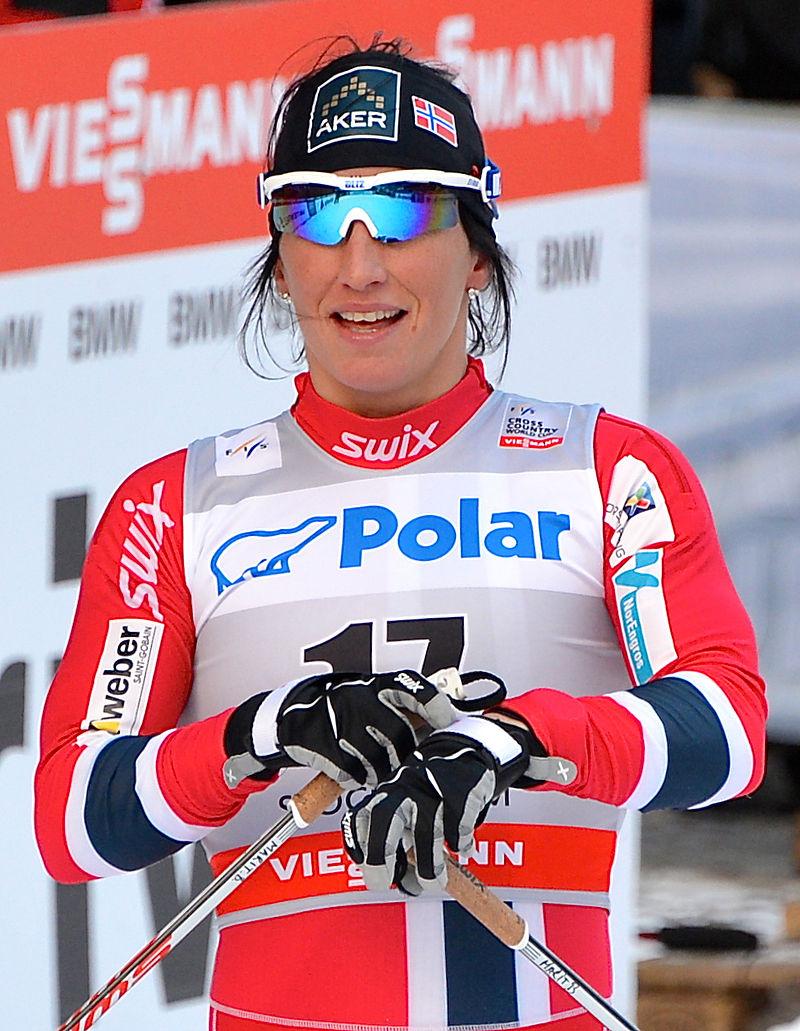
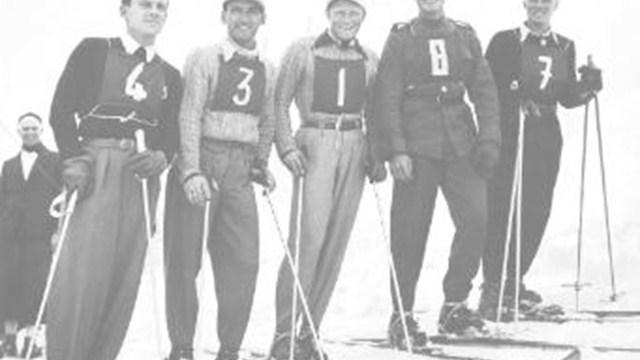
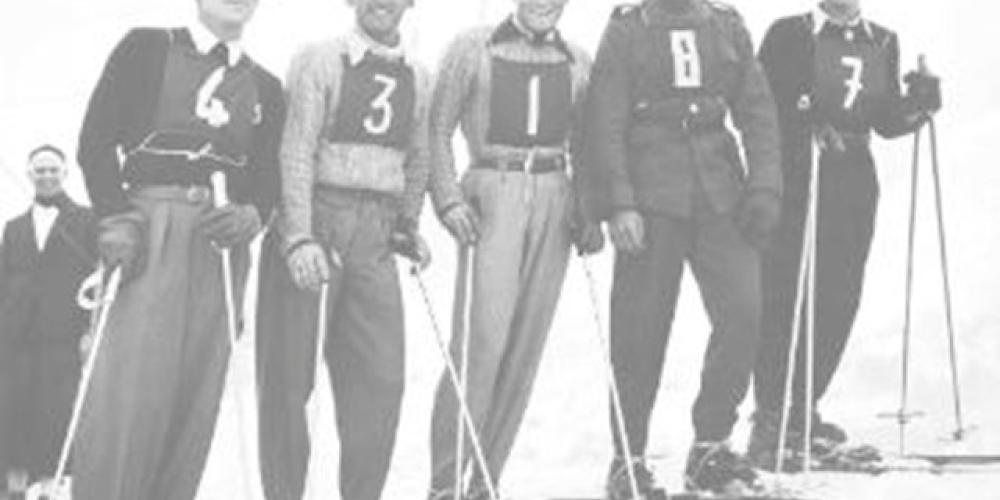
Can you name these five skiers?

  1. Won both the Olympic downhill and the Olympic ski jump.
  2. First to win all the alpine events in a single Olympics.
  3. Won three Olympic golds and the overall World Cup in the same year.
  4. Set the world record for ski jumping distance five times.
  5. Won 26 World Championship and Olympic gold medals and 114 World Cup races.

The answers:

  1. Birger Ruud
  2. Toni Sailer
  3. Jean Claude Killy
  4. Matti Nykanen
  5. Marit Bjorgen
Category
Open to Public?
Off
Feature Image Media
Image
Timestamp

Small vertical, big results: A 750-f00t-high ridge in Ontario has spawned many of Canada’s Olympic and World Cup champions. By Lori Knowles

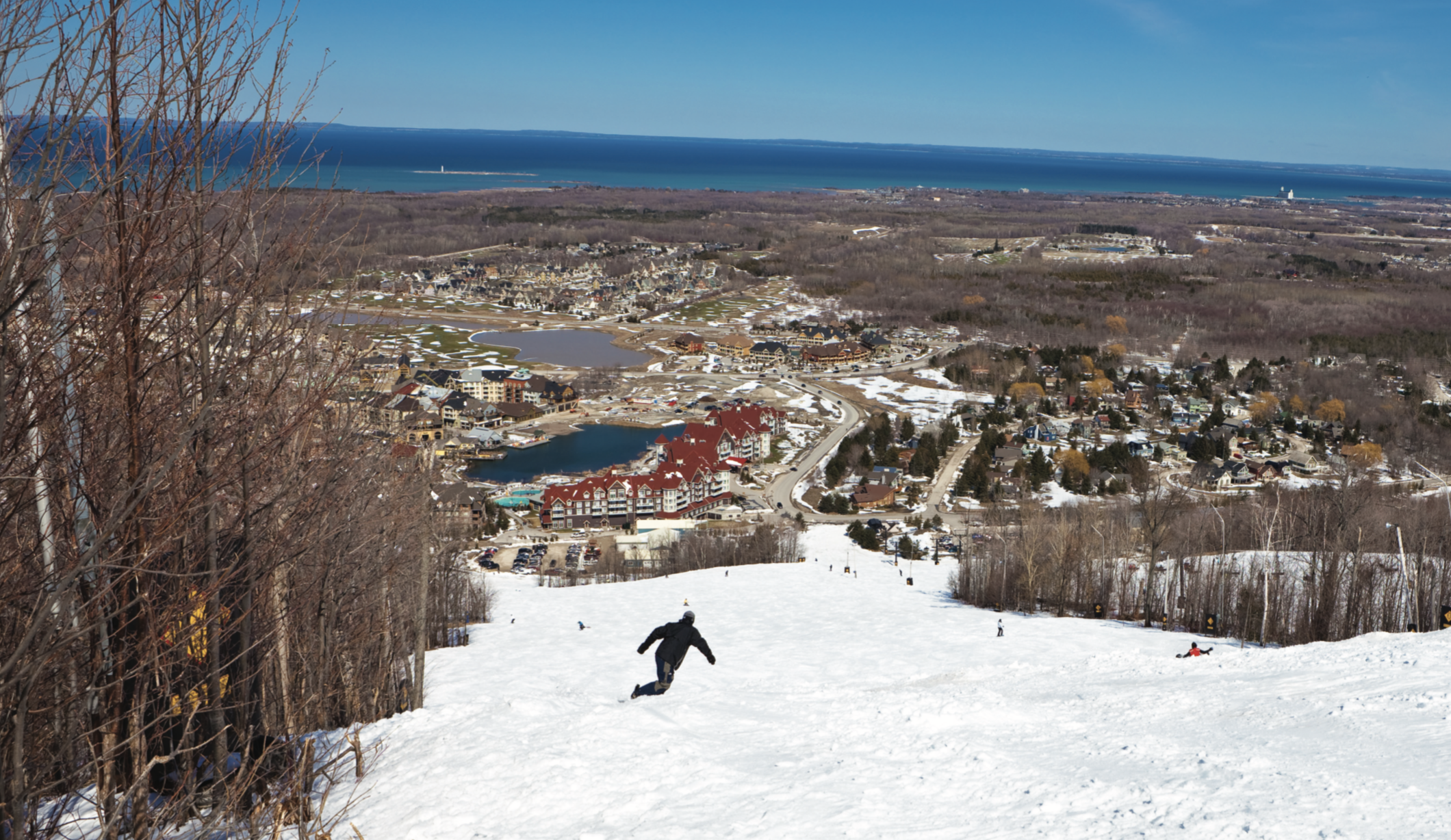
Creative Canadian marketers call it the Blue Mountains but locals know it as the escarpment—a rim overlooking Georgian Bay, a geological landmark of Southern Ontario with a vertical drop of 750 feet and a 2.5-mile-long strip of steep ski runs that have produced some of the world’s greatest ski racers: 1980 Olympic bronze medalist Steve Podborski; four-time Olympian Brian Stemmle; three-time World Cup downhill winner Todd Brooker; and six-time World Cup ace Laurie Graham. An impressive number of Canada’s top competitors spent their formative winters along this ridge: riding tows, dancing through gates, schussing icy chutes.

It started in the early 20th century, as it always does, with an intrepid group of men and women wearing laced boots and gabardine suits. Recognizing the ski potential of a snowy escarpment 100 miles (160 kilometers) north of Toronto near Collingwood, the Toronto and Blue Mountain ski clubs made their mark. Through the 1920s and ’30s they built ski jumps and cut runs. History books say a fox-hunting trumpet called skiers to the slopes; horses hitched to sleighs carried them to the runs. With names like Wearie, Gib, Nipper and Hans, these pioneers persevered...

Category
Open to Public?
Off
Feature Image Media
Image
Timestamp

In a poll of Skiing History readers, 59 percent put Stenmark first.

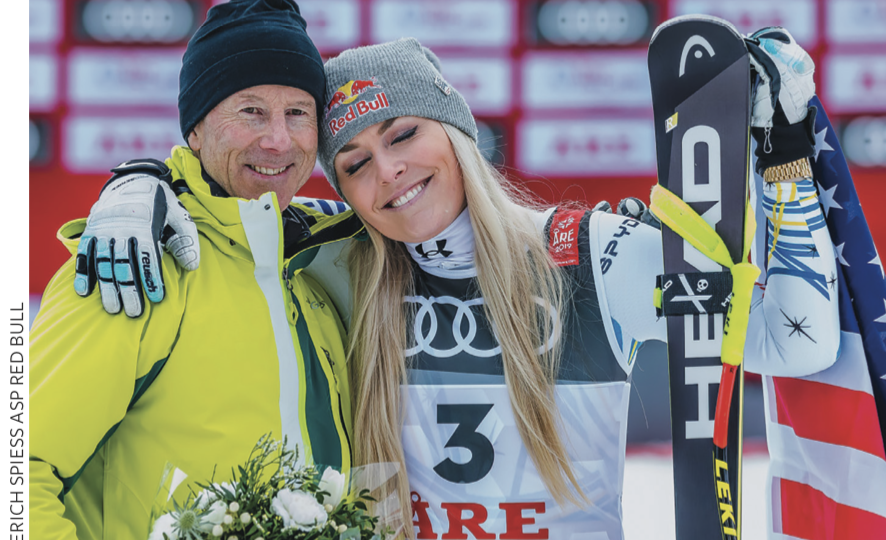
Lindsey Vonn’s decision at the beginning of February 2019 to retire, four victories short of Ingemar Stenmark’s 86 World Cup wins, gives rise to a debate: Which racer’s record is superior? It may be an artificial question created by the press, but Vonn herself said, “Retiring isn’t what upsets me. Retiring without reaching my goal is what will stay with me forever.”

The World Cup was originally created to honor all-round excellence in technical and speed competition. Vonn won in all disciplines, Stenmark in only two.

Starting in February, Skiing History ran a poll on its website (www.skiinghistory.org) and Facebook page (www.facebook.com/skiinghistory), asking our readers to choose between Vonn and Stenmark. Of 962 votes cast, Stenmark received 568 (59 percent) and Von 394 (41 percent). Here are some of the comments from voters... 

Stenmark vs Vonn
Category
Open to Public?
Off
Feature Image Media
Image
Timestamp

U.S. Skiing could learn a lot from the success formula within its own women’s cross-country team. By Edith Thys Morgan

The FIRST, EVER, cross country gold medal for the U.S.!” Those words, screamed by commentators in joyful disbelief, capped off one of the most memorable moments of the 2018 Winter Olympics. When Americans Kikkan Randall and Jessie Diggins won the team freestyle event, it was not only a triumph of persistence and hard work, but also the ultimate validation of the power of team. 

The U.S. victory was particularly interesting against the backdrop of Norway’s record 39 Olympic medals in Pyeongchang, accomplished with a mere 109 athletes (Team USA won 23 medals with 242 athletes). The buzzwords behind Norway’s success—culture and team—echo the values portrayed in World Class, a new book by Vermont author Peggy Shinn. They also stand in stark contrast to the dynamics that have evolved on the U.S. Alpine Ski Team in the past decade, where individual superstars have assembled private teams that cater exclusively to their needs. U.S. Alpine success in Pyeongchang was underwhelming, and U.S. Skiing could learn much from the success formula within its own organization. Through extensive research and interviews, Shinn recounts the history of the U.S. Nordic Ski Team, and details the team’s journey from the low point in 2005–2006—when the U.S. did not even name a women’s Nordic ski team for the World Cup season—to the spring of 2017, when a full team of medal-ready women stood poised to make history. 

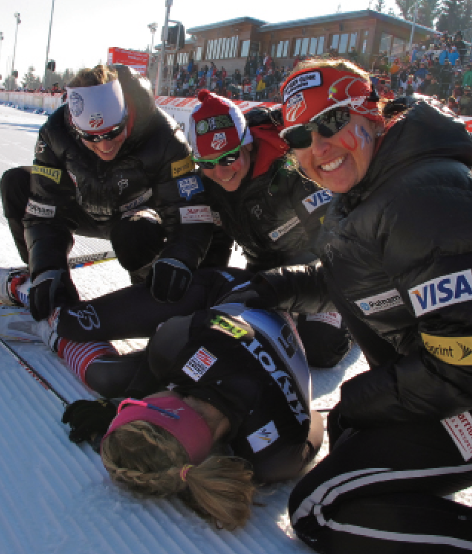
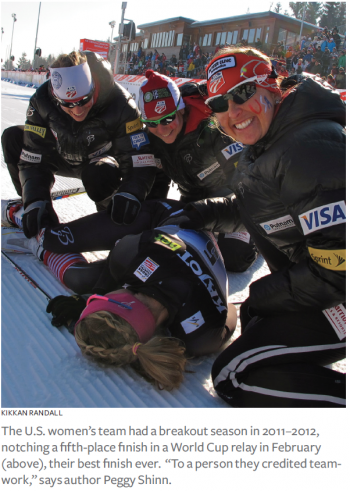
Shinn got her inspiration while watching the U.S. Women’s Nordic Team during its breakout season of 2011–2012.  The women had just notched their best World Cup relay finish ever, fifth place, and they had done it without their longtime superstar, Kikkan Randall, who was ill that day. When Shinn asked the women about their success, she writes: “They did not credit their individual strengths…to a person they credited teamwork.” As a former competitor in many sports, and a journalist covering Olympic sports for Team USA.org, Shinn was intrigued. She set about understanding the power of team, and showing it work through the lens of a sport that is known for being solitary, brutally demanding, chronically underfunded and not particularly fun. 

After that breakthrough season, the team would go on to win eight medals in three World Championships in the next five years, and they would accomplish this decked out in patriotically striped goofy socks, pink-streaked hair, glittery face paint and huge smiles. The medals validated their own individual journeys of hard work, optimism and uncompromising standards, but also their unwavering commitment to each other. As Shinn writes of the Nordic team: “They have everything from the transformational leader, to the coach who connects with his athletes, to the agreeable, conscientious energizers who comprise the team.”


THE LEADER
The transformational leader is Kikkan Randall, an Alaskan who graduated from high school in 2001 with the nickname “Kikkanimal” and a ten-year plan to win an Olympic medal. She soon became a star on the U.S. Ski Team. Like top U.S. Nordic women before her, she did this as a solo star, traveling and training with the U.S. men or with women from other countries. Unlike many stars, Randall is also the consummate teammate and leader, who hordes neither control nor attention, and is “as happy for her teammates’ successes as she [is] for her own.” In the spring of 2006, inspired by the steady and remarkable ascent of the Canadian Nordic team, Randall lobbied hard for a women’s team, with teammates and a dedicated coach. Coach Pete Vordenberg demanded a $1 million budget for the Nordic Team and U.S. Skiing president Bill Marolt agreed, putting the money towards coaches and a young development team.  


THE COACH

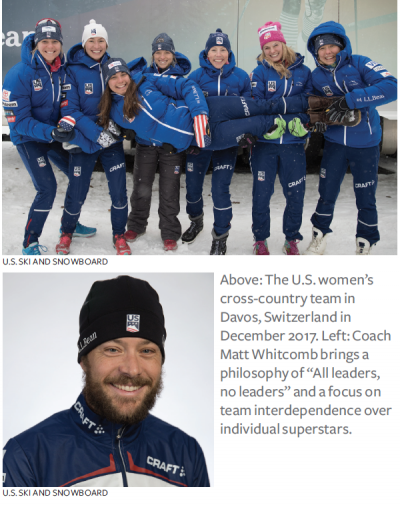
Matt Whitcomb, who had built a Nordic program at Burke Mountain Academy, joined the U.S. Cross Country Ski Team in 2006 and was named head women’s coach in 2012. He brought the structure, discipline, patience and inclusiveness to turn Randall’s team vision into a reality. Friendly and approachable, his positive coaching style—gleaned from his own coaches growing up in the Berkshire Mountains of western Massachusetts—reinforced what athletes did right, versus dwelling on what they did wrong. He also adopted Burke’s motto of, “All leaders, no leaders.” Whitcomb explains that only four of the seven podium-level women can be on a relay team. “But it’s the three who aren’t selected who hold the key in their hands. The tone that they set—from the moment they find out they are not selected for the relay—can either add or subtract from the team atmosphere.” That realization of interdependence is a cornerstone of how the team viewed and treated each other. 


THE ATHLETES
In addition to these remarkable leaders, World Class is about the entire team that buoyed, pushed and lifted each other to greater heights.  This includes Liz Stephen, Holly Brooks, Jessie Diggins, Ida Sargent, Sadie Bjornsen, Sophie Caldwell and Rosie Brennan—women

who range from young phenoms to college athletes to working adults, and come from points all across the country—as well as the many women before them who steadily emboldened Team USA. They did so by their performances but also by cheering wildly from the sidelines, being patient with rookie moves and costly mistakes, or embracing rituals like group karaoke and writing personalized Secret Santa poems. Working hard together, inside a supportive, communicative, and optimistic environment, they became a high-performance engine.

THE ATTITUDE, AND LACK THEREOF
World Class is also about cooperation for a common cause, and how a sport becomes a family. The decades it takes to fully develop talent, combined with notoriously shoestring budgets, mean the U.S. Nordic Ski Team must rely heavily on privately funded, post high school feeder programs. These include the Craftsbury Green Racing Project and the Stratton Mountain School T2 in Vermont, along with Alaska Pacific University and top NCAA schools that fund development through their ski teams. The National Nordic Foundation—a nonprofit grassroots organization—also lends support to up-and-coming Nordic skiers. Success depends on cooperation and communication between all these organizations and the national federation. Here, too, the Alpine team can take notes on how to fully embrace and optimize development resources. 

World Class captures many pivotal moments, be they inspirational success, resilience after failure or the necessary readjustments when the magic seemed to be gone, and tells a story that goes well beyond the success of one team. As Sadie Bjornsen said after her first individual World Cup podium: “…We are dreamers. But we are also believers. It’s crazy how much confidence you can get from a teammate’s success if you allow yourself to stand beside them.”

World Class: The Making of the U.S. Women’s Cross-Country Ski Team by Peggy Shinn. Published by ForeEdge (2018); 248 pages, 38 color illustrations; $19.95 paperback, $14.99 e-book (www.ForeEdgeBooks.com).

Category
Open to Public?
Off
Feature Image Media
Image
Timestamp

From the FIS website:

The International Ski Federation - Fédération Internationale de Ski, Internationaler Ski Verband - is abbreviated in all languages as FIS.

FIS was founded on the 18th of February in 1910 when 22 delegates from 10 countries joined together to form in the International Skiing Commission in Christiania (NOR) and served from 1910 to 1924. The group became formally known as the International Ski Federation on 2nd February 1924 during the first Olympic Winter Games in Chamonix, France with 14 member nations. Today, 123 National Ski Associations comprise the membership of FIS.

Whilst the existence of skiing as means of transport is very ancient, its practice as a sport is relatively recent. It was not developed in Norway until after 1850, when the first races were held around the town of Christiania, which later became the city of Oslo. From 1870 onwards, the Alpine countries were in turn affected by the rapid expansion of skiing as a sport: the first competitions in Germany in 1879, the foundation of the first Swiss Club in 1893 at Glaris initiated by Christoph Iselin. National Ski Associations appeared in turn in Russia (1896), Czechoslovakia (1903), the United States (1904), Austria and Germany (1905) and Norway, Finland and Sweden (1908). From 1910 to 1924, the International Skiing Commission strove to monitor the development of competitive skiing throughout the world. In 1924, at the time of the first Olympic Winter Games, this Commission gave birth to the Federation International de Ski.

For more information on the past International Ski Congresses, see here.

Feature Image
Category
Open to Public?
Off
Feature Image Media
Image
Timestamp
Author Text
By Serge Lang

Translated from the French by D. Wright Pryce

Published posthumously, with the kind permission of Patrick Lang

Editor’s Note: Today’s World Cup of Alpine Skiing is so firmly in the grasp of the International Ski Federation (FIS) administration and of the national ski federations that it has almost been forgotten that the world-wide, season-long competition was not an FIS initiative, but one spearheaded by the press. The actual individual initiator was the dean of Europe’s ski writers, the late Serge Lang, a Swiss who lived partly in France, and wrote for the Paris-based sports daily, L’Equipe, as well as for German and Italian newspapers. Shortly before his death in 1999, Lang wrote a history of how the World Cup was launched more than 40 years ago.  


The World Cup was to be brought into being by a near-perfect conjunction of events and by the support of a handful of important people.

The very name chosen to designate it was of the utmost importance. World Cup, Coupe du Monde, Weltcup, Coppa del Mondo, echoed like a fanfare in all the languages of the world.  Other than in soccer, there were no other World Cups at the time. And soccer's international trophy had only been dubbed the World Cup by the British that same year. Today, of course, there are a hundred-odd world cups, in everything from sailing to cycling, fencing to volleyball, rugby to bob-sledding. In skiing alone—including jumping, cross-country, freestyle - there are half dozen World Cups, all inspired by the name and, sometimes, by the spirit and the formula of the alpine skiing World Cup, which my colleagues and I created.

The World Cup was not only a journalistic creation, a fact that I can confirm, having been a journalist since 1940. It was an event devised with the media in mind—not just the mass-circulation newspapers and the sporting press, but also radio and especially television. Audiences, viewers, readers and sponsors have proven this to be right. The World Cup has become a massive world-wide attraction.

In the early days, however, only three journalists were prepared to put their professional weight behind the project. Those three were: Michel Clare of L'Equipe, the famous French sports paper ; John Fry, then editor-in-chief of Ski Magazine in New York; and Austria's Kurt Bernegger, a reporter for Salzburger Nachrichten, later with Austrian television and to my mind the most far-sighted commentator of that era.

And what of all the other sportswriters and broadcasters? While they were not really against the World Cup, neither were they ready to support it. Later I was to read with great interest that a good many of them had, for a long time, imagined a similar ranking system. Well, such a system was not unique. Other sports had adopted a point-based ranking system for some time. The Desgrange-Colombo Challenge and the Prestige Pernod in cycling, and the Golden Ski of L'Equipe, awarded ten years earlier, all used similar systems.

The original World Cup of alpine skiing, in fact, borrowed its format from sailing. It followed a system of counting at the beginning of the season a limited number (best three) of finishes from each discipline towards the overall ranking.

"That way, our skiers won't feel obliged to participate in every race," said French team coach Honore Bonnet. He was wrong, as we were all to realize very soon, having ignored the racers' strategic sense of what was needed to win. Even after having accumulated their maximum number of points in any given event, they still entered races in order to deny rivals the chance to score more and get closer to them.

It Began at the Hahnenkamm

The story of the World Cup began late one January morning in 1966, less than a hundred meters from the "Hinterseer Farm," halfway down Kitzbühel's Hahnenkamm famous downhill course. Struck by sudden inspiration, I turned to French Team Director Honoré Bonnet and US coach Bob Beattie, who, like me, were there to watch the practice runs.

"What we are going to do," I said, "Is...to hold a World Cup." I was speaking in English for the benefit of Bob Beattie, so "World Cup" was the actual phrase I used. At that point Beattie was defending the idea of holding the FIS World Championships annually. (Ed. Note: The FIS World Championships were, and still are, held every second year.)

In a way, of course, I can take no great credit for coining the name World Cup. For several weeks the British had been using the term to describe soccer's world championship being played in England that summer of 1966. In Portillo, Chile, at the 1966 World Alpine Ski Championships, I remember standing on the edge of the downhill course at 10 a.m. listening to the soccer final between England and West-Germany at Wembley.

It was at Portillo that skiing’s World Cup was effectively born, thanks to Bonnet, Beattie and Dr Sepp Sulzberger, a lawyer who was in overall charge of the Austrian Alpine ski team. But it was Marc Hodler, President of the International Ski Federation (FIS) since 1951 who had the courage to shoulder the heavy responsibility and declare that the first World Cup would be raced under FIS patronage in the winter of 1967.

MARC HODLER SEALS THE DEAL

I once read that history knows how to choose the men and the women it needs to carry out its destiny. Perhaps it is true. After all, I held no mandate in any ski federation. The only official title I had was president of the International Association of Ski Journalists. But this was enough to enable me to have official-and usually friendly - relationships with the executives of the various ski federations, the FIS and, more importantly, its president.

Even though Hodler had long been enthusiastic about such a project, nothing was certain in Portillo. Even after long days and nights of negotiations with my three partners and with the project finally ready, Bob Beattie doubted that we would get FIS approval. For a week, Beattie listed the possible objections, even though he was one of the greatest supporters of the World Cup idea. One evening he got up from the table, pointed to a piece of paper on which we had noted the various points of our agreement—the dates of the first schedule, the rules and the points system and so on—and said : " Marc Hodler will never accept this proposal. "

Fortunately this was a gross misreading of Marc Hodler, of his sportsmanship, enthusiasm, goodwill and his long range vision. The next day, around noon, and in the same bar where, with the aid of much "Pisco" and coffee , we'd just spent a good part of our Chilean nights, Marc Hodler studied the proposal for a few minutes then asked simply : "What time do you want me in the Press Room to announce the creation of this World Cup?"

A NEW ERA BEGINS

And so, in the heart of the Andes, thousands of miles from the Alps, the old calendar of ski racing died on August 11, 1966. A new era, whose outlines we could not yet make out, was about to begin.

At the time, international ski racing was in the doldrums - except for its natural peaks, the Olympic Games and the World Championships. Meanwhile, a new medium had arisen. The growth of television highlighted the need for a change in the ski racing’s format.

TV had already begun to make its presence felt in the skiing world, making stars out of what had formerly been ski racing champions on paper. Racers likes Jean Claude Killy, Karl Schranz and Leo Lacroix clamored for TV attention. International skiing was desperately in need of a new showcase.

Bonnet and Beattie had come up with the idea of an Alpine Countries Cup. The concept played down individual victories and elevated nation-by-nation racing. It was an excellent idea in itself, but unlikely to generate mass popular interest. Ski racing is a sport of individuals, not a team game. And TV wanted to concentrate on stars. Nevertheless, the national team competition idea persisted. The mid-March 1965 “World Series of Skiing” at Vail was restricted to nations – France, Austria and the U.S. -- whose athletes had won medals at the Innsbruck Olympic Games the year before.  Excluded were the Canadians and the Swiss. They were snubbed. And, in the view of some people, unfairly.

Meanwhile, something else happened in 1965. During the summer, in the heart of Roubaix, France, a dense crowd had gathered to witness the morning start of one of the stages of bicycling’s Tour de France. In the confusion, Jacques Goddet—chief editor of l'Equipe (the French daily sports newspaper) and head of the Tour de France itself - strode towards me in pressed khaki pants, like a central-casting British officer.

"Hello Serge" he said. "Listen, dear friend, no-one can make head nor tail of this ski racing business anymore. One day Killy is winning, the next it's Schranz, Marielle or Billy, Dick or Harry. Come on, get me something together. A challenge to decide the winner, a gimmick or an event like the Super Prestige Pernod in cycling. Fix it with Albert de Wetter and get me an outline before the end of the Tour de France" At that time, De Wetter, a noted journalist, was one of L'Equipe's two representatives in the Publicis group, the main advertising agency of this important sports paper.

Over an awful cacophony of car horns, De Wetter shouted at me: "I've found a client who wants to spend a quarter of a million to link his logo with skiing and snow—it's Evian mineral water. You get the picture—drink Evian and feel like you're in the French Alps. Set up a challenge with a ranking over a number of races...See you at Bordeaux."

On the eve of our next meeting, I drafted my project. There was to be a point system: in each race—25 points for the winner, 20 for the second, 15 for the third and so on, down to one point for a tenth place finish. There would be a dozen races. Everything was to begin at Hindelang in the western part of the Bavarian Alps and to end, at the beginning of March, in Muerren with the Arlberg Kandahar where all the points would be added up. It was a simple idea and, including the schedule, it fitted on two-double spaced pages.

I gave my outline to De Wetter the night of the Bordeaux stage of the Tour de France. It did not seem to interest him as much as it had a few days earlier in Roubaix. The first races were won by Karl Schranz and Marielle Goitschel,  yet the season-long competition was being named "Challenge de l'Equipe," and not "Challenge Evian." Because of a banal misunderstanding, the original sponsorship agreement had never been completed.

The "Challenge de L'Equipe" survived one year. A wasted year? Hardly. That season was a great prelude to the World Cup. After Billy Kidd, who led the Challenge after his slalom victory at Hindelang, injured himself during the Hahnenkamm slalom at Kitzbühel, no-one talked anything but the World Cup,  the name that had struck a chord a stone's throw from Hinterseer's farm.

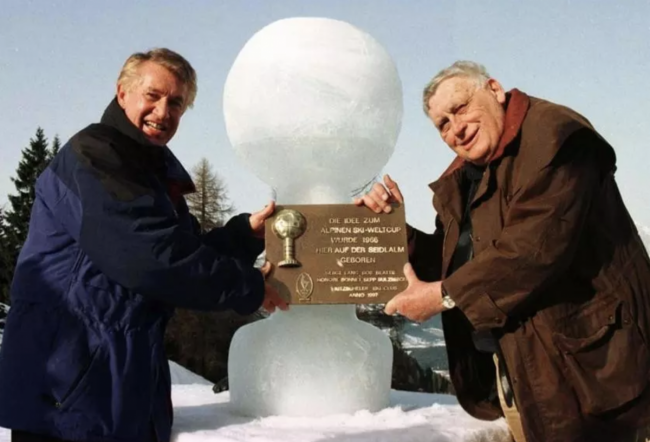
Once Evian learned that what was at stake was no longer a challenge but an authentic World Cup under the aegis of the FIS, the mineral water company wanted to share it. So it happened that the first World Cup was graced by the  famous crystal globes introduced by Evian in 1968.

WITHOUT PORTILLO, IT MIGHT NOT HAVE HAPPENED

I have good reasons to believe that had the 1966 World Championships—then held every four years—taken place anywhere else but Portillo, Chile, in the Southern hemisphere far away from the Alps, the World Cup would never seen the light of the day. The Southern Cross was our lucky stars. If the World Championships had been awarded to a more traditional European venue - Davos, Garmisch or Kitzbühel for instance - our proposal for a World Cup - which would run throughout the season from country to country - would not have overcome the opposition of the conservative voices in skiing. But in Portillo, they were of no consequence. The potential political opponents did not come.

The move to Portillo was itself revolutionary. Think of it...what kind of idea was it, to go and hold world skiing championships in midsummer,  in a distant part of the globe, let alone to discuss a new idea for a World Cup? Anyway, at the crucial moment, the stick-in-the-muds were not there to bray that a World Cup would serve no purpose and would only cause additional problems. Of course, they made their positions known, but much later - too late, once everything had begun.

The whole set-up in Portillo was of vital importance too. The small resort was situated a few kilometers from the Chilean-Argentine border, perched at nearly 9,000 feet. All the skiers and officials had to live together in a single hotel offering only 100-odd beds. This excluded battalions of unwelcome visitors. Everything had to happen either in the hotel or on the slopes. While the Andes offered an admirable diversity of skiing, in the hotel everything was confined to dining room bar and the basement nightclub. It was in that bar, which was deserted after dinner, that Bonnet, Beattie, Sulzberger and I sat day in, day out discussing the new season-long, annual competition.

While the racers' attention was naturally fixed on the events of the World Championships, most of them, including Jean Claude Killy, greeted the idea of the World Cup with enthusiasm.

Yet a few months later, as the opening date of the first World Cup season of 1967 approached, I wondered. How would it be greeted by the countries with long skiing traditions, whose races were already classic events long before the World Cup? I need not have worried. The World Cup not only strengthened all the classic races, but it proved to be crucial in the development of more races and resorts.

ADDITIONAL COMMENTS by John Fry

The first World Cup season of 1967 comprised seven slaloms, five giant slaloms and five downhills. A racer’s points were derived from his or her three best results in each discipline. It was a little bit like draw poker, where you discard an inferior card and hope to replace it with a better one. If you placed well in a race, the points replaced a previous lesser result. You could earn a maximum of 75 points for the season in each of the three disciplines, but as you got closer to attaining 75 points in giant slalom, for example, point gains diminished. You needed to turn to downhill and slalom to keep up in the overall standings.

In retrospect, the original World Cup formula—discarded after only a few seasons—was a good system. It truly rewarded all-round competitors. It involved only 17 races, compared with the bloated total of 30 or more created in later years—not by the press, but by ski politicians seeking to appease resorts and national federations.

Beginning in the 1970s, FIS officials fought against specialization in alpine skiing, by frequently changing the World Cup point formula. The battle to prevent technical specialists from winning the overall title was understandable, but  juggling the point formula removed any chance of comparing the performances of racers from year to year. In my judgment, it impoverished the sport’s history. Fans and journalists today cannot rate, for example, Hermann Maier’s 1998 World Cup points against Jean-Claude Killy’s or Ingemar Stenmark’s winning records.

As for the first World Cup season, it culminated in March,1967 when a huge entourage of racers, coaches, officials, press and their mountain of luggage and skis arrived in the United States for the first North American World Cup races at Cannon Mountain. Before the racers came to Cannon, we published a profile of Killy by Lang in SKI Magazine.  I created a program for the event, with an explanation of how the new winter-long circuit worked. It appeared as an insert in SKI Magazine, reaching 100,000 readers. As many as 15,000 spectators showed up. Killy won all three races. Sports Illustrated featured him on its cover. At the season-ending final ceremony at Jackson Hole, Wyoming, FIS President Marc Hodler presented Killy and Nancy Greene with Evian’s trophies.

The World Cup had proved a huge success! Serge Lang’s dream came true.


HOW THE NATIONS CUP STARTED

By John Fry

Serge Lang, en route from the FIS World Championships at Portillo to his home in Switzerland, visited me in my office in Manhattan on a hot August day in 1966.

“SKI Magazine should be involved in the new World Cup,” said Lang.

I gave Lang the usual answer to all proposals brought to the magazine at the time. “We don’t have any money.”

“That’s okay,” he responded. “Evian (the bottled water company) pays for everything. But we want American press exposure. Why don’t you present a trophy?”

“For what?”

“Come up with an idea,” said Lang.

“Right now, I don’t have an idea.”

“Fine, let’s go to lunch. I know a very good Italian restaurant on Madeeson Avenue.”

Extended, multi-course meals, laced with several bottles of vin rouge, were Lang’s way of finding solutions, as I came to learn. The Madeeson Avenue lunch produced no ideas, but waking the next morning, I came up with one. Why not group the points accumulated by each nation’s racers and create a team competition—albeit a statistical one? The team whose racers aggregated the most points by the end of the season would win a trophy, called The Nations Cup. Year by year, the standings would compare how the world’s alpine skiing nations rank in strength.

That morning, before Lang flew back to Europe, he dropped by my office, where I explained my concept to him. “And SKI Magazine will present the trophy,” I added, “not to an athlete, but to the head national coach, as a means of recognizing the role played by the trainers.”

“It’s good,” he said quietly. . .so quietly that I couldn’t tell if he was unenthusiastic, or sorry The Nations Cup wasn’t his own idea. “It’s good,” he repeated. We shook hands.

 
Although it was an American idea, the Nations Cup has never been won by the U.S. Ski Team. The Team did, however, win the women’s category in 1982; its best overall showing, second-place, was in 2006. In 42 winters so far, only Austria, Switzerland and France have won the Nations Cup.
Feature Image
Category
Open to Public?
Off
Feature Image Media
Image
Timestamp
Author Text
By Lisa Densmore

A former competitor remembers the Women’s Pro Ski Tour. 

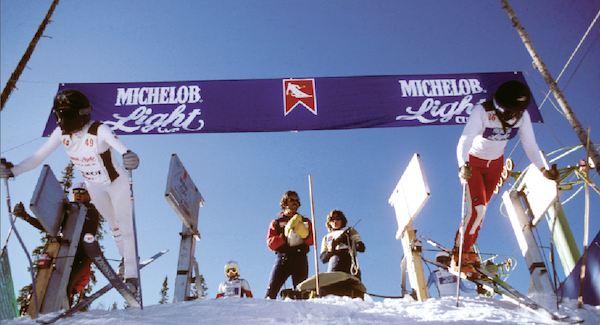
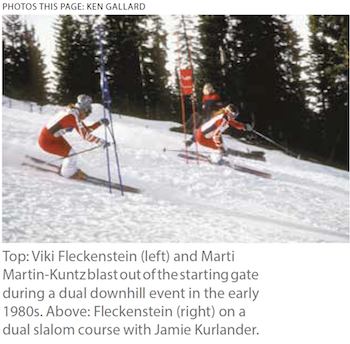
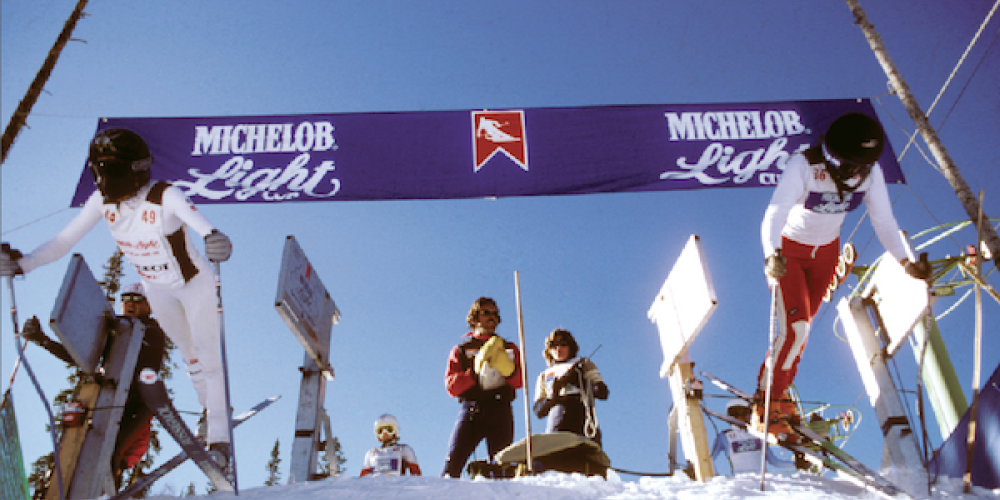
I slid into the starting gate, defined by a low board in the snow four feet behind two “horse gates.” Though I exuded confidence, adrenaline surged through my body. Before me, 25 red panels zigzagged down the slope, next to an identical row of blue panels. The two courses spilled over two six-foot kickers en route to the banner-bedecked finish arena. The racer to my left, Kim Reichhelm, planted her poles and pushed back, lifting her ski tips a foot off the snow as she tested the kick board behind her. Satisfied, she coiled like a puma about to pounce.

Kim and I had been good friends and fellow competitors since our days as high-school students at Stratton Mountain School in Vermont, but at that moment, we dueled for our paycheck. My eyes fixed on the gates while my ears tuned out all but the starter’s familiar husky voice.

“Red course ready?” he shouted. “Blue course ready? Courses clear. Racers ready…” As the ear-splitting horn pierced the air, the gates sprang open. Kim and I rocketed down the hill, matching each other turn for turn. We thrust ourselves across the finish line and glanced at the clock. After two runs, one on the red course and one on the blue, Kim had bested me by 0.003 second, less than the length of a ski tip.

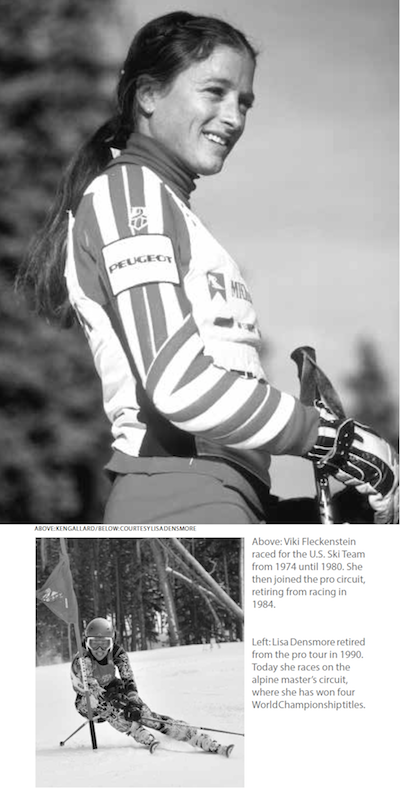
During my six winters on the Women’s Pro Ski Tour, starting in the mid-1980s, sometimes I was on the winning side of those split seconds and sometimes not. It was challenging, exciting and nerve-racking, not to mention one of the few ways a woman could earn a living as a professional athlete.

“Women’s pro ski racing 

was the third-richest pro sport for women at the time,” says Jill Wing Heck, who founded the Women’s Pro Ski Tour in 1978. “It ranked after tennis and golf, but ahead of bowling and rodeo barrel racing.” 

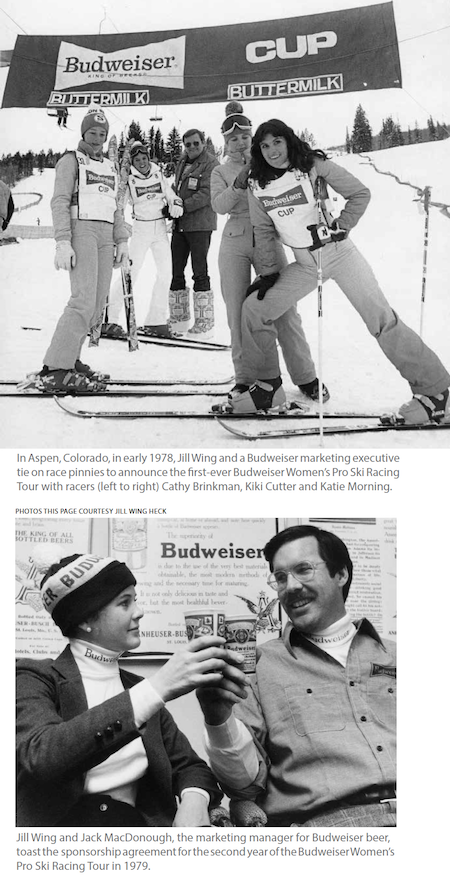
While selling sponsorships for the co-ed pro freestyle tour, Wing Heck had befriended Judy Nagel, Susie Corrock and a number of top female alpine ski racers who had switched to freestyle. “There was nothing else,” says Wing Heck. “They talked about how much more fun it would be to race. Then the freestyle tour started having insurance problems, lawsuits due to injuries. Its sponsors fled. No one wanted women’s pro ski racing, so I wrote up a proposal. Anheuser Busch bought it! Then I thought, now what do I do?”

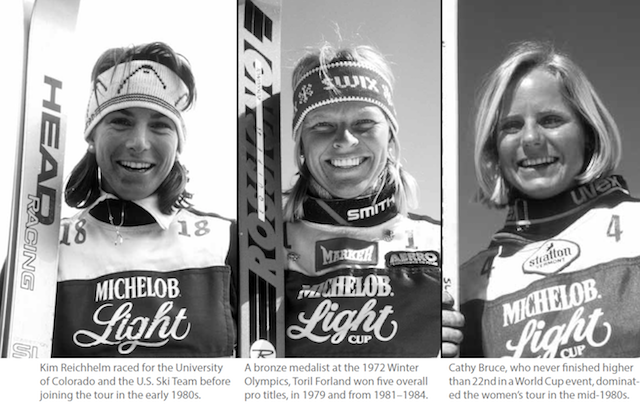
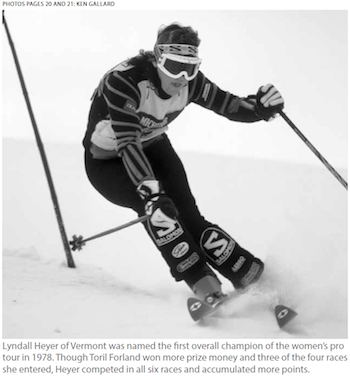
Tony Furman, a New York publicist who was involved with the ski industry, gave Wing Heck office space and offered to do P.R. for the fledging tour. She hired a tournament director, Eric Hvoslef, and put together three events (comprising six races) at Waterville Valley in New Hampshire, Alpine Meadows in California and Vail in Colorado, with a $40,000 purse for the inaugural season. Though Norwegian Toril Forland won the most prize money and three of the four races she entered, Lyndall Heyer of Stowe, Vermont, who entered all six races, accumulated more points and was named the first overall champion.

Over the two decades the tour existed, though many female World Cup standouts competed periodically after retiring from their national teams, most of the stars on the start list were middle-of-the-pack World Cuppers, collegiate All-Americans and Europa Cuppers who never made an Olympic team due to lack of ability or mental toughness, politics or injury. The Women’s Pro Tour gave these athletes a second chance to be world-class, particularly those who thrived on the dual format and the lack of team structure. They tuned their own skis, coordinated their travel and training, and drank adult beverages whether they liked them or not, as Budweiser, Michelob and DeKuyper sponsored the tour at various times. The three overall champions of the women’s pro tour during my era—American Cathy Bruce, Austrian Rowitha Raudaschl and Swede Catarina Glasser-Bjerner—fit this profile. Norwegian Toril Forland, who retired the year after I joined the tour, did not.

Bruce, who never finished higher than 22nd in a World Cup event, dominated the women’s tour during the mid-1980s. “I had a slight confidence problem after being dropped from the [U.S.] team before the 1980 Winter Olympics,” said Bruce in an interview with Los Angeles Times (March 5, 1987). “It took a while for me to grow up mentally, and ski racing is definitely a mental sport.”

Toril Forland was a master at the mental game. A bronze medalist in alpine combined at the 1972 Winter Olympics, she skied for the University of Utah and then joined the pro tour. She won five overall pro titles—in 1979 and from 1981–84. She had an uncanny ability to dial up her intensity as needed, sneaking by a newcomer in an early round before pouring it on for the finals.

Roswitha Raudaschl, a diminutive brunette from Austria, joined the tour as a teenager. She spoke little English but skied with lots of tenacity. She returned to the Alps many thousands of dollars richer. Ditto for Glasser-Bjerner and a handful of women’s pro tour standouts, though not entirely from prize money.

By the time I joined the women’s pro tour in 1985, prize purses at an event varied from $10,000 to $25,000 split between two races per weekend—usually a giant slalom and slalom—with the top 16 each day earning a check. Though no one revealed exactly what they made each year, a top racer with victory bonuses from her sponsors and a willingness to do photo and film shoots and make public appearances could accumulate anywhere from $40,000 to more than $100,000.

When I retired from the tour in 1990, Wing Heck had sold the tour to North American Pro Ski Corporation, which also owned the men’s tour. ESPN was on board with a two-year agreement to broadcast events. Television brought in more sponsors, prize money and athletes. By 1993, the women’s tour boasted a $325,000 prize purse over nine events, but a couple of years later, the women’s tour began to unravel. It’s not clear whether the television coverage disappeared because sponsorships dried up or vice versa, but a year after the millennium, the women’s pro tour was no more.


A member of the Women’s Pro Ski Tour from 1985 to 1990, Lisa Densmore has written about, photographed and televised ski racing for more than 20 years (www.LisaDensmore.com). 


Women's Pro Tour
Category
Open to Public?
Off
Feature Image Media
Image
Timestamp
Author Text
By Tony Chamberlain

From the 1960s through the 1990s, a series of U.S. entrepreneurs—including Friedl Pfeifer, Bob Beattie and Ed Rogers—took turns trying to make pro ski racing a success. 

Counting only prize money, this season’s highest-ranked alpine ski racer—Tina Maze of Slovenia, with 11 World Cup wins and 24 podium finishes—earned 701,797 Swiss francs, or about $726,000. That tops the prize earnings of friend and rival Lindsey Vonn of the United States, who pulled in about $220,000. The number-one male skier was Marcel Hirscher of Austria, who won $554,286. In the 2012–2013 season—the 21st winter since the Federation Internationale de Ski (FIS) first began to allow cash purses—more than $8 million in prize money was distributed on the World Cup alpine circuit. This doesn’t include dollars that athletes earn from other sources, like product endorsements: According to ESPN, Vonn’s total haul this year was $3 million.
(This article first ran in the May-June 2013 issue of Skiing History).

Professional ski racers lag behind the superstars of other sports when it comes to annual earnings—Vonn’s annual earnings are about a 20th of what boyfriend Tiger Woods pulls in on the golf course, for example. But their careers can still be relatively lucrative. This is thanks partly to the pro racing movement, which confronted the politics of amateurism in the 1960s and affected competitive racing for all time.


Clashing Over Shamateurism

As early as 1936, the International Olympic Committee (IOC) and the International Ski Federation (FIS) were clashing over the role of money in ski racing. That year, the IOC announced that ski instructors were to be considered “professionals” and were therefore ineligible to compete in the Winter Games at Garmisch-Partenkirchen, Germany. Austria and Switzerland withdrew their top alpine racers in protest. By 1952, when Chicago millionaire Avery Brundage took the helm of the IOC, the stage was set for a showdown. “Brundage was a man obsessed with the idea of pure amateurism,” writes John Fry in his book The Story of Modern Skiing. “He regarded alpine racers as a cancer within the Olympics because of the money paid to them by equipment companies to use their products.” 

Meanwhile, alpine racers found an outspoken proponent in FIS president Marc Hodler, who argued they should be allowed to earn money to cover the high cost of training and racing, which far exceeded the expenses of, say, swimmers or track and field athletes. Sir Arnold Lunn concurred, saying that “fake amateurism” encouraged perjury as athletes swore they were amateurs in order to compete in the Olympics.

The long-running battle between Brundage and Hodler heated up when Brundage publicly demanded that racers from the 1968 Grenoble Olympics—including triple gold-medal winner Jean-Claude Killy—return their medals. He also demanded that a slew of racers be barred from the 1972 Games in Sapporo, Japan. In the end, the only racer to be banned was Austria’s great slalom skier, Karl Schranz, the three-time world champion and World Cup overall champ in 1969 and ’70. Schranz, who was considered a favorite in the ’72 Games, was excluded on grounds that his consultant status with equipment manufacturers, most notably Kneissl, had tainted his amateur status. His expulsion triggered outrage in Austria (where Brundage was burned in effigy) and around the world. As Fry writes, it was a watershed event in the history of the Games, and one that ultimately “turned out to be the funeral…of the amateur ideal in the Olympics.” Brundage stepped down later that year.


Friedl Pfeifer and Pro Racing in America

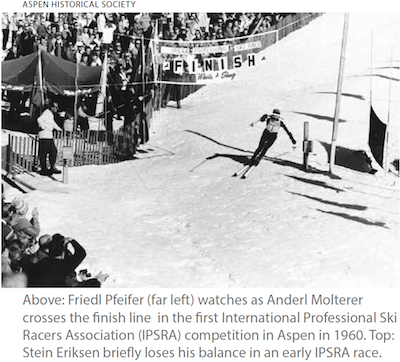
While the IOC and FIS were duking it out over the Winter Games, a professional raci

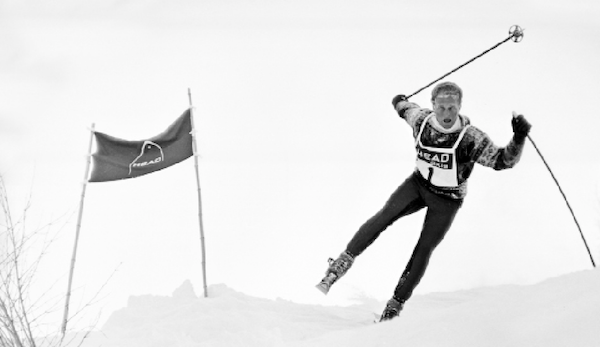
ng circuit was gaining traction in the United States. It was led by Friedl Pfeifer, one of the founders of the Aspen Skiing Company who helped to build the Colorado resort after World War II. As a ski instructor in his native Austria, Pfeifer had been barred from the 1936 Games for his “professional” status. So he had a certain passion in 1960 when he founded the International Professional Ski Racers Association (IPSRA), stamping it with a ringing rationale. “I want (ski racers) to have the opportunity to be compensated for what they have given to the sport,” he said. “With that in mind, I set out to start a professional racing organization.”

The ski world took notice as Pfeifer organized a cadre of the most famous names in skiing: Minnie Dole, Sigi Engl and Willy Schaeffler in administration; Howard Head as the initial sponsor; and racers such as Toni Spiess, Anderl Molterer, Stein Eriksen, Pepi Gramshammer and Othmar Schneider. The initial races were held at Buttermilk in 1960. 

“The FIS heard about my project,” wrote Pfeifer in his biography, Nice Goin’ (ghost-written by Morten Lund), “and urged the U.S. Ski Association to notify resorts of the consequences of hosting an IPSRA race. The resorts were warned that if they supported or sponsored the professional ski races in any way they would be disqualified as a future host for an FIS championship event.” 

Despite the warning, the fledging pro ski tour survived for six fairly vigorous seasons until Pfeifer turned the tour over to the racers themselves, who formed the Professional Ski Racers Association with Killington’s Karl Pfeiffer (no relation) heading the group. After the championship races in Japan the next season, Pfeiffer held a meeting to tell racers that he didn’t have the time to chase new sponsors. In 1969, wrote Friedl Pfeifer, “The torch was passed on once again, this time to Bob Beattie.” 


Bob Beattie Takes the Reins

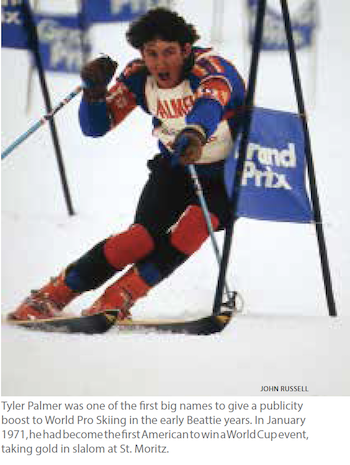
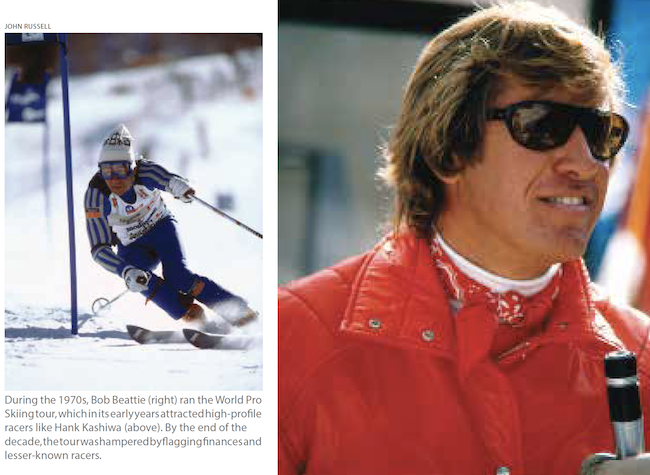
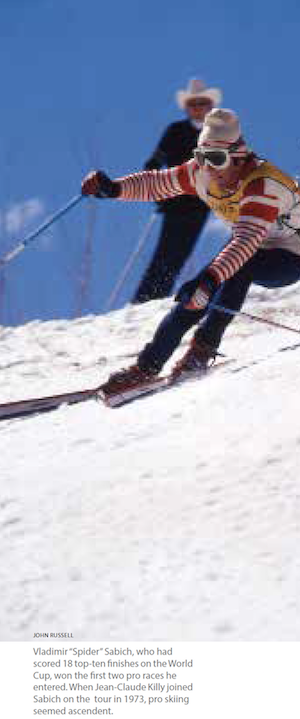
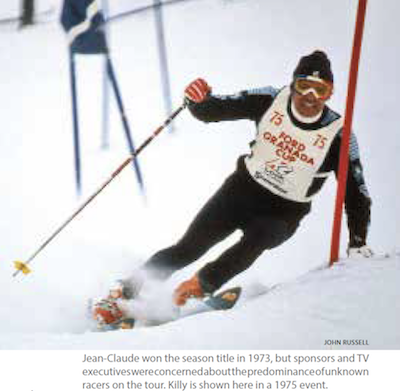
The 1970s started well for Beattie’s tour, featuring high-profile U.S. racers like Billy Kidd, Tyler Palmer, Hank Kashiwa, Scott Pyles and a 25-year-old from Aspen with dazzling blond good looks, Vladimir “Spider” Sabich, who had scored 18 World Cup top-ten finishes. Sabich won the first two pro events he entered, taking home a modest $21,189 in prize money. But the charismatic racer, whom some suspect was the inspiration for Robert Redford’s character in the movie Downhill Racer, also had product endorsements that brought his earnings to $100,000. He soon earned the nickname “Mr. Pro.” When Killy joined him at the start of the ’73 tour, pro racing seemed to be the ascendant rocket of the sports world, with product endorsements coming on strong and TV dates filling the season calendar.

Instead, enthusiasm dampened that year when the tour took an unpredictable turn and two relative unknowns—Austrian racers Hugo Nindl and Harald “The Stork” Stuefer, a gangly athlete who stood six feet, five inches tall—won the opening events. In the end, Killy took the season title, mollifying sponsors and television executives. But the potential weakness of pro skiing was becoming clear: Without big names, the buzz soon quieted.

In 1974, Nindl won the title, and a record $93,230 that stood for many years. But again, when unknowns such as rookie Josef Odermatt displaced better-known skiers, Beattie knew he had

to come up with a plan. Meanwhile, the tour’s chief sponsor, the cigarette company Benson & Hedges, pulled out of ski racing.  In 1975, the schedule forced a five-week break in mid-season, and the tour seemed to be faltering.

Aspen hosted a four-race Aspen Pro Spree event in 1976 at a time when hometown hero Sabich was struggling on the slopes. A French skier, Henri Duvillard, soared on the tour that year, winning three of the four Aspen races and adding 13 more wins to dominate the season and win him an honorary title, “The Frog Who Ate the World.”

The season seemed fairly successful until March, when Sabich was shot to death. His girlfriend, the actress Claudine Longet, was arrested for manslaughter and sentenced to a short term in prison.

By the end of the decade, the tour was still suffering from a familiar demon—unknown ski racers—and so Beattie devised a plan to alter the seeding system to guarantee that some top names would at least get through the qualifying rounds. The maneuver helped a bit; the season finished with two veterans, Hans “Hansi” Hinterseer and Lanny Vanatta, taking serious but unsuccessful runs at Austrian Andre Arnold.

The following season, with his finances flagging, Beattie’s tour unraveled. Arnold was still dominating early, and the season played out until April, when a handful of racers—including Hinterseer and Boston’s Richie Woodworth—boycotted a race, claiming that a snowstorm had made course conditions variable and unfair. With national TV ready to roll, the boycott was disastrous for Beattie, who disbanded World Pro Skiing a few weeks later.


The Era of Ed Rogers

With no major leagues left, regional minor-league tours partially filled the void, including a Coors-sponsored American Pro Ski Tour out of Colorado and a group of racers organized by Maine restaurateur Ed Rogers and partner Mike Collins, who signed a sponsorship deal with the French car company Peugeot. After a sensational Eastern meet at Mt. Snow in Vermont (Wayne Wright fought hard to beat Georg Ager for the title), the two regional tours were combined once again into a national tour. Rogers, who owned the famed Red Stallion Inn at the Sugarloaf ski resort in Maine, says, “We had the B tour, but when Beattie went out, a lot of his skiers came over to us.” 

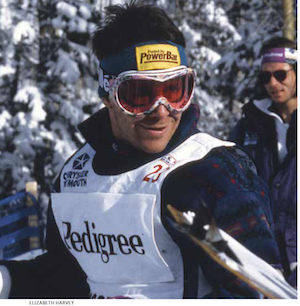
In the mid-1980s, the Viking assault was on, in the form of Norwegian brothers Jarle and Edvin Halsnes and their buddy Reidar Wahl, who won the tour in 1984. Jarle won the title in 1985 and Edvin beat him the next year. Jarle was back in 1987 before Sweden’s Joakim Wallner broke the brothers’ grip in 1988, the year that Jarle, suffering from a bad back, announced his retirement. In his  1987 win, Jarle pocketed $103,750, finally topping Nindl’s earnings mark that had stood since 1974.

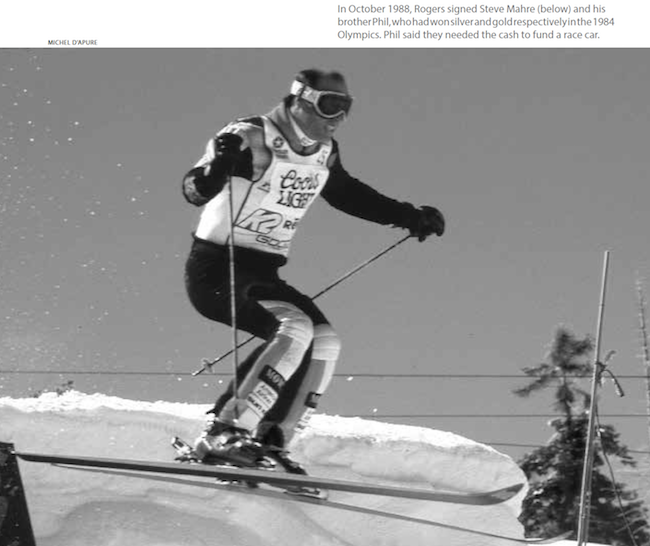
In October 1988, Rogers announced that he had signed the country’s two most successful amateur racers, twin brothers Phil and Steve Mahre, who had won gold and silver medals respectively in the 1984 Wint

er Games in Sarajevo. Phil explained that they needed the cash to fund a race car, and yet bad-mouthed the pro tour as a group of “has-beens and never-weres, including myself.” Mahre’s opinion aside, the tour that year was stacked with stars, including two Austrian aces—Roland Pfeifer and Bernhard Knauss, who had lost his place on the Austrian national team because of illness.  

In 1989, Phil Mahre placed second but still pocketed $82,000 for the season. Meanwhile Chrysler-Plymouth liked what they saw and came in as a major sponsor. Mahre, who bad-mouthed the tour as too easy, still worked hard to master the dual-elimination format, ending up 3rd in the 1990 standings. But Knauss was coming on strong.

At first, Knauss was unable to overtake Pfeifer who, in 1990, cashed in with record earnings after winning both the tour and the Plymouth Super-Series Championships for a record haul of $221,816. The following season, Knauss hit the jackpot for $356,256, and then sweetened it the following year b

y winning $364,038 and knocking off Andre Arnold’s old record with 46 career wins. The next season he passed the million-dollar mark in career earnings. He would go on to win 76 races by the end of the tour in the late 1990s, with career earnings of about $1.5 million.

Though there had not been an American winner on the tour since the Mahre years, in 1996 Erik Schlopy from Park City won Rookie of the Year honors with a 6th place finish, as Knauss finally relinquished his dominance to a younger countryman, Sebastian Vitzthum. Then another Austrian, Hans Hofer, won his first title.

In 1996, Rogers and his new partner, Bill Flavin, sold the tour to Del Wilber & Associates from McLean, Virginia. Calling it the World Pro Ski Tour, Del Wilber soon had it up for sale again. One potential buyer, ESPN, gave it a pass to start the X-Games instead, and another, IMG, also let it go, leaving the field to the Fox Family Channel which, within two years, cancelled all of its sports programming.

“When Chrysler left, we couldn’t find a replacement,” says Rogers. “Fox couldn’t come up with enough sponsorship either, and that’s what pro sports is all about.” The sad irony, Rogers says, is that pro racing, which had been running continuously in the United States for nearly 40 years, came apart at a high point, with high-profile racers and record prize dollars. 

“I think I know how it could work again,” says the plain-talking Rogers, now in his 70s, “but I’m not about to do it. I put in my time.”

Look for an account of the women’s pro tour in the July-August issue, by former U.S. Ski Team and pro racer Lisa Densmore. In the September-October issue, we’ll publish a look back at the Bee Hive, a professional giant slalom race that flourished in the early 1960s at the Georgian Peaks ski area in Ontario, Canada.


Feature Image
Category