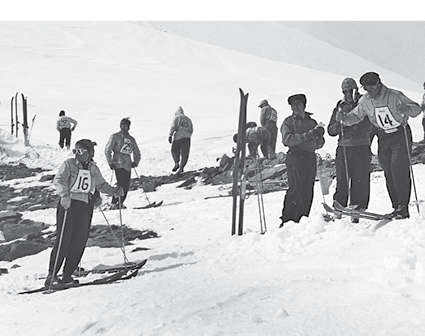
Edie Thys Morgan’s article, “Evolution of On-Course Safety” (March-April 2025), brings up memories of Sigurd Hall, a Norwegian immigrant who was killed in the 1940 Silver Skis race on Mount Rainier. It was reportedly this country’s first death to occur in a sanctioned ski race.
Photo top: Sigurd Hall (#16) waits his turn to start in the 1940 Silver Skis race on Mt. Rainier.
Born in Norway in 1910, Hall immigrated to the U.S. in 1929, settling in Seattle. He became one of the Northwest’s outstanding racers (as a cross-country skier and, later, as a four-way competitor) and mountaineers (doing first ski ascents of local peaks). He hoped to participate in the 1940 Olympics, but the Games were canceled because of World War II.
First run in 1934, the Silver Skis race was one of the country’s most prominent competitions. After a three-hour hike from Paradise Lodge to Camp Muir, skiers raced more than three miles in a virtually uncontrolled downhill, finishing near the lodge. The course was half a mile wide in places, allowing racers to pick their own route. A local paper called it the “Kandahar of the Northwest.”
Approximately 100 men and women competed in the 1940 race in April. Hall, skiing in a dense fog, veered off course a half-mile from the start, hit a rock and died instantly. His death was a major national issue for the racing community. A commission of the Pacific Northwestern Ski Association (PNSA) held hearings into Hall’s death, and the American Ski Annual contained several articles about his fatal crash later that year.
The commission made a number of recommendations for future races, including a mandatory safety evaluation of pre-race weather conditions, a minimum number of gate flags on course, the marking of extreme hazards and the ability to postpone or cancel the race. The hope was that the PNSA would codify the safety recommendations at its next meeting, but that never happened. The parameters of several of the commission’s suggestions, however, eventually led to improved safety regulations by various racing associations nationwide.
The high point of Hall’s racing career came just one month before his death, when he finished third in the National Four-Way Skiing Championships, behind Alf Engen and his brother, Sverre.
This is the story of an honest president. In 1975 Roffe skiwear outfitted President Gerald R. Ford and family. I was the designer, and I remember Betty [Ford] wearing a size eight. We were asked to supply an invoice, which we did at wholesale. We were told the president must pay for his own skiwear. The check arrived. It was a check on President Ford’s personal account, handwritten and signed by him. We framed the check and hung it on the wall in the reception area of our factory in Seattle. A month or so later, we received a call from the treasury department requesting that we cash the check, and they said they would then send it back. We did, and they did. We put the check back in the frame and back on the wall by the front door.
Wini Jones Vice president, ISHA board of directors Bainbridge Island, Washington
Boots in the Snow at the 1956 Cortina Games
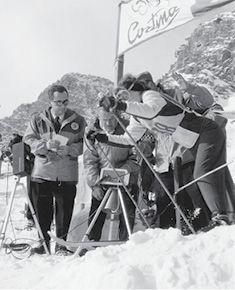
In a recent issue of Skiing History, you used a photo of me from the 1956 Cortina Olympics, identifying me as a “female racer” (“Cortina’s Olympic Rewrite,” January-February 2026 and “No. 38’s Record-Setting Olympic Race,” Letters, May-June 2026). It was a few years ago, so I will forgive you. In fact, I have never seen the photo in my life, but the start number is correct! It was such a tough year for me I probably trashed the photo. I had spent three months in the hospital in 1955, then another five months in a cast, all resulting from a bad spiral fracture. At Cortina, my goal was to beat my bib number. I wore start No. 38 in the giant slalom and finished 29th. In the downhill, I started 37th and finished 22nd. In slalom, I started as No. 43 and finished 30th.
The great news for Canada and for me was Lucile Wheeler’s bronze medal in the downhill. She was always my inspiration. The 1956 Cortina Winter Games were a great disappointment to many athletes as there was no village. We were put in various scattered hotels, with no chance to meet team members from elsewhere. The best arrangements were had by the officials, leaving many athletes in crowded sleeping conditions and makeshift beds. The men’s downhill conditions were horrendous and about half of the first 25 men did not even finish the race. The women’s slalom was no better. Keep up the good work with Skiing History. In this house, it is always a race to be the first one to pick it up from the mailbox.
Anne Heggtveit Hamilton Cornelius, North Carolina
Correction
The Ski Art column on Leonetto Cappiello in the May-June 2026 issue had previously run in the September-October 2022 issue. Our apologies for the error.
Feature Image Media
Image
Article Date
Timestamp
07/06/2026 - 3:31 PM
Open to Public?
On
Full Access Article for Public
No. 38’s Record-Setting Olympic Race
In the January-February issue (“Cortina’s Olympic Rewrite”), Toni Sailer is identified regarding the 1956 Winter Olympics, where he won gold in slalom, giant slalom and downhill. In the other photo on that page, the female racer in the starting gate at Cortina is Canadian Anne Heggtveit, No. 38 (photo above), who was still recovering from a leg injury that nearly ended her career. Her goal was to place no lower than her bib number—one she accomplished. Four years later, at the 1960 Squaw Valley Olympics, Heggtveit would win the women’s slalom by 3.30 seconds over Betsy Snite, which remains the biggest gap in Olympic Alpine skiing history for women (almost, but not quite, bettered by Mikaela Shiffrin this year).
Bob Soden Montreal West, Quebec
Women Fight for Gender Equality in Nordic Combined
It took many decades and a lawsuit for women ski jumpers to be allowed to compete in the 2014 Sochi Winter Games. Women are now fighting another battle—to compete in Nordic combined at the 2030 Winter Olympics. Men have competed in the discipline since the 1924 Games. In 2022, the International Olympic Committee (IOC) refused to add women’s Nordic combined to the 2026 Milan-Cortina Games. Nordic combined now faces an existential threat. The IOC is considering removing the sport entirely from the 2030 Games. Earlier this year, Nordic Combined USA and Nordic Combined News launched a campaign to urge the IOC to include women’s Nordic combined in 2030 and save the men’s event. Search Nordic combined at change.org to sign a petition.
John W. Lundin Seattle, Washington
Thanks, Walter!
I loved the piece on Bob Soden’s book about Jay Peak, Vermont (“Good Reads,” March-April 2026). I got certified by Walter Foeger in the Natur Teknik in 1972 at Jay Peak. Walter was the ski-school director at a small hill called Dutchess in Beacon, New York. I taught skiing there, mostly on weekends and after school. Every Saturday we had an instructors’ clinic with Walter. He would challenge us to a turn contest on the beginners’ slope. He was so good at the hop, hop Teknik that no one could make more turns than him. He could even hop, hop uphill. He ignited my enthusiasm for skiing such that I transferred from Fordham to the University of Vermont so I could ski more. I spent the first winter at Mad River Glen. I spent my senior year at Smuggler’s Notch. Then I moved to Sun Valley. I’ve been a ski bum here for 52 years. Thanks, Walter!
Paul Kenny Sun Valley, Idaho
Honor Roll Correction
In the March-April 2026 issue, which carried the 2025 Donor Honor Roll, ISHA donors who contributed $100 in 2025 (Silver Medalist level) were incorrectly listed in the Bronze Medalist category. We regret the error. The corrected Honor Roll can be viewed at skiinghistory.org/article/isha-annual-report-and-honor-roll.
Feature Image Media
Image
Article Date
Timestamp
05/19/2026 - 10:15 AM
Open to Public?
On
Full Access Article for Public
Bugging Out
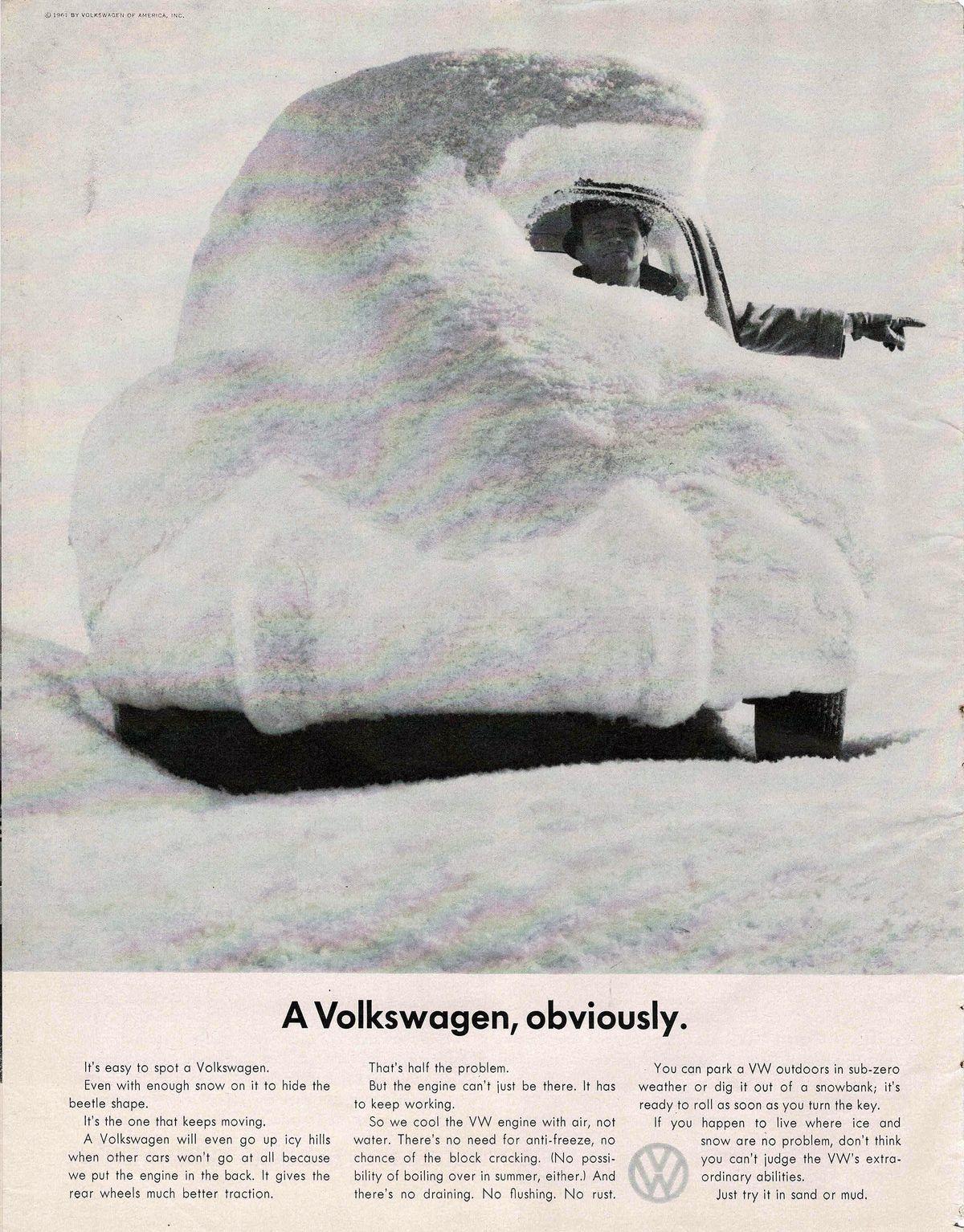
The snow-laden VW Beetle ad on the back cover of the January-February 2026 issue (“Snowbound Volkswagen”) brought back a few been-there, done-that memories. I had three VW Bugs (including a 1959 36-horsepower convertible, with no gas gauge but a one-gallon reserve tank). The rear engine provided surprising traction. Each of my Bugs had ski racks bolted into the engine air vents, with footers attached somehow to the inside of the rear bumper. Many times, first with my dad at the wheel, that ’59 Bug trudged up the Mount Rainier highway to Paradise in the early ’60s to the four rope tows where I learned to ski. Later, in 1970 and ’71, I taught college ski classes at Big Bear, California. I remember a fellow instructor and I driving up to Big Bear from the University of Redlands in the ’59 Bug with the top down and the skis, including my 205-centimeter GS Fischer Alus, jerry-rigged to the convertible’s folded-down top. Skiing History magazine is full of sweet memories.
Tom Hayward Bainbridge Island, Washington
Peeking into Eldora Crystal Ball
Thanks for the great piece on Eldora (“A Tiny Colorado Town Buys Its Ski Area,” January-February 2026). As a municipally owned entity, Eldora will now have a 1,500-person board of directors since locals can show up at town council meetings and make their feelings heard. Second, the Shelf Road to Eldora has always been a bone of contention with Boulder County, as it is dangerous and hard to maintain. There is a more level path that could be developed, but the county and the public would need to agree and pay for it. Third, a few years back, Eldora tried to extend its Corona Bowl down close to the hamlet of Eldora. This would have been a crown jewel to the resort. After a painstaking approval process with the Forest Service, it was the loud complainers that skunked it at the county level. I am not sure to what lengths the town would go, but if they were to annex up to the ski area, perhaps they could deal with the road and the expansion and even zone in some housing, hotels and other amenities. I have always believed in this little pipsqueak mountain. If the town and area management can negotiate the political waters, they could really improve on a good thing.
Jonathan Williams Denver, Colorado
Enlightening and Entertaining
It goes without saying that the arrival of Skiing History is a welcome occurrence here in our White Mountains. The January-February issue was no exception. I was struck by how well the magazine both educates and entertains those of us who love the sport. I particularly enjoyed learning about people about whom I knew nothing two days ago. Sarah Schleper, what an inspiration! (“Viva Sarah Schleper!”) Captain Powder, what a smile (“Captain Powder, Defender of Winter”). And Robert Chamberlain, there’s a man I wish I’d met (“The Complex Life and Photography of Robert Chamberlain”). Probably the most telling line came at the end of the David Moe/Captain Powder piece: “Skiing today is nothing like it was in the old days. It was a lot more fun than it is now.” Truer words were never spoken.
Tim Scott Jackson, New Hampshire
Feature Image Media
Image
Article Date
Timestamp
03/15/2026 - 3:40 PM
Open to Public?
On
Full Access Article for Public
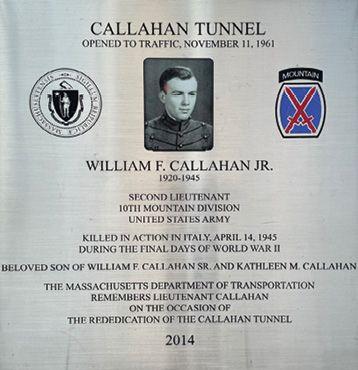
Walking around Boston’s North End the other day, I came upon this very interesting sign. It commemorates the Callahan Tunnel, which connects downtown Boston with East Boston and is used by many to travel to Logan Airport. What I found interesting was Second Lieutenant William F. Callahan’s connection to the 10th Mountain Division—and the fact that he died fighting with the unit in Italy in the final battles of World War II. Interesting that one of the heroes of the 10th was from the Boston area and is commemorated with this traffic artery. Bernie Weichsel Wayland, Massachusetts
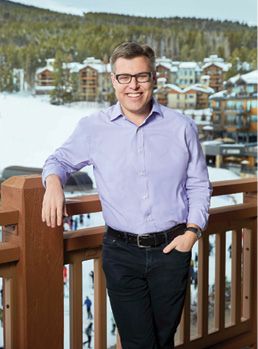
Rob Katz
As I enter my 67th year of skiing—45 of that as a full-time, fully certified ski instructor—I always look forward to the next issue of your magazine. Being a history buff and a skiing history buff, I was intrigued that an interview with Rob Katz was included (“Full Circle,” November-December 2025). Having known Joe Jankowski (Arapahoe Basin) and George Gillett (Vail) personally, both actual ski area owners, and having met Mr. Katz, there is a significant difference—but there’s also many similarities among these people. A passion for skiing is the most common similarity. Although the difference between Mr. Katz’s operation of a ski area and the others is substantially different, history will determine the legacy that Mr. Katz leaves behind. Mark Miller Vail, Colorado
Life’s Balance
I always look forward to every issue, but the article on women racing longer was particularly important (“A Golden Age for Older World-Cup Women Racers,” September-October 2025). People quit and retire because of accepted ages and not because they can’t do things. I’m 82 and windsurf in big wind in Maui all summer and snowboard and ski much of the winter. There is nothing special about me. I’m working on a book about balance to encourage people to keep doing sports—whether they live longer or not, they live better lives. Kenneth W. Rendell Natick, Massachusetts
Feature Image Media
Image
Article Date
Timestamp
01/14/2026 - 2:11 PM
Open to Public?
On
Full Access Article for Public
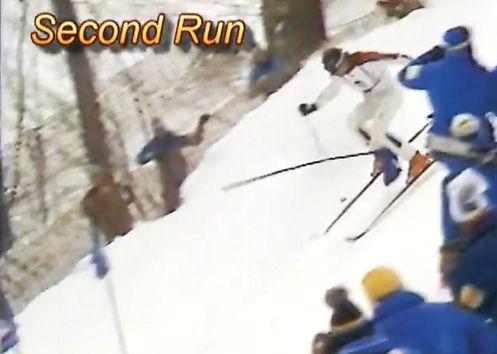
In your great story on the 1980 Lake Placid Olympics (“The Amateur Hours,” January-February 2025), you note that Phil Mahre carried a “bamboo stick” between his feet for three gates in the slalom and you quote him as saying that “there’s no question that I was outskied on the second run.” But I beg to differ. Mahre was being too modest. Tony Blair (1958 Canadian junior Alpine ski champion) and I watched the slalom from close to the edge of the course about two-thirds of the way up on the “first run” side, but we could see the second run clearly on the other side of the hill. As soon as we saw Mahre carrying that “bamboo stick” between his legs, we knew it was over for him—at least for the gold. It was clear to us that he had been slowed down by more than the 1.08 seconds by which Stenmark won the run [and therefore the gold]. It’s worth noting that less than a year before, Mahre had fractured his ankle badly at a pre-Olympic giant slalom. At first, it wasn’t clear that he was going to be able to walk properly again, let alone ski and race. A metal plate and seven screws in his ankle did the job, however, and he followed up his 1980 silver medal with a gold at Sarajevo in 1984.
Ivo Krupka
Former chair, Canadian Ski Hall of Fame and Museum
Ottawa, Canada
Photo top: Phil Mahre carries bamboo between his knees, slowing his pace on the way to winning a silver in the 1980 Lake Placid Olympic slalom.
1980 Lake Placid Rewind
I wanted to compliment you on the article on the Lake Placid 1980 Olympics (“The Amateur Hours,” January-February 2025) It brought back memories. As a new Atomic rep of two years, I was there. I brought a good dealer at the time, who just happened to be Ken Gart.
I was there with Ken, Frank Hurt and Alois Rohrmoser in a house in Saranac Lake, I think. We saw Annemarie Moser-Pröll win the downhill on Atomic, which was great. So thanks!
Charlie Webb
Edwards, Colorado
Feature Image Media
Image
Article Date
Timestamp
11/03/2025 - 4:37 PM
Open to Public?
On
Full Access Article for Public
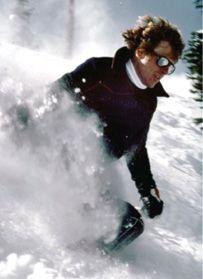
For almost 30 years I designed Roffe skiwear—all made in downtown Seattle. During the 1970s and ’80s, Roffe supplied Robert Redford with a new outfit every year—always black. (He was a size 31 long in stretch pants.)
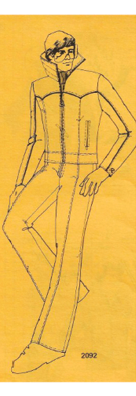
1978: Roffe catalog
sketch of Redford's
suit.
This is the drawing of the suit he is wearing from the 1978–79 Roffe order form, which includes the custom design details: “black with red piping across the Western yoke and on top edge of the collar.”
The suit was made of a new type of fabric: a woven stretch nylon from Schoeller Textil in Switzerland. The jacket’s retail price was $105, the same as the ski pants.
In the movie Downhill Racer, Redford wore a simple shell I designed for Roffe. The front was made from 70-denier coated nylon. Because the shell had to be slim fitting yet with enough stretch to allow the wearer to ski in a full tuck, the back was made of thick wool, while Dacron and Lycra two-way stretch fabric went across the shoulders. (Four-way stretch fabric had not yet been created.)
The photos for the advertisements that Roffe ran in the ski magazines in the fall of 1978 were shot at Redford’s Sundance resort. He let us stay in his old house, and he gave me a tour of his new house, built overlooking the ski area and Mt. Timpanogos.
Redford and Paul Newman were very close friends off the screen. On a Newman visit they would sit in Redford’s music room equipped with a super sound system and a small fridge with a beer tap. They listened to music, drank beer and bathed their faces in bowls of ice cubes, believing it helped keep them facially perfect.
They often pranked each other. On one visit, they went for a spin in Redford’s new Porsche. When they stopped at a gas station, Newman headed for the restroom. Redford took off. The attendant was suspicious about this abandonment. Newman was left trying to convince the fellow that he really was Paul Newman. Redford thought it great fun. He didn’t tell me how long it was before he came back to get Newman.
Wini Jones
Vice President, ISHA Board of Directors
Bainbridge Island, Washington
Be a Holiday Hero
Impress your family and friends by immersing them in the history of our sport for the holidays. A subscription to Skiing History magazine is the ideal gift for the discerning skier or rider—and conveniently suitable as a great stocking-stuffer. Go to skiinghistory.org/join to send a subscription to a friend or family member at a discounted holiday gift rate.
Feature Image Media
Image
Article Date
Timestamp
11/01/2025 - 5:18 PM
Open to Public?
On
Full Access Article for Public
I especially enjoyed the March-April issue for two reasons. First, I opened the cover and was greeted by a scene I know well: the background shot of the Gorsuch ranch in Colorado. I have sat on those red Adirondack chairs. A truly beautiful place! Then I got to the last pages and found a photo that I also knew well, the obituary for CB Vaughn, so well written by Bill Post. As I read it, I recognized that I also had an unusual connection to him. When I first met CB, his claim to fame was that he held the world speed-skiing record at Portillo, Chile. Then, when I was the skiwear buyer at Saks Fifth Avenue, he came and showed me his side-zip warmup pants and said,
“You have to buy these pants—they’re SUPER!” And I did buy them. So, I guess I was one of his first customers and eventually one of his last at Ski Market!
Sheila Whitman
Vail, Colorado
Sportswashing Hits a Home Run
To Jay Cowan’s piece on “Cigarettes and Skiing” (July-August 2025), I’ll add another early example of tobacco sportswashing: baseball cards. One of the most valuable collectibles is the Honus Wagner card, inserted into packs of cigarettes by the American Tobacco Company from 1909–1911. Legend has it that Wagner put the kibosh on production because he was against promoting tobacco to children. Some speculate that his opposition was more about exploiting what today is commonly known as his name, image and likeness. Whatever the motivation, the result was the creation of a rare artifact. Only 50 or 60 Honus Wagner cards are estimated to exist. One sold for $6.6 million in August 2021, a record for sports memorabilia until a Mickey Mantle rookie card sold for $12.6 million a year later.
Ron Rudolph
Fairfield, Connecticut
Feature Image Media
Image
Article Date
Timestamp
09/06/2025 - 3:14 PM
Open to Public?
On
Full Access Article for Public
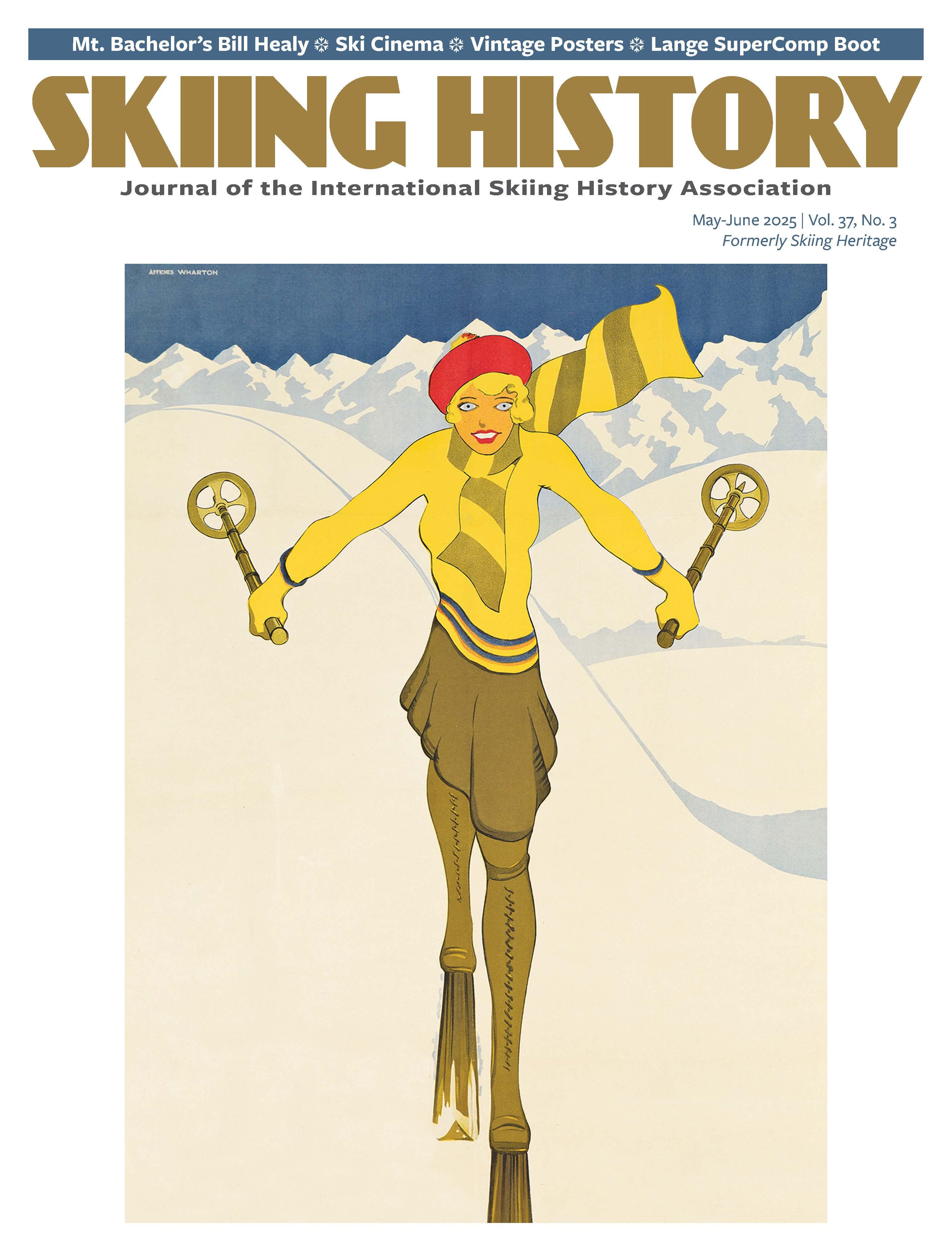
I always enjoy the annual review of Swann’s poster auction by Everett Potter. When I perused the catalog before this year’s sale, I found an intriguing poster that appeared both fun and ridiculous. And there it was, adorning the cover of another fantastic issue of Skiing History (May-June 2025)! The poster of a skier advertising Puente del Inca represents classic marketing hype rather than any real skiing opportunity at the time. In 1931, recreational skiing in Argentina was just getting going with the forming of the Club Andino Bariloche. While there are unspecified, sporadic reports of skiing between stations of the trans-Andean rail line (by the European engineers), it is a desolate, barren, rugged place that rarely receives much snow in the winter. In 1925, a spa hotel was developed at the site intending to attract Argentine health tourists, and the poster represents an attempt to fill empty rooms in the winter. Los Penitentes wasn’t developed as a ski area until the 1970s. Buenos Aires is often called the “Paris of South America,” but Puente del Inca should never be compared to St. Mortiz.
Chris I. Lizza
Author, South America Ski Guide
Lee Vining, California
Tragedy Leads to the Founding of the National Ski Patrol
Well done with the important article, “The Evolution of On-Course Safety” (March-April 2025). The photograph on page 18 (see below) reminded me of another contribution to skiing’s safety made by a ski-racing accident. In 1936, in a race on the Ghost Trail on Pine Mountain [Pittsfield, Massachusetts], similar to the Thunderbolt Trail, Frank Edison fell, crashing into a tree. His rescue was mishandled, which led to his death. The next day my father, Roland Palmedo, organized a committee chaired by Minnie Dole to study skiing safety. That led to the establishment of the National Ski Patrol, with Dole as its director.
Philip Palmedo
St. James, New York
Feature Image Media
Image
Article Date
Timestamp
07/13/2025 - 11:44 AM
Open to Public?
On
Full Access Article for Public
I always enjoy the annual review of Swann’s poster auction by Everett Potter. When I perused the catalog before this year’s sale, I found an intriguing poster that appeared both fun and ridiculous. And there it was, adorning the cover of another fantastic issue of Skiing History (May-June 2025)! The poster of a skier advertising Puente del Inca represents classic marketing hype rather than any real skiing opportunity at the time. In 1931, recreational skiing in Argentina was just getting going with the forming of the Club Andino Bariloche. While there are unspecified, sporadic reports of skiing between stations of the trans-Andean rail line (by the European engineers), it is a desolate, barren, rugged place that rarely receives much snow in the winter. In 1925, a spa hotel was developed at the site intending to attract Argentine health tourists, and the poster represents an attempt to fill empty rooms in the winter. Los Penitentes wasn’t developed as a ski area until the 1970s. Buenos Aires is often called the “Paris of South America,” but Puente del Inca should never be compared to St. Mortiz.
Chris I. Lizza
Author, South America Ski Guide
Lee Vining, California
Tragedy Leads to the Founding of the National Ski Patrol
Well done with the important article, “The Evolution of On-Course Safety” (March-April 2025). The photograph on page 18 (see below) reminded me of another contribution to skiing’s safety made by a ski-racing accident. In 1936, in a race on the Ghost Trail on Pine Mountain [Pittsfield, Massachusetts], similar to the Thunderbolt Trail, Frank Edison fell, crashing into a tree. His rescue was mishandled, which led to his death. The next day my father, Roland Palmedo, organized a committee chaired by Minnie Dole to study skiing safety. That led to the establishment of the National Ski Patrol, with Dole as its director.




 Rob Katz

 Charlie Webb