Presented for a single outstanding contribution or several contributions to skiing’s overall historical record in published book form.
American Birkebeiner The Nation’s Greatest Ski Marathon By Jerome P. Poling
In American Birkebeiner, Jerome P. Poling brings us the remarkable story of how a modest ski race in the North Woods of Wisconsin grew to become the largest cross-country ski marathon in North America. This book spans more than 50 years of race history, from visionary race founder Tony Wise and his efforts to promote Nordic skiing across the Upper Midwest to race-day highlights, skier profiles and history-making finishes.
American Birkebeinercelebrates every athlete and outdoor participant who has ever pushed themselves to their limits. The book sparks with lively, narrative-driven prose and is based on extensive archival research, reporting and personal interviews. This lavishly illustrated book also features 150 photographs, including intimate portraits of athletes pushed to the limits of their endurance, sweeping aerial shots of skiers and cheering crowds, and awe-inspiring winter vistas. An exquisitely crafted ode to an extraordinary race, American Birkebeiner will inspire winter sports fans and outdoor enthusiasts alike.
American Birkebeiner, the Nation’s Greatest Ski Marathon, by Jerome P. Poling, Wisconsin Historical Society Press (2025), 368 pages.
Orte der Erinnerung im Skisport (Memorable Places in Skiing) Edited by Dr. Markwart Herzog and Annette Hofmann
This multidisciplinary volume examines a wide range of “places of memory” in organized skiing.
The focus is on traditional ski competitions and winter sports areas, decaying and forgotten ski jumps (“lost places”), and collectible artifacts displayed in museums or auction houses. Included are papers on places of social gathering, media and biographies, National Socialist sports policy and “invented traditions”—legends and myths, which repeatedly become subjects of historical deconstruction.
With contributions byE. John B. Allen, Reiner Beck, Andreas Brugger, Thomas Busset, Sébastien Cala, Markus Friedrich, Markwart Herzog, Annette Hofmann, Grégory Quin, Andreas Praher, Karin Rase and Marit Stub Nybelius.
In German, Orte der Erinnerung im Skisport (Memorable Places in Skiing), edited by Dr. Markwart Herzog and Annette Hofmann, Nomos Publishing (2025), 229 pages.
Shishapangma, Skiing the Highline The Account of the First American Ski Descent from an 8,00-Meter Peak By Michael Marolt
Shishapangma, Skiing the Highline, is the account of the first American ski descent from an 8,000-meter peak. In this gripping true story of determination and grit, author Mike Marolt recounts pushing the edge of extreme sports with his twin, Steve Marolt, and lifelong friend Jim Gile. Together, they reached the pinnacle of their progression from childhood climbing and skiing to attaining the highest peaks in the world.
In Shishapangma, the mountaineering trio overcomes overwhelming odds as they climb and ski the 14th highest mountain in the world. The climb cemented a team that became arguably the most accomplished high-altitude skiers in history. The trio always maintained the unwritten ethics of climbing the highest peaks, shunning all Sherpa/porter support, as well as supplemental oxygen and altitude drugs.
Shishapangma, Skiing the Highline, by Michael Marolt, Gatekeeper Press (2024), 260 pages.
Skade Award
Presented for an outstanding work on regional ski history or for an outstanding work published in book form that is focused in part on ski history.
Ski Club Lodge Pioneers, 1944-1967 Advocates. Architects. Aficionados. Alpine initiatives of the Kosciuszko State Park Trust, Australia. By Donald Johnson
This is the story of the challenges faced in building the modest club lodges in the ski resorts of the Kosciuszko State National Park Trust in Australia. For seven decades, these private ski-club lodges have predominated in providing skier accommodations in Australia.
After the Kosciusko Lodge burned down in 1952, ski clubs pioneered a unique form of Alpine communal living. Through unrelenting efforts of their intergenerational members, those ski clubs have successfully sustained their lodges in the face of many challenges. Their resilience has contributed to the quality of today’s Alpine communities now recognized for their historic and cultural significance.
Ski Club Lodge Pioneers, 1944-1967, by Donald Johnson, Perisher Historical Society (2025), 196 pages.
Film or Photography Award
Presented for an outstanding contribution to the historical record of skiing in photographic or film/digital form.
Big Mountain Soul: Ski Africa
Brilliantly filmed and edited, this documentary explores the motivation of Black skiers and snowboarders, and their passion for the sport. It records the 1973 origin of the National Brotherhood of Skiers (NBS) and its early attraction to big-mountain, back-country skiing. This pursuit has evolved into the next goal for the organization, as the group now pursues skiing all seven continents. Here, amid a historical perspective of Black skiing history—beginning in 1909 with Arctic explorer Mathew Hanson—is the story of the NBS’s expedition to Morocco to skin and ski the Atlas mountains of the African continent.
Directors Brendan Russo and Cameron Sale. Producers Jonathan M. Correia and John M. O’Conner. 45 minutes; Outside TV
First Tracks: Michigan’s Skiing Legacy
This film takes us on a journey with Emma, a young student who discovers the unique history of skiing in Michigan. Starting with Nordic skiing by Scandinavian loggers and miners who erected towering ski jumps in the late 19th century, the film explores how Michigan skiing influenced the development of the sport nationwide. Here’s the 1905 launch of the National Ski Association in Ishpeming and Boyne Mountain’s first chairlift in the Midwest. Along the way, Emma learns about the Michigan invention of the Snurfer, early snowmaking innovations and one of the first rope tows in the country. A heartfelt and educational story, First Tracks celebrates Michigan’s legacy on the slopes.
Producers Mike Panich and MWS Productions. Collaborator Michigan Snowsports Industries Association. 18 minutes; YouTube/MyMichiganTV
Advice for Girls
Advice for Girls spotlights the collective experience of women in the ski industry. The feature-length film, with an all-female cast and production crew, brings together advice from three generations of women to remind girls and women of all ages that they are worthy of success, allowed to take up space and are invaluable to the future of the ski industry. With an inclusive cast—women of color, queer women, transgender athletes, women with disabilities and more—the film strives to provide all viewers with someone to connect to and be inspired by.
The Road West Traveled Director Sara Beam Robbins; Writers Sara Beam Robbins and Addy Jacobsend; 45 minutes; YouTube/TheRoadWestTraveled
Bill Healy: A Man Who Loved a Mountain
Offered as a personal story through the eyes of his family (his wife, sons, great grandson and colleagues), this film captures the remarkable character, pioneering vision and enduring legacy of Mt. Bachelor’s founder, Bill Healy. The film explores Healy’s arc as an Oregon skier in the 1930s, his World War II combat experience in the 10th Mountain Division and his years of struggle to open Mt. Bachelor in 1958 and continue to evolve the ski area today. This is an inspirational story of the founding of a major resort and how Bill Healy’s spirit continues through all the skiers who enjoy this resort today.
Producers Mt. Bachelor and the Mt. Bachelor Sports Education Foundation; Editor Joseph McMahon; 50 minutes; MBSEF/Vimeo
We’ll Still Be There: The Story of Goldminer’s Daughter Lodge
This film tells the story of ski-industry pioneers Jim and Elfriede Shane, powder skiing at Alta, Utah, and the Shanes’ creation of the Goldminer’s Daughter Lodge at Alta in 1963. Before building their iconic lodge, the husband and wife team were ski pioneers at the forefront of technological developments in both powder skis and avalanche mitigation practices. The story unfolds through the recollections of Elfriede and her long-time friends and fellow ski pioneers Jim McConkey, Junior Bounous and Alan Engen, supported by visuals in large part made possible by the extensive archives of the Special Collections Department at the J. Willard Marriott Library at the University Of Utah. Here is the inspiring story of Jim and Elfriede Shane.
Producer Flylow Gear; Director and Writer Alex Mager; 12 minutes; Flylowgear.com
Feature Image Media
Image
Article Date
Timestamp
05/19/2026 - 2:08 PM
Open to Public?
On
Full Access Article for Public
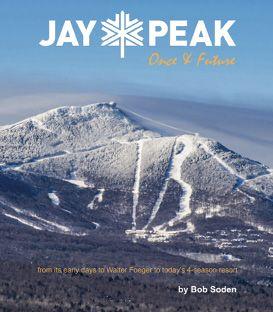
Jay Peak, Once and Future
From Its Early Days to Walter Foeger to Today’s 4-Season Resort By Bob Soden
Bob Soden, who has spent a lifetime skiing and teaching skiing at Jay Peak, Vermont, has created this weighty, 324-page full-color history of his home mountain.
Jay Peak is a unique ski area, at least among North America’s Eastern resorts. It claims average annual snowfall comparable to the major Colorado resorts (at the end of January 2026, Jay had more than four times Vail’s season-total snow this winter). It boasts a truly bilateral Canadian/New England culture. And Jay was for decades the headquarters of Natur Teknik, Walter Foeger’s direct-to-parallel ski teaching formula that challenged Arlberg orthodoxy.
To do the resort justice, Soden has created a unique book. Readers of this magazine will recognize Soden as a frequent contributor, a longtime ISHA board member and a member of its awards committee. As a historian, he values context, and the book is formatted accordingly. His detailed history begins in 1910, with the establishment by James P. Taylor of the Green Mountain Club. Each chapter contains a useful context box listing significant world events for that year. The best feature is the inclusion, on every full-color page, of original-source documents reproduced at legible scale. Browsing through the newspaper clippings, contemporary maps and photos, and financial and legal documents brings the story alive, as do the dozens of spectacular full-page panoramas. The result is a gorgeous book full of visual and intellectual surprises.
Foeger wasn’t the sole creator of direct-to-parallel ski teaching. Emile Allais published the original French direct-parallel system in 1937. By the time Foeger established the Jay Peak ski school in 1956, many Swiss and French instructors were skipping stem turns entirely in a noble effort to streamline the learning process. But Foeger built Natur Teknik into a practical system that was formally adopted at a dozen ski schools across the region. As the resort’s general manager, Foeger also supervised trail and lift construction.
Following his return to Austria in 1973, the resort missed his strong leadership. A series of owners came and went, culminating in the resort’s purchase, in 2008, by Ariel Quiros. What followed was the biggest financial scandal in Vermont history. It took almost two decades to sort out the mess, but the mountain remained open, and the snow continued to fall throughout. —Seth Masia
Jay Peak, Once and Future: From Its Early Days to Walter Foeger to Today’s 4-Season Resort, by Bob Soden, Marquis, Montmagny, Quebec (2025), hardcover, 324 pages. $99 USD
Aspen Journey: Past to Present By Susan Dalton
This coffee table-size book stands out among the many published about Aspen over the past half-century. Susan Dalton comprehensively surveys the town’s history, from the days of the original Ute inhabitants and the ensuing mining boom and bust years, to the ski area’s 10th Mountain Division roots and, finally, Aspen’s emergence as a skiing and cultural mecca.
Every page brims with a multitude of beautifully rendered old documents, photographs, panoramas, posters and maps. A cleverly illustrated, four-page fold-out timeline near the book’s front also clearly presents the arc of Aspen’s history. A bonus: Tissue pockets that hold fine copies of old postcards are tipped in throughout the volume.
Great documentation and stories carry us through the early years of skiing and town development, from Olympian Bill Fiske in 1936 to Walter and Elizabeth Paepcke and Friedl Pfeifer in the mid-1940s. The Paepckes saw Aspen’s remoteness not as a negative, but as a means of lending the area a certain cachet, which aligned with their ideas of promoting an annual cultural festival and other summer events to offset its winter activities.
Aspen Mountain opened in 1947 with what was then the world’s longest chairlift. Under the partnership of Pfeifer and Paepcke, the Aspen Skiing Corporation was formed. Pfeifer developed neighboring Buttermilk Mountain in 1958. The development of the third and fourth mountains, Snowmass and Aspen Highlands (by Whip Jones), soon followed.
This handsome tome will, without a doubt, grace many a library and living room of Aspen aficionados and other ski-history fans, laying out the resort’s rich history, as it were, on a platter. Other books by Dalton include Telluride: A Silver Past, A Golden Future and Durango: A Silver Past, A Golden Future.— Bob Soden
Aspen Journey: Past to Present, by Susan Dalton. Published by Red Tambourine Publishing, LLC, Telluride, Colorado (2023), hardcover, 164 pages. $85 USD
A Town Built by Ski Bums
The Story of Carrabassett Valley, Maine By Virginia M. Wright
Veteran journalist Virginia Wright tells the intriguing story of a town with a difference at the base of Sugarloaf, the second-largest ski resort east of the Mississippi. The mountain also claims the second-longest vertical drop (2,820 feet/860 meters) in New England.
What sets Carrabassett Valley apart from most ski towns are its origins and makeup. The ski area arrived first, in 1963. A decade later, in 1972, a couple dozen local ski bums bought some 1960s A-frame houses and decided it would be in the interest of their pocketbooks to set up a municipality that didn’t do things in the usual fashion. They got approval to combine two unincorporated towns remaining from the area’s lumber heritage at the foot of the ski area, then based the new town’s economy on outdoor recreation and creative investment. It helped that these young dreamers were both well-heeled and well-educated.
Carrabassett Valley doesn’t fit the usual conception of a New England ski town with vintage homes and a white, steepled church. Instead, the town now boasts 2,100 homes and owns a first-class Trent Jones Jr., golf course, 2,000-acre ski touring and mountain biking park, airport, riverside rail trail, advanced fitness center and modern library, among other facilities. Yet residents don’t pay high taxes. The town’s directors have ensured that the mill rate has never exceeded $8.40.
In fact, Carrabassett Valley has managed its affairs so well that the town has been able to come to the rescue of the ski resort on more than one occasion when bridge loans were needed.
This book provides a well-researched, well-written and comprehensive history. The author was a senior writer at Down East magazine for 10 years and has written other books, including Red’s Eats: World’s Best Lobster Shack, The Wild Blueberry Book and Route 1: Maine. –B.S.
A Town Built by Ski Bums: The Story of Carrabassett Valley, Maine, by Virginia M. Wright. DownEastBooks, Essex, Connecticut (2024), hardcover, 266 pages. $29.95 USD
2025 ISHA Award Winners
Award winners will be honored April 10, 2026, at Snowbird, Utah, as part of Skiing History Week.
Lifetime Achievement Award: Junior Bounous
At 100 years old and still skiing, Bounous is known as a “Pioneer of the American Ski Industry.”
Ullr Awards
Presented for a single outstanding contribution or several contributions to skiing’s historical record in published book form.
Kandahar 1924–2024: The Original Ski Racing Club, by Adam Ruck
Orte der Erinnerung im Skisport(Memorable Places in Skiing), by Dr. Markwart Herzog and Annette Hofmann
American Birkebeiner: The Nation’s Greatest Ski Marathon, by Jerome Poling and the Wisconsin Historical Society Press
Shishapangma, Skiing the Highline: The Account of the First American Descent from an 8,000-Meter Peak, by Michael Marolt
Skade Awards
Presented for an outstanding work on regional ski history or a book focused in part on ski history.
Ski Club Lodge Pioneers 1950-1960: Advocates, Architects and Aficionados, by Donald Johnston
A Town Built By Ski Bums: The Story of Carrabassett Valley, Maine, by Virginia M. Wright and the Carrabassett Valley History Committee
Aspen Journey: Past to Present, by Susan Dalton
Jay Peak, Once and Future: From Its Early Days to Walter Foeger to Today’s 4-Season resort, by Bob Soden
Film Awards
Big Mountain Soul: Ski Africa, Directors Brendan Russo and Cameron Sale; Producers, J.M. Correia and J.M. O’Conner
Bill Healy: A Man Who Loved a Mountain, Mt. Bachelor Sports Education Foundation
Mountains Not for Profit, Teton Gravity Research and Indy Pass
Advice for Girls, Addy Jacobsend and Sara Beam Robbins
We’ll Still Be There: The Story of Gold Miner’s Daughter, Alex Mager
First Tracks: Michigan’s Skiing Legacy, Steve Kershner, Mickey MacWilliams, Mike Panich and Matthew Zabransky
Feature Image Media
Image
Article Date
Timestamp
03/15/2026 - 4:40 PM
Open to Public?
On
Full Access Article for Public
The Art of Shralpinism: Lessons from the Mountains By Jeremy Jones
Before digging into pro snowboarder Jeremy Jones’s sprawling, entertaining, highly useful and educational The Art of Shralpinism: Lessons from the Mountains, it’s best to turn to the inside back cover, where Jones posts the Shralpinist’s manifesto. Aphorisms such as “The Shralpinist is sometimes bold but always humble” and “The Shralpinist knows there is no shortcut to the top and remains patient and unflappable” offer sage advice to readers. (“Shralpinism” is a portmanteau of the words shredding and Alpinism coined by Jones.)
Jones is a snowboarding polymath and an influential voice in the freeride community. He’s the founder and longtime spokesperson of Protect Our Winters, the founder/owner of Jones Snowboards (specializing in splitboard models that can access the backcountry under human power) and an active filmmaker who has made documentaries including HBO’s Closer to the Edge.
The Art of Shralpinism: Lessons from the Mountainsis his love letter to the massive mountain ranges and mountain lifestyle that have shaped his quite remarkable career. Part memoir, part instructional manual, part diary and even part sketchbook, this is a true delight to read and the type of book that anyone with a mountain soul will come back to time and time again.
Though Jones would likely protest, the book would serve readers well placed near the toilet, where they can enjoy anecdotes of Jones’s far-flung adventures in Alaska, Jackson Hole and the High Sierra. Moreover, margin notes like “Get Fit, Get Educated, and Get Going” apply not just to life in the mountains but to life in general. — Steven Threndyle
Mountaineers Books (2022), ISBN 13: 978-1-68051-330-1, 288 pages, softback, $29.95
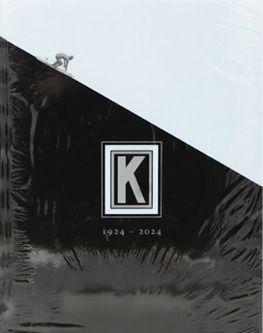
Kandahar 1924–2024: The Original Ski Racing Club By Adam Ruck
Adam Ruck, a member of the Kandahar Ski Club, celebrates the centennial of Britain’s first ski racing club, founded on January 30, 1924 at Mürren, Switzerland. With the help of many photographs, he tells the tale of the well-to-do amateur spirit that the club fostered in both Alpine racing and boisterous partying. The book is full of names that may not be familiar to American readers, but Ruck has an enviable knack of showing how each has contributed to the K’s (as the club is known) success.
After World War I, as skiing became widely popular, all looked positive for the sport. But then came the Depression, the Anschluss and World War II. During the 1920s and 1930s, the K experimented with the dual race Hindmarsh start, the Scaramangea roped race and the Golden Stick competition, which encouraged a “happy leaping from hillock to hillock, sometimes referred to as ‘goating.’” The influence of the Inferno run from top of the Schilthorn to the Lauterbrunnen valley was contagious: 127 skiers competed in 1972; 1,179 in 1979.
After World War II, the K sponsored young racers who competed internationally and organized citizen racing—a nice balance. Club members were enthusiastic to see their sport on the big screen when the James Bond film On Her Majesty’s Secret Service was filmed at the revolving restaurant at the top of Murren’s Schilthorn. It was wonderful advertising for the sport.
Privately printed for the club’s 1,700 members, for whom skiing is “like an arrow from an archer,” this history deserves a wider audience. —E. John B. Allen
Kandahar Ski Club (2024). Order from the KSC website: Kandahar.org.uk. For delivery to UK, ₤45; to Europe, ₤50. For delivery to USA and Canada, contact: hon.sec@kandahar.org.uk.
Feature Image Media
Image
Article Date
Timestamp
01/16/2026 - 3:50 PM
Open to Public?
Off
Full Access Article for Public
ISHA presented its 2024 book and film awards in March in Lake Placid, New York, during the annual Skiing
History Week, held in partnership with the U.S. Ski and Snowboard Hall of Fame. We will review the balance of the award-winning books and films in future issues.
Ullr Award
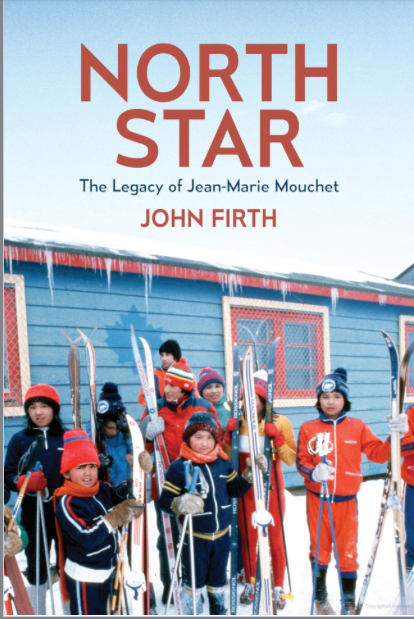
North Star
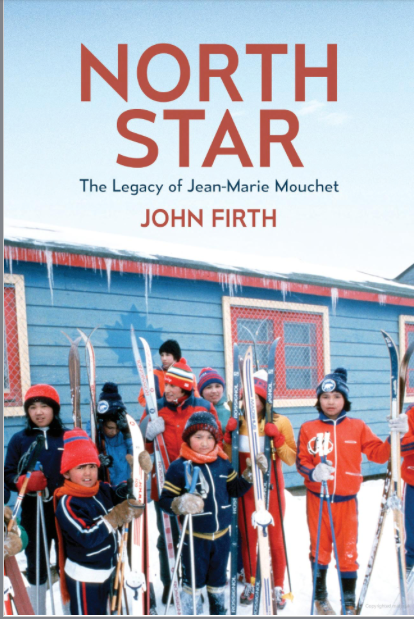
North Star: The Legacy of Jean-Marie Mouchet
By John Firth
John Firth’s latest book, this one on skiing history, tells the thrilling and inspiring story of Jean-Marie Mouchet, an Oblate Catholic priest from France who was imprisoned by the Nazis during World War II and, after the war, emigrated to Canada in the 1950s. There he set up a mission in the Yukon and created the Territorial Experimental Ski Training (TEST) program that taught cross-country skiing to aboriginal children. The program eventually placed four TEST skiers on Canada’s national team and sent two Inuvik Nordic skiers to four Olympic Winter Games, beginning in 1972.
Mouchet was born in 1917 in Malbuisson, in the shadow of the Jura Mountains on the French-Swiss border. The young boy became a proficient cross-country skier in the surrounding hills, as well as a crack shot, adding rabbits to the family’s larder. As the youngest of five brothers, Mouchet, by tradition, was destined to become a priest–until the war began. His expertise on skis and with a rifle had him posted to the Alps to fight the Italians.
Later, at the Oblate seminary in La Brosse-Montceaux, he became part of the “Maquis” (the resistance) and after being rounded up was shipped with fellow novitiates to a detention camp, Frontstalag 122, in Compiègne. He remained there until 1944, when the sighting of U.S. tanks caused the German guards to flee. Mouchet received the Order of Canada in 1993 for his dedication to and education of the northern peoples. — Bob Soden
Friesen Press (2024); ISBN 978-1-03-919433-5. 324 pages. $23.99, hardcover. Also available in softcover and e-book.
Skade Awards
Mt Washington Valley
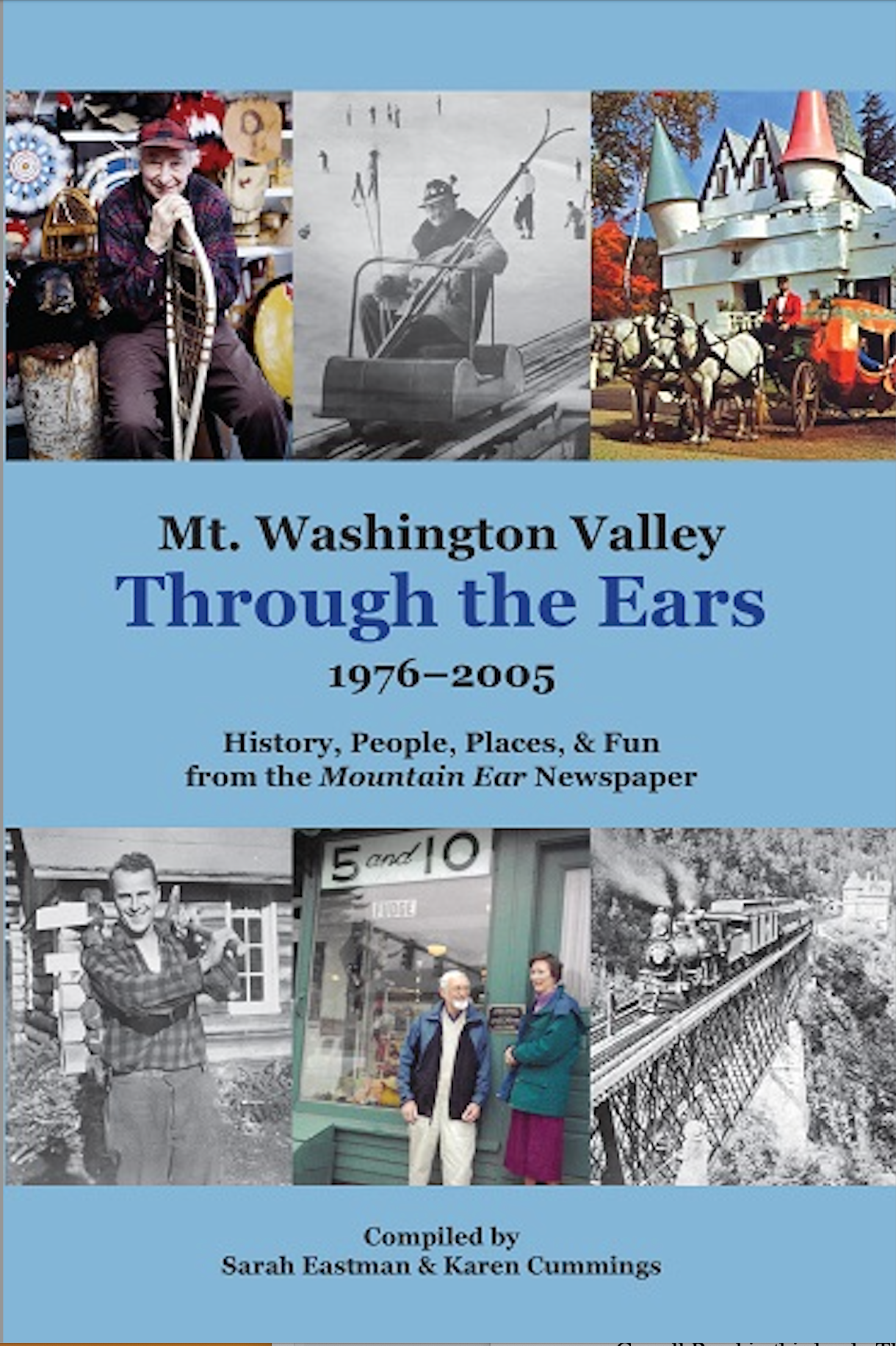
Mt. Washington Valley Through the Ears, 1976-2005
Compiled by Karen Cummings and Sarah Eastman
Over a period of nearly three decades, the weekly newspaper the Mountain Ear played a special role in examining the skiing history of the Mount Washington Valley in New Hampshire. The paper was founded in 1976 with the help of Steve Eastman, who sold it to Salmon Press in 2005. Over the years, his brother Tom often wrote about ski history and also published books on the subject. In this compilation of stories that originally ran in the Mountain Ear, Tom Eastman wrote two of them: on Harvey Dow Gibson and Carroll Reed. They are based on personal encounters with Reed, a ski pioneer and sports-shop owner, and people close to Gibson, a North Conway native who made it his goal to develop his hometown as a ski center. Both men were instrumental in bringing Austrian ski hero Hannes Schneider to North Conway in 1939 and, in his wake, several ski instructors from the Arlberg gained a foothold in the Mount Washington Valley. They contributed significantly to the development of tourism in the region. — Christof Thöny
Bondcliff Books (2024); ISBN 13: 978-1-931271-41-7.
192 pages. $19.95. Softcover.
Sierra Nevada
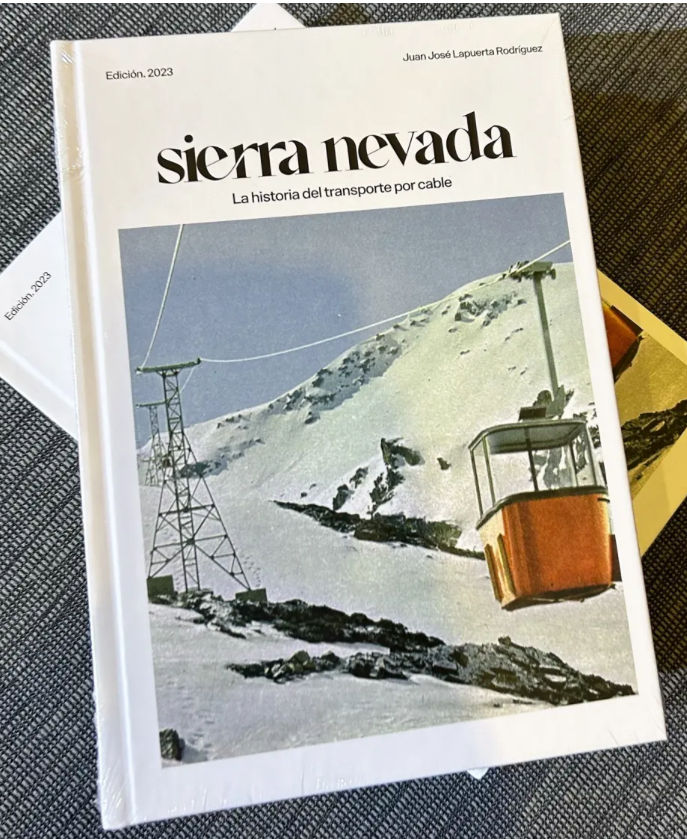
Sierra Nevada: The History of Ropeways
By Juan José Lapuerta Rodríguez
Juan José Lapuerta Rodríguez lives and works in the Austrian province of Vorarlberg as an employee of the Doppelmayr company, the world market leader in ropeway construction. Rodríguez is passionate about his job and also devotes his free time to the history of ropeways. His fascination with the subject goes back to his childhood days, spent on the Canary Islands. At the age of five, he rode the Mount Teide aerial tramway with his parents, which he still remembers today, according to the book’s preface. The author, who is of Spanish origin, also has a long-standing connection with the Sierra Nevada ski resort, the best-known winter sports resort in Spain. It gained international fame primarily through hosting the Alpine world championships in the 1990s. In his book, Rodríguez vividly describes the history of skiing in the Sierra Nevada and, in particular, the development of ski lifts. One focus is on the first passenger cable car, developed in San Sebastián in 1907 by Leonardo Torres. Numerous illustrations and a wealth of interesting information make the book a real page-turner. — C.T.
Available in Spanish and English for 30 Euros. For inquiries please contact the author directly at remontes.sn@gmail.com.
Vallees aux sommets
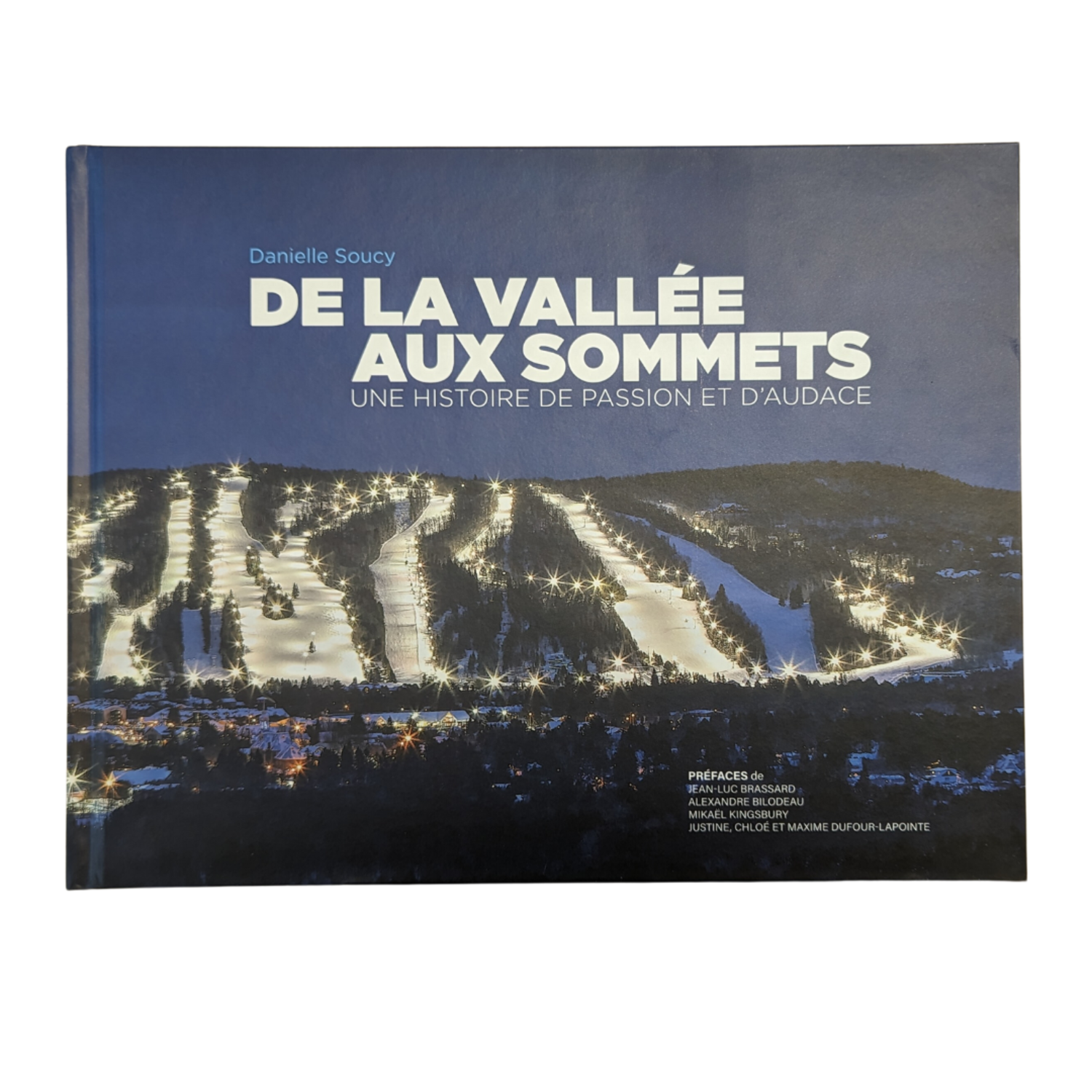
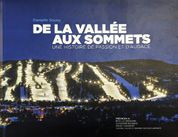
De la Vallée aux Sommets: une histoire de passion et d’audace (From the Valley to the Summits: A story of passion and daring)
By Danielle Soucy
Danielle Soucy’s beautifully illustrated coffee-table book tells the story of Mont Saint-Sauveur, Quebec, 45 miles north of Montreal.
In 1910 the hill was adopted by the Montreal Ski Club. The McGill University Red Birds Ski Club then arrived in the late 1920s, christening it the Big Hill. In 1934, the club renamed the most prominent slope Hill 70, in honor of McGill chancellor Sir Arthur Currie, who commanded the force that took a French hill of that name during World War I (see Skiing History, May-June 2017).
That same year, American entrepreneur Fred Pabst installed the Big Hill’s first rope tow and, two years later, a J-bar. About this time, Victor Nymark of Seigniory Club/Chateau Montebello (see Skiing History, September-October 2020), built a ski lodge at the base.
After World War II, the Big Hill expanded into a patchwork of separate lift companies on either side of Hill 70, identified as Hills 68 through 72. In 1968, a local group, led by accountant Jacques Hébert and pharmacist Guy Piché of Montreal, planned a single consolidated lift ticket that would give access to more ski mileage (and lift capacity) than could be had at Mont Tremblant, 35 miles farther north. By the early 1970s the group had unraveled the intertwined land rights and acquired the lifts on what was renamed Mont Saint-Sauveur.
In 1978, a trio of the ski area’s partners, led by Louis Dufour, heard about an opportunity south of the border: Jay Peak, Vermont, had triple the vertical of Mont Saint-Sauveur and was being sold by its forestry-giant owner, Weyerhaeuser, at a price they couldn’t refuse. The company became Mont Saint-Sauveur International, And over the next 20 years it acquired the smaller Laurentian areas of Mont Avila, Morin Heights, Mont Gabriel and Mont Olympia.
Following the death of principal director Hébert in 2006, the company consolidated again, unloading Jay Peak to focus on its local areas. In 2016, the company changed its name to Les Sommets.
This is Soucy’s fourth book; her first, La Vallée de la Diable: de la hache aux canons à neige (The Valley of the Devil: From hatchet to snow guns), earned an ISHA Award in 1999. — B.S.
Boutique les Sommets (2023); 203 pages. $49.99 CAD, hardcover.
Film Award
Variable.
Variable: 10 Years, 46 Mountains, Endless Possibilities
By Jamie and Doug Kennard
Backcountry skiers often use the word “variable” to describe snow conditions that are, quite truthfully, “horrendous,” “impossible” and even, yes, “unskiable.” Thanks to 10 years of helmet-cam footage from filmmaker Doug Kennard, we can see firsthand just how variably awful skiing in upstate New York can be. It took that long for Kennard and his brother, Jamie, to ski New York’s highest peaks, all in the Adirondacks. Variable truly shows Eastern backcountry skiing as a sufferfest. Why ski powder when frozen meltwater, rocks, twigs, dirt, mud and sticks provide so much challenge? But there’s more to this modest, beautifully told story than showing how crazy New England skiers are. Kennard interrupted the quest to provide homecare for Tracy, his wife of 30 years, who succumbed to cancer in 2023. Last year, he picked up the mantle anew and completed the final 10 summits, then put together this very fine documentary. — Steven Threndyle
Available for viewing on YouTube.
Mountain Men
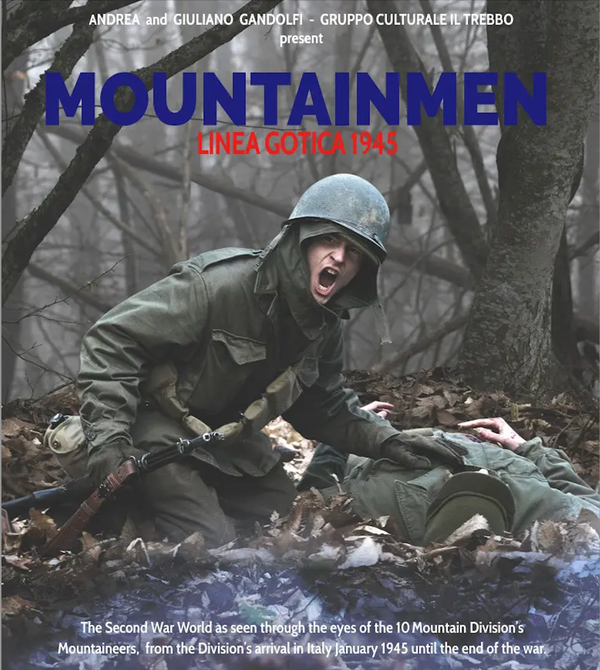
Mountain Men: Gothic Line 1945
By Andrea and Giuliano Gandolfi
The conquest of the Gothic Line, which took place 80 years ago, is one of the dramatic events in the last phase of World War II. The German army called the large-scale, contiguous fortifications the “Gotenstellung.” They stretched from the Tyrrhenian Sea across the entire Italian peninsula to the Adriatic Sea and were intended to prevent the breakthrough of the Allied forces into the Po Valley. The final conquest of the positions lasted from the fall of 1944 until April 1945. The U.S. Army’s 10th Mountain Division, specially trained for mountain warfare, played an essential role in the conquest. Many books and films about the 10th and its combat mission have been released in the U.S., but this new film, produced in Italy, takes a slightly different look at the subject. Based on the original locations and the memories of contemporary witnesses, the film is a valuable contemporary document. That’s largely because we are at a stage where there will soon be no more eyewitnesses to World War II, and such accounts will exist only as part of historical tradition. — C.T.
Authors and producers to be honored on March 28 in Lake Placid
ISHA’s Awards Committee has announced the winners of the 2024 ISHA Awards, which honor the best works of history published or produced during the past year.
The awards will be presented during a banquet in Lake Placid, New York, on March 28, 2025. Watch for reviews of the winning books and films in the Media Reviews section of the magazine.
Lifetime Achievement Award
A Lifetime Achievement Award will be presented to Jeff Byrne of Lake Placid, New York, in recognition of his lifelong activities promoting skiing and its culture. Byrne has dedicated his career to professional coaching and managing all aspects of winter sports program management for Special Olympics International. He served on the New York State Olympic Regional Development Authority and several nonprofit boards and committees.
Jay Cowan
Ullr Awards
Presented for a single outstanding contribution or several contributions to skiing’s historical record in published book form.
Der Schneehase: SAS 1924-2024, by Ivan Wagner
North Star: The Legacy of Jean-Marie Mouchet, by John Firth
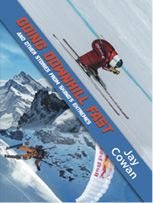
Going Downhill Fast: And Other Stories from Skiing’s Extremes, by Jay Cowan
Danger! Natural Snow: Aspects of Ski & Olympic History, edited by Annette R. Hofmann and Christof Thöny
Lou Dawson
Baldur Awards
Presented for an outstanding work of general interest that sheds significant light on an aspect of skiing history.
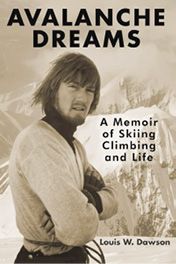
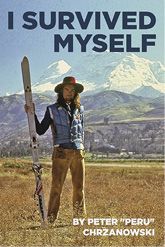
I Survived Myself, by Peter “Peru”
Chrzanowski
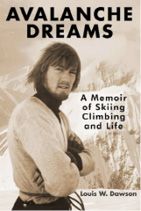
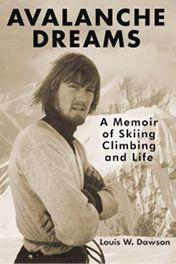
Avalanche Dreams: A Memoir of Skiing, Climbing, and Life, by Louis Dawson
Danielle Soucy
Skade Awards
Presented for an outstanding work on regional ski history or for an outstanding work published in book form that is focused in part on ski history
De La Vallée aux Sommets: Une Histoire de Passion
et d’Audace, by Danielle Soucy
Sierra Nevada: The History of Ropeways, by Juan Jose Lapuerta Rodriguez
Mount Washington Valley Through The Ears: 1976–2005 (Mountain Ear), compiled by Sarah Eastman and Karen Cummings
Rick Moulton
Film Awards
Mad River Glen: A 75-year
Fellowship of Skiers Rick Moulton
Mountain Men: Gothic Line 1945 Andrea and Giuliano Gandolfi
Variable: 10 Years, 46 Mountains, Endless Possibilities Jamie and Doug Kennard
Honorable Mentions
Book: The Man Who Had 9 Lives: A Murder on Skis
Mystery, by Phil Bayly
Video: Centursa Sierra Nevada: Una Historia Por Esquiar Santiago Sevilla
Short Film: Gray Rocks, Snow Trains, Monts Plante, Chalet Cochand, Jackrabbit and Rhona and Rhoda Wurtele, Michel Allard—with LSM, Cogeco Community TV and Nous TV Laurentides
Women in Snowsports Industry Award
ISHA will present the Women in Snowsports Industry Award to Ingrid P. Wicken. In addition to being the author of award-winning snowsports history books, she has dedicated her life to the development and expansion of the California Ski Library, the largest private ski library in the world.
Join us in Lake Placid, March 26-30
The International Skiing History Association and the U.S. Ski & Snowboard Hall of Fame will hold our annual US Ski and Snowboard History Celebration in Lake Placid, NY, March 26-30, 2025. We invite you to join us for skiing with friends and colleagues, a film festival, on-snow tours, lectures, fashion shows, meet-and-greets, and back-to-back evenings of awards honoring the 2024 ISHA Award winners (Friday evening) and Hall of Fame Class of 2024 (Saturday evening).
Schedule of Events (subject to change)
Wednesday, March 26
• ISHA Film Festival at the Lake Placid Center for the Arts
Thursday, March 27
• Whiteface On-Snow Tour and History Luncheon
• ISHA John Fry Presentation and reception: Skiers in WWII
• Snow History Trivia
• HOF Welcome Party
Friday, March 28
• Ride ‘n Slide with Legends at Whiteface
• Free-the-heel Nordic Trek at Mt. Van Hoevenberg; with Jan Reynolds & Billy Demong
• HoF Après Party and Gorsuch Fashion Show
• ISHA Awards Reception and Gala Banquet
• Snowsport Legends Party
Saturday, March 29
• USSS Hall of Fame Reception and Induction Banquet
Lou Dawson is a hero to Colorado’s backcountry skiers, as the first person to ski from all 54 of the state’s 14,000-foot peaks, including a number of first descents, and author of the best guidebooks to ski mountaineering in the state. He’s also the author of the American Alpine Club’s formal history of ski mountaineering, Wild Snow, and the founder of the respected website of the same name (which he has since sold).
Lou Dawson
Avalanche Dreams is a soulful coming-of-age memoir. The child of a hippie couple, Dawson grew up semi-feral in the Texas hills, and then in Aspen and the Elk Mountains. His father, Craig, was a ne’er-do-well who built, with his own hands, several homes for his growing family but was forced to sell all of them. In the late 1960s, the Dawson house, on Highway 82 east of town, became a headquarters of Aspen’s drug culture and even of Hunter Thompson’s campaign for sheriff.
At least Craig Dawson instilled in his oldest kid a passionate devotion to mountain adventure. The real father figure in Lou Dawson’s early life was Paul Petzoldt, founder of the National Outdoor Leadership School (NOLS). As a teen, Dawson himself became a NOLS instructor, and then—by surviving a series of near-death experiences--one of North America’s best rock climbers. It was an era of rapid technical progress in climbing, and Dawson was in the thick of it in Colorado, Wyoming, Yosemite and Alaska, partnering with legendary climbers like Harvey Carter, Don Peterson and Michael Kennedy.
Death by hypothermia or a misplaced step was always a possibility for a risk-addicted climber, but as Dawson shifted into ice climbing and ski-equipped winter mountaineering, the recurring horror was avalanche. He lost friends under the snow, including Meta Paumgarten Burden in 1970. Then he twice nearly died in the snow, each time rescued in the nick of time and with a shattered leg. It took three harrowing attempts over four winters to complete, in 1982, the first midwinter traverse of the Elk Mountains.
Parallel to the mountaineer’s progress, Dawson struggled to find his way from the chaos of his early family life to acceptance of a stable relationship. That came in 1984, when he met Lisa Spieler, the Americanized daughter of Swiss mountaineers. They married within a year, and Dawson chose to temper risk for the sake of marriage—as he writes, he learned finally to “live by the mountain’s rules.”
Beginning in 1987, Dawson set out to ski all the Fourteeners, completing the project in the spring of 1990 at age 38 and just in time for the birth of his son, Louie. More adventures followed, some of them partnered with Lisa and Louie. In 2010, 20-year-old Louie helped his old man summit and ski Denali in winter.
Dawson has become a graceful, even lyrical, writer. Of mastering wild-snow skiing, he writes “I thought about steeps—why they’re special. Halfway between the vertical and the horizontal, a line bisects the world. On one side, gravity rules. On the other side, forty-five degrees and beyond, when you spring off the snow during a turn, for a moment, you fly, weightless. Beyond the challenge, beyond the athleticism, steep skiing was about wings.” –Seth Masia
Best Peak Press, 2024. 371 pages with 82 black & white photos. $25 hardcover, $18 paperback, $10 Kindle edition.
Peter Peru.
I Survived Myself, by Peter Chrzanowski
I Survived Myself might seem like a curious title for a book about ski mountaineering and paragliding, yet the stunning array of accidents that Canadian author Peter Chrzanowski has experienced over the past 50 years indeed makes his continued existence somewhat miraculous. The book is 400 pages long, and there are bumps, bruises and blood in every chapter.
In the early 1980s, Chrzanowski was a pioneer of extreme skiing. Before arriving in Whistler, British Columbia, in 1982, he undertook a pair of expeditions to Huascaran and Ranrapalca in the Andes, earning the nickname “Peter Peru.” In Ranrapalca, he barely survived after cartwheeling down a couloir and falling into a crevasse.
At a time when other ski mountaineers were muddling through three-week ski traverses on telemark gear, Chrzanowski and his rowdy (and inexperienced) posse used helicopters to reach impressive summits in the Sea to Sky Corridor. Almost immediately, things started to go wrong. In 1979, Chrzanowski organized a heli-assisted descent of the West Couloir of Wedge Mountain. Team member Gerhard Singler died when a cornice collapsed at the top of the route. This misadventure didn’t stop Chrzanowski from creating an informal business, Extreme Explorations, which specialized in taking thrill-seeking tourists into Whistler’s gnarliest terrain, both in and out of bounds.
Thus began a 40-year odyssey in which mishaps pile up like rubble at the bottom of an avalanche chute. What kept Chrzanowski going was chutzpah; by the mid-1980s, he’d released a series of films featuring major peaks such as Mount Waddington and was relentless in his pursuit of sponsorship and financing to bring his projects to fruition. Chrzanowski managed to attract young, strong and photogenic skiers like Steve Smaridge, Jia Condon, Ptor Spricenieks, Troy Jungen, Eric Pehota and Trevor Petersen—several of whom later moved on to bigger roles with better film companies.
Chrzanowski’s biggest break came when he was invited to both film and judge the very first World Extreme Skiing Championships in Valdez, Alaska, a gig he then held for more than a decade. His luck took a turn for the worse following a damning story in Powder Magazine titled “Curse of the Traverse.” In 1995, Chrzanowski plotted a multi-day “team traverse” race across the Pemberton Icecap glacier system in the Coast Range. Several teams got lost and Chrzanowski broke his leg when he fell off the back of a snowmobile while filming. A search-and-rescue team was deployed to find missing racers and volunteers.
In the early 2000s, Chrzanowski decided that extreme skiing no longer provided big thrills. He took up paragliding, moving to Pemberton, where he joined the ragtag Flying Monkeys. Thus began a two-decade transition away from ski filmmaking and a new notoriety, not just in Canada but also in Mexico and Colombia.
Then there are the (apparently) dozens of liaisons with beautiful women in Poland, France, Chile, Colombia—pretty much everywhere he travels. Alas, finding a soul mate and continuing the family name— Chrzanowski is an only child—does not seem to be in the cards for him.
As with many self-published efforts, I Survived Myself contains many formatting, spelling and grammatical errors, and is about a hundred pages too long. There has never been a ski bum/filmmaker/paraglider quite as renegade as Peter Chrzanowski, and a much better book could have been written about his many highs and lows. But I Survived Myself is still a fascinating, and often cringe-worthy account, of one man and his relationship to the mountains. The title could not have been more appropriate. –Steve Threndyle
ISHA Film Awards
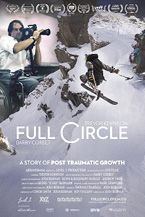
Full Circle
Full Circle: A Story of Post-Traumatic Growth
By Barry Corbet and Trevor Kennison
Directed by Josh Berman, music by Mark Crawford
Faced with a traumatic injury that renders you permanently disabled, how would you reinvent yourself? In 2014, Trevor Kennison’s life was forever altered by a broken back—for worse and for better, in equal measures. Barry Corbet, an intrepid skier, mountaineer, explorer, filmmaker and Jackson Hole legend, broke his back in a helicopter crash in 1968. Frustrated by a pre-ADA culture that did not accept or support the disabled, Corbet reinvented himself, becoming a seminal leader in the disability community. Full Circle follows Kennison on a path toward post-traumatic growth in parallel with Corbet, 50 years later. Their stories mirror each other, connected through time and space by common locations and motifs—injuries in the Colorado backcountry, rehab at Denver's Craig Hospital, fame in Jackson Hole—but also, through their shared resiliency and refusal to let their passion for life be limited by their injuries. Full Circle is both an unblinking examination of the challenges of spinal cord injury and a celebration of the growth that such tragedy can catalyze.
Streaming on Netflix, 104 minutes.
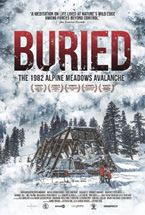
Buried.
Buried: The 1982 Alpine Meadows Avalanche
Jared Drake and Steven Siig
In the early 1980s, Alpine Meadows ski patrollers were the gods of winter in Lake Tahoe, California, a sun-drenched wonderland of endless powder and parties. This sundry crew full of youthful hubris and a zest for explosives was guided by a newly minted avalanche forecaster named Jim Plehn. More thoughtful and strategic than the others, Plehn was a stickler for safety and protocol; he had to be at this avalanche-prone resort. The responsibility to keep the skiing public safe was an all-consuming obsession of the patrol crew, which made the day of March 31, 1982, all the more devastating.
With the ski area closed due to high avalanche danger, an avalanche of unforeseeable magnitude broke free. Millions of pounds of snow hurtled down the side of the mountain, demolishing the resort’s base area and burying the parking lot. The shell-shocked patrol team dug into the wreckage. Eight victims were buried in the slide—co-workers, friends, family—and every passing second was precious.
Over the next five days, through an unrelenting storm and unimaginable tragedy, the rescue team persevered. Innocence was lost, mortality faced, Mother Nature reckoned with, but through it all they never gave up hope for a miracle.
Streaming on Netflix, Prime and Apple TV, 90 minutes.
Alf Engen
Alf Engen: Snapshots of a Sports Icon
Alan and Barbara Engen
An affectionate biography of Alta legend Alf Engen.
Alf Engen Ski Museum, 38 minutes. Streaming at vimeo.com/906432480
Feature Image Media
Image
Article Date
Timestamp
07/07/2024 - 2:57 PM
Open to Public?
On
Full Access Article for Public
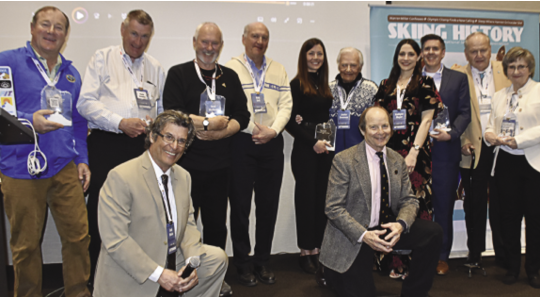
ISHA presented its annual book and film awards on March 20, at Black Rock Mountain Resort in Park City, Utah. We reviewed four award-winners in previous issues. Above, award winners (left to right standing) Lanny Johnson (Buried), Chris Couper (From Ranch to Resort), Rick Walkom (Skiing Off the Roof), Rett Ertl (Eldora), Ayja and Junior Bounous (Junior Bounous), Kathryn Mayer and Greg Glasgow (Disneyland on the Mountain) and Alan and Barbara Engen (Alf Engen). In front, ISHA's Seth Masia and Rick Moulton. Charlie Sanders photo.
Ullr Award
Patrick Thorne
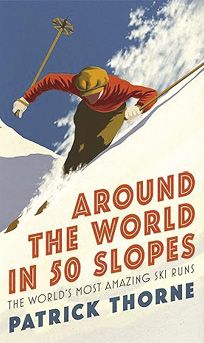
Around the World In 50 Ski Runs
By Patrick Thorne
Skiing History contributor Patrick Thorne tells the surprising stories behind 50 ski runs across the globe. Learn about the two different ski areas that each claim to be Hannibal’s route through the Alpine passes with his elephants; the debate around what is really the world’s steepest slope; how smugglers have used ski runs to escape customs patrols; and why hundreds of skiers dress as witches each year at Belalp in Switzerland.
Thorne’s account features skiing from across Europe, North America and South America, and ski destinations in China, Iran and even North Korea. Along the way, meet Franz Klammer, the Beatles, Count Dracula, St. Patrick and James Bond. This text is complemented with practical information and trail maps.
Patrick Thorne won ISHA’s Cyber award in 2020 for his website DrySlopeSkiing.com.
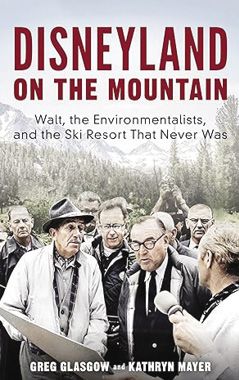
Disneyland on the Mountain; Walt, the Environmentalists, and the Ski Resort that Never Was
By Greg Glasgow and Kathryn Mayer
The book is a well-researched look at Walt Disney’s ill-fated attempt to develop a ski resort in the Mineral King area of the Southern Sierra Nevada mountains of California.
Disney was introduced to skiing in the 1930s and loved it. He met the Austrian ski champion Hannes Schroll, then ski school director at Badger Pass ski area in Yosemite, and became an early investor in Schroll’s development of the Sugar Bowl ski area. When Squaw Valley was awarded the 1960 Winter Olympics, Disney was appointed chairman of the pageantry committee and Disney studios designed the “set” and entertainment program.
After the Games, Disney and his advisor Willy Schaeffler looked for a resort site within driving distance of Southern California. They found Mineral King, adjacent to Sequoia National Park, and also learned that the Sierra Club had in the late 1940s recommended Mineral King for winter sport development.
In February 1965 the Forest Service issued a formal call for bids by companies interested in developing a ski resort in Mineral King. Of six bids received, Disney’s was declared the winner by Orville Freeman, secretary of agriculture, and Disney’s plans were announced on September 19, 1966, with California Governor Pat Brown and other officials in attendance.
The Sierra Club had an active skiing community in both Northern and Southern California, but environmental concerns increased substantially in the 1960s and 1970s. At a tumultuous meeting of the Sierra Club in San Francisco in May 1965, the club voted to lobby against the proposed ski development. Gradually, positions hardened to the point where the Sierra Club began to explore legal options and filed a lawsuit on June 5, 1969, in federal district court in San Francisco to block the project. The Sierra Club won in the district court but lost on appeal to the Supreme Court.
The Forest Service continued to study and revise plans for Mineral King and prepare an environmental impact statement. Disney adjusted his plans and for a time seriously considered building a destination resort at Independence Lake. But it took John Krebs, elected in 1976 to represent California’s 17th Congressional District, to put a stop to the whole project. He introduced a bill that would make Mineral King a part of Sequoia National Park and a similar bill was introduced in the Senate. The bills died in committee that year, but both were reintroduced in ١٩٧٧. Hearings were held, Jimmy Carter was strongly in favor of them and that was that. — Einar Sunde
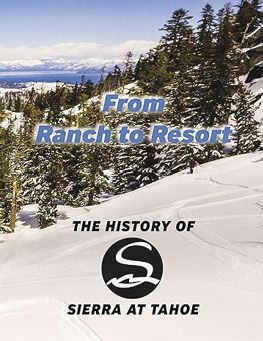
From Ranch to Resort: The History of Sierra at Tahoe
By Christopher C. Couper
This book opens with a roaring depiction of the wild gold rush days of the forty-niners, who were driven by dreams of striking it rich in the gold camps of the High Sierra. Couper carries the history of this mountainous region on through early railroads and the lumber industry to the 1920s, when the advent of automobiles created demand for proper roads. The book then settles into the Highway 50 corridor to the south shore of Lake Tahoe while focusing on the Ski Ranch, a simple roadhouse that defied the odds and survived for 50 years, evolving by 1999 into the modern multipeak resort Sierra at Tahoe.
Founded by the Barretts in 1948, the ski area didn’t even have a parking lot. Skiers just parked along the road and climbed over snowbanks to the lodge and its short rope-tow-served slopes. This coffee-table-sized, 350-page book is crammed with photos not only of the Ski Ranch but of neighboring resorts, like the Strawberry Hut/Edelweiss Ski Area, that have come and gone along Highway 50.
In 1952 heavy snows avalanched, burying Route 50. The Barretts sold the Ski Ranch and the new owners, Vern and Bobbie Sprock, immediately created a parking lot; the improvements never stopped. Successful avalanche control, under the professional eye of Monty Atwater, not only protected the lower ski slopes, but also enabled expansion above tree line to more snow-dependable higher terrain. When Highway 50 was widened in 1968, the resort lost its roadside location and moved up to its current site. Since 1993, Mountain Manager John Rice has overseen its expansion. A purchase by Booth Creek Ski Holdings in 1996 led to more growth, culminating in 2,000 skiable acres serviced by 10 chairlifts, including three high-speed quads offering multiple slope exposures. Bristling with intriguing anecdotes, the book chronicles the rise of the ski area and will draw readers into searching out this lesser known of the major Lake Tahoe resorts. –Rick Moulton
Sierra Software Solutions (2021), 364 pages. Hardcover $100, softcover $50 at Amazon.
Rick Walkom
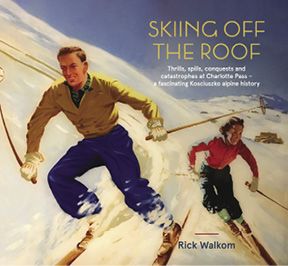
Skiing off the Roof
By Rick Walkom
This is the fourth edition of a book first published in 1991. It brings Australia's 93-year history of the Kosciusko Chalet up to date—well, up to 2020, with more color photos.
Author Rick Walkom arrived at Charlotte Pass in the New South Wales Snowy Mountains in 1975, after completing university. He was keen to take a short working holiday with a couple of mates before settling down to a life on the land. It was not to be! This famous snowbound outpost of winter sport on the roof of Australia seduced and captivated him, and he stayed for fifteen seasons. His first job as a lift operator led him to continue as a ski patrolman, Canadian-qualified ski instructor, summer caretaker and lodge manager. In 1978 Walkom became very much part of the mountain scene after converting his share in the family property into a slice of Charlotte Pass Village Pty Ltd, the company that held the head lease.
His interest in Charlotte Pass’ history grew and he suggested a Back to Charlotte Pass reunion to celebrate the 50th anniversary of the original chalet. At this reunion Walkom met many of Kosciuszko’s legendary characters. The resultant outpouring of reminiscences of the pioneering years inspired him to research the history around Charlotte Pass and its part in the growth of Australian skiing.
Walkom regularly returns to catch up with old mates and still tries to steal the gold from the young guns in the weekly Standard Race. He is a member of the Spencers Creek Ski Club, the Kosciusko Alpine Club, the Perisher Historical Society, the Thredbo Museum and the Australian Alpine Snowsports History Association.
skiingofftheroof.com.au (2023). 320 pages, 450 photos. Hardcover $79, including postage.
Film Awards
Buried: The 1982 Alpine Meadows Avalanche
Jared Drake & Steven Siig
In the early 1980’s, the Alpine Meadows Ski Patrol were the undisputed gods of winter in the mountain hamlet of Lake Tahoe, California, a sun-drenched wonderland of endless powder and parties. This sundry crew full of youthful hubris and a zest for explosives were guided by a newly minted avalanche forecaster named Jim Plehn. More thoughtful and strategic than the others, Jim was a stickler for safety and protocol; he had to be at this avalanche-prone resort. The responsibility to keep the skiing public safe was an all-consuming obsession of the patrol crew, which made the day of March 31, 1982, all the more devastating.
With the mountain closed due to high avalanche danger, an avalanche of unforeseeable magnitude broke free. Millions of pounds of snow hurtled down the side of the mountain demolishing the resort’s base area and burying the parking lot. The wreckage was unimaginable and for the shell-shocked patrol team there was no time to dwell, eight missing victims were buried in the slide - co-workers, friends, family - and every passing second was precious.
Over the next five days, through an unrelenting storm and unimaginable tragedy, the rescue team persevered. Innocence was lost, mortality faced, Mother Nature reckoned with, but through it all they never gave up hope for a miracle.
Streaming on Netflix, Prime and Apple-TV. 90 minutes.
Alf Engen: Snapshots of a Sports Icon
Alan & Barbara Engen
An affectionate biography of Alta legend Alf Engen.
Alf Engen Ski Museum, 38 minutes. Streaming at vimeo.com/906432480
Cyber Award
PerisherHistory.org.au
Perisher Historical Society
The Perisher Historical Society researches stories from all the resorts along the Kosciuszko Road including Sawpit Creek, Wilson’s Valley, the Hotel Kosciusko (Sponars Inn), Smiggin Holes, Perisher Valley, Blue Cow, Guthega, Skitube, Betts Camp, the Chalet and all the huts adjacent to the Kosciuszko Road and on the Main Range. This remarkable website archives hundreds of documents and photos, with an efficient search function.
Honorable Mentions
Baldur Award: Without Restraint, by Robert C. DeLena and Ryan C. DeLena
Skade Award: Skiing in Colorado, by Colorado Snowsports Museum and Hall of Fame and Dana Mathios
Film Award: NGR: The Fabulous Life of Nancy Greene Raine, by Lainey Mullins
Film Award: Sierra Nevada Ski and Olympic History: And the Future SNOW Museum, by Eddy Ancinas and Steve Jensen
Feature Image Media
Image
Article Date
Timestamp
05/13/2024 - 11:34 AM
Open to Public?
On
Full Access Article for Public
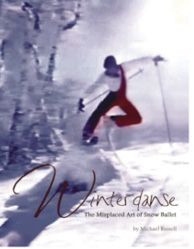
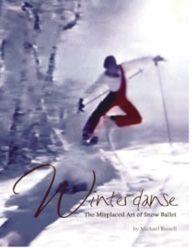
Winterdanse
Winterdanse: The Misplaced Art of Snow Ballet
by Michael Russell
Michael Russell’s Winterdanse is a passionate, cri du coeur about the author’s career in freestyle skiing - his triumphs, his failures and his struggles to have the purity of the artform acknowledged and accepted.
Freestyle skiing is an umbrella term (a loose one) that covers a number of styles of skiing, from acrobatic to moguls, skating to aerials, et al. It has been around for some time, dating back to at least the mid-1880s in Morgedal, Norway, where practitioners made “hopalom” and arabesques off moguls and in gates, per “Roots of an Olympic Sport: freestyle,” by Morten Lund with Peter Miller (Skiing Heritage, March 1998). Dr. Fritz Reuel in 1920s Austria continued this break from traditional skiing with his Reuel (Royal) Christies performed on the “wrong,” uphill, edge.
Winterdanse, however, is concerned with what occurred after the acceptance of “freestyle” as a legitimate form of skiing competition, which is generally agreed to have begun with the introduction of freestyle skiing instruction at Waterville Valley, New Hampshire, in 1969. The next year, Waterville owner Tom Corcoran and PSIA co-founder, and “exotic” skier, Doug Pfeiffer organized the first National Open Championships of Freestyle Skiing.
Russell, in Winterdanse, acknowledges Pfeiffer’s seminal influence on the directions his life took in skiing. In this story of his personal journey, from 1973 through 1985, the author takes us from his first tentative steps experimenting with “exotic skiing,” found in his father’s collection of Doug Pfeiffer Skiing magazine pointers, at Pat’s Peak, NH. He begins as a gifted amateur who showed creative mixing of acrobatic moves, choreographed to music combinations he chose. He distained aerials as not sufficiently artistic.
He joined the Chevy Tour as a professional in 1975, and was soon competing with the likes of Ed Pouquette, Greg Athans, Bob Theobold and Greg Stump. Russell from the beginning thought of his freestyle as actually “ballet skiing,” and accordingly developed routines that were imaginative, dynamic and flowing. He began to modify his equipment, changing the flex of his ski tips, the placement of his bindings and progressing through longer and longer ski poles that gave him leverage, for example, to execute the first ballet 720s on skis.
Russell takes us through his dozen years in the sport, pushing the balletic envelope, struggling against the rigidity of many judges and an increasing move in the sport towards “confining” the artform and the establishment of fixed and defined moves - all to make it more digestible and categorizable for the judging panels.
Amply and handsomely illustrated with classic photographs and documented with newspaper clippings, copies of score sheets and hand-drawn choreographic layouts, this is one of the first, if not the first, comprehensively reported works on the development of the freestyle movement, its growing pains, its eventual acceptance as an Olympic event and, ultimately, its original form falling from grace in the world of skiing competition. Winterdanse is an important contribution to the history of skiing and its possibilities. - Bob Soden
Winterdanse: The Misplaced Art of Snow Ballet by Michael Russell, Published by Nonesmanneslond, U.S.A. (2022), hardcover, 336 pages. $44.00
Georges Blanchon
George Blanchon
By Daniel Sage
Georges Blanchon is little-known outside France, but he was a founder of the Alpes-Club and of the national French Ski School, and a tremendously influential author and journalist. He deserves to be better-known. Daniel Sage has compiled a biography composed largely of Blanchon’s memoirs, providing valuable insight into the thoughts one of skiing’s pioneer organizers and builders.
In Georges Blanchon: cet homme protée libre et genereux (Georges Blanchon: this protean man, free and generous), Sage shows how Blanchon was fundamental, and key, to the formation of one of the first ski school organizations in Europe, and the creation of its ski instruction bible.
Blanchon was a polymath who, in 1918, at age 16, founded the Alpes-Club, and in 1925 taught himself journalism and began writing for Le Petit Dauphinois, then the daily newspaper of the French-speaking Alps. He would go on to work as a broadcaster, created an illustrated monthly magazine and then founded a real estate business in Grenoble. In 1930 he was elected secretary-general of the French Ski Federation (Fédération française de ski - FFS).
In 1937, Blanchon produced, with FIS champion Emile Allais and ski team captain Paul Gignoux, the seminal work Ski Français. Blanchon, with his writing and illustration skills, was responsible for producing the lion’s share of this historic book. That same year, Blanchon unified the various methods of ski teaching in France, and became the founding president the National French Ski School (l'École nationale du ski français - ENSF).
In 1939, Blanchon formed a partnership with Charlotte Perriand, an interior designer and architect, and set up a design office to produce military barracks. During the Second World War he joined the National Front for the Liberation and Independence of France and the resistance with the Francs-tireurs and French partisans. He was a captain in the Departmental Committee for the Liberation of Isère.
In the late 1940s, Blanchon turned his creative energies to architecture and furniture design, influenced no doubt by his cousin, Le Corbusier.
This book was written at the initiative of Jean Daudignon, on the occasion of the 100th anniversaries of the Comité de Ski du Dauphiné (1923-2023) & the Fédération Française de Ski (1924-2024).-- Bob Soden
Georges Blanchon: cet homme protée libre et genereux by Daniel Sage. La Glisse (2023) Technic Color, Seyssins, France, softcover, 203 pages. 18.00 € ($20 usd)
Feature Image Media
Image
Article Date
Timestamp
03/09/2024 - 12:54 PM
Open to Public?
Off
Full Access Article for Public
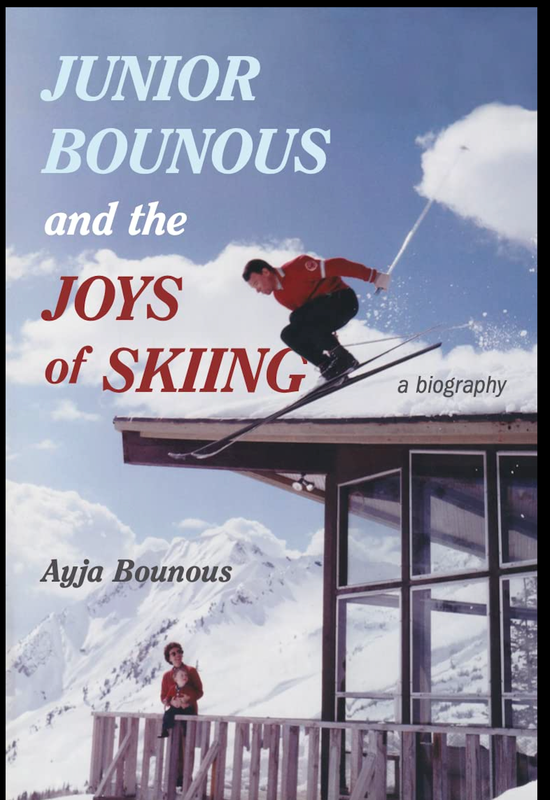
Ayja Bounous has crafted a well-written and comprehensive biography of an iconic American skier and teacher, and a tender tribute to her grandfather.
Junior Bounous was born in 1925 in Provo, Utah, in the Wasatch Mountains, and taught himself to ski at age eight on self-fashioned skis. He became a renowned powder skier and was a favorite model for photographers like Fred Lindholm, appearing frequently in ski periodicals and Warren Miller films.
Bounous’s astounding ability to convey the secrets of navigating powder to other skiers brought students from afar to wherever he was teaching, and they returned year after year.
After explaining how he got the name “Junior,” Ayja Bounous recounts her grandfather’s life-changing encounter with Alf Engen at Alta, their instant rapport and how he fully absorbed Engen’s teaching philosophy. Bounous would later infuse Engen’s methods into the Professional Ski Instructors of America’s American Teaching System.
We learn how, with Engen’s urging, Bounous earned his Forest Service certification to teach skiing at age 23 and then became a full-time ski instructor at Alta, teaching there from 1948 to 1958. In 1958, he was lured 600 miles westward to Sugar Bowl, California, becoming one of the first American-born ski school directors in the country.
The author describes how her grandfather later returned to Utah, in 1966, to become part owner and ski school director of the Timp Haven ski area (on Mount Timpanogos). In 1968, Robert Redford acquired the resort and renamed it Sundance (after his character in Butch Cassidy and the Sundance Kid). Redford prevailed upon Bounous to stay on as ski school director, and the actor thereby became a Bounous-trained powder adept.
In 1970, Bounous was approached to design the trail system for the nascent Snowbird ski resort, which opened in 1971. He then served as ski school director there until 1991, when he was named director of skiing. At Snowbird, Bounous also inaugurated both a children’s and a disabled learn-to-ski program.
Bounous’s partner through all these adventures, from 1952 onwards, was his wife, Maxine (née Overlade), who became a master powder skier in her own right and for her off-piste speed became know as “Fast Max.” A BYU graduate, she became indispensable as an editor when SKI and Skiing magazines published Bounous’s ski tips and PSIA’s instructional ski books included his contributions. Together, they raised two boys (one, Steve, raced for the U.S. Ski Team).
This biography recounts the couple’s full life of world travel and recreation in the off-season, too. They visited more than a dozen countries, from a memorable journey to Bounous’s ancestral hometown in northern Italy to the South Pacific, and from Nepal to New Zealand.
Somehow, the couple also managed to fit in month-long trips with friends and family on Lake Powell, on a houseboat or camping with a ski boat. Bounous loved exploring the many canyons and hidden rock arches that line the immense reservoir. Both would waterski and wake surf well into their 80s. And they botanized with passion, seeking out the myriad wildflower species of the Wasatch Mountains and discovering how the schedule and abundance of their flowering depended upon the snowpack of the previous winter. Junior Bounous is still skiing at the age of 98.
Junior Bounous and the Joys of Skiing, by Ayja Bounous. Printed by Paragon Press, Inc. (2022), softcover, 283 pages. $38


 Brilliantly filmed and edited, this documentary explores the motivation of Black skiers and snowboarders, and their passion for the sport. It records the 1973 origin of the National Brotherhood of Skiers (NBS) and its early attraction to big-mountain, back-country skiing. This pursuit has evolved into the next goal for the organization, as the group now pursues skiing all seven continents. Here, amid a historical perspective of Black skiing history—beginning in 1909 with Arctic explorer Mathew Hanson—is the story of the NBS’s expedition to Morocco to skin and ski the Atlas mountains of the African continent.
 This film takes us on a journey with Emma, a young student who discovers the unique history of skiing in Michigan. Starting with Nordic skiing by Scandinavian loggers and miners who erected towering ski jumps in the late 19th century, the film explores how Michigan skiing influenced the development of the sport nationwide. Here’s the 1905 launch of the National Ski Association in Ishpeming and Boyne Mountain’s first chairlift in the Midwest. Along the way, Emma learns about the Michigan invention of the Snurfer, early snowmaking innovations and one of the first rope tows in the country. A heartfelt and educational story,
 Offered as a personal story through the eyes of his family (his wife, sons, great grandson and colleagues), this film captures the remarkable character, pioneering vision and enduring legacy of Mt. Bachelor’s founder, Bill Healy. The film explores Healy’s arc as an Oregon skier in the 1930s, his World War II combat experience in the 10th Mountain Division and his years of struggle to open Mt. Bachelor in 1958 and continue to evolve the ski area today. This is an inspirational story of the founding of a major resort and how Bill Healy’s spirit continues through all the skiers who enjoy this resort today.
 This film tells the story of ski-industry pioneers Jim and Elfriede Shane, powder skiing at Alta, Utah, and the Shanes’ creation of the Goldminer’s Daughter Lodge at Alta in 1963.
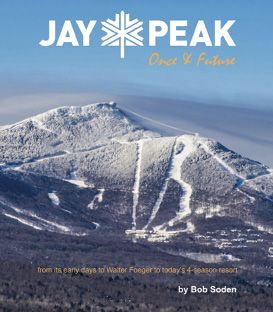 Bob Soden, who has spent a lifetime skiing and teaching skiing at Jay Peak, Vermont, has created this weighty, 324-page full-color history of his home mountain.
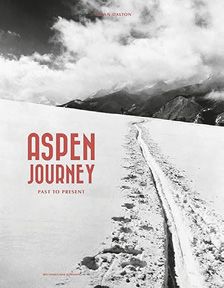 This coffee table-size book stands out among the many published about Aspen over the past half-century. Susan Dalton comprehensively surveys the town’s history, from the days of the original Ute inhabitants and the ensuing mining boom and bust years, to the ski area’s 10th Mountain Division roots and, finally, Aspen’s emergence as a skiing and cultural mecca.
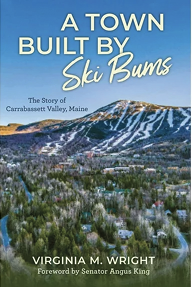 Veteran journalist Virginia Wright tells the intriguing story of a town with a difference at the base of Sugarloaf, the second-largest ski resort east of the Mississippi. The mountain also claims the second-longest vertical drop (2,820 feet/860 meters) in New England.