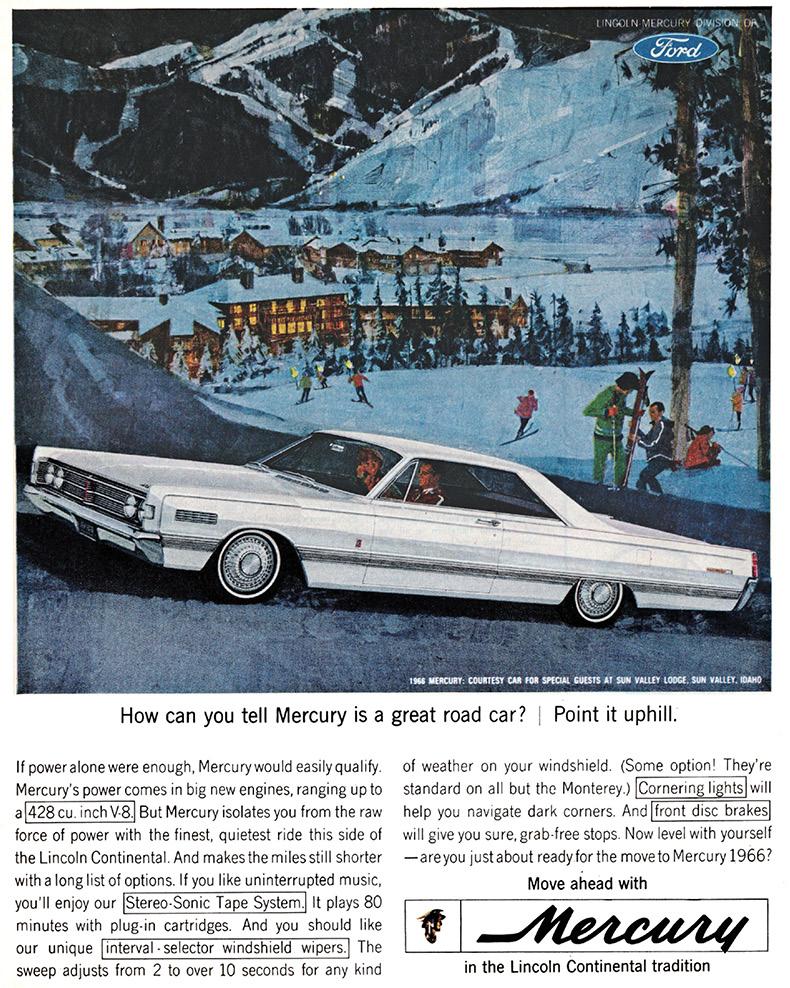
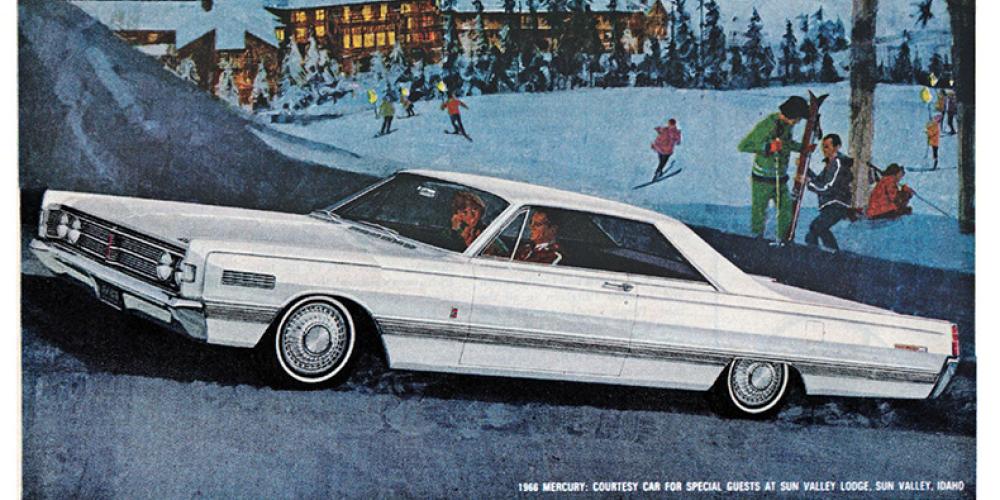
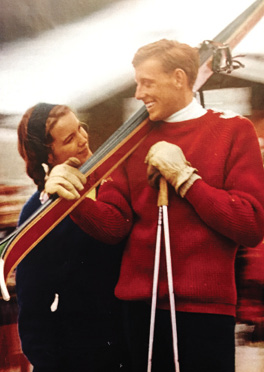
This advertisement, from the Winter 1966–1967 issue of LIFE magazine, featured happy
skiers motoring uphill near the Sun Valley Lodge in Idaho.
COMING UP IN FUTURE ISSUES
TO CHINA ON SKIS
In 1980, John Fry, Ned Gillette and Jan Reynolds were among the first Westerners to ski in China, which will host the 2022 Winter Olympics. Here’s what they found 40 years ago.
ALL-NATURAL, ALL-ALPINE
A brief history of gelande jumping—the art and sport of hucking off a hill.
SHORT TURNS
Ski news from around the world, viewed through the lens of history.
RESORTS THEN AND NOW
An intrepid journey to Björgafall, a small ski area in Swedish Lapland
WHERE ARE THEY NOW?
Extreme ski pioneer Glen Plake: The evolution of a rebel
Since the 1960s, this Austrian instructor has been an influential voice in ski technique and mountain management … and for the past few decades, a hard-working innkeeper in Vermont. By Edith Thys Morgan
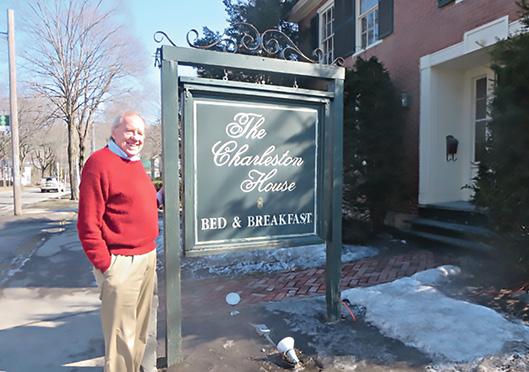
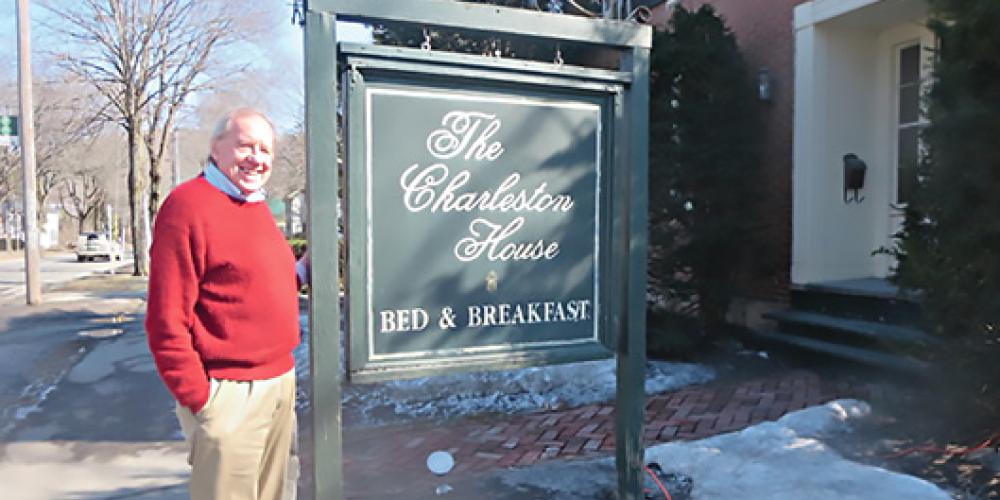
Photo above: Dixi Nohl in March 2020 outside of The Charleston House, the Vermont inn that he and wife Willa have run for 21 years.
On a typical day in Woodstock, Vermont, Dixi Nohl is up at 7 a.m. to set up breakfast, which his wife of 50 years, Willa, cooks for guests at the Charleston House. The two have run this bed-and-breakfast at the edge of town for 21 years, and welcome guests from all over the world who come to experience quintessential Vermont. They fuel up on Willa’s feast, especially German pancakes with sautéed peaches, which she admits is “not health food,” and, as Dixi adds with a laugh and a decidedly German accent, “no German has ever recognized it.”
Dixi and Willa have lived in Vermont since 1967, and in Woodstock since 1997. They consider themselves proud Vermonters, though both hail from beyond its borders. Willa grew up in Canada, while Dixi was part of the Austrian invasion that shaped ski technique and the ski industry in America.
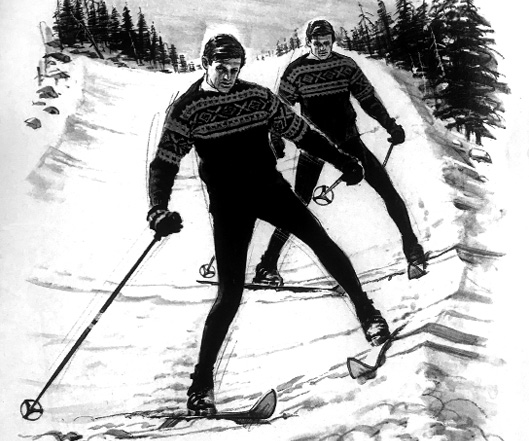
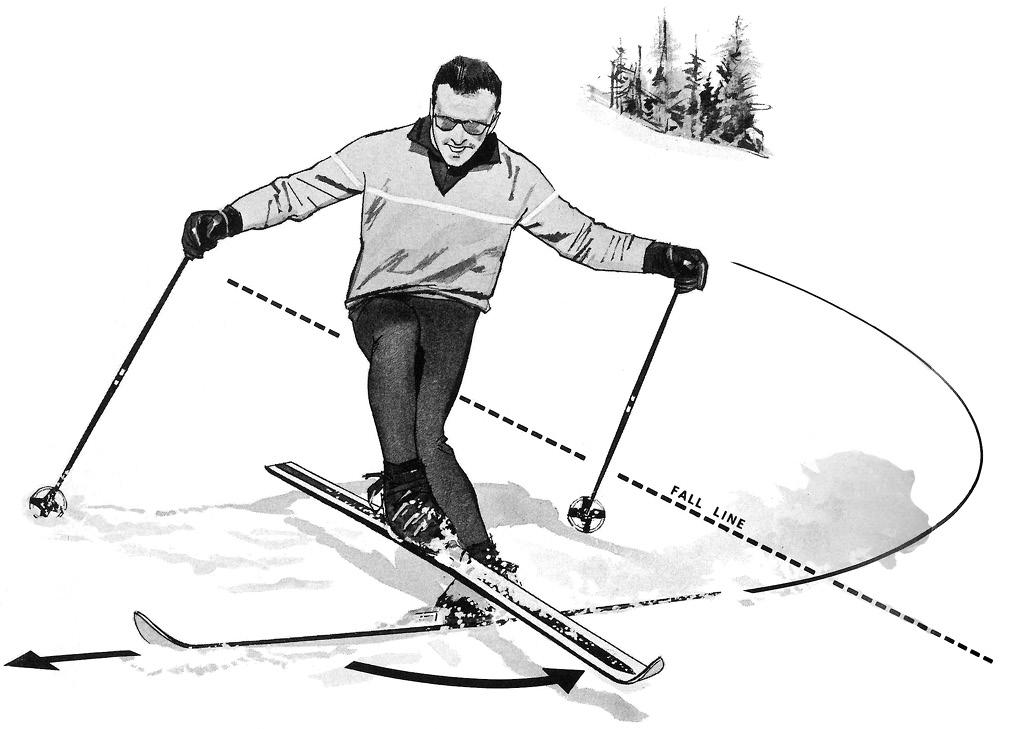
A fixture in SKI magazine in the mid- to late-1960s, Nohl demonstrated pointers like the “Banked Turn” and the “Rabbit Bounce.” Artist Bob Bugg created the line art from photos taken at an annual spring photo shoot, generating a season’s worth of pointers in a day or two.
Dieter “Dixi” Nohl grew up in St. Anton, Austria, where, in the 1950s, his parents Fritz and Maria built the Hotel Montjola above the heart of the village. At the time, Fritz was running the ski school in Zurs over the Arlberg Pass. They slowly built up the hotel and eventually acquired the neighbor’s house, making the Montjola—and Maria’s famous fondues—a destination in St. Anton.
As a ski racer, Nohl’s contemporaries included Karl Schranz, Egon Zimmermann and Pepi Stiegler. After a rash of injuries—five broken legs, including two in the same season—he took a break and delved into the three-year process of getting his Austrian ski instructor’s certification. In 1960, at age 20, Nohl accepted Sepp Ruschp’s invitation to come to Stowe and join the ski school. Nohl was a welcome addition to Stowe’s ski school and social set, setting slalom courses for Ted Kennedy and teaching young Cindy Watson (daughter of IBM’s Tom Watson) to ski. He was featured in September 1960 LOOK magazine as Stowe’s “Romeo on Skis.”
For the next four years, Nohl followed an annual migration pattern, teaching in Stowe in the winter and in Portillo in the summer. Nohl fondly remembers Portillo’s convivial ambiance, with all of the guests together in one hotel, gathering for dinner. In the fall, Nohl returned to Austria and taught English to aspiring ski instructors as part of their certification under Professor Stefan Kruckenhauser, the “Ski Pabst” (Pope of Skiing).
Nohl was featured in the September 1960 issue of LOOK as “Stowe’s Romeo on Skis.” “He is gallant, with a business sense,” explained the magazine, which also extolled the benefits of skiing to the New England economy.
Kruckenhauser had filmed Nohl and his fellow ski racers for his book Wedeln: the New Austrian Skiing Technique. In 1969, Bob Ottum of Sports Illustrated described wedeln as: “an entire new style of skiing, a legs-together, wriggly, snakelike way of going down the hill, using hip movement and heel thrust from the waist down…[that] swept the world like no other form of skiing before or since.” Kruckenhauser continued to film Nohl, a star student, for technical demonstrations on his trips home to Europe.
When Gore Mountain opened in 1964 in New York, Nohl was hired to start its ski school. In 1967 he returned to Vermont to take over the ski school at Madonna (Smugglers’ Notch), where he also started the Fondue Haus. During that time Nohl represented Madonna at pre-season ski shows in major northeastern cities. At the show in Montreal, he met Willa, who was manning a bus tour booth as a favor for her friend. They married the following May. In 1972 they moved on to Mad River Glen, where Dixi stayed for 12 winters, running the ski school and heading the resort’s year-round marketing program.
Around this time, Kruckenhauser quite literally changed his stance on ski instruction, famously showing up in Aspen at Interski in 1968, armed with film and young beginner skiers to promote his new technique. Advances in ski material and design allowed for shorter, more maneuverable skis that accommodated a wider stance. This was an easier and quicker way for beginners to learn than the feet-together wedeln, and Nohl, described in SKI as “Kruckenhauser’s alter ego,” helped to spread this new skiing gospel. “It made sense,” says Nohl. “As the skis got shorter and shorter, the stance got wider and wider.”
Kruckenhauser was happy to use fellow Austrians to export his ideas and get newcomers skiing well quickly. Nohl was an early adopter of video review with his ski students at Mad River. He took an active role in writing and demonstrating pointers in SKI and was also an examiner for PSIA.
A constant in SKI magazine throughout the mid- to late-1960s, Nohl brought his meticulous understanding of technique to readers though a treatise on the respective evolutions of the Austrian and French ski techniques, as well as a comprehensive comparison of the American, New Austrian (wide-stance) and GLM teaching methods. His concise one-page pointers included things like the “Tired Skier Carry,” for getting kids off the slopes, the thrust in slush for conserving energy, and no less than six ways to ski a catwalk.
Each spring, SKI organized a photo shoot starring Nohl. “Because of his training under Kruckenhauser, along with his thin, tall physique, he was a superb technique demonstrator,” explained John Fry, then editor of SKI. “We’d get all these pointers sent in by instructors, in longhand. Sometimes they included pictures, sometimes not,” he says. They shot the whole season’s pointers in a day or two. Sequence shots of Nohl were then converted to line art by artist Bob Bugg.
While at Mad River, Dixi and Willa sent their older son, Jay, to Green Mountain Valley School to pursue ski racing. When the family moved to Burke in 1984, and Dixi took the role of general manager, Jay and his younger brother Cory attended Burke Mountain Academy. Jay went on to ski for Dartmouth College, and Cory raced for Williams. Nohl managed Burke for 13 years (1984–1997), coming in after the development of the lower mountain and lasting through five owners and multiple bankruptcies. Finn Gunderson, who was headmaster at Burke Mountain Academy during some of that time, remembers negotiating for snowmaking and hill space with Dixi, who was also dealing with state regulators, managing the resort and fending off creditors. “He was always proud of the school and supportive,” says Gunderson.
When Burke sold again, in 1997, Nohl moved on to Woodstock. He had visited the Charleston House one winter and the owners mentioned wanting to sell. With his training in the hotel business, Dixi and Willa jumped in. Twenty-one years later the inn is their work and their social life, and they never shut down between seasons. Willa gets out for volunteer work, and to stage the occasional political rally or fundraiser, while Dixi skis at Killington regularly. The rhythm of inn life keeps them busy every day until afternoon.
“We love Vermont,” says Willa, who can’t pick a favorite of all the places they’ve lived along the way—Jeffersonville, Warren, Burke and Woodstock. “It is home for us. We are lucky to feel that way.”
Edith Thys Morgan is a ski-racer mom, blogger and author, and former World Cup and Olympic alpine racer (racerex.com).
1967: You need balance, courage and most of all proper angulation for a good sharp parallel turn. All these qualities can be built up by a little acrobatic exercise which I call the Javelin Turn, but which is really an exaggerated, intentional crossing of the fronts of the skis. There is no other exercise that illustrates so clearly how the hip must be placed for angulation in the parallel turn. In normal parallel skiing, the inside ski, boot, leg and hip must lead the turn. In the Javelin, the inside of the body has to lead or you will fall.
To practice the Javelin turn, start off as in any parallel turn, and then pick up the inside ski of the turn. As the turn progresses, keep pointing the tip of the lifted ski farther and farther to the outside of the turn, so that by the end of the turn, the lifted ski is at right angles to the tracking ski. Make sure to keep the tip of the lifted ski well off the snow.
Two or three Javelin turns early in the day will get you set in the correct, powerful “lead with the inside” that is the secret of a really good carved parallel turn. —Arthur Furrer (Ski School Director, Bolton Valley, Vermont)
2019: The exercise described here has been in constant use by savvy instructors and coaches since it was described in the pages of SKI Magazine by Art Furrer in 1967. A Swiss “trick skier” who was featured many times in SKI during the 1960s, Furrer named the maneuver after the model of ski he promoted at the time: the Hart Javelin.
To this day, the Javelin Turn is the go-to exercise for developing good hip angulation and its concomitant countered posture, in which the pelvis and torso face somewhat toward the outside or downhill ski. That posture is a key element of what American instructors commonly refer to now as “upper and lower body separation.” Javelin turns also demand that the skier balance over the outside ski, another important skill.
This article first appeared in the January-February 2020 issue of Skiing History.
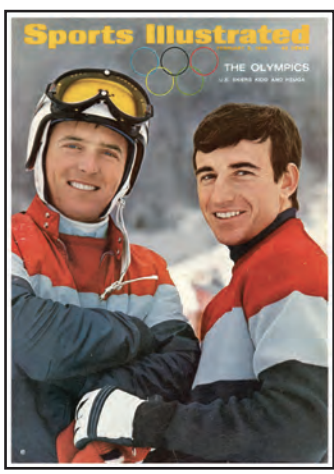
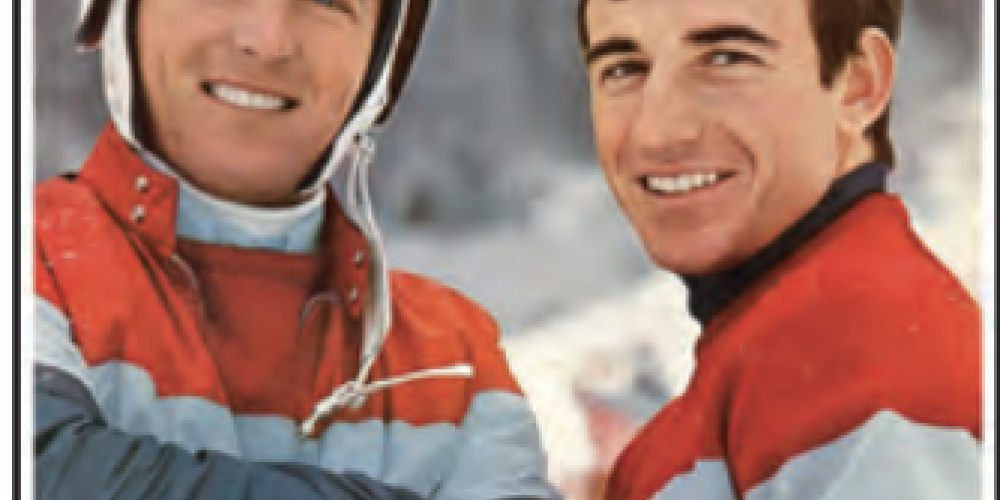
After reading “The Making of DownhillRacer” in the September-October 2019 issue and seeing the photo of Robert Redford in a Roffe shell, I thought I’d add a little behind-the-scenes information. It was an unlined shell with the front made of stiff coated 70-denier woven nylon. The shell was created for the U.S. Ski Team, and in 1968, Olympic alpine medalists Billy Kidd and Jimmie Heuga wore the shell on the cover of Sports Illustrated (February 5 edition). It had to fit close to the body but still stretch across the shoulders. This was before the invention of multi-directional woven stretch fabrics, so the back was made of heavy woven wool/Lycra one-way stretch fabric, with the stretch going horizontally across the shoulders. Redford can ski very well, and Roffe supplied him with skiwear for many years. In this picture of him plowing through powder, he’s wearing a two-piece suit made of fourway stretch woven nylon/Lycra fabric, insulated with a new product that I developed with 3M, a stretch insulation. Both the suit fabric and the shell back were --Wini Jones
From the January 2019 issue of Skiing History magazine
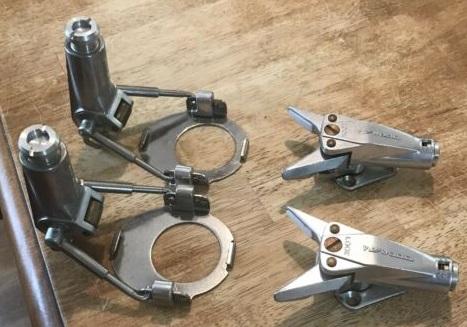
As life returned to normal after World War II, skiers on both sides of the Atlantic wanted to replace their pre-war equipment. The first order of business was to dump the old leg-breaking Kandahar bindings, with their solid toe irons and long-thong wraps designed to support the ankle and prevent heel release. In 1948 the French sporting goods manufacturer Jean Beyl introduced a pivoting plate meant to prevent spiral fractures of the tibia. It didn’t release from the ski but could pivot 360 degrees in a twisting fall. By 1950 he had talked a number of French racers into using the “Antifracture” plate.
In the afterglow of liberation, the French still referred to U.S. soldiers as “Amis” (“friends”). American products had a reputation for quality and were in high demand. French companies sent production engineers to visit U.S. factories for guidance on rebuilding their own industries. Beyl wanted to give his new ski binding an American-sounding name. Besides, North America might become a healthy export market someday.
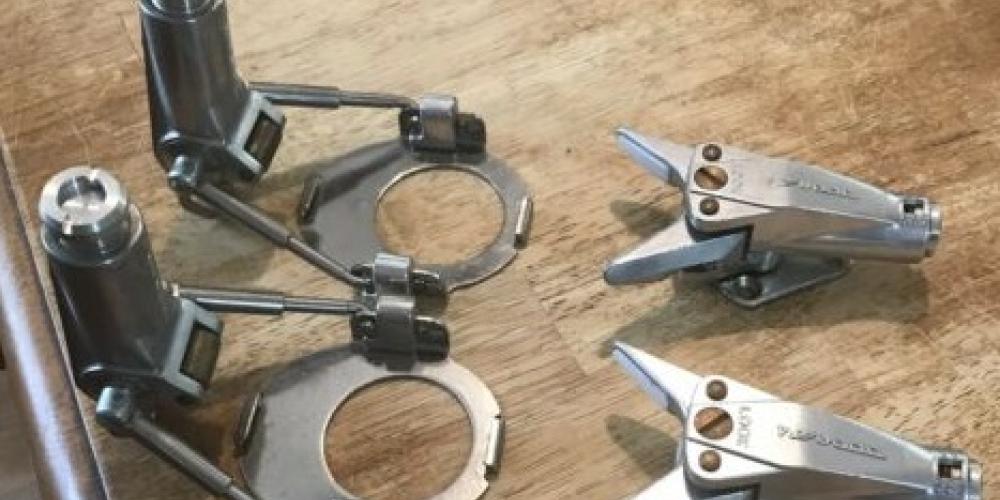
Beyl noticed that American soldiers got weekly magazines with punchy names like Time, Life and Look. He chose Look as the corporate name, after the large-format photo magazine. And he replaced the boot-length plate with an easier-to mount high-elasticity toe unit paired with a cable heel system. He called the new toe Nevada, another word evoking America despite its Spanish origin (it means “snowy mountain”).
As a product name, Look Nevada had a spectacular run. Its next redesign, in 1962, became the Nevada II and paired with the step-in Grand Prix turntable heel. That combination campaigned into the 1980s.
Beyl wasn’t finished with American magazines. In 1983 he designed Look’s releasing-clip bicycle pedal. After leaving the company, in 1987 he created an improved pedal, and called it Time. –Seth Masia
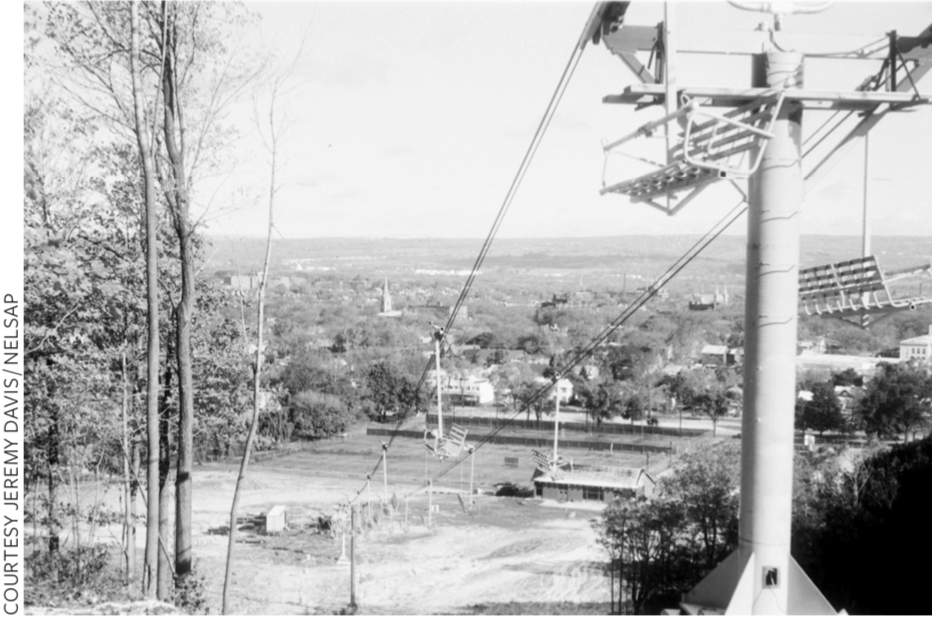
Installed at a small New York ski area, the world’s original high-speed detachable quad had the right idea with the wrong execution. BY JEREMY DAVIS
The opening of the Doppelmayr Quicksilver SuperChair at Breckenridge, Colorado in 1981 is often cited as the first operation of a high-speed, detachable quad chairlift. While this lift is certainly the world’s first successful detachable four-seater chairlift, an earlier prototype operated approximately a decade earlier in the most unlikely of places—a community ski area in Utica, New York.
In the mid 1960s, the Val Bialas Ski Center at the Parkway was modest, with a few trails and slopes served by a T-bar and rope tow. In 1968—with the popularity of skiing on the rise nationwide—the city council voted to spend $100,000 on upgrades.
A local manufacturer, Mohawk International, bid $114,000 and was awarded a contract to build a four-person detachable chairlift with stationary loading. Skiers would be taken up the mountain sideways, at a speed of 600 feet per minute. A 2,500-per-hour capacity was planned, which would far exceed any other lift’s capacity at the time. Sue Baum, the local Parks and Recreation Commissioner, envisioned the lift running year-round, with summer rides to a summit observation and picnic area.
This project would be Mohawk’s first foray into the ski lift business...
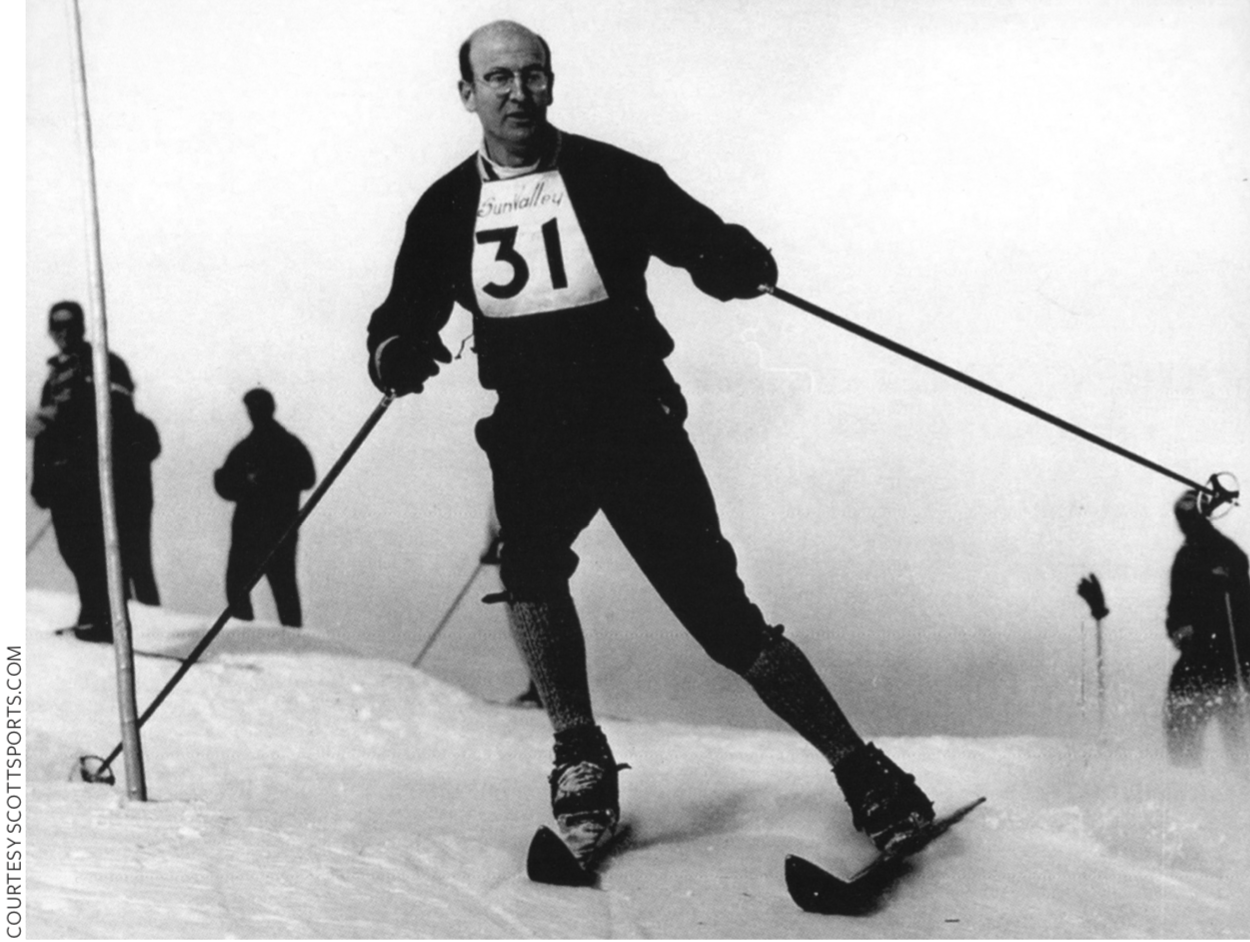
In January 1968, Skiing Magazine ran this profile, written by John Jerome, of Ed Scott, founder of Scott USA.
Ed Scott may be the most humorous man I’ve ever met. Yet I don’t believe I ever saw him really break up in laughter. Rather, he’ll pursue a line of conversation in a direction that amuses him, and he’ll pause, turn his wide-eyed spectacles full upon you, and you’ll notice his upper lip twitch slightly. That’s all. If you haven’t broken up yourself by that point, you’d do well to re-examine the past two or three minutes of conversation—because Scotty has just cracked some tremendous private joke, and it would be worthwhile to figure out what it was.
Among the things he thinks are funny are most of the big shots in skiing, international racing and its convoluted internecine wars, international ski business and its convoluted internecine wars, his own business efforts, life in the Sun Valley area, life, and himself. Among the things he is dead serious about are—well, just read that list again...
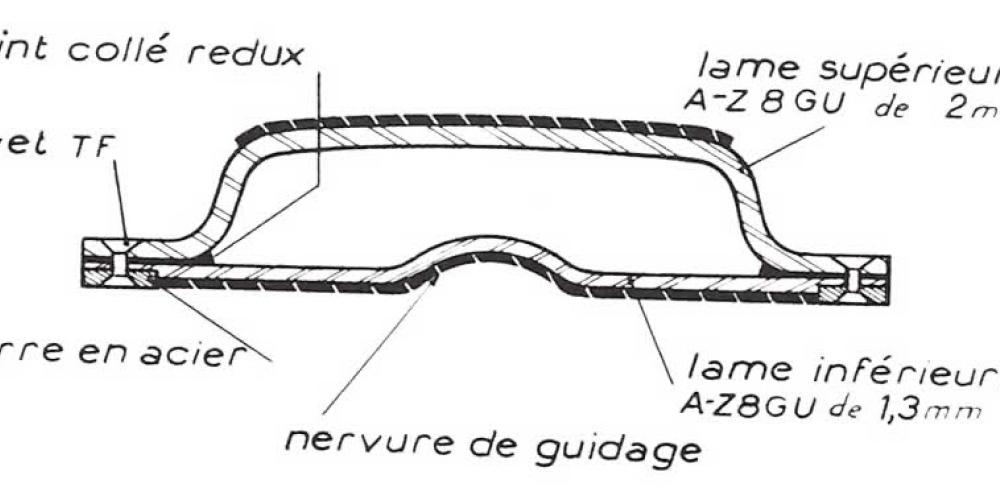
The MV2, designed by Jean Liard and introduced in 1964, was a magnificent giant slalom ski, raced to a downhill win at Morzine that winter by Mariel Goitschel, and to World Championship gold medals at Portillo, in 1966, by Goitschel and Guy Périllat. It was unique in its era for having not two but three layers of aluminum -- specifically a hard alloy of Aluminum, zinc and copper called Zicral. Like all top racing skis of the late 1960s, it had a wood core with aluminum layers top and bottom, but the core was reinforced with a third sheet of aluminum, formed into a “hat-section” rib the factory called an omega, for its rough resemblance to the Greek letter Ω. That rib reinforced the MV2 in torsional stiffness, giving it tremendous edgehold when turning on ice.
Historically, the MV2 is unique, blending American and French inventions.
The story begins at the Vought-Sikorsky aircraft factory in Connecticut, in 1945. The factory is best known for the Vought F4U Corsair fighter, one of the fastest and, piloted by U.S. Marine aviators, most capable aircraft of World War II. As it became clear that the end of the war was near, Vought-Sikorsky managers expected aircraft orders to drop sharply, so they looked around for consumer products they could build and sell. Because the company knew how to laminate aluminum to balsa wood, some bright soul decided that Vought could build skis. The project was handed to three of the company’s engineers, who happened to be skiers: Arthur Hunt, Wayne Pearce and Dave Richey. In short order they created the prototype of an aluminum “sandwich” ski -- a lightweight wood core between aluminum top and bottom sheet. The Vought factory ran off 1000 pairs and created the brand name Truflex. It was the first mass-produced aluminum ski.
By 1946, as the French and other European air forces rebuilt after the war, orders flowed in for the Corsair, and the company became busy building helicopters. The ski wasn’t needed, and management killed the Truflex project. Hunt, Pearce and Richey quit and formed their own ski company, introducing the Alu 60 in 1947. In order not to violate the Vought patent, they dropped the wood core and made their ski from two layers of aluminum: a flat base sheet and the hat-section topskin to reinforce it and control flex (see cross-section drawing, top of page). The trio then invented the celluloid-plastic yellow TEY Tape, applied to the aluminum base to improve glide speed (TEY referred to the last letters of their names). Then they invented the snow gun, which was so successful that they quit making skis. But Adolf Attenhofer, who owned a sizeable ski factory in Switzerland, bought the Alu 60 patent and began marketing the ski as the Attenhofer Metallic. He licensed manufacturing to the French sporting goods firm Charles Dieupart & Fils, who created the Aluflex brand. By adding a strip of wood under the hat-section top, Dieupart smoothed out the ski’s ride and vibration. Beginning in 1954, Aluflex was a big hit in France. Former World Champion James Couttet put his name on it. Aluflex and Couttet skis were widely adopted by ski instructors and even by the French Army’s mountain troops. Actual manufacturer was the metal-products company Les Ressorts du Nord (Northern Springs – as in auto suspensions).
In the mid-50s, fiberglass became available in commercial quantities. In France, Paul Michal’s Dynamic factory, building great wooden slalom skis since 1931, spent seven years experimenting with the new material and learned how to wrap wet fiberglass around a wood core to create, with the help of Charles Bozon, the VR7 of 1960 (VR for verre résine, or resin glass, 7 for the development time). The ski hit the race circuit in 1962 and was an instant success. That year Aluflex formed a partnership with ski-binding distributor Claude Joseph, who had begun building fiberglass skis under the company name Les Plastiques Synthetiques. Ressorts du Nord built a new factory in Sallanches, just down-valley from Chamonix. The glass ski was named Starflex, to be marketed alongside Aluflex.
The chief engineer at the Sallanches factory was Jean “Jeannot” Liard. He developed the Starflex fiberglass ski into a slalom model called the Compound RG5 (RG for resin glass, an Anglicized tribute to the VR7). Air bubbles in the resin caused the tips to break. Liard called on engineers from Dynamic to help iron out the production problem. In order to repair the RG5 reputation, the new company paid Michal for the right to put a Dynamic seal of approval on every RG ski -- then launched the Dynastar brand. Michal and his team weren’t amused by the copy-cat branding, and killed the consulting relationship. Meanwhile, Charles Dieupart fell out with Ressorts du Nord and split, taking Aluflex with him. His new venture didn't last long.
Meanwhile Liard needed a new aluminum ski. Onto the existing Aluflex structure (flat aluminum base, hat-section aluminum top rib) he added a flat aluminum topsheet. The ski now contained three layers of Zicral aluminum and three strips of wood (one under the “hat” rib, one on each side). It was stable, precise and very fast. Liard named the ski MV2 for “mass times velocity squared,” the formula for calculating energy. And that’s the ski you’re looking at here – a direct descendent of the Connecticut-built Alu 60 of 1947. –Seth Masia, International Skiing History Association
This article is based on information from several sources, chiefly Une histoire du ski, by Franck Cochoy; “Eight Classics,” by Morten Lund (SKI Magazine, January 1986); interviews with Michel Arpin and Adrien Duvillard (both now deceased); and Jean Liard. Many thanks to Jean-François Lanvers for interviewing Liard.




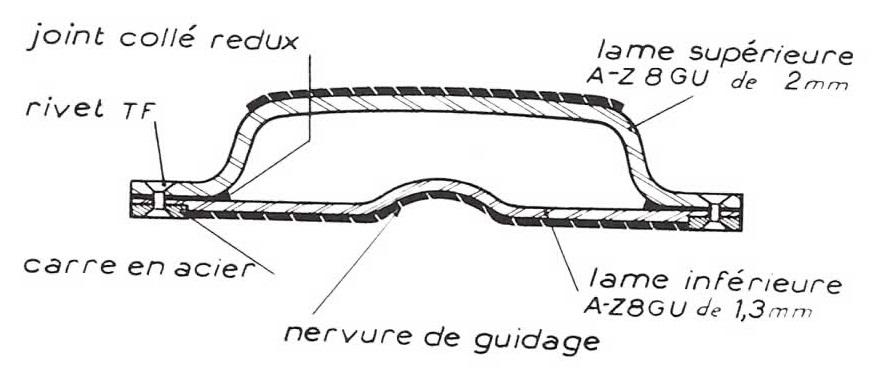
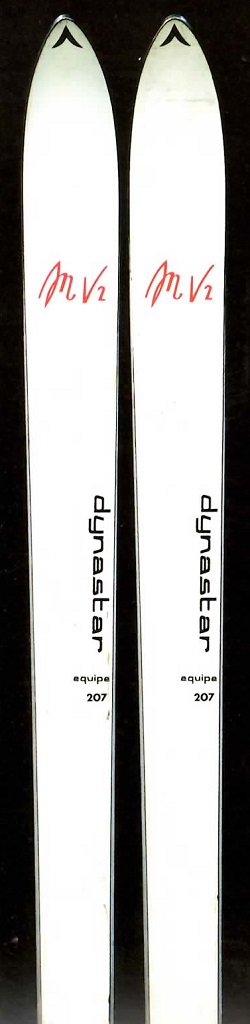 The MV2, designed by Jean Liard and introduced in 1964, was a magnificent giant slalom ski, raced to a downhill win at Morzine that winter by Mariel Goitschel, and to World Championship gold medals at Portillo, in 1966, by Goitschel and Guy Périllat. It was unique in its era for having not two but three layers of aluminum -- specifically a hard alloy of Aluminum, zinc and copper called Zicral. Like all top racing skis of the late 1960s, it had a wood core with aluminum layers top and bottom, but the core was reinforced with a third sheet of aluminum, formed into a “hat-section” rib the factory called an omega, for its rough resemblance to the Greek letter Ω. That rib reinforced the MV2 in torsional stiffness, giving it tremendous edgehold when turning on ice.