Technology

For ski equipment, skiwear, lifts etc

Open to Public?
Off
Feature Image Media
Image
Timestamp
Author Text
John Fry

At first a gimmicky convenience, the boot buckle took ten years to earn its place among the sport’s enduring inventions.

In 1955 a former stunt pilot and Swiss inventor named Hans Martin sold the world’s leading ski boot company, Henke, his patent for using metal buckles rather than laces to fasten leather boots.

Dolomite double lace boots (Vintage Ski World photo)

Skiers needed such a convenience. The number of lacing hooks and eyelets on a pair of boots had skyrocketed to as many as 90 with the introduction around 1950 of the inner boot and rear lacing. The digitally challenged skier could now spend as long as 10 minutes lacing the equivalent of four boots before setting out on the slopes, to say nothing of fine-tuned re-lacing adjustments during the day. Time wasn’t the only inconvenience. Tightening the laces of the hard, stiff outer boot, unless you used a hook-like device to draw them taut, caused raw, sore fingers. And pity the racer who attempted to adjust his laces on a raw frigid January day before stepping into the starting gate. It was an experience comparable to that possibly felt by Scott penciling his dying thoughts in Antarctica.

The buckle boot surely would be the answer. “No more frozen fingers!” claimed Henke. “Flip it open. . .flip it shut. Keep your gloves on!” But when Henke’s salesmen began to show their $49.50 Speedfit boot to dealers in the 1955, they were often laughed out of the shops. At the time buckles were associated with the galoshes worn by folks to walk through slushy streets. “Who would want to wear galoshes to ski?” sneered skeptical shop owners.

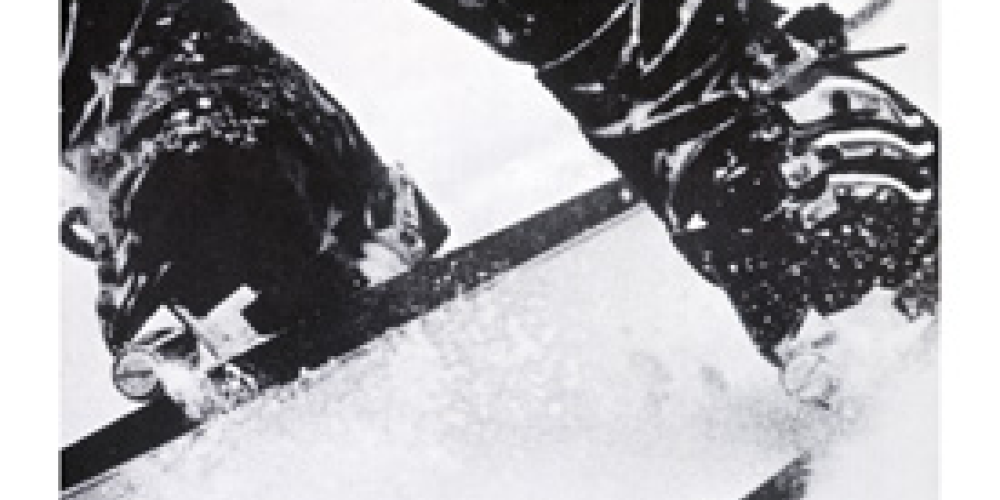
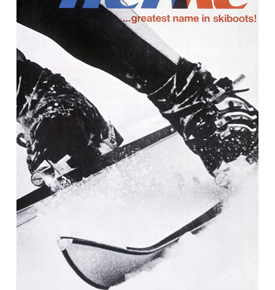
Henke Speedfit

Nor did skiers invade shops demanding the revolutionary lace-less boot. They were reluctant to give up lacing’s comfortable close fit, especially when the hard outer boot contained a soft separately laced inner boot. The infinite adjustability offered skiers the most personalized fit they would enjoy until the arrival of custom-foamed liners 20 years later. By contrast, buckles created stresses and painful pressure points on the foot where they attached to the leather.

Racers — usually the first to seize on new technology — didn’t begin to adopt the buckle boot until the early 1960s when other bootmakers improved on Martin’s original design, and offered hand-lasted inners and better-designed tongues to even out the pressure.  Even then, a top racer would wear out a boot in a few weeks as the leather stretched beyond repair. What the performance-oriented skier awaited was leather’s replacement by indestructible, stiffer plastic. In Dubuque, Iowa, plastic boot inventor Bob Lange made his early prototypes using laces, but it was almost humanly impossible to cinch tight the hard, unpliable plastic. Only buckles, Lange discovered in 1965, would enable his new boot to work. Fortunately for him, the buckle had already been invented. . . and the design and making of ski boots changed forever.

Heinz Herzog, long-time president of Raichle-Molitor USA, adds this comment:

It was not uncommon to suffer frostbite as a result of wearing seamed leather boots without interior padding or insulation. To cinch a long thong around the boot, I remember having to thread it through a couple of steel rings with bare fingers. Hans Martin, a Swiss, invented the buckle. Part of his patent covered the method of mounting each buckle on the boot, a challenge because it was leather. Need to spread pressure, not create pressure points. Martin sold the patent to the Swiss boot company, Henke. Others tried to design their own, but Martin’s design was the only one that worked, so the other boot companies like Molitor paid Henke for the right to use the Martin-designed buckle. Le Trappeur had the greatest success in racing. Instead of having the two buckles going laterally across the shaft, they attached one diagonally at the heel.

Martin spent tens of thousands trying to make a one-buckle boot.


Feature Image
Category
Open to Public?
Off
Feature Image Media
Image
Timestamp
Author Text
John Fry

An obscure Austrian accountant invented the steel edge in order to save lives. Racers found it more valuable for winning gold medals.

Rudolf Lettner, an office worker who liked to ski, invented a piece of equipment which, more than anything, revolutionized the sport 85 years ago. He was an unlikely inventor.

An accountant, Lettner worked for Austria’s historic salt works, the giant Saline Hallein near Salzburg. On his one day off per week in winter, he regularly went skiing in the high mountains south of town.

On a foggy Sunday in 1917, Lettner’s pleasure turned to dread. High up on a steep, icy slope, his skis began to sideslip. Hard as they were, his hickory edges were too round and worn to grip the hard surface, and he slid downhill, sometimes headfirst, sometimes feet first. He would have collided with the rocks below, but by dragging the steel tips of his poles along the icy surface, Lettner managed to bring himself to a stop. It saved his life.

Lettner, 30, thought a lot about what might have prevented his nearly fatal accident. Skiing could be made safer, and skis would certainly turn better if their edges were metallic, like the tips of his poles. But how to attach the metal to wooden skis so that it didn’t impede the ski’s natural bending? The skier, too, would want to be able to sharpen the edges. The steel must not be so hard that it couldn’t be filed readily. Bronze was too soft. . . the edge would quickly lose its sharpness.

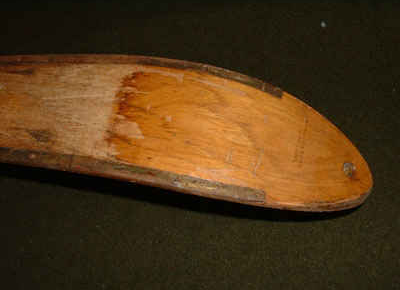
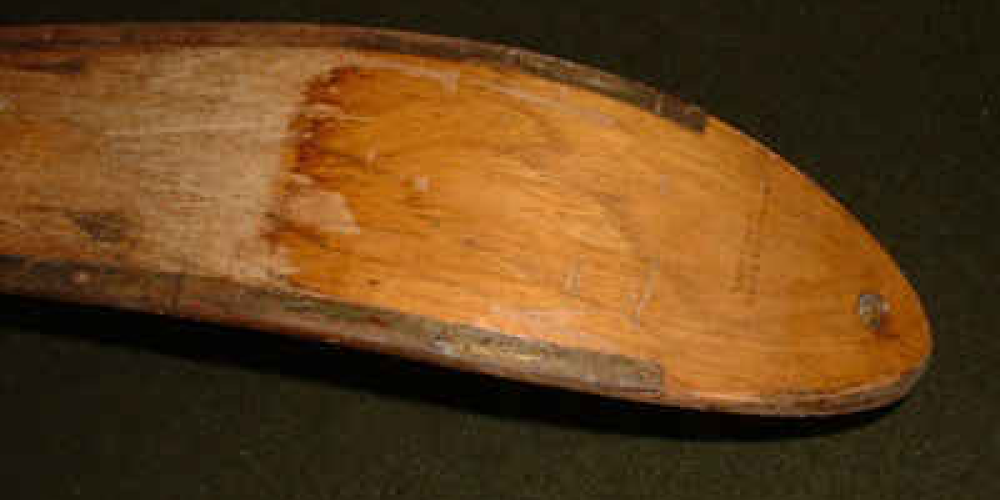
It took Lettner almost ten years of experimentation to arrive at a solution – which was to screw short sections of steel strip on to the ski, allowing it to flex. To make the steel flush with the ski’s base and sidewall, he routed a strip along the length of the wooden edge to match the width and thickness of the steel.

Lettner patented his invention in 1926. While he wasn’t an engineer, he also proved not to be much of an entrepreneur or marketer either. Skiers seem mostly to have ignored his invention over the next four years. But at the University Winter Games at Davos, Switzerland, in 1930, Austrian racers entered the starting gate equipped with the Lettner edge. They created a sensation, making razor-sharp turns and winning easily.

The losing racers, anticipating controversy six decades later over the “unfair” advantages of high boot platforms and short slalom skis, protested. The protest failed. Yet it was loud enough to make a splash in the newspapers, and soon racers everywhere realized that without steel edges it was impossible to win. Skiing was flooded with designs competing with Lettner’s. By 1935, the authoritative British Ski Year Book listed no less than 17 different brands of steel edge, along with advertisements for shin guards to prevent legs from being cut and pants torn. Lettner himself invented a machine to sharpen the edges, and ski shops did a profitable business replacing lost and damaged edge sections.

With the arrival of metal skis in the 1950s and fiberglass in the 1960s, the edge became a continuous steel strip integrated into the ski’s construction.

Gone but not forgotten, Lettner’s original segmented edges can still be found on antique skis decorating the walls of mountain chalets and ski museums.

John Fry is the author of The Story of Modern Skiing, and the President of the International Skiing History Association, publisher of Skiing Heritage and of this website.

 (The original steel edge and the only known image of Rudolf Lettner hang in a little ski museum at Werfenweng, south of Salzburg, not far from where the inventor’s nearly fatal fall gave rise to the idea of a metallic edge.)
 

Feature Image
Category